Resources
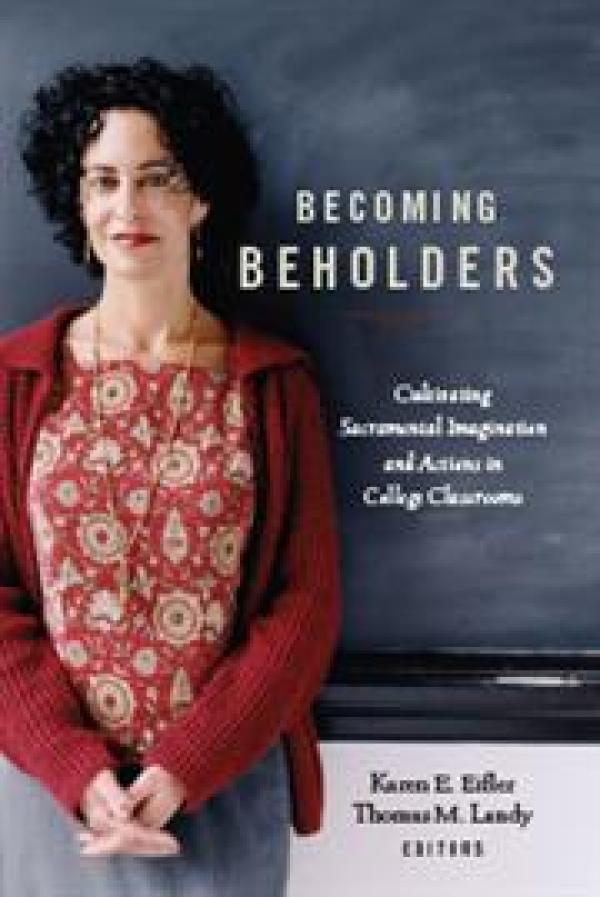
This thought-provoking, insightful collection of twenty articles is directed toward teachers at Catholic colleges, but it is applicable to anyone who teaches in higher education and who comes to that task from a faith perspective. A wide variety of disciplines are represented, including art, literature, writing, chemistry, math, economics, sociology, communication, history, Spanish, and, of course, religion. The book’s title and subtitle are suggestive. The title derives from a Hopkins poem, “Hurrahing in Harvest”: “These things, these things were here and but the beholder / Wanting” (xii). “Sacramental imagination” in the subtitle is described as “a deeply Catholic perspective on the world, one that sees God manifest throughout the natural, created world” (ix). This perspective is cultivated through “Actions in College Classrooms.” The authors therefore discuss in detail activities in courses that they have taught that relate to the topic of the book. They often quote from students’ journals or essays as a means of demonstrating student learning. They also describe activities that go on outside the classroom, such as trips to museums, personal reflection during the week, and service with nonprofit agencies as additional ways by which the sacramental imagination is cultivated. Several of these essays have appeared elsewhere, some in publications related to Collegium, a Catholic organization that describes itself as “a colloquy on faith and intellectual life”. (Indeed, the book is featured prominently on the group’s webpage.) The organization, Contemplative Mind in Society, is mentioned, as is the work of Parker Palmer. One, then, could see this book as part of a larger conversation about spirituality and education. Here a Catholic perspective on higher education is brought to bear. Incidentally, two authors have Wabash connections: Angela Kim Harkins was a Wabash fellow, and Anita Houck acknowledges a Wabash colloquy. The title of their essays are both representative: Houck’s “You Are Here: Engagement, Spirituality, and Slow Teaching,” and Harkins’ “Cultivating Empathy and Mindfulness: Religious Praxis.” Other interesting titles (and topics) include economist Peter Alonzi’s “Pauses,” English professor Melissa A. Goldthwaite’s “Rhetorics of Silence: A Pedagogy of Contemplation, Empathy, and Action,” and communications professor Jonathan M. Bowman’s “Mutual Benefice: Helping Students Find God in a Research Methods Course.” Readers of this resource might be tempted to read only the articles written by professors of theology or religious studies. That approach might be a good entry point to the book, but the treat is to see how teachers in various disciplines are cultivating sacramental imagination in their classrooms. A particularly intriguing example was Stephanie Anne Salomone’s use of a “This I Believe” essay in a geometry course, thus “Linking the Mathematical Axiomatic Method with Personal Belief Systems.” The concluding sentence of the book was fitting and invites reflection. Jonathan M. Bowman writes, “I have reinvigorated my own experience of transcendence as I teach and mentor my undergraduate students” (313). Reading this book – and pondering its implications for our teaching – can help us too “become beholders.”
In 1997, the International Conference on Adult Education (CONFINTEA) crafted the visionary Hamburg Declaration on Adult Learning and Agenda for the Future (UNESCO, 1997) claiming that adult education could contribute to “a world in which violent conflict is replaced by dialogue, a culture of peace based on justice . . . and the creation of a learning society committed to social justice and general well-being” (2-3). What is the value of an idealistic treatise like the Hamburg Declaration? And what does it matter to theological education? Religious education faculty want their teaching to impact student learners and to make a positive difference in their global communities. In an ever-changing world, it is essential that theological educators situate their teaching within the larger sociocultural milieu, recognizing how contextual realities inform and shape both the process and content of adult learning. The Hamburg Declaration demands that educators heed its call and answer its pedagogical implications. Contributors to this current volume were invited to provide a critical analysis of the Declaration’s core themes, particularly in light of political, social, economic, and cultural transformations occurring throughout the world today (4). They chronicle the challenges and opportunities that adult education has had in issues surrounding democracy, women, literacy, work, environment, technology, international policy, and economics – particularly in the years since the declaration was published. While today’s pressing concerns may differ from those in 1997 – for example, the changing nature of work and unprecedented advances in technology – nevertheless, a review of these themes may be instructive for how educators might examine related issues within the context of religious and theological education. The Hamburg Declaration follows from the emphases of adult educators such as Brookfield, Freire, Hooks, and Illich, who affirm the political nature of education. Political and social realities do indeed shape the context of student learning. In cultivating appropriate pedagogical strategies to address the most urgent global issues, Adult Education and Learning in a Precarious Age suggests that we pay heed to the process of framing problems and how these inform solutions. Reiterating the emphasis in Hamburg, co-editor Welton affirms an “ethic of dialogue respectful of the different moral and spiritual options” that is “best able to promote the learning process” (17). Such dialogue is essential as teachers engage students in critical reflection of relevant global issues. Yet, the preliminary analysis by the authors of this volume invites further interaction from an explicitly theological perspective. Although one may question the actual progress made on the concerns identified in the Hamburg Declaration and the role of adult education, this work still serves as timely inspiration for values-driven religious educators who are motivated by the pursuit of truth, justice, and ethics; who long to foster transformative education with impact beyond the classroom. As Nesbit, this volume’s co-editor, asserts, “What is possible is shaped, in part, by our visions” (98).
The subject of theology and religion is related to the human desire for and experience of transformative inner experience. Contemporary theological education tends to especially draw students who are internally motivated for their own transformation or for facilitating other’s transformation through their ministry. In this sense, Transformative Learning and Identity touches upon the DNA of theological and religious education. This book is one of the fruits of the author’s research on transformative learning, which developed from another of his books, How We Learn (London, U.K.: Routledge, 2007),a comprehensive account of general learning theory. In Transformative Learning and Identitythe author reviews the theoretical development of the concept of transformative learning through a survey of knowledge and research to “understand and explain how the most rewarding and far-reaching human learning processes take place and why and how they have become so important in today’s world” (xiii). As such, this is not a self-help book with pedagogical strategies. What the author means by “today’s world” carries the foundational assumptions of this book. He calls this contemporary context late-modernity which includes an economic environment that allows upward mobility among classes heavily dependent on the performance of individuals. For him, this is the context of the individualism from which the quest for identity rises. Individualization provides the possibility “to create one’s totally own existence in the very best and personal way – if only one was able to manage all the many life situations and make the right choices all throughout” (62). With such an ideal of individual choices, the responsibility of one’s own accomplishment of the ideal rests on individual will and capacity. Transformation then becomes a crucial task for individuals to accomplish. Illeris’ main conceptualization follows from Jack Mezirow’s understanding of transformative learning – a process of meaning creation, of which elements like individual experience, critical reflection, dialogues, holistic orientation, awareness of context, and authentic relationships are important building blocks. Using this foundation, Illeris surveys the thoughts of several scholars to further exploration of transformative learning. After a brief survey of psychoanalytic theories of change and a cursory survey of emancipating pedagogical theories including Paulo Freire’s critical theory, and one feminist approach developed in the 1980s, he surveys the theories of Yrjö Engeström, Robert Kegan, Peter Jarvis, and Mark Tennant. Through his analysis of the development of various theories in Part I, he concludes that transformative learning “comprises all learning that implies change in the identity of the learner” (40). Thus, he devotes Part II to identity development through the theories of Erik Erikson, Thomas Ziehe, Kenneth Gergen, Mark Tennant, Etienne Wenger, Pierre Bourdieu, Anthony Giddens, and Zygmunt Bauman. In Part III, he examines transformative learning from different standpoints such as developmental stages, the processes of progressive and regressive transformation, motivation and identity defense, personality and competence, and its habitus as in school, work, individual, and society. The author’s intent is to build a more authoritative definition of transformative learning through a theoretical survey of the history of the concept. Along with the survey, his understanding of regressive transformative learning is an important contribution. Regressive transformative learning happens when expected progressive transformative learning is frustrated but still results in identity change. When it happens simultaneously with another progressive transformative learning experience, it can result in identity transformation. There are several points that may need to be augmented to bring out this book’s full potential for religious and theological education. As Illeris writes from his location in Denmark, despite some experience in Teachers College, Columbia University, this work seems to mostly assume a middleclass European or European American context. Hence, it needs to be translated with intercultural sensitivity to find relevance in the context of diversity of cultures, power dynamics, socio-economic classes, and genders in the twenty-first century higher education. A discussion about emancipatory transformation and deeper reflection on critical pedagogies like those of Freire and McLaren would help translate this work into theological school contexts. Another useful dialogue would involve the topic of spirituality. From a Christian point of view, transformative learning can be conceptualized as involving the spiritual engagement of a person. This book is a helpful theoretical resource for those who want to conceptualize impactful teaching and learning experience. I recommend exploring this book with a theological lens in order to dialogue with the different theories surveyed: it could yield helpful dialogical points that could advance the search for realization of transformative learning in theological school contexts.
Shank’s Interactive Open Educational Resources is a welcome resource for any educator needing guidance as to how best to employ interactive learning materials (ILMs) in their classroom. The author’s style throughout is that of an encourager. He wants instructors to understand that ILMs are something more than using an online book or PowerPoint presentation. He claims that ILMs have the potential to address “significant modern-day learning challenges such as student preparedness, student engagement, and attentiveness” (7). The book is divided into three sections. The first provides an introduction, answering the question “What are Interactive Learning Materials (ILMs).” The second is devoted to “Finding ILMs.” And the last section concerns “Choosing and Using ILMs.” In the opening section, Shank defines ILMs and their relationship to open educational resources (OERs). He writes that ILMs are not easily defined because they have no universally accepted design and structure. Readers discover that ILMs should be interactive, online, and teach a specific objective or set of objectives. They should also contain one or more of the following processes – “applying, analyzing, and problem solving” (13). The second part of this book is a resource guide to locate specific ILMs. The author claims that by using specific search strategies, and key digital repositories and libraries, the process of locating ILMs is made easier. A common thread found throughout this section is that of “accessibility.” The author gives priority to sites freely available and user friendly. Shank identifies specific collections of ILMs – including online educational repositories, media sites, museums, educational institutions, and professional organizations, as well as government and nongovernment agencies. In essence, “knowing where to look will save a lot of time and bring us closer to acquiring the right kinds of resources” (23). For example, the author asserts that MERLOT is a general repository containing thousands of free, peer-reviewed, high-quality ILMs covering most disciplines. The OER Commons is a similar repository that “functions as a portal for teaching and learning materials around the world” (46). Educators are encouraged to be contributors to the repository’s resources. Beyond North America, readers are introduced to ARIADNE, a European-based repository committed to the development and exchange of learning resources, and JORUM, a British-based repository. Universities are another source of high quality ILMs. However, because of their vast numbers, the author suggests starting with institutions with known collections, or where the educator has a personal connection. Shank also expounds on a number of other educational repositories including the North Carolina Learning Object Repository (NCLOR). The author also encourages educators to give consideration to non-profit organizations like museums, professional organizations, and governmental as well as non-government agencies – groups that have “increasingly integrating interactive learning materials into their online resource offerings to educationists at all levels” (95). Among those highlighted is the Smithsonian Institution that offers innumerable educational resources. Shank encourages educators to remember the “three main areas of selection criteria – content, engagement, and design (CED) – to evaluate the quality of the identified ILMs” (31). Nonetheless, the overriding consideration should be given to content and accuracy. In the third part, the author offers suggestions for choosing and using ILMs. He encourages educators to find ILMs that are appealing and address different learning styles. He writes that students will be more likely to spend time concentrating on and engaged with ILMs if their environment is more immersive with materials, entertaining, or compelling (144). ILMs can be incorporated as course blogs, wikis, social networking sites (such as Facebook) and learning management systems (LMS). Instructors could also link ILMs to their online course syllabus. Shank contends that ILMs provide valuable feedback concerning student performance. Assessment is critical since it shows instructors whether course learning objectives are being achieved and makes the student more accountable for work they do (144). ILMs can also help struggling students to review or come to understand key concepts at their own pace (133). As the author indicates, “the more learning activities engage students, the more likely it is that the ILMs will have robust feedback” (122-123) Interactive Open Educational Resources is a cutting-edge book that provides transformative approaches to education. It is also a valuable resource guide. It will assist instructors to make a new kind of education possible in the classroom.
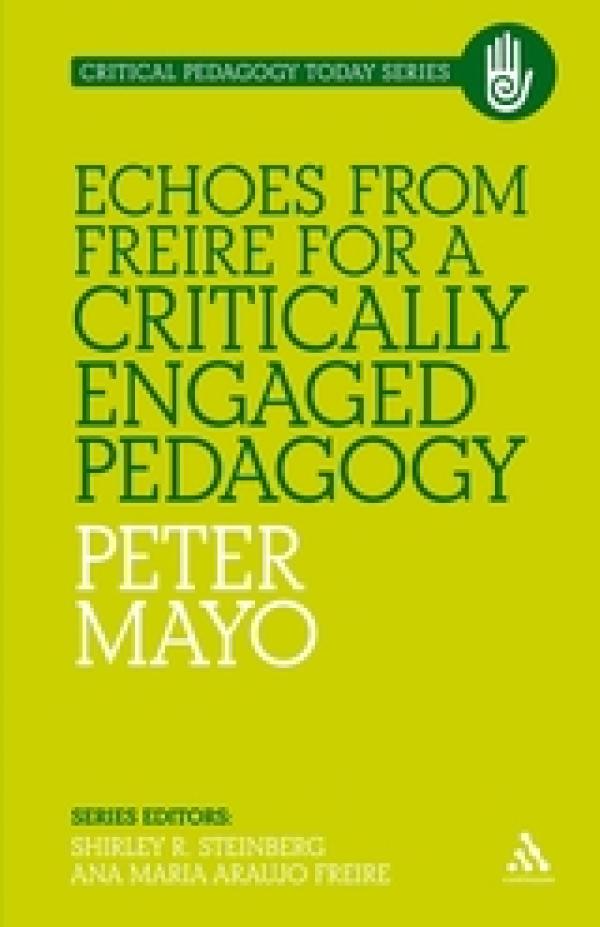
Whose side are we on when we teach (4)? Theological education and religious studies have sometimes been the type of elitist, domesticating education that Paulo Freire warned against – education that supported colonial powers. Peter Mayo’s book is not written specifically for teachers in seminaries or religious studies, but it offers both challenge and resources for profound reflection on issues of the politics of knowledge relevant to all theological and religious work. Mayo calls educators to move toward social justice and revitalization of the public sphere in ways reminiscent of Freire. Through Mayo, readers find companions in liberating movements for an authentically dialogical approach to education. What’s more, Mayo offers encouragement through his awareness of the movements of “globalization from below,” insisting on integration of theory and practice for substantive democracy. First, Mayo poses pedagogical and philosophical questions situating Freire’s contribution in the tradition of John Dewey’s “education for democracy” (36). Readers must consider Mayo’s judicious acknowledgement of both the excesses and contributions of socialism, Marxism, and Neo-Marxist thought. Furthermore, readers are challenged to consider ways their pedagogy approaches knowledge as dynamic rather than static (92). Next, Mayo explores common ground for potential partnerships rooted in shared work and theory. Postcolonial, peace activist, anti-racism, neo-Marxist, liberation feminist, and other emancipatory educators will find companions in this call to confront the spread of hegemonic global capitalism. Like an invitation to a remarkable symposium, the gift in Mayo’s book is an introduction to the work of key figures who echo Freire including: Lorenzo Milani, Margaret Ledwith, Julius Nyerere, Paula Allman, Antonia Darder, and Henry Giroux. Each of these thinkers invites study in their own diverse contexts. Mayo points out common threads of shared praxis and analysis in their work providing directions for further study and unifying a growing movement. In this way, Mayo’s book offers encouragement for those engaged in critical, emancipatory work. Despite evidence of increasing militarism and corporate encroachment on daily life, the reader finds sustaining encouragement in growing global movements for social transformation. We are encouraged by robust manifestations of Freire’s influence that extend from Brazil around the world, in places including: Malta, Italy, California, Nottingham, England, Rhode Island, and Tanzania. Mayo illustrates local educators/actors confronting corporate globalization while at the same time weaving together transnational networks of support. Educators in theology and religious studies will find rich resources for pedagogy that is both critical and emancipatory in this volume. The breadth of voices included and the depth of Mayo’s familiarity with Freire’s ethos and writing spark new dialogue for transformational teaching. Although this book could be accused of being overly ideological, those making such an accusation could be called to examine their own political commitments for complicity with systems of injustice. If teachers were true to Freire’s vision, we would be in conversation with each other across borders and cultural contexts. Mayo both models and invites us to join that work uniting reflection and action. Problems of xenophobia, racism, and cultural accommodation persist in theological education and religious studies as well as other forms of higher education. Educators interested in political mobilization, community development, and liberating praxis will find Mayo posing key problems in transformative ways.
Kate Blanchard Last Wednesday most of us opened our cyber-devices to a feed full of news about three young Muslim students in North Carolina who were murdered at home by a gun-toting white neighbor, apparently acting in defense of some...
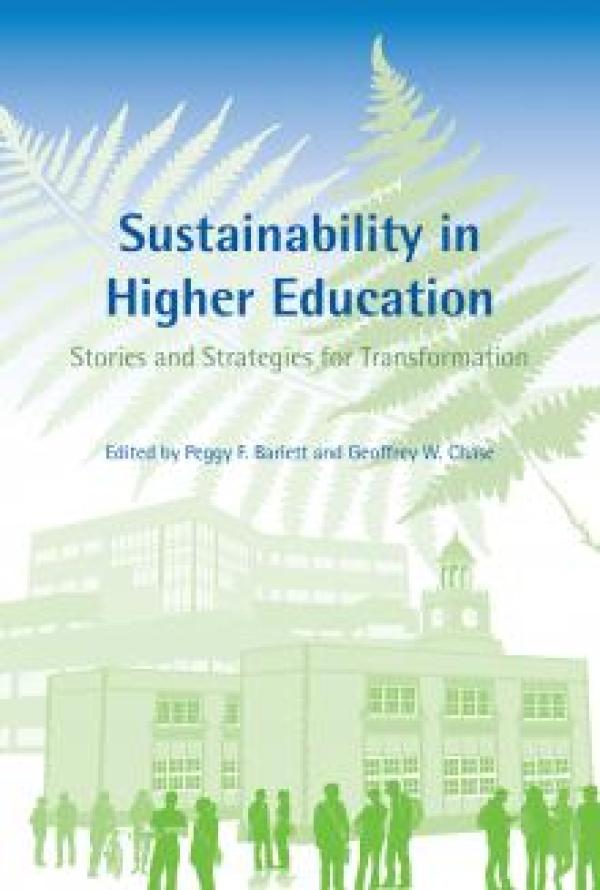
At the risk of sounding trite – this is a good book and is well worth spending some serious time engaging. I approached it with a certain amount of skepticism, but was rapidly converted to the sensibility and obligation of sustainability within the context of higher education. The authors clearly demonstrate that there are a number of ways to approach the challenge, offering practical insight for taking up the task. The book is divided into six sections, with four articles in each: Leadership and Commitment, Curricular Transformation, Defining the Paradigm for Change, Institutional Mission and the Culture of Sustainability, Accountability, and Professional and Personal Transformation. The authors approach the topic of sustainability from a number of angles and situations. They represent the range of higher education, from the community college to the major research university, both state and private. A careful reading will provide insight into how sustainability can be introduced into the maintenance of physical plants, curricula, teaching practice, and campus life and community. Most importantly, and this is a subtext woven throughout the book, there are multiple, practical descriptions of how a culture of sustainability can be established. Tactics for funding the movement to sustainability are also presented in a number of the narratives. The section on Accountability was one of the more engaging; if the task of creating a sustainable campus and culture is to be achieved there must be ongoing accountability, at every level. The first chapter, Sustainability Strategic Planning: Establishing Accountability in a World of Distractions (18), by Julie Newman of Yale, describes how “raising the bar” for sustainability was achieved at a large, prestigious and very diverse educational institution. As she puts it, “The course of action from vision to implementation calls for walking a fine line between enabling a creative process of continuous improvement over the long term while setting and achieving incremental, measureable, and impactful goal along the way” (221). Newman’s description of the walk to accountability could easily fit most educational institutions. Sustainability in Higher Education issues an unwritten challenge to those engaged in religious and theological education. There are no theological schools included in the book. While there is a description of Spelman University’s development of a “wellness program” as one of the ways to sustainability, there is no mention of a spiritual component. Santa Clara University’s Jesuit president, Michael Engh, is cited calling for a more just and sustainable world and for ethical implications being explored, but there is no direct appeal to theological method or thought. In the chapter Living the Questions (22), only two paragraphs were devoted to whether or not spiritual traditions could be engaged (268-9). The vision of creation in Genesis, and the hopefulness God has in it, as witnessed in the Incarnation, might also provide justification for developing cultures of sustainability. Theological educators should consider the challenge, and explore how faith contributes to a culture of sustainability. This is a good book that prods us to think along those lines.
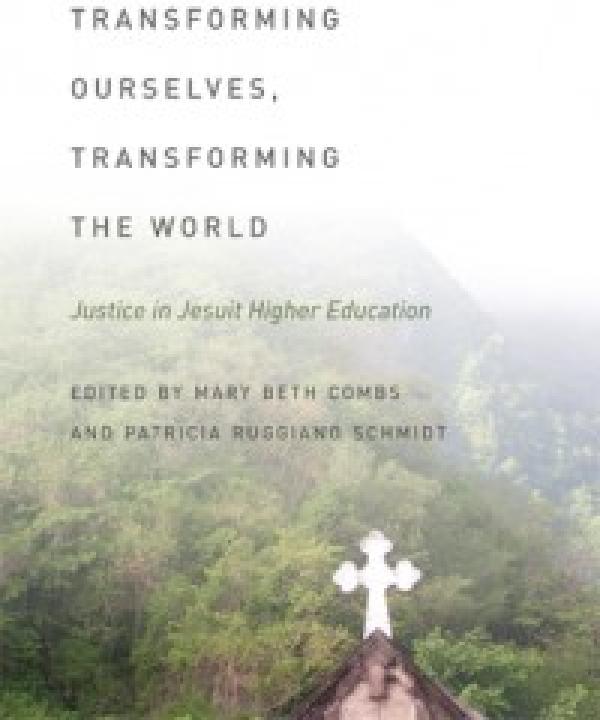
In 2000, Fr. Peter-Hans Kolvenbach, then Superior General of the Society of Jesus, delivered a landmark address entitled “The Service of Faith and the Promotion of Justice in American Jesuit Higher Education.” In it, he raises the question, what is the “whole person” that Jesuit institutions seek to educate? His answer: “Tomorrow’s ‘whole person’ cannot be whole without an educated awareness of society and culture with which to contribute socially, generously, in the real world… [Students] should learn to perceive, think, judge, and act for the rights of others, especially the disadvantaged and the oppressed” (11). Spurred on by the sentiments expressed by Fr. Kolvenbach and others, faculty and administrators at Jesuit universities across the nation have developed a remarkable array of responses to the call for justice in education. The task of Mary Beth Combs and Patricia Ruggiano Schmidt’s edited volume was to gather many of those who have been responsible for the progress in justice education made in Jesuit institutions in the last decade and a half, highlight their work, and give them a platform from which to share what they have learned in the process about effectively educating for justice. They have succeeded admirably. The first two sections feature ways in which faculty evoke in their students the kind of solidarity with the oppressed and marginalized from which the work of justice springs. Readers of this journal will find particularly evocative and potentially useful Carol Kelly and Christopher Pramuk’s use of the arts, particularly music, to open students’ minds to appreciating how the world looks from the perspective of the poor and neglected among us. Many of the essays focus on various kinds of “academic immersion.” These range from something as simple as incorporating a strategic service learning component into a class, to summer courses abroad where advanced students work to help a population in need, to a full semester living and learning among some of the world’s poorest inhabitants. Another theme addressed in several essays is curricular change at the department or college level. This is perhaps a more daunting task, as it requires the cooperation of faculty and administrators. But there is also an opportunity here for departments of religion, in our often secularizing institutions, to perhaps discover a new means of making the content of our discipline more relevant to the practical concerns of our students and the world outside our classroom. The third section contains a number of reflections on establishing more justice-centered institutional modi operandi. These will interest faculty concerned with shaping campus culture outside their own classroom. On occasion, the authors press their conclusions about what “works” beyond the warrant of their limited experiences. Nevertheless, this book remains an excellent source of inspiration and ideas for bringing students into contact with “the gritty reality of this world” (11), so that they not only learn the content of their discipline, but also begin to discover possibilities for its meaningful application in the service of justice. I highly recommend it as a starting place for thinking about how to make any course or program in religion a more transformative, justice-centered endeavor.
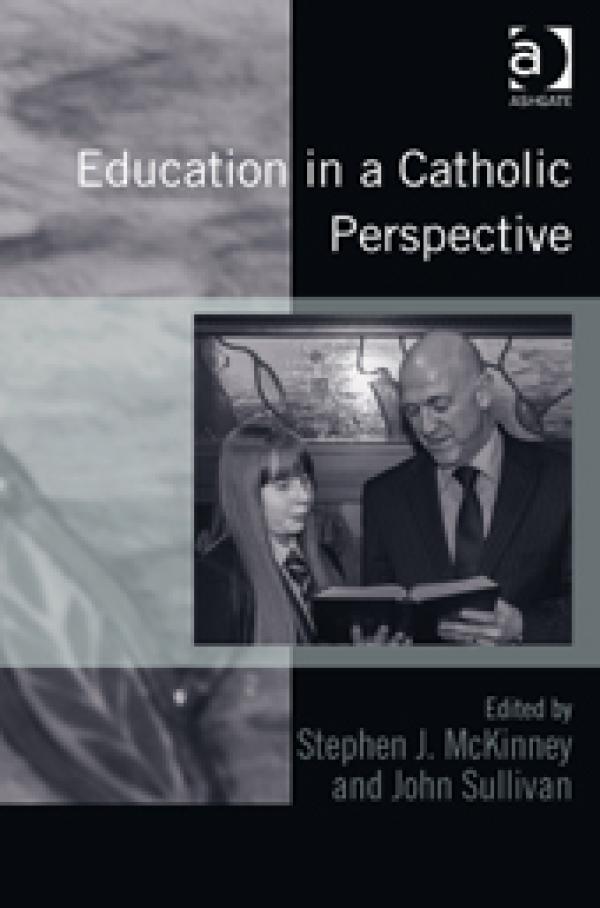
Higher education is in a state of flux amidst a cache of challenges that might be cast as a new set of unanticipated three R’s: recruitment, retention, and reserves. As college administrators strategize for the future, the shifting demographics in traditionally student-rich areas and the overall decreased pool of potential students because of birth rate trends will make sustaining college operations increasingly difficult. The challenge is more acute for private colleges and universities, whose sticker price tends to be substantially more than those of public institutions. It is perhaps even more poignant for Catholic institutions of higher learning that educate students in a particular religious environment. No two Catholic schools are the same and most wrestle with what it means to be Catholic. Some institutions boldly proclaim strong Catholic identity while others loosely reference their Catholic tradition or grounding. The number of students, faculty, and administrators on campuses self-identifying as Catholic complemented by the frequency of Catholic activities and choice of campus speakers have tended to serve as the metric for determining “how Catholic” an institution is. The first measure is reasonable. Without a critical mass of Catholic students, a Catholic school risks losing its identity. What precise percentage of Catholic students is needed for an institution to call itself Catholic, however, remains unsettled, but the ongoing admission of non-Catholic students merely to sustain rolls cannot bode well for the future of Catholic schools. As an example of the second metric, Notre Dame in South Bend, Indiana, often recognized as “the” Catholic university in the United States, received a maelstrom of criticism when it invited President Barack Obama to give its 2009 commencement address. Its detractors believed engaging an individual who holds views contrary to the Catholic faith lessens the Catholicity of the school. In Education in a Catholic Perspective, Stephen J. McKinney from the University of Glasgow, U.K., and John Sullivan from Liverpool Hope University, U.K., recognize that the identity of Catholic schools is at stake. They state that “there is an increasing distance between Catholic education, in its many forms, and the rich intellectual heritage of the Catholic Church” (3). Rather than engaging in a polemic against post-modern neoliberal ideas that can threaten the preservation of Catholic identity, their text seeks to retrieve the philosophical and theological roots of Catholic education. The book is divided into five parts. In the first section, the “Introduction,” two chapters written by Stephen J. McKinney orient the reader to the overall thrust of the text. McKinney’s first describes “education” in the Western world and then moves onto to discussing “Catholic education” using post-Vatican II teachings of the Catholic Church. McKinney admits the ongoing challenges Catholic education faces as it moves forward amidst the steady barrage of criticisms including charges of proselytizing and of being elitist and anachronistic. His assessment is honest and builds on critical scholarship in this area. The second part, “Theological Foundations,” consists of three articles that shore up the religious supports of Catholic education. John Sullivan writes on the import of St. Augustine and Maurice Blondel to Christian education. Vivian Boland considers Thomas Aquinas’s contribution to Catholic education through his understanding of transcendental properties of truth, goodness, beauty, and integrity. Clare Watkins considers revelation, scripture, and truth vis-à-vis truth in its beauty and love in its tenderness as formidable underpinning for Catholic education. In Part III, “Theology and Education,” Stephen McKinney and Robert Hill propose Jesus as a Teacher and reading the gospel from new perspectives to inform learning and teaching. David Torevell writes on epiphany, worship, and the contemplative body in Catholic education suggesting inward silence and embodiment as a distinctive import from Catholic tradition for education. David Evans demonstrates that the intersection of faith and reason is the “route to wisdom” and a holistic appreciation of education. Clare Watkins examines the role of conscience formation in education and teachers’ critical responsibility in fostering that in their students as well as in their own search for God. The fourth part of the text considers “The Ecclesial and Social Dimension” of Catholic education. In the first two articles of this section, John Sullivan considers the tension between the individual and institution and then moves to discuss the Church and the World. Sullivan refrains from an “over and against” attitude of Catholic education towards society. Sullivan proposes a participative engagement model in service of the world for all involved in the project of Catholic education. Christine Forde concludes this section by considering “the troublesome concept of ‘gender’” and offering challenges from feminist theology. Forde’s work here can serve as a prelude to further discussion about other disquieting contemporary moral issues such as medical coverage, homosexuality, divorce and remarriage, and investment policies, to name a few. The concluding fifth part, “Mission into Practice,” considers how to make the proposals in the text a sustainable reality. Kevin Williams suggests the development of a “Catholic” curriculum that incorporates specific teaching and learning goals. William’s piece seems out of place with the rest of the rather conciliatory text, but perhaps further development of his work is needed to fully appreciate his suggestions. Finally, John Sullivan and Stephen McKinney explore practical implications of strengthening the internal core of Catholic education in an effort to make it a viable educational option for the future. As Catholic school leaders strive to understand their institution’s Catholic identity, they would be wise to reference this text. Students of philosophy and theology will also find this book of interest in relation to their respective fields of study. It could be useful for educational specialists seeking to understand Catholic education. The book provides a rich critical assessment of some of the major thinkers in the history of Catholic education and their import for today. It includes a resource-rich bibliography and a detailed index. Leaders concerned with the future of Catholic education have to pay sharp attention to the externals that challenge institutional growth. However, what McKinney and Sullivan have assembled here offers another no less important and, perhaps, even more critical investigation into how to chart the future of Catholic education in a more meaningful way.
Eric D. Barreto Ferguson is revelatory. “I wanted to comment on the tragic rift that we’re witnessing,” Bob Staake says about his cover for the December 8th issue of The New Yorker, arriving next week. “I lived in St. Louis for seventeen years before moving to Massachusetts, so watching the...