Resources
Mindful Teaching and Learning challenges educators to be attentive to their own self-knowledge and location in the classroom. Emphasizing a transdisciplinary approach, the authors articulate the value and effectiveness of mindfulness-based practices and the possible benefits for pedagogy and curriculum. The editor contends, “The content of this book examines ways in which to develop habits of mind, courses of action, as well as a curriculum of study that would support educators as they cultivate competencies for thriving and coping with the modern demands of being a teacher” (viii). The first three chapters draw on evidence-based research to argue for the value and effectiveness of mindfulness-based practices. Elizabeth R. Mackenzie assesses previous research across disciplines in order to craft a compelling foundation for the need for and benefits of mindfulness training for students and educators. Karen Ragoonaden draws on Eastern contemplative practices, indigenous wisdom, and mindfulness to demonstrate the positive impact of mindful practices on one’s personal and professional life. Through her self-study, Ragoonaden reveals the impact of mindfulness on educators and students. Kathryn Byrnes and Tom Bassarear provide pedagogical techniques to demonstrate the effectiveness of contemplative pedagogy. They discuss techniques that arise from their own contemplative practices and urge readers to similarly engage practices to be meaningfully incorporated into class sessions. The second portion of the book considers the implementation of mindfulness-based practices in leadership, curriculum, and field experiences. Sabre Cherkowski, Kelly Hanson, and Jennifer Kelly consider leadership as informed by mindfulness. Drawing on their own experiences in educational research, in leadership in a school district, and in the classroom, the authors articulate mindful leadership as being rooted in knowledge of oneself, assisting others to live and work better, and being nurtured in relationship with colleagues. Geoffrey Soloway draws on his qualitative research on mindfulness-based wellness education programs to offer insight into curriculum design and implementation. Significantly, he offers suggestions for how to assist students in drawing connections between mindfulness and their own lives. Margaret Macintyre Latta examines field experience for prospective teachers as an opportunity to attend to the relation between theory and practice in curriculum and to implement mindfulness in the classroom. Overall, the authors contribute to wider discussions in pedagogy as they question the goals of education and emphasize a holistic approach to the individual and learning in contrast to a dominant emphasis on content. Mindful Teaching and Learning challenges faculty to focus on the learning evident in the present moment. The chapters draw on a wide range of research and methodologies (self-studies and qualitative research). In particular the use of self-studies by several of the authors and reflections by educators on their own use of mindfulness encourage the reader to reflect on his or her own practices and the possible impact of mindfulness on an individual’s personal and professional life, pedagogy, and students.

Nancy Lynne Westfield Associate Professor of Religious Education Drew Theological School It is a challenge to do what you teach. “If you know these things happy are ye if you do them.” (John 13:17, King James Version – or the version of my childhood bible study) - my grandfather’s favorite.
This is a book about teachers and not about teaching. Furthermore, it is a book about data on mass populations of teachers in higher education from ten different countries ungarnished by local anecdote or illustrative portraits of a faculty person in real working conditions. The reason this book is worth paying attention to in this forum is that it shines a comparative light on the perils and possibilities that face new entrants into the academic field – some of whom will be your colleagues. Or rather, because this book is of more interest as a reference for hiring committees and deans, it tells you of the challenges your candidate has faced to reach your attention in the first place. That is if you are open to exploring how to move from even national inbreeding to internationalization of faculty recruitment. We find here the results of a ten country participative research program into the realities of career preparation, openings and market transparency, prospects and permanence, of the academic life, individually presented and analyzed and then cumulatively assessed by the editors in the final chapter. The countries are Brazil, China, France, Germany, India, Norway, Portugal, Russia, South Africa, and the U.S. There is of course a vast difference in contexts – from massive increase of student demand and a dearth of faculty, to a tedious and precarious shuffle of young faculty into middle age before a realistic prospect of career stability and something coming close to middle class lifestyle. (This latter is an unquestioned normative standard even as it is evident that the status of the academic profession in many societies is falling.) A number of thematic emphases emerge throughout the chapters, specifically the impact of hiring practices and terms of employment on female faculty, the difficulty of inbreeding and the social burden of academic networking, as well as more common experiences of young faculty such as heavy teaching load and administrative obligations with less time for research. It is agreed that contract and temporary employment with attendant uncertainty is the newest but also most detrimental aspect of current higher education. Some gems, of course, emerge from the textual detail. Male professors can get paid more in India after undergoing a vasectomy, a PhD will get male students out of military service cheaply enough in Russia, females are in the majority of doctoral students in Portugal. As a foreign born and trained academic teaching abroad, and given the international prospectus of the book, I shall concentrate a few remarks on the international (and not just national) data. Norway is concerned that too much of its government investment in doctoral work funds foreign born scholars, Portugal experiences a brain gain and often requires doctoral students to have international experience, France is relatively closed as a system, whereas South Africa welcomes PhDs from abroad in large number. Interestingly the chapter devoted to the US paid no attention to its cohort of international faculty. Perhaps this is so because international faculty are imagined to be ubiquitous, but alongside collegial anxiety about brain drain from abroad this disregard of the good or otherwise of international recruitment was noteworthy. India and Brazil have fewer foreign imports but radical differences in conditions for young faculty in public (better) or private (worse) sectors. India has a massive teacher shortage whereas the EU experiences long waits for civil servant professors to retire, and in the US there is not even a retirement age. If teaching religion is to benefit from an international perspective, as I believe it does, it is going to mean pursuing scholars from very different educational settings and looking (for US job searches) beyond easily accessible US-based guild networks. (I leave to others the judgment, case by case, as to whether US-trained international scholars are as international as those trained abroad.) It will mean understanding different pressures faced by potential job candidates from other countries. This book is a great resource for this purpose. Its data may also facilitate the comprehension of institutional pressures that affect the success or otherwise of international scholarly networks and projects as faculty from one country interact with faculty from another. I think of my current project with colleagues from Brazil where the broad data of Elizabeth Balbachevsky's chapter contextualizes what I have picked up in conversation.
The authors of 147 Practical Tips for Emerging Scholars describe their work as offering much “to initiate or advance your success as a scholar, and nothing to lose as you invest a short time to read it” (22). This is a bold claim for a slender volume. However, this clear, honest, unpretentious work lives up to that promise. Authors Kathleen King and Ann Cranston-Gingras identify a key problem with the structure of academia: Those who seek to engage with it too often find themselves without guidance: the professional lives of doctoral faculty, new faculty, and experienced faculty (the three groups the book addresses) are often unsupervised and lack critical guidance for developing and establishing professional reputations, maintaining schedules, pursuing tenure, and avoiding mistakes. Guidance for making good professional decisions is what 147 Practical Tips seeks to provide. The key word which characterizes these tips is “practical”; the tips range from advice about scheduling to reminders to spell-check all correspondence. Some of the tips are about personal development; the authors focus not just on writing, but writing well, learning to vary styles and approaches. Others concern etiquette, with the dos and don’ts of collaborating with peers and contacting publication editors. The final section encourages scholars to apply this knowledge in the service of other emerging scholars, becoming the mentors to students and colleagues we wish we had had. Throughout, there is the acknowledgment that not all of the tips are relevant to all persons at all times; instead, King and Cranston-Gingras intend this to be a re-read resource, to be returned to as often as necessary. Though both authors work in education departments, the tips are meant to be applicable across disciplines – which is one of the book’s unfortunate weaknesses, as most tips are by necessity wholly unspecific. In addition, the section on technology already feels a touch outdated, as though it were targeted to an older audience, one which could use reminders that Dropbox can facilitate collaboration and all-caps text reads like shouting. For a short, cross-discipline guidebook, however, this book provides a significant amount of helpful hints and general guidance. Even in its limited scope, it encourages readers to take the extra steps they need to learn about publications, trends, and significant works inside their own disciplines, and then to apply the information here as necessary. The advice is often simple but rarely simplistic; even the most basic suggestions are good reminders of things too easy to forget in what can be chaotic pursuits. An emerging scholar myself, I would recommend this book to others on the path to establishing academic careers, and I expect to find myself opening it again.

Tat-siong Benny Liew Class of 1956 Professor in New Testament Studies College of the Holy Cross [O]ne thing above all—to step to one side, to leave … spare moments, to grow silent, to become slow—the leisurely art of the goldsmith applied to language: an art which must carry out slow

Non-academics who pick up Julie Schumacher’s epistolary novel Dear Committee Members might assume that they are encountering a parody of academic life. Schumacher’s academic readers, however, will wonder whether she sneaked into their own inboxes and printed the choicest items. The novel consists of letters penned by Jason Fitger, a disenchanted and mediocre professor of creative writing and literature in the underfunded English department of Payne University, a less-than-top-tier teaching college. Through his correspondence, Fitger both details and demonstrates most of the mundane (but annoying) challenges and bad behavior of academic life. Fitger writes letters of reference for students he cannot remember, students he can remember all too well for their lackluster performance, and spectacular students whose career choices are dramatically below (their professor’s assessment of) their capabilities. His frustration at having to write letters is made worse by the combination of technology and bureaucracy that has come to characterize online letters of recommendation – Fitger is out of patience with online form submissions, whose character limits will not let him expound as he sees fit and that log him off or cut him off mid word. He often opts instead to send a letter by mail, certain that the institution will, of course, accept a letter postmarked (rather than electronically submitted) on the due date. Fitger’s letters chronicle what are now tropes in the writing about academia – for instance, the crumbling but inhabited humanities building, though in Dear Committee Members the insult is compounded because, as Fitger’s exasperated letters detail, not only are the English department’s digs shabby by comparison to the social sciences, but are being made worse through constant construction as the floor above is renovated for the Economics department. Throughout these letters one gets a sense of the failures of Fitger’s own life. It becomes clear, for instance, that within the administration are both his ex-wife and the (now ex-) lover for whom he left her, and his letters to each intertwine their personal histories with campus politics. Similarly, letters to graduate school friends in the world of creative writing mix advocacy for students with hints of relationships between those successful or not and laments for Fitger’s own squandered promise. While in no way derivative, Dear Committee Members joins the ranks of academic novels such as Moo, Straight Man, and Wonder Boys. Schumacher, herself a professor of creative writing and literature, knows what she is talking about, and she deploys humor to excellent effect, waltzing the reader through an at best underwhelming professor's correspondence, revealing much along the way about the personalities and practices of Fitger and his fellow academics.
As an African American female associate professor in religious studies, I heard my voice and I felt heard as I read many of the essays in this book. It is intentionally intersectional, addressing race and ethnicity (and to some degree sexual preference) as well as gender. The editors and authors are scholars and administrators in the field of sociology, generally. With this book they interrupt the culture of silence in higher education, which remains the gendered domain of white males where women continue to experience inequality. Case studies, personal narratives and experiences, qualitative (interviews) and quantitative research raise readers’ consciousness about oppressive structures and cultures that impact women in academe. Women have made gains in the academy in terms of their increased presence, but major challenges remain. In this sourcebook each essay builds on existing research and offers suggestions for changing oppressive structures and cultures. The book is divided into five parts, each ending with a case study, and each chapter includes a list of resources. The final chapter offers models for engendering change. The book was born among scholars concerned with bringing together service, scholarship, and activism. While much is said about women faculty in general, a number of essays focus on nonwhite women and specifically black women as the “double minority” in the academy. They are less likely to be mentored, promoted to full professor, granted tenure, and more likely to leave the academy. Part One addresses problematic structures, such as exclusionary practices (lower wages and less upward promotions) that require faculty action to address. Also significant are the horizontal impediments to shattering the glass ceiling and not just the vertical ones (increasing numbers of women). Another example is the uneven, inequitable service burden placed on women and the accompanying fairy tale advice to ‘Just say no to service,’ which only “exacerbates gender-blind sexism in academia.” In the latter case the author suggests that institutions “just don’t ask” unless they are prepared to acknowledge and reward women’s service labor. Part Two discusses the dissonance between structures and cultures. Often structures like institutional quotas and commitments to diversity work in favor of women’s presence, but institutional cultures are resistant, hostile, violent, and unhelpful. Part Three addresses exclusionary cultures, including those that protect disciplinary canons, perpetuate the white male as the “ideal professor,” and value problem portable over problem-based research, which devalue women and the interdisciplinary work of nonwhite women. Part Four discusses “chilly climates,” “contrapower harassment,” incivility, microaggressions, and mobbing that are pervasive and often unchecked. These behaviors have greater negative impact on women with consequences for their physical and emotional well-being and job productivity. One author suggests that women of color consider a “trauma-to-transformation” model that involves redefining self, brain detoxification, sense-making, and reconfiguring the social reality. I highly recommend this book to institutions that value diversity (without which academic excellence does not exist) and desire to create a healthy, productive environment for a truly diverse and representative faculty and administration. I also recommend it for female and male faculty and administrators impacted by cultures of silence and who are interested in disrupting and dismantling those cultures.

Molly Bassett Associate Professor of Religious Studies Georgia State University It’s week nine here and this is my seventh post for the Center’s blog on teaching. We’ve reached the point where I’d like to take you out for coffee and find out how it’s going. I’d love to hear about...
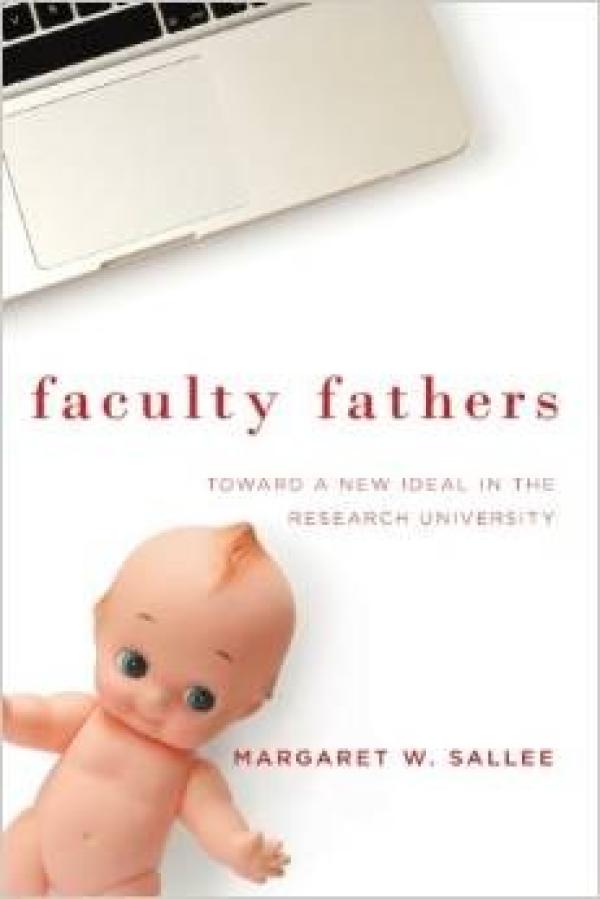
In this insightful project, Sallee examines a largely unexamined area of gender equity in North American higher education. Sallee provides a compelling case for why faculty work-life balance considerations ought to include male faculty on the tenure-track. In eight chapters, Sallee analyzes her study of seventy male faculty members across various ranks and disciplines in four public research institutions within the Association of American Universities: Eastern University, Mid-West University, Southern University, and Western University. The study included forty-six white faculty, five Latinos and Asians respectively, and fourteen faculty of unknown ethnicity. Regrettably, other faculty of color declined participation. Interviewees serve in humanities and social sciences, sciences and engineering, and in professional schools (such as medicine and business). The author claims that gender norms still prescribe work expectation and research universities in particular still prize the male worker as the ideal worker: she calls the phenomenon hegemonic masculinity in a gendered-university. This study suggests that male faculty have to choose between being an ideal worker or an ideal father – if they are or plan to be a parent. For this study, conscientious fatherhood inevitably shapes one’s scholarly engagement and thereby affects research productivity, quality of scholarship or depth of intellectual thought, and choice of a research project undertaken. An engaged father would have fewer uninterrupted blocks of time for research, thinking, and for formulating solutions to difficult problems. This study concludes that a faculty father would generally seek safer lines of inquiry, projects that are closer to home, or that require less travel and commitments. Consequently, male faculty -- particularly those from Generation X on the tenure track -- tend to lean more towards their family roles than towards becoming ideal scholar researchers. Male faculty generally experience professional pressure and may feel penalized when they prioritize family commitments over research, publication, grant applications, and teaching. If a male faculty member prioritizes work, the study finds that their family will likely suffer. Some universities may grant accommodation for work-life balance, such as extending the tenure-clock or releasing faculty from teaching duties. Nonetheless, male faculty, especially those whose spouses are working (be it full-time or part-time in academic or non-academic appointments) tend not to use these privileges for fear that higher administration or their colleagues would regard them as less serious professionals and academics. While not all male faculty interviewed felt this pressure or experienced being shortchanged, most perceived inequitable expectations. In light of her research, Sallee offers research universities policy proposals to catalyze change. She urges that universities set the standard and correct the entrenched, unhealthy culture of hegemonic masculinity and expectation in contemporary work-life tensions. I agree with Sallee. My question is how does the increasing trend of employing adjuncts complexify her inquiry, and what changes can higher education make to facilitate a healthy employment and education culture that genuinely benefits all stakeholders, not just in research universities but in most institutions of learning?
Nancy Lynne Westfield Associate Professor of Religious Education Drew Theological School Baby Suggs, holy, is an enslaved, woman in the novel Beloved, by Toni Morrison. In the passage cited below, Baby Suggs, holy is preaching in the woods on a Saturday afternoon. Baby Suggs, holy stands on a huge flat-sided.