Resources

This collection of essays by seventeen Generation X faculty members serving in various types of institutions and representing a range of disciplines, ranks, and roles aims to “demonstrate the personal issues, conflicts, and triumphs that are definitive of this generation” as they pertain to their academic careers. While some contributions are stronger than others, as a whole the book achieves its purpose through the insightful and honest author self-reflections. The first sentences of the opening chapter offer, “The truth is unbelieveable, not because it is untrue, but because no one wants to believe it. I am living proof.” The readers’ fear the whole book may sound like the all-too-familiar voice of a Gen Xer is quickly affirmed. The self-analysis of the first story flows into the next three installments and the reader may begin to wonder if the whole book is going to simply be a series of texts from a group of faculty who managed to gain a formal education but think life as a teacher ought to be different somehow. However, Andria J. Woodell’s recollection from a female white southern social psychologist’s perspective changes the tone of the book and is followed by primarily thoughtful reflections and analysis of personal choices and responsibility, within the realities of various institutional contexts. Most authors adeptly identify key factors in their personal journey, including educational background and aspirations, family dynamics, sexual orientation, or race, which impacted their experiences in academia. Following these observations they share information about specific institutional obstacles and supports they encountered along their respective journeys and how each responded to the interplay of these factors. David Prescott-Steed’s chapter, explaining how his PhD research project on “the abyss” metaphor became an intentional factor in his post-doctoral decisions personally and professionally, was entertaining, well-written, and an appropriate summary of a Gen Xer’s values encountering the challenges and triumphs of everyday life. Likewise, Kathleen and George Mollock’s perceptive essay on an academic couples’ journey in the higher education milieu, first as students and then as faculty, describes the choices they made and consequences of those choices, some anticipated, others unexpected. For most Gen X academics, this would be a beneficial read, even if they cannot identify with every individual story or institutional context. Likewise, for the late baby-boomer or early-Gen X administrator, it may provide helpful examples of understanding how the realities of academia are seen from different points of view. For either a faculty member or administrator in a faith-related institution, the narratives of individuals in these contexts also describe the unique challenges and approaches to these extra dimensions of academic life. As a whole, the book presents an appropriate and necessary diversity of experiences (race, gender, sexual orientation, discipline). While some chapters were stronger than others, it was a worthwhile book to read and would be a valuable addition to a post-secondary library.

Roger Nam This morning, I received an email concerning course schedule decisions for Spring 2016. It seemed so far away until I realized that it is already 2015. Unbelievably, seven years have passed since I finished my degree and entered my first full time appointment. For most of us, the...
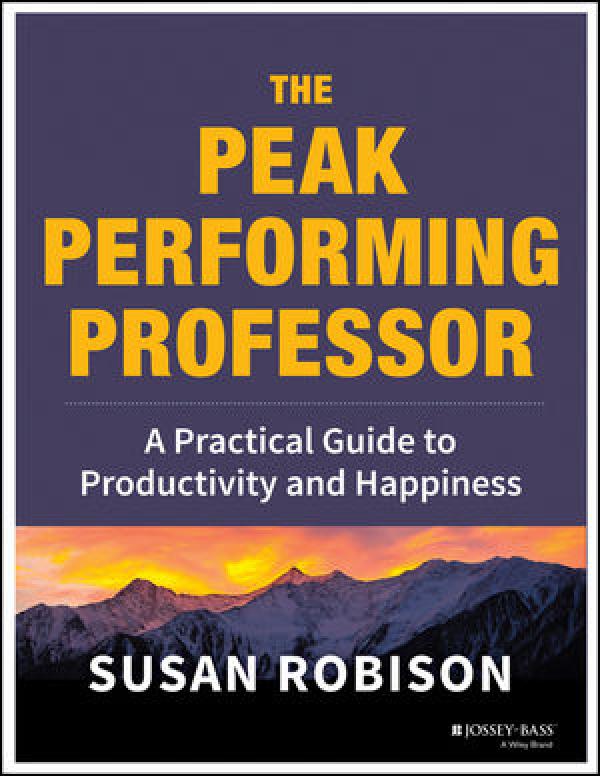
Today the question of how to manage the three dimensions of a professor’s work – teaching, writing, and institutional citizenship – in ways that are satisfying, sustainable, have integrity, and allow for other dimensions of “having a life,” is increasingly fraught. Multiple contextual factors contribute to this state of affairs, from economic conditions that result in fewer tenure-stream positions to demands for greater accountability and the questioning of the value of a baccalaureate degree. The contemporary situation creates uncertainty for faculty, most of whom have made significant investments to become professors. Uncertainty feeds anxiety that grows into distraction that saps energy and enjoyment in the work. This is bad for professors and for their universities. Enter Susan Robison, psychologist, former full professor, and faculty development expert. Hardly naïve about larger contextual factors impinging on the professorate, Robison offers a way forward: teaching faculty practices of self-regulation that “increase their own productivity and satisfaction in areas over which they have control” – their own lives and work (xv). Robison presumes that faculty become professors motivated by deep purposes to which they are committed. Purpose grounds aspirations and commitments. It anchors internal coherence to satisfying lives in which professors accomplish good work as teachers, scholars, and university citizens. From this basic assumption flows Robison’s framework: (1) capture the energy or “power” of one’s deep purpose and articulate that purpose and the mission, vision, and goals that flow from it; (2) establish priorities, organize projects, and cultivate work habits that align with purpose; (3) develop interpersonal skills and cultivate mutually supportive relationships; and, (4) engage in the self-care essential to long-term health. After explaining and providing both reflective exercises and concrete strategies for each element in the first four parts of the book, Robison applies her framework very explicitly to the roles that professors occupy – professor, teacher, scholar, servant leader, and human being – in part five. Her claim: when individual faculty “define productivity and happiness for themselves with a view to their own long-range success,” the results will benefit both faculty and institutions (11). Composed in a workbook format, readers can turn to the sections of the volume that most interest them, or read from beginning to end. The volume employs theories and strategies from a range of fields, selected, conceptualized and presented specifically for faculty. This is one of its strengths. It also has an extensive bibliography for those wishing to pursue a particular topic. Robison’s positive tone and direct, uncomplicated approach likely will lead some readers to dismiss The Peak Performing Professor as too simple, too normal. And the workbook format leads to some repetition. But for those trying to compose lives and careers, those looking to find a way to retrieve the lost pleasure of being a professor, and those charged with supporting others to do good work, this is a book worth reading
Kate Blanchard It's late January in Michigan and I'm in a certain mood. So here for your mid-winter schadenfreude are eight (click-baity) things I hate right now, in no particular order. Perhaps many of you can relate. Teaching requires me to dress like a grown-up. While I have male friends...
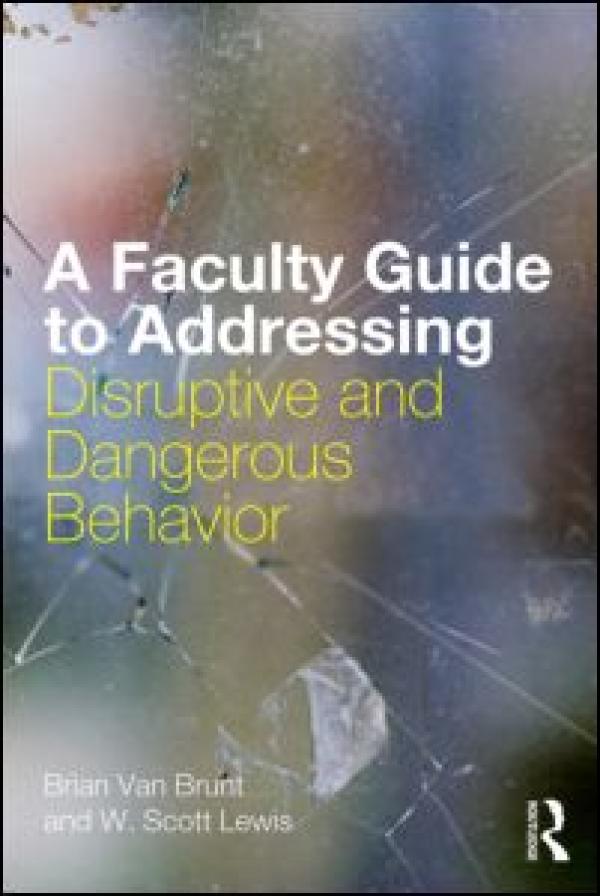
At some point in one’s teaching career, perhaps every teacher is confronted by disruptive behavior from a student that interferes with the processes of teaching and learning. Many faculty are challenged daily by common disruptive behaviors ranging from using social media during class to acts of physical and psychological aggression. On occasion, faculty find themselves afraid of a student, yet rarely do teachers receive training for these situations. Many assume a “do-it-yourself” mentality, believing it to be one’s sole responsibility to handle what happens within the classroom. At most, faculty may discuss it with departmental colleagues, but often fail to report disruptive student behaviors to appropriate university officials. It is precisely this approach that Brunt and Lewis discourage in A Faculty Guide to Addressing Disruptive and Dangerous Behavior. They encourage faculty at community colleges, technical schools, and four-year colleges and universities to expand their categories of what constitutes disruptive and potentially dangerous student behavior, to manage such behavior with both sensitivity and firmness, and to learn when and how to make use of institutional resources for dealing with student conduct problems. The book is immensely practical, drawing upon the authors’ expertise as a university counseling center director and a higher education risk management professional. The issues and techniques discussed in each chapter are illuminated by case studies contributed by faculty and administrators from a wide array of institutions. Each chapter also includes discussion questions that could guide important faculty dialogue around these issues. In part one, Brunt and Lewis operationalize dangerous and disruptive behaviors, teaching faculty how to identify signs of potentially dangerous behaviors and to conduct threat assessments. The authors challenge professors’ tendencies to dismiss, ignore, or take an overly punitive approach to disruptive behavior. Yet they also recognize that contextual factors shape whether a situation is viewed as a crisis and what strategies will be effective. They introduce terms and university resources that ought to be familiar to all faculty, but probably are not. How many teachers know whether their institution has a Behavioral Intervention Team, Risk Assessment Team, Student Conduct Office, or equivalent? More importantly, do faculty know when and how to contact them? Part two focuses on student populations who present a particular challenge. This is the least informative section of the book, as the material on each population is sparse, usually two pages or less. Further, the authors’ approach is confusing. In some cases they identify nontraditional student populations with physical and mental health problems, generational characteristics, or life circumstances that may impede their academic progress and thus predispose them to acting out in frustration: military veterans, international students, millennial and older students, and distance learning students. In other cases, however, they problematize groups whom they describe as likely to be victims of discrimination: African Americans and GLBTQ students. For example, their explanation of the micro-aggressions that African Americans may experience on campuses is commendable, but they regrettably frame the problem as being occasioned by the presence of African American students rather than by the cultural myopia of White students. In part three, Brunt and Lewis advise faculty not to “reinvent the wheel” but rather to take advantage of campus resources for assisting students. They begin with a helpful description of FERPA, HIPAA, and Title IX regulations, clearly outlining the limits of and exemptions to privacy laws that faculty often perceive as obstacles to discussing student issues with colleagues. They then discuss the various resources available to faculty and how to make use of them. In part four, they review ten “core concepts,” that is, characteristics and skills that will assist faculty in managing their classrooms, reducing the likelihood of dangerous and disruptive behavior, and handling it effectively when it occurs. I highly recommend this book for postsecondary faculty. This is a book that needs to be read, but also needs to be discussed with colleagues. Many faculty will find similarities between the scenarios described in the case studies and issues confronted in their teaching experience. As a licensed psychologist, I have usually felt confident in my capacity to address most student issues, but reading this text helped me to recognize occasions when I may have missed clear student distress signals. It has prompted me to investigate the resources available on my own campus.
Eric D. Barreto I love the holiday season, but I think I loved it more as a student than as a teacher. The Christmas season was usually a clear barrier, a distinct break. Finals were done. There was no more work to do. The weeks of Christmas and New Year’s...

It may seem premature to offer this blog at the beginning of an academic year, but the fact is most deans who are leaving office will have announced their departure from that role with a year's notice. If that's the...
New deans come into the office of Chief Academic Officer in varied ways. Some aspire to the work, others are called, some are pressed into service, and some poor souls are voted in during a missed Faculty meeting. While larger...

Grace Ji-Sun Kim, Associate Professor of Doctrinal Theology, Moravian Theological Seminary It was the second week of January, and I was alone with the three kids as my husband was off to sunny California on business. The first night he...
Debra J. Mumford, Frank H. Caldwell Associate Professor of Homiletics and Associate Dean for Student Academic Affairs, Louisville Presbyterian Theological Seminary. “Using Time.” What a curious phrase. At best, it is aspirational. At worst, it is a wee bit oxymoric....