Resources
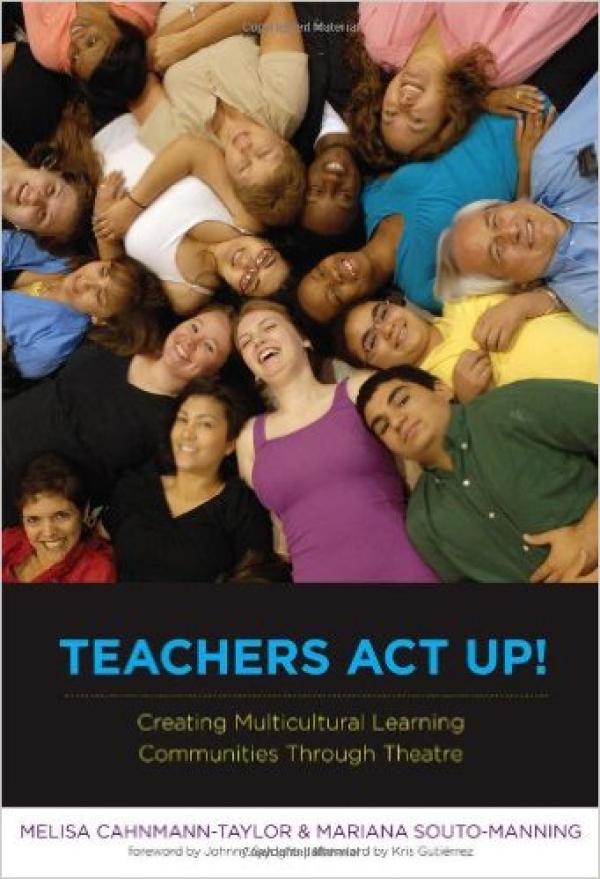
If teachers want to create positive change in the lives of their students, then they must first be able to create positive change in their own lives. This book describes a powerful professional development approach that merges the scholarship of critical pedagogy with the Theatre of the Oppressed. Participants “act up” in order to explore real-life scenarios and rehearse difficult conversations they are likely to have with colleagues, students, administrators, and parents. The authors have practiced the theatrical strategies presented here with pre- and in-service teachers in numerous contexts, including college courses, professional development seminars, and PreK–12 classrooms. They include step-by-step instructions and vivid photographs to help readers use these revolutionary theatre strategies in their own contexts for a truly unique learning experience. (From the Publisher)
This new revised edition of our bestselling book brings together the best, most up-to-date writing and resources on service-learning, from learning theory and pedagogy to practical guidance on how to implement service-learning in the classroom. This edition reflects the tremendous growth in service-learning that has occurred since the first Toolkit was published in 2000. In addition to updated material throughout, this volume includes expanded chapters on community partnerships, student development, and redesigning curriculum, as well as two new chapters—one exploring the connection between service-learning and civic engagement and the other focusing on community-based research. Revised and expanded recommended reading lists, broken down by topic, bring readers a wealth of print and online resources for further study. The Introduction to Service-Learning Toolkit is an essential resource for faculty and administrators who wish to be part of the growing movement toward civic engagement in higher education. (From the Publisher)
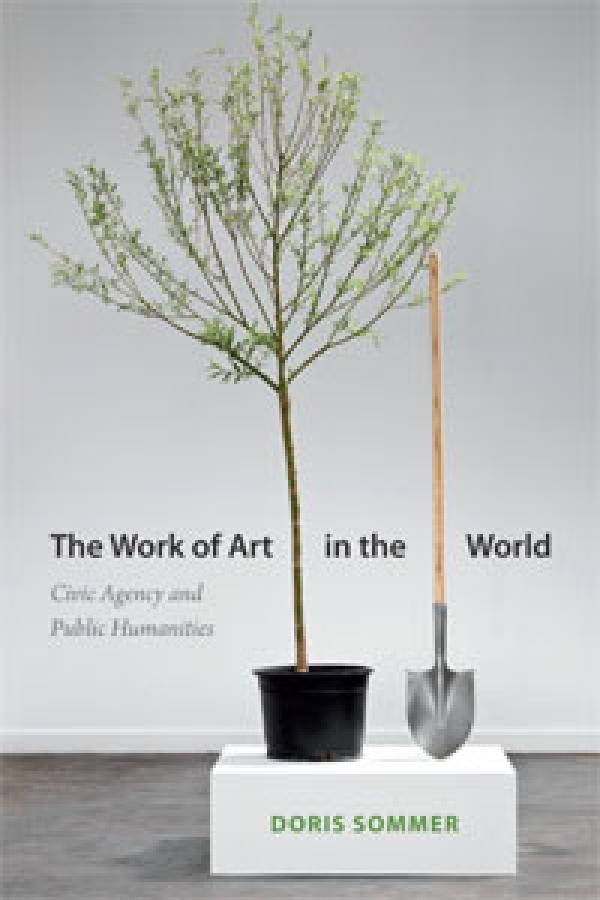
Celebrating art and interpretation that take on social challenges, Doris Sommer steers the humanities back to engagement with the world. The reformist projects that focus her attention develop momentum and meaning as they circulate through society to inspire faith in the possible. Among the cases that she covers are top-down initiatives of political leaders, such as those launched by Antanas Mockus, former mayor of Bogot√°, Colombia, and also bottom-up movements like the Theatre of the Oppressed created by the Brazilian director, writer, and educator Augusto Boal. Alleging that we are all cultural agents, Sommer also takes herself to task and creates Pre-Texts, an international arts-literacy project that translates high literary theory through popular creative practices. The Work of Art in the World is informed by many writers and theorists. Foremost among them is the eighteenth-century German poet and philosopher Friedrich Schiller, who remains an eloquent defender of art-making and humanistic interpretation in the construction of political freedom. Schiller's thinking runs throughout Sommer's modern-day call for citizens to collaborate in the endless co-creation of a more just and more beautiful world. (From the Publisher)
An interface between academic learning and civic engagement. The Initiative promotes the divergent thinking of arts and humanities in the service of solutions to real life problems.
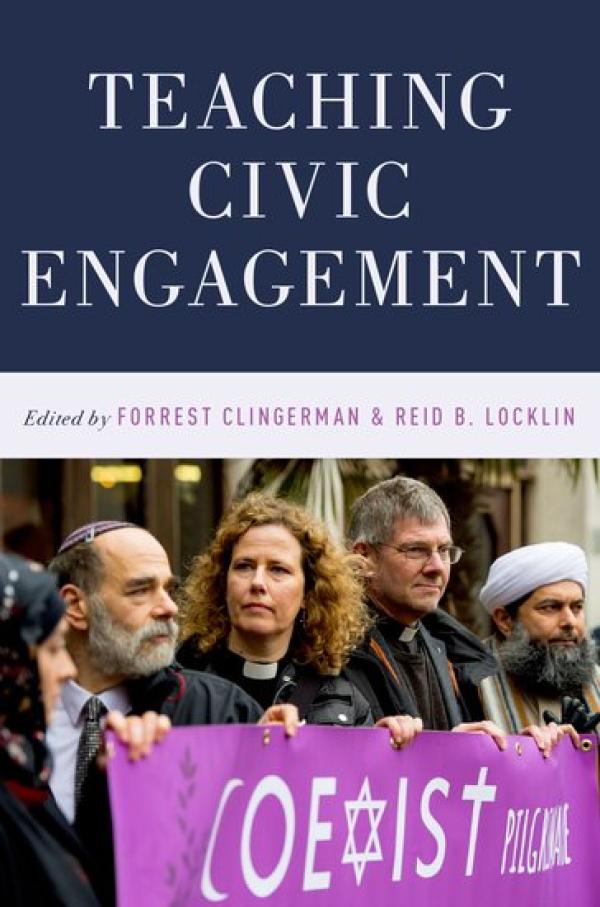
Click Here for Book Review Abstract: Using a new model focused on four core capacities-intellectual complexity, social location, empathetic accountability, and motivated action--Teaching Civic Engagement explores the significance of religious studies in fostering a vibrant, just, and democratic civic order. In the first section of the book, contributors detail this theoretical model and offer an initial application to the sources and methods that already define much teaching in the disciplines of religious studies and theology. A second section offers chapters focused on specific strategies for teaching civic engagement in religion classrooms, including traditional textual studies, reflective writing, community-based learning, field trips, media analysis, ethnographic methods, direct community engagement and a reflective practice of "ascetic withdrawal." The final section of the volume explores theoretical issues, including the delimitation of the "civic" as a category, connections between local and global in the civic project, the question of political advocacy in the classroom, and the role of normative commitments. Collectively these chapters illustrate the real possibility of connecting the scholarly study of religion with the societies in which we, our students, and our institutions exist. The contributing authors model new ways of engaging questions of civic belonging and social activism in the religion classroom, belying the stereotype of the ivory tower intellectual. (From the Publisher)
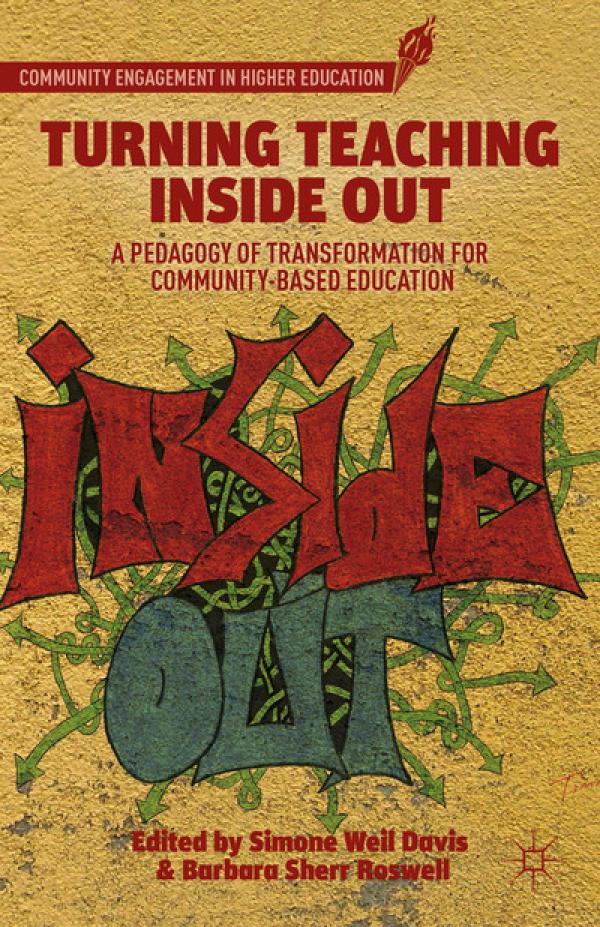
Click Here for Book Review Abstract: The Inside-Out Prison Exchange Program brings campus-enrolled and incarcerated students together as classmates in postsecondary courses built around dialogue, collaboration, and experiential learning. Contributors to this book consider the broader lessons that Inside-Out provides for community-based learning praxis, prison education and postsecondary teaching in general, both on campus and in community settings. An international network of practitioner-scholars probe the challenges and contradictions inherent in community-based work, but especially charged in the prison setting: the intersections of race, class and gender, and the tensions between teaching and activism, evaluation and advocacy, and compromise with and resistance to oppressive and dehumanizing systems. At a time when many in the Academy are seeking to deepen the impact of the community-based learning initiatives on their campuses, Turning Teaching Inside Out offers a model. (From the Publisher)
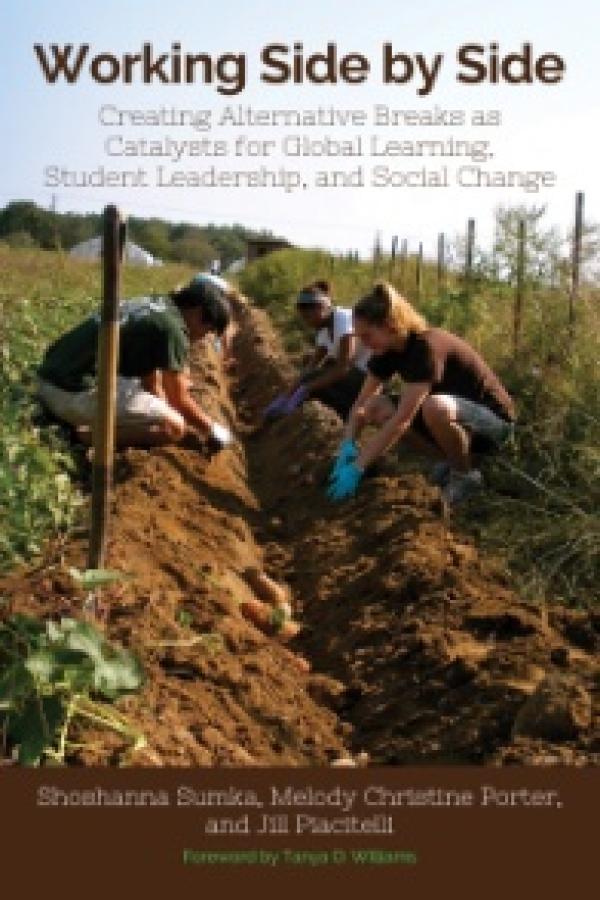
Click Here for Book Review Abstract: This book constitutes a guide for student and staff leaders in alternative break (and other community engagement, both domestic and international) programs, offering practical advice, outlining effective program components and practices, and presenting the underlying community engagement and global learning theory. Readers will gain practical skills for implementing each of the eight components of a quality alternative break program developed by Break Away, the national alternative break organization. The book advances the field of student-led alternative breaks by identifying the core components of successful programs that develop active citizens. It demonstrates how to address complex social issues, encourage structural analysis of societal inequities, foster volunteer transformation, and identify methods of work in mutually beneficial partnerships. It emphasizes the importance of integrating a justice-centered foundation throughout alternative break programs to complement direct service activities, and promotes long-term work for justice and student transformation by offering strategies for post-travel reorientation and continuing engagement. The authors address student leadership development, issue-focused education, questions of power, privilege, and diversity, and the challenges of working in reciprocal partnerships with community organizations. They offer guidance on fundraising, budget management, student recruitment, program structures, the nuts and bolts of planning a trip, risk management, health and safety, and assessment and evaluation. They address the complexities of international service-learning and developing partnerships with grassroots community groups, non-governmental and nonprofit organizations, and intermediary organizations. For new programs, this book provides a starting point and resource to return to with each stage of development. For established programs, it offers a theoretical framework to reflect on and renew practices for creating active citizens and working for justice. (From the Publisher)
Click Here for Book Review Abstract: Experiential Education in the College Context provides college and university faculty with pedagogical approaches that engage students and support high-impact learning. Organized around four essential categories—active learning, integrated learning, project-based learning, and community-based learning—this resource offers examples from across disciplines to illustrate principles and best practices for designing and implementing experiential curriculum in the college and university setting. Framed by theory, this book provides practical guidance on a range of experiential teaching and learning approaches, including internships, civic engagement, project-based research, service learning, game-based learning, and inquiry learning. At a time when rising tuition, consumer-driven models, and e-learning have challenged the idea of traditional liberal education, this book provides a compelling discussion of the purposes of higher education and the role experiential education plays in sustaining and broadening notions of democratic citizenship. (From the Publisher)
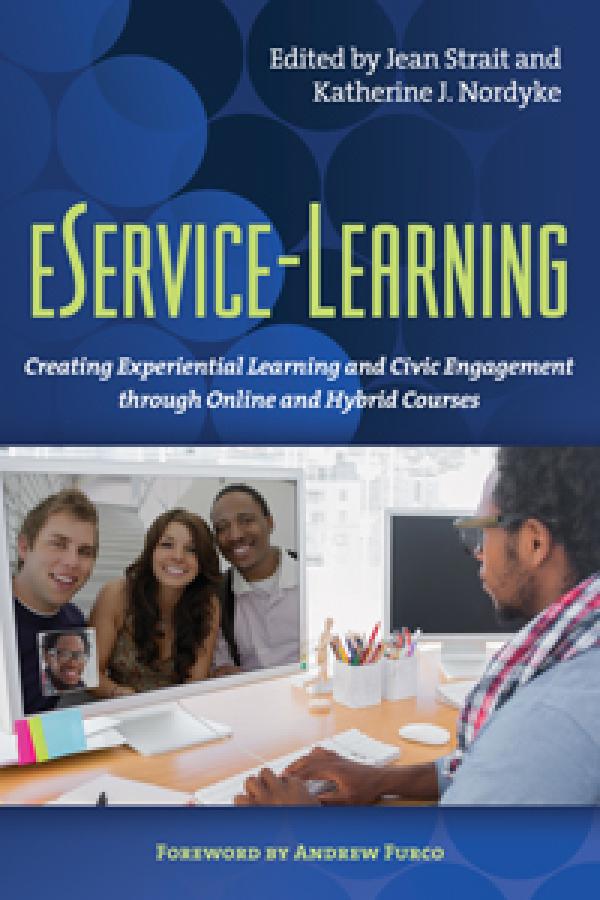
Click Here for Book Review Abstract: This book serves as an introduction to using online teaching technologies and hybrid forms of teaching for experiential learning and civic engagement. Service-learning has kept pace neither with the rapid growth in e-learning in all its forms nor with the reality that an increasing number of students are learning online without exposure to the benefits of this powerful pedagogy. Eservice-learning (electronic service-learning) combines service-learning and on-line learning and enables the delivery of the instruction and/or the service to occur partially or fully online. Eservice-learning allows students anywhere, regardless of geography, physical constraints, work schedule, or other access limitations, to experience service-learning. It reciprocally also equips online learning with a powerful tool for engaging students. In eservice-learning, the core components of service, learning, and reflection may take a different form due to the online medium—for example, reflection often occurs through discussion board interactions, journals, wikis, or blogs in an eservice-learning course. Moreover, the service, though still community-based, creates a world of opportunities to connect students with communities across the globe—as well as at their very own doorstep. This book introduces the reader to the four emerging types of eservice-learning, from Extreme EService-Learning (XE-SL) classes where 100% of the instruction and 100% of the service occur online, to three distinct forms of hybrid where either the service or the instruction are delivered wholly on-line – with students, for instance, providing online products for far-away community partners – or in which both are delivered on-site and online. It considers the instructional potential of common mobile technologies – phones, tablets and mobile reading devices. The authors also address potential limitations, such as technology challenges, difficulties sustaining three-way communication among the instructor, community partner, and students, and added workload. The book includes research studies on effectiveness as well as examples of practice such drafting grants for a community partner, an informational technology class building online communities for an autism group, and an online education class providing virtual mentoring to at-risk students in New Orleans from across the country. (From the Publisher)
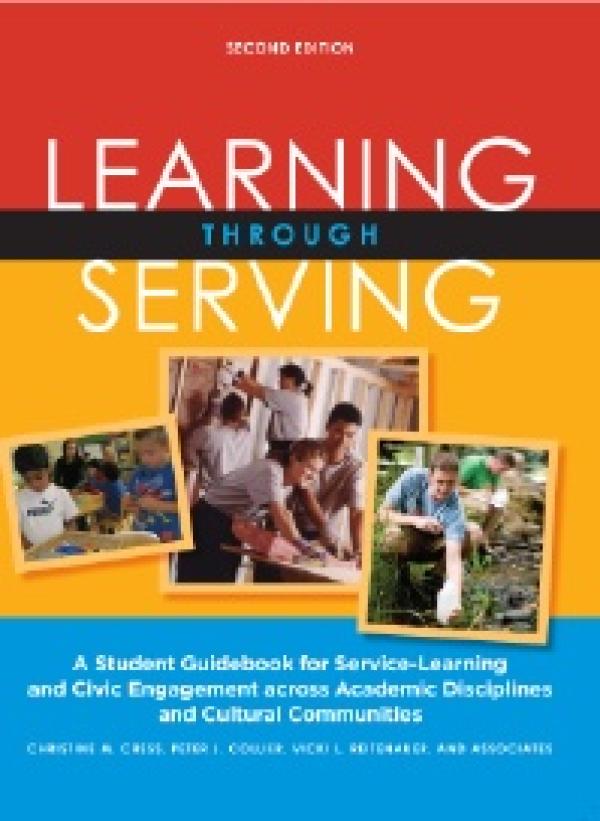
Click Here for Book Review Abstract: This substantially expanded new edition of this widely-used and acclaimed text maintains the objectives and tenets of the first. It is designed to help students understand and reflect on their community service experiences both as individuals and as citizens of communities in need of their compassionate expertise. It is designed to assist faculty in facilitating student development of compassionate expertise through the context of service in applying disciplinary knowledge to community issues and challenges. In sum, the book is about how to make academic sense of civic service in preparing for roles as future citizen leaders. Each chapter has been developed to be read and reviewed, in sequence, over the term of a service-learning course. Students in a semester course might read just one chapter each week, while those in a quarter-term course might need to read one to two chapters per week. The chapters are intentionally short, averaging 8 to 14 pages, so they do not interfere with other course content reading. This edition presents four new chapters on Mentoring, Leadership, Becoming a Change Agent, and Short-Term Immersive and Global Service-Learning experiences. The authors have also revised the original chapters to more fully address issues of social justice, privilege/power, diversity, intercultural communication, and technology; have added more disciplinary examples; incorporated additional academic content for understanding service-learning issues (e.g., attribution theory); and cover issues related to students with disabilities, and international students. This text is a student-friendly, self-directed guide to service-learning that: • Develops the skills needed to succeed • Clearly links service-learning to the learning goals of the course • Combines self-study and peer-study workbook formats with activities that can be incorporated in class, to give teachers maximum flexibility in structuring their service-learning courses • Promotes independent and collaborative learning • Equally suitable for courses of a few weeks’ or a few months’ duration • Shows students how to assess progress and communicate end-results • Written for students participating in service learning as a class, but also suitable for students working individually on a project. (From the Publisher)