Resources
Sexual violence on campus is a major issue facing students, faculty, and administrators, and institutions of higher education are struggling to respond. This forum brings together three responses to the problem, with a focus on the religious studies classroom. The responses move from the institution to the faculty to the classroom, exploring three separate but linked spaces for responding to sexual violence. The first contribution (Graybill) critiques common institutional responses to sexual violence. The second contribution (Minister) advocates for long-term, classroom-based responses to sexual violence and describes a faculty/staff workshop response. The third contribution (Lawrence) emphasizes the classroom, examining the issues that arise when perpetrators of sexual assault are part of the student body. Read together, the pieces offer a comprehensive view of the complicated intersections of sexual violence, the university, and pedagogical issues in religious studies.
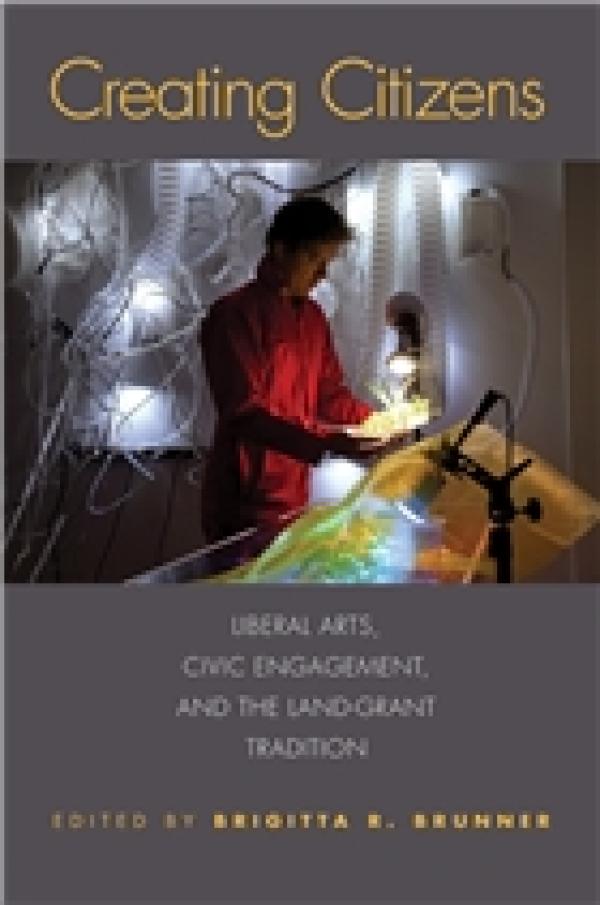
Click Here for Book Review In Creating Citizens, professors and administrators at Auburn University’s College of Liberal Arts recount valuable, first-hand experiences teaching Community and Civic Engagement (CCE). They demonstrate that, contrary to many expectations, CCE instruction both complements the mission of liberal arts curricula and powerfully advances the fundamental mission of American land-grand institutions. The nine essays in Creating Citizens offer structures for incorporating CCE initiatives into university programs, instructional methods and techniques, and numerous case studies and examples undertaken at Auburn University but applicable at any university. Many contributors describe their own rewarding experiences with CCE and emphasize the ways outreach efforts reinvigorate their teaching or research. Creating Citizens recounts the foundation of land-grant institutions by the Morrill Act of 1862. Their mission is to instruct in agriculture, military science, and mechanics, but these goals augmented rather than replaced an education in the classics, or liberal arts. Land-grant institutions, therefore, have a special calling to provide a broad spectrum of society with an education that not only enriched the personal lives of their students, but the communities they are a part of. Creating Citizens demonstrates the important opportunities CCE instruction represents to any university but are especially close to the heart of the mission of land-grant colleges. In open societies, the role and mission of public institutions of higher learning that are supported by public subsidies are perennial subjects of interest and debate. Creating Citizens provides valuable insights of interest to educators, education administrators, students, and policy makers involved in the field of higher education. (From the Publisher)
Click Here for Book Review Abstract: The concern that the democratic purposes of higher education -- and its conception as a public good -- are being undermined, with the growing realization that existing structures are unsuited to addressing today's complex societal problems, and that our institutions are failing an increasingly diverse population, all give rise to questioning the current model of the university. This book presents the voices of a new generation of scholars, educators, and practitioners who are committed to civic renewal and the public purposes of higher education. They question existing policies, structures, and practices, and put forward new forms of engagement that can help to shape and transform higher education to align it with societal needs. The scholars featured in this book make the case for public scholarship and argue that, in order to strengthen the democratic purposes of higher education for a viable future that is relevant to the needs of a changing society, we must recognize and support new models of teaching and research, and the need for fundamental changes in the core practices, policies, and cultures of the academy. These scholars act on their values through collaboration, inclusiveness, participation, task sharing, and reciprocity in public problem solving. Central to their approach is an authentic respect for the expertise and experience that all stakeholders contribute to education, knowledge generation, and community building. This book offers a vision of the university as a part of an ecosystem of knowledge production, addressing public problems with the purpose of advancing a more inclusive, deliberative democracy; and explores the new paradigm for teaching, learning, and knowledge creation necessary to make it a reality. (From the Publisher)
Click Here for Book Review For directors of campus centers that have received the Carnegie Classification for Community Engagement, this book offers research and models to further advance their work. For directors starting out, or preparing for application for the Carnegie Classification, it provides guidance on setting up and structuring centers as well as practical insights into the process of application and the criteria they will need to meet. Building on the findings of the research undertaken by the author and John Saltmarsh on the infrastructure of campus centers for engagement that have received the Carnegie Classification for Community, this book responds to the expressed needs of the participating center directors for models and practices they could share and use with faculty, and mid-level and upper-level administrators to more fully embed engagement into institutional culture and practice. This book is organized around the purpose (the “why”), platforms (the “how”), and programs (the “what”) that drive and frame community engagement in higher education, offering practitioners valuable information on trends of current practice based on Carnegie Classification criteria. It will also serve the needs of graduate students aspiring to become the future professoriate as engaged scholars, or considering preparation for new administrative positions being created at centers. Co-published with Campus Compact. (From the Publisher)
Click Here for Book Review A guide for students, groups, and organizations seeking to foster interfaith dialogue and promote understanding across religious lines In this book, renowned interfaith leader Eboo Patel offers a clear, detailed, and practical guide to interfaith leadership, illustrated with compelling examples. Patel explains what interfaith leadership is and explores the core competencies and skills of interfaith leadership, before turning to the issues interfaith leaders face and how they can prepare to solve them. Interfaith leaders seek points of connection and commonality—in their neighborhoods, schools, college campuses, companies, organizations, hospitals, and other spaces where people of different faiths interact with one another. While it can be challenging to navigate the differences and disagreements that can arise from these interactions, skilled interfaith leaders are vital if we are to have a strong, religiously diverse democracy. This primer presents readers with the philosophical underpinnings of interfaith theory and outlines the skills necessary to practice interfaith leadership today. (From the Publisher)
Click Here for Book Review Abstract: This book is about teaching for professional practice and explores ways to engage students in the classroom. It draws on the principles of rigorous scholarship and focuses on interactive learning between the class and the professor and among the students. Each contributor addresses the need to connect theory with community practice, deploying different methods in different contexts, and sharing scholarly reflections about how to improve the craft of teaching. The essays offer practical suggestions that allow readers to adapt and apply these ideas in their own classrooms to suit their particular contexts and share the outcomes of that process. (From the Publisher)
Community-based research (CBR) refers to collaborative investigation by academics and non-academic community members that fosters positive change on a local level. Despite recent trends toward engaged scholarship, few publications demonstrate how to effectively integrate CBR into academic course work or take advantage of its potential for achieving community change. Community-Based Research: Teaching for Community Impact fills these gaps by providing: * An overview of language and methods used by professionals engaged in CBR * A framework for orienting CBR toward concrete community outcomes * Effective ways to integrate CBR into course content, student-driven projects, and initiatives spanning disciplines, curricula, campuses and countries * Lessons learned in working toward positive outcomes for students and in communities This text is designed for faculty, graduate students, service-learning and other engaged learning and scholarship practitioners, alliance members, special interest groups, and organizations that desire to strengthen student learning and utilize research for improvement in their communities. (From the Publisher)
Click Here for Book Review Abstract: Randy Stoecker has been "practicing" forms of community-engaged scholarship, including service learning, for thirty years now, and he readily admits, "Practice does not make perfect." In his highly personal critique, Liberating Service Learning and the Rest of Higher Education Civic Engagement, the author worries about the contradictions, unrealized potential, and unrecognized urgency of the causes as well as the risks and rewards of this work. Here, Stoecker questions the prioritization and theoretical/philosophical underpinnings of the core concepts of service learning: 1. learning, 2. service, 3. community, and 4. change. By "liberating" service learning, he suggests reversing the prioritization of the concepts, starting with change, then community, then service, and then learning. In doing so, he clarifies the benefits and purpose of this work, arguing that it will create greater pedagogical and community impact. Liberating Service Learning and the Rest of Higher Education Civic Engagement challenges—and hopefully will change—our thinking about higher education community engagement. (From the Publisher)
Click Here for Book Review Abstract: Concepts of civic learning and democratic engagement are central to the purpose of higher education, especially for community colleges. This volume: - establishes a philosophical framework for civic learning and democratic engagement in community colleges, - details several approaches to enhancing the civic capacities of students in these institutions, - provides best practice examples and lessons learned from practitioners in the field, and - addresses some of the sticky issues such as: What are the outcomes of civic learning programs and practices? How might civic competencies transfer to other settings? Is there a connection between civic skills and those valued in the workplace? This is the 173rd volume of this Jossey-Bass quarterly report series. Essential to the professional libraries of presidents, vice presidents, deans, and other leaders in today's open-door institutions, New Directions for Community Colleges provides expert guidance in meeting the challenges of their distinctive and expanding educational mission. (From the Publisher)
Multiversities are sprawling conglomerates that provide liberal undergraduate, graduate, and professional education. As well-springs of innovation and ideas, these universities represent the core of society's research enterprise. Multiversities, Ideas, and Democracy forcibly argues that, in the contemporary world, multiversities need to be conceptualized in a new way, that is, not just as places of teaching and research, but also as fundamental institutions of democracy. Building upon the history of universities, George Fallis discusses how the multiversity is a distinctive product of the later twentieth century and has become an institution of centrality and power. He examines five characteristics of our age - the constrained welfare state, the information technology revolution, postmodern thought, commercialization, and globalization - and in each case explains how the dynamic of multiversity research alters societal circumstances, leading to the alteration of the institution itself and creating challenges to its own survival. The character of our age demands reappraisal of the multiversity, Fallis argues, in order to safeguard them from so-called 'mission drift.' Writing from a multi-national perspective, this study establishes how similar ideas are shaping multiversities across the Anglo-American world. Ultimately, Multiversities, Ideas, and Democracy seeks to uncover the ethos of the multiversity and to hold such institutions accountable for their contribution to democratic life. It will appeal to anyone interested in the role of education in society. (From the Publisher)