Resources
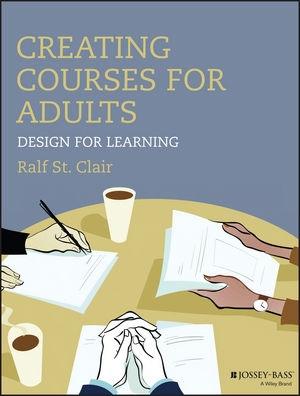
Ralf St. Clair’s instructive book on designing courses will provide helpful guidance to new professors and a meaningful review to those seasoned in the classroom, along with some potentially new material for those veterans. Divided into ten well-defined chapters, Creating Courses for Adults walks readers through the learning theory associated with the adult student population, as well as the practical logistics of designing different kinds of courses for different adult populations. The array of courses discussed range from online for credit instruction to non-credit onsite education for trade school students. Taking seriously the role and the needs of the professor and not just the students, St. Clair begins with a welcomed and affirming chapter, “All About You,” which includes a very helpful section entitled, “Why Who You Are and What You’ve Done Matters.” While this book accepts that teaching is about the students, the author accepts the often unappreciated fact that teaching is also about the needs of the professors, who feel a sense of vocation to this work. St. Clair operates out of the helpful notion that “nobody is an intuitive or completely natural teacher” (page xii), a claim that will challenge seasoned instructors to continue to plan and will encourage new professors with their often unarticulated sense of intimidation. Several chapters are especially rich in what they provide the planning process. Chapter three, “Context Drives Design,” makes distinctions among formal learning, non-formal learning, and informal learning. Adult learners may bring previous experience in formal learning to the classroom, since formal learning is education that leads to a diploma or certificate. They will certainly bring experience in non-formal learning, such as that experienced in an open-ended group, and informal learning, which refers to learning achieved through everyday activities. In fact, the latter two learning experiences can so shape the approach to education of adult learners that it becomes difficult for them to embrace a world of formal learning, even if it is adult-education friendly. For this reason, teachers must give some thought in course design to preparing students for the particular educational context that the course provides. St. Clair also offers helpful approaches to online learning. In addition to a useful bibliography of online course design material, St. Clair proposes that design issues in online education do not fundamentally differ from onsite education. Citing current literature that explains online course design, St. Clair concludes that the best literature provides questions for online course design that do not substantially differ from face-to-face education. While acknowledging that his conclusion will not be universally accepted, St. Clair nonetheless provides an affirmation that online education can be informed by the same theoretical approaches that guide other forms of education. Readers wanting an accessible approach to course design, grounded in both theory and application, will find St. Clair’s Creating Courses for Adults to be valuable. The book belongs in the collection of any teaching and learning center of higher education for its content and its current bibliography.

Eren Tasar Assistant Professor University of North Carolina at Chapel Hill As a trend in twentieth-century world history, decolonization is a major topic in any class dealing with modern Muslim societies. This mundane fact comes as a surprise to some of my students, however, for reasons that I can illustrate.
Nancy Lynne Westfield Associate Professor of Religious Education Drew Theological School It is a challenge to do what you teach. “If you know these things happy are ye if you do them.” (John 13:17, King James Version – or the version of my childhood bible study) - my grandfather’s favorite.

Caleb Elfenbein Assistant Professor Grinnell College The core learning goal of my introduction to Islam is that “Islam” is not a thing. Islam does not say anything. Islam does not do anything. Islam holds no power over anyone. Given the incredible diversity across time and space that marks the practices
Cláudio Carvalhaes Associate Professor McCormick Theological Seminary In Brazil There has been a recent uprising of students fighting for justice and better education. Several political developments have spurred the revolt of fourteen- to seventeen-year-old students in defiance of arbitrary laws of governors. Let me mention four events. First, it was

Theological school deans are not just theological leaders for their institution, they must be EDUCATIONAL leaders. That is, they must implement sound educational practices related to curriculum, instruction, supervision, assessment, and administration. There is a variety of ways to assess...

Tat-siong Benny Liew Class of 1956 Professor in New Testament Studies College of the Holy Cross “You are now entering the real world.” This is undoubtedly one of the most popular remarks that college/university graduates hear around the time of their commencement ceremony. The comment implies, of course, that life

Joshua Canzona Georgetown University In his “Homage to Joe Sacco,” Edward Said celebrates the author of Palestine and gives us one of the best love letters to comics ever written. He shares his first comic book experience, “Everything about the enticing book of colored pictures, but specially its untidy, sprawling.
Nancy Lynne Westfield Associate Professor of Religious Education Drew Theological School The proximity of violence is the terror. Violence is not new – it is, for much of our society and in many, many ways, a preferred way of life. The illusion is that violence can be controlled, patrolled, contained,
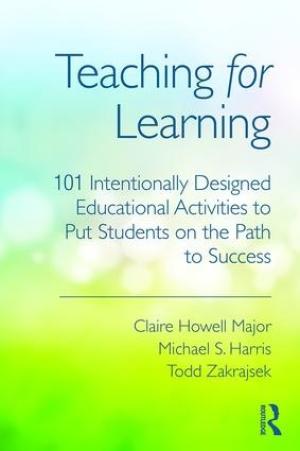
The authors of this extremely helpful book open with an observation that is often true: there is a lot of research on how to teach effectively, but “this information tends to be inaccessible to most instructors, as it has been published piecemeal in journals that instructors frequently do not read” (xi). To help remedy this lamentable situation, they have sifted through hundreds of studies in teaching and learning in order to compile a list of educational activities that both work in real world settings and are supported by research. In other words, if you have ever wondered what kinds of teaching actually lead to learning (retention, critical thinking skills, creative application), and you would like to do a better job of varying your pedagogical approaches, then this book will be of interest to you. Each of the eight chapters focus on a particular kind of teaching and learning format, including lecture, discussion, peer teaching, academic games, reading strategies, writing, graphic organizers, and metacognitive reflection. In clear prose, the authors explain the strengths and drawbacks of each kind of teaching as well as what researchers have found concerning each approach’s effectiveness. For example, lectures work better when instructors keep the lectures short, focused on essentials, and when accompanied with frequent quizzing and guides to effective note-taking. After establishing what works according to research, the authors provide detailed “Intentionally Designed Educational Activities” (IDEAs) to help instructors teach in a way that has been proven to lead to learning. Again, using lecture as an example, some of the suggested activities include guided note-taking, a “find the flaw” exercise, the Socratic seminar, and lecture bingo. The IDEAs, which are delightful and often fun, are cross-referenced with other teaching activities in the book and include helpful “pro-tips” to give additional guidance on implementation. This clear structure makes the book one that can be read cover-to-cover as well as a handy reference volume for specific classroom situations. Both seasoned and new teachers will get a lot out of this book. New instructors will find the help they need when trying to translate their graduate education into effective teaching. More seasoned teachers will find some tried-and-true methods confirmed but will also encounter new ideas to reinvigorate the classroom. While some of the 101 IDEAs in the book are clearly designed for mathematics or scientific fields, the vast majority are well-suited to humanities and social sciences and will be right at home in religious studies and theological departments at both undergraduate and graduate levels. This book has the potential to greatly improve our day-to-day teaching; our students will be grateful.