Resources
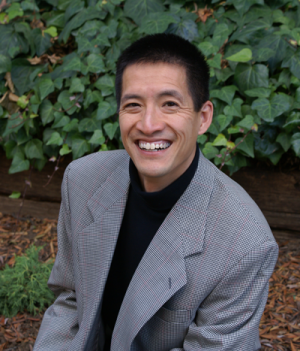
It was by now a pretty well-known social experiment. A man dressed like a homeless person collapses on the street and is ignored by pedestrians; when the same person puts on a business suit and collapses on the same street, however, a number of strangers quickly come to his aid. Unfortunately, appearance does matter, and it matters also in the classroom. Let me turn now to share my own experiences with two students in my very first course that I taught as a full-time professor. Student One It was literally my first day of class in the seminary. I was both anxious and excited. After giving out and going through the syllabus, I followed my lesson plan on which I had worked tirelessly all summer long. When time was up, I was secretly congratulating myself for making what I thought to be a wonderful first impression, especially when a couple of students came up to me and said that they were really “psyched” for the course. Then a white woman student who looked to me to be in her fifties introduced herself to me with not only her name but also her credentials. She said that she had a doctorate in adult education and that she could tell that I had little knowledge or experience with adult education (of course, I had told everyone at the beginning of the class that this was my very first year teaching at the seminary). She followed up and commented that my syllabus was too long and too intimidating and that I talked too fast, gave too much material, and failed to provide students any handouts. I was floored and a little embarrassed, but I managed to keep myself calm and said something to the effect that I would try to provide some handouts and that I would always be available for conversations if she had any questions about the course. Unfortunately, my “invitation” resulted in one after-class encounter that has remained vivid in my memory even almost twenty years later. I had just returned a written assignment to the class, and this woman came up after class again and asked me why she got a particular grade. (It was not a bad grade, as I remember that it was in the B range.) Since I always provide ample comments on student papers, I pointed those out and explained that her paper could be better and more tightly organized. To my surprise, she responded by saying that my “problem” had to do with the fact that English was not my first language and that I did not understand that there was a kind of writing “in the West” known as stream-of-consciousness. Would she feel the same liberty to approach a white male professor and say something like this if she got a B-range grade from him? I think not. Student Two It was time to look at my very first set of course evaluations as a full-time professor. This time, I was more anxious than excited. One particular student comment stood out among the—thankfully—many affirmative and encouraging evaluations that I had received. This student basically said he or she had gotten to the classroom feeling very tired from a long day of work as well as feeling rather frustrated as this was his or her first day in seminary. Sitting at the back of the classroom, this student said he or she felt even worse when I walked into the classroom and stood behind the lectern as the instructor for the course. I could not repeat it verbatim but it went something like this: “I could tell it was going to be a disaster as soon as I saw him, but then Professor Liew started to speak and I was immediately energized and engaged.” I am grateful and glad that, based upon a very positive evaluation, this particular student was able to learn from me and with me, but what this student assumed upon just seeing me is most telling. Why would he or she make the foregone conclusion that the course was going to be bad as soon as I showed up? Yes, there is another “appearance” that one cannot change as easily as putting on or taking off a piece of garment. These two students taught me early on in my teaching career that students carry all kinds of assumptions, racialized or otherwise, with them into the classroom, and so I have to be prepared for them. Of course, we as teachers are not immune to this: we have assumptions that lead us to think, act, speak, and make evaluations in particular ways with particular persons. If teaching is truly one of the best ways to learn, I want and need to learn from these early experiences in my teaching career how students may also need to prepare for class in ways that go way beyond what are listed on their syllabi. Allow me to share the following video by some students at the Rhode Island School of Design as we all work to plan and prepare for the beginning of a new academic year (note that the video contains strong language that some may find offensive). The video raises a host of issues and questions to consider. What questions arose for you as you think about your own teaching? What might it mean for students and teachers to “veil” themselves in classroom contexts? Social DNA comes with the bodies that enter our classrooms, but it can also be addressed and even changed by what we do in our classes.
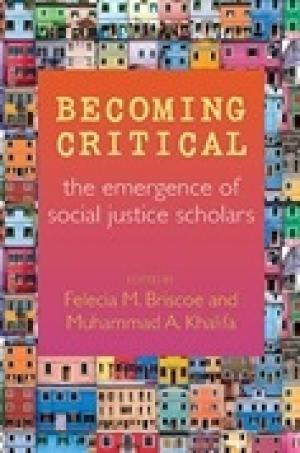
This book presents readers with eleven compelling autoethnographies that combine critical theory and scholars’ lived experiences. Each contributor deserves its own recognition for the courageous act of opening up private spaces for public discussion, utilizing their own experiences as data. Described as a “nontraditional way of knowing,” autoethnography, as a form, “challenges the criticism of traditional positivist epistemologies regarding ‘objectivity, absolute truth, and ‘validity’’” (13, 7). The text’s editors, Felicia M. Briscoe and Muhammad A. Khalifa, remark that they choose critical autoethnography as a genre because it “allows us to represent knowledge outside a traditional European framework” (13). Western academe is itself a culture – one historically dictated by White middle-class male norms. Autoenthographies produced by those belonging to marginalized and often silenced groups counter and disrupt narratives of the dominant academic discourse. Each of these scholars tells their own story and documents their experience of ‘becoming critical’ when they recognized the oppressive power of relationships at work in their worlds, reacted to them, and in the end, endeavored to steer society towards “greater social, political, and economic equity” each in their own way (10). These autoethnographies are, in short, counter-narratives for social justice within higher education. Drawing from such disparate sources as Comedy Central’s Chapelle’s Show to renowned theorists such as Patricia Hill Collins, Paulo Freire, and Pierre Bourdieu, these texts pull from a diverse range of mediums. While the experiences are varied and multifaceted, much of the theory drawn upon overlaps. Many of the authors use a Foucauldian understanding of the power/knowledge relationship (splendidly illustrated in Briscoe’s chapter) which suggests that power is not totally in the hands of one person. As Briscoe states, “people cannot be neatly divided into oppressors and the oppressed... we are oppressors in other ways” (120-121). Other common theories pervade the series, such as CRT (Critical Race Theory) which highlights the endemic nature of racism in American society. Many of the authors give a cursory nod to Judith Bulter’s concept of one’s identity as performative. However, Miguel De Oliver’s “We’re All Half-Breeds Now…in a Not so Ivory Tower” describes how, for the “racially ambiguous,” the space that one occupies becomes the “key to presumptions of identity” (228). In his experience, he need only occupy a particular space to be ascribed a specific identity (foreigner, Latino, “White,” Navajo, “Black athlete,” and so forth) (225-241). Whether the chapter is about a Gusii woman (Damaris Moraa Choti) living in a world of male domination, experiencing cultural pressures (from primarily women relatives) to undergo clitoridectomy, who finds solace in her family’s Christian faith and love of education or a Black, male, Muslim’s (Muhammad A. Khalifa’s) encounter of being automatically singled out in class to respond to a Boyz N the Hood trailer because in the “White imaginative” Black males are expected to identify with the gangster nature, readers will be challenged by the worlds presented and drawn into the experiences described. Sadly, there are no easy answers and speaking out against institutional injustices often has very real material consequences (as noted in the chapter “Too Black, Yet Not Black Enough: Challenging White Supremacy in U.S. Teacher Education and the Making of Two Radical Social Misfits” by Brenda G. Juarez and Cleveland Hayes). The case studies are divvied up by the contributor’s experience based on race and gender but perhaps the most instructive section focuses on the case studies documenting scholars’ intersecting dimensions of identity (race, gender, ethnicity, class, religious, and so forth). The autoethnographies in this section track how the authors embody multiple (sometimes conflicting) identities, occupy a myriad of roles, and negotiate their personal and professional identities amid the confines of higher education. In the chapter, “Working the Hyphens: Ethnographic Snapshots in Becoming Critical-Female-Black-Scholars,” El-Amin, Henry, and Laura fight the notion that there is “no room for real PhDs to take seriously scholarship that is politically, historically, and personally rooted in multiple identities” (208). These scholars’ stories – in fact, their very existence – explode the myth of the monolithic scholarly experience. As the American university becomes exponentially diverse, college professors and administrators will need to be well-versed in critical theory as well as actively engaged in dialogues on difference. This book exposes the reader to both. Readers need not be educational professionals or “theory heads” to benefit from the stories presented here; anyone invested in social justice and educational equity will be rewarded by hearing these voices.
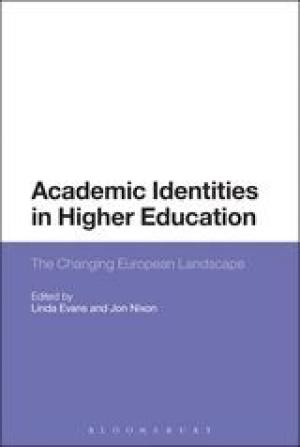
Academic identity, like all identity, is fluid. This volume places questions about academic identity in the equally fluid context of “Europe,” which is here defined as at once united and fragmented, particularly after the economic crises of 2008. This volume pulls together thirteen articles in three sections: Frameworks and Perspectives, Academic Trajectories, and Formations and Re-formations. The authors are not sociologists of life course or scholars who study academic identity; they are, more usefully for this volume, speaking from their own contexts and experiences in European higher education from the late twentieth into the early twenty-first centuries. The editors have done a fine job choosing and grouping these essays, many of which were written by authors in their second or third languages to comply with market demands for English publication. This is one of the many strengths of the book, as it illustrates the kinds of demands that are placed on European academics that are absent in many ways from American contexts. Nevertheless, much is familiar here: academics in neoliberal systems of mass higher education struggle with ever-increasing bureaucracy, top-down management, and the encroachment of academic “professionalism.” Pressure to be represented well in world rankings tends to encourage institutional systems of assessment and auditing of outcomes that shape the academic enterprise as an inward-looking, self-serving part of a labor-driven economy and individual academics as cogs in the machine. As Jon Nixon states in his introduction, treating academic work like labor, as a matter of “pre-specified outcomes and destinations,” produces an unfortunate mismatch: “Academic identity is – to come full circle – a process that is uncertain in direction and indeterminate in outcome” (13). To treat academic work as labor is to misunderstand the potential benefits of outward-looking institutions that value intellectual autonomy and innovation above target-setting and performance measures. Many of the chapters in this volume could stand alone as case studies; each presents its own particular balance of interrogating biographical, institutional, or broader contextual identities and each brings a coherent and defined voice to the shared project. It is impossible to capture the richness of each of these chapters here, and each somehow manages to consider an individual life within the vast institutional, sociocultural, historical, and political contexts in which that life is lived. Although there is nothing specific to either religious studies or theology in this volume, there is much here that will resonate with academics who struggle with being pulled away from research and teaching to comply with institutional mandates. This volume should help academics in all disciplines to reflect on the power of context and particularly institutional context to shape lives and careers. Implicit here is a call to embrace the best in higher education despite the “regulations, financial incentives, rewards, quality standards, as well as academic, public, and professional values” (6) that constrain and give shape to our identities. These essays hint that a mix of resilience and subversion might well be the academic’s best allies.
This is the new side bar for Web Site On Religion, this page is named (custom-sidebar-website_on_religion)
This is the new side bar for Syllabi, this page is named (custom-sidebar-syllabi)
This is the new side bar for scholarship, this page is named (custom-sidebar-scholarship)
This is the new side bar for Blog, this page is named (custom-sidebar-post)
This is the new side bar for programs, this page is named (custom-sidebar-page)
This is the new side bar for grants, this page is named (custom-sidebar-grants)
This is the new side bar for Books Reviews, this page is named (custom-sidebar-book_reviews)