Resources

I have always thought that a course on spirituality should take place in a supportive environment, and it is best done in person. But something happened that changed my mind. Last fall, I attended a webinar organized by Kosen Gregory Snyder at Union Theological Seminary. The webinar invited a Native American, a Buddhist, and a Christian leader to discuss the ways that religious and spiritual traditions can address our ecological crisis. This webinar was just what I needed, as I was over-stretched by work and speaking engagements. I was exhausted and depleted. I felt a sense of accompaniment as each speaker shared their spiritual wisdom and paths. So when I was asked to offer my spring online course “Spirituality for the Contemporary World” to the community, I accepted the invitation with enthusiasm. For over two decades, I have taught courses on various aspects of spirituality in Boston and Atlanta and have accompanied hundreds of students on their spiritual journeys. I saw offering this course to those who may need it during the prolonged pandemic as a vocation and a challenge. I had not taught a course on spirituality online, let alone taught it for both students at my school and members of the community. The first challenge was how to translate the practice-oriented pedagogy to an online format. I include meditation, breathing exercises, Tai Chi movements, singing, arts, and rituals in my spirituality courses. I emphasize learning by doing and not just listening! How could we do these things in a Zoom setting? As we know by now, even the simple thing of group singing is a challenge on Zoom. To learn how I might do some of these in my class, I consulted my colleagues at school who have expertise in digital learning. They have given me a lot of encouragement and sound advice and the school will provide production help and equipment if needed. I welcome the challenges of teaching this class as a growing edge of my teaching. I have taught this course in person numerous times, and I am eager to find out what I can learn by teaching it online. The pandemic has disrupted higher education and its impact will last for years to come. According to a study by Instructure, the company that created the online platform Canvas, the demand for online and hybrid courses skyrocketed, even as in-person learning resumes. Thus, scholars in religion and theological educators need to be better prepared so they can teach these courses well. I know that many seminaries and divinity schools have already used online and hybrid learning for some time and the learning curve may not be so steep. When the pandemic closed my school and forced our classes to go online, the school has provided training and support for the faculty. One of the challenges was learning how to use the Zoom platform, which was originally designed for business, to create an interactive and participatory learning environment. I learned from my colleague Sarah Bogue, who offered useful tips and exercises for building community through online learning. I intend to use some of her suggestions in my spirituality class. Since the community participants in my class do not have access to the school’s academic teaching technology, I decided to create a website for the course. At the beginning of the pandemic, when everything shifted online, I helped the network Pacific, Asian, and North American Asian Women in Theology and Ministry update our website, open Twitter and Instagram accounts, and create a YouTube channel. I feel good that I can transfer what I have learned in my community work to my online teaching. The course website has a blog. I posted the first blog, explaining why I am teaching this course at this time. Many Facebook friends posted prayers and thoughts about the new year in the first week of January and I asked for permission to share a New Year prayer and photos taken to show nature’s beauty on the blog. Participants in the class will be invited to contribute blog posts to share with the class. The course will have its own Facebook page. I will post the questions to be discussed each week. I plan to use this space for participants to share their practices, such as photos of home altars, places for meditation, and nature walks, as well as spiritual poetry and writing. While my students have their assignments, the posts on Facebook will allow me to gauge community participants’ interest and engagement in the course. An altar I created To avoid Zoom fatigue, I will not give long presentations and will minimize the almost routine use of PowerPoint in Zoom teaching. We must justify why we need to have synchronous meetings at all if the meetings are not interactive. Instead, I have invited guest speakers and artists to lead a range of activities, including Notes of Rest, artwork, and learning to write poetry. Some of them have taken my spirituality courses and they are delighted to help as I offer this course to the community. As a seasoned teacher, trying something new in teaching stretches my pedagogical imagination. We have been in the digital age for decades, and teaching can’t remain the same if we are to catch up with the digital natives, who are well versed in digital technology. Two weeks before the course, I began setting myself in the spirit of teaching this course. I paid attention to my daily rituals (the design of daily life) and practiced Pilates for seniors. I always enjoy teaching spirituality courses because I need them as much as my students do!
I was flailing. I was trying to show my students the different features of the videoconferencing tool Zoom that we’d be using synchronously for the rest of the semester, but I didn’t know how to share my computer screen in such a way that would show Zoom itself. Zoom kept hiding. It was our first day back, and I was feeling frustrated and flummoxed. It was not my best moment as a teacher. Or was it? Many of you may be familiar with the work of Carol Dweck. In her book and professional talks posted online (like this one or this one), she describes two types of mindsets: fixed and growth. A fixed mindset means that students believe their qualities, like intelligence, are innate, unmalleable, carved in stone. I get this from students a lot: “I’m just not a good writer,” as if writers come out of the womb good. (Anne Lamott has something to say about this in her brilliant essay, “Shitty First Drafts,” which I’ve assigned in every course I’ve ever taught.) I get the impression that many of my colleagues think the same about teaching: You’re either a good teacher or you aren’t. But those with a growth mindset believe that abilities can be developed over time, through practice and effort; they don’t shy away from challenges and failures because those are opportunities to grow, rather than revelations of unchangeable imperfections best left hidden. Covid-19, and all the uncertainty and upheaval resulting from its spread, is giving us an opportunity to embrace a growth mindset as educators. How can we do so? One of my approaches has been to demonstrate a spirit of curiosity and openness with my students. I had never used Zoom breakout rooms before three weeks ago, but I wanted to try them out with my newly online class. I thought these rooms could help students do the partner and group work they were used to doing face to face. So, I said, “Hey, I’m going to try something out here; let’s see what happens.” I didn’t know what would happen. We were going to find out, together, as co-learners. I remember, a couple summers ago, I was reading so many books from a certain section of the bookstore that my buddy asked me, “Are you just sitting around reading quasi-philosophical self-help books and should I be concerned?” “Yes and unclear” was my reply. One author I was fortunate to come across during this time was Brené Brown. In The Gifts of Imperfection, she introduced me to a phrase I love: “an aspiring good-enoughist.” Many of my friends are drowning right now in self-imposed perfectionism. One spent hours editing a short recorded lecture before posting it on our LMS. If perfection is our aim, however, we may shy away from the very opportunities that would stretch us and challenge us, forcing us to grow—instead opting only into narrow situations that showcase the talents, skills, and knowledge we already possess. We don’t have to be perfect to be good teachers. We don’t have the time, energy, or bandwidth anyhow. Let us all, instead, be good-enoughists. And, while we’re at it, let’s allow our students to see that’s what we’re doing; after all, they look to us as role models. When my daughter was just a baby and she would hear a loud sound—a motorcycle, a lawn mower, a fire alarm—she would look, not toward the noise itself, but up at me. She gauged how she should respond to the world by how I was responding; if I remained calm, she did too. I think it’s the same with students. If we respond to our inevitable (and they are inevitable) mistakes with histrionics or apologies, students will think something bad has happened and react accordingly. If we take our mistakes and failures in stride, and laugh them off, students just might too; they are generally pretty good sports. Failure, of this kind and on this scale, doesn’t have to be a big deal. (If nothing else, the global pandemic has given us all a sense of perspective.) Now is the time for us to model, good-naturedly, what life-long learning looks like. A final key, for me, in embracing a growth mindset, has been to show what learning after a mistake looks like. The next class session, after the Zoom debacle, I came back and shared with my students what I had discovered. After doing some quick Google searches and consulting Zoom’s very helpful tutorials, I could share my screen in such a way that Zoom itself would show. “Look!” I excitedly said. “Look! I’m doing it!” I’m not sure they were as excited as I was, but they had gotten to see my failure . . . and then they got to see the growth that resulted from it. They saw me, their professor, gain a new skill, just as I was asking them to do over the course of our time together. Humility is hard, and may seem altogether too rare, in the academy. Now is the time to embrace it. We’re all learning, we’re all growing. This pandemic is just making it more obvious.

Like many parents of small children, I responded to the COVID-19 crisis by subscribing to Disney+. One of my first dives into animated nostalgia was with the Pixar short Presto, which initially preceded showings of the 2008 masterpiece WALL-E. I watched with bemused horror as the magician, resolute on performing for the packed house, ignores the obvious pleas of his rabbit for a simple carrot and experiences greater and greater injury as he tries to coerce the rabbit to do his bidding. I was glad my children were already asleep. Before long, I was thinking about how some of my own attempts at improving my instruction over the years might sadly resemble the flailing and desperation of the magician Presto. Our students are hungry, and we risk failing them–and getting hurt in the process–if we lose sight of this. They are hungry for connection, for community, for security, and yes, for learning. I want to feed their hunger, to give them the carrot that will hold them over until something more substantial is available again. But now that all our interactions have been digitized, I have found myself a bit adrift, realizing that much of my impact in the classroom depends on a persona that I perform. The shift to remote teaching and learning has forced me to reckon with my lingering assumptions about students as an audience. I have always seen myself as a lifelong learner, and a fellow-learner with my students. But now, more than ever, I have become aware that I still often treat students like an audience who has paid good money for a seat and impatiently await my magic making. But, like the animated magician who pulls off his trick only when he finally listens to his rabbit, I am realizing that in this crisis teaching and learning works best when students are full partners in the enterprise. My Presto moment might just be responsible for a lasting shift in my pedagogy toward students as collaborators, even co-conspirators. My religious studies courses serve exclusively general education students, so I cannot depend on students’ background knowledge or preexisting curiosity to energize the classroom. For students without personal connections to any religious practice or traditions, finding religious cultures interesting often depends on finding me interesting. I found in my early years as a full-time instructor that sharing my inner “history nerd” captured the imaginations of only some students. Watching a video tape of myself teaching was a formative moment in my professional development during my first semester on the job. My best attempts at good, provocative, open-ended questions fell flat, and I could see on tape how the intellectual energy I felt did not come through for the students. So I worked on conveying more excitement through energetic physicality, modeling inquiry not merely through thoughtful questions, but also through emphatic gestures and wide variations in the volume and tone of my voice. I stopped being afraid to say–loudly–“What?!” to my own attempts at interpretation. Students responded. Visits to my office hours increased. Course evaluations slowly improved. A persona that initially struck me as a farcical performance became less forced, more authentic. I am sure that I improved other skills as an instructor, but the energy I put into the performance seems to have opened up my creativity as well as my sensitivity to students. To perform in this way forced me to imagine the intellectual and emotional position of my students. It made me seem more vulnerable. It helped me make stronger connections to students. Demonstrating how willing I was to challenge myself opened up new possibilities for students to challenge me, too, and to ask potent questions about religious texts. My new instructor’s persona did not suit all pedagogical circumstances, but it became an important tool in my belt. Just as important, this new professorial habitus made me feel differently about teaching, in ways that improved my instruction in other ways, some measurable and tangible, others not. Overnight, Covid-19 took away my stage, my audience. Initial feedback suggested that nearly 1/3 of my students new quarantined lives would not accommodate a steady schedule of video conference discussions, so I opted for asynchronous approaches. Optional video office hours gave me some opportunities to speak with students face to face, but not every student would “attend” or watch the recordings. I found I could not fit all my expressiveness into a small box on a tablet screen. Discussion forums facilitate authentic discussions of our shared texts, but it becomes impossible to gauge quickly the reactions and comprehension of thirty students to a 100-word follow-up post on one thread among dozens in a forum. But I cannot, like the magician Presto, continue to perform and prestidigitate for an audience because that audience has more important things to worry about under the present circumstances. If learning is to happen now, we must be even more attentive than ever to what students need. On the one hand, this has meant above all simplifying, paring away inessential elements in order to get to the core of my objectives. I have cut down the length of reading assignments; no longer convinced that there is virtue inherent in testing students’ ability to find the important passages in a challenging text, only then to discern meaning in them. I have cut down discussion questions from four of five to one or two as students are discussing asynchronously need a focused conversation so they aren’t talking past one another. But it has also meant jettisoning performance in favor of collaboration, in and through the humble discussion forum. In other words, I have been challenged to accommodate and facilitate students’ intellectual agendas rather than skillfully molding them to my own. This means asking authentic questions, but it also means responding authentically. Without my in-person performance of classroom leadership and inquiry to subtly redirect, I have had to be more honest about when an answer is off topic and needs clarification,. Students’ links to videos or blog posts on a topic, drawn from corners of the Internet I never visit, have forced clearer and more effective conversations about evaluating sources (and about the differences between scholarly and other sorts of discourse). I have embraced the leveling effect of having my replies treated the same way as my students’ by a democratizing Moodle interface. And I have shared my genuine surprise, sadness, laughter, and joy at the insights and compassion students have expressed in plain-text prose of 100 to 250 words. In response to the crisis, I have stopped performing and started dialoging more thoroughly than before. It is an experience that I hope I will be able to translate back into face-to-face instruction, whenever that should return.

When Covid-19 became a pandemic, I was not ready to make a transition to online teaching out of the blue, in the middle of the course period, but I felt a great responsibility for my students since they were going through upheavals. So, I made a 3-minute video for them and shared it through email; I encouraged them to stay safe and strong. This initial video brought a message of hope and care to them. In these tumultuous times, I see myself as pastor, theologian, and scholar. I also sent a kind, informative email to them to make sure we were all on the same page in terms of the remaining course schedule. I reached most of my students through email, but three of them did not respond for two weeks. I was anxious about them and looked for them like a shepherd who has lost a sheep. I tried to contact them every way I could: by phone, through school staff, through social media. My attempt failed. Two weeks later, they responded to me with descriptions of personal and family crisis. I was so happy that all of my students were safe. My philosophy during this time is to streamline teaching or learning, to minimize the use of technology other than that with which they are already familiar (e.g., email and the Learning Management System [LMS]). I did not ask them to learn new online skills or to set up a Zoom account. In fact, “Online Meetings” was available through our school’s LMS. All I emphasized was the importance of fast communication through email. In this traditional tech way, I maintained close contact with them and understood their individual situations. With this teaching philosophy in mind, I prepared a weekly PPT with audio narrations (like lecturing in person, unlike just reading the text) and uploaded it to our LMS, along with the new course schedule and detailed instructions. Then, the students were asked to review my PPT several times and submit a response paper to the weekly question via email. They followed my instructions very well, but some of them were struggling, so I proposed weekly online tutoring times during which I could speak with some of them online “face-to-face.” One time I had 10 students in our virtual room and talked with them about various topics they brought up. It was a good, humbling, and eye-opening experience. We felt our close community in this together. I learned how to make a podcast with a smartphone application and created podcasts for my students. I ended up making a total of 13 podcasts, each an average of 6-7 minutes. They were like songs with critical information for the week. Each podcast had its style or color with background music. My students loved them. It's an irony that this unusual environment allowed me to obtain the necessary online teaching skills which I have wanted for a long time. While virtual teaching won’t replace face-to-face meetings, in the future we may serve some “special” students who cannot make class every time. I think we may need to use hybrid courses often to maximize the student learning experience. Now I am sitting at the chair at my home and thinking about my students who are going through this pandemic. I had the joy of reading their journals of “Reading and Learning,” which is part of the required assignments. They took journaling seriously and wrote it in creative ways. Below are some excerpts: I really have to say Dr. Kim; I like the way you have really made this transition WORK! You have kept us intact with emails, weekly videos, and now the podcasts. This has been a very smooth transition; you have answered a lot of our questions and concerns on your podcasts and you have been willing to pour out to us all that you have learned over your career. I love the part where you say 'Hello, this is Dr. Kim speaking to the World!' I am so thankful for the power points because you say more than you write on the slides. I can re-listen and that’s one of the luxuries we do not get in person. In coming to class, we hear it once, and then it's off to the next thing. However, with the podcasts and blogs, it's more personal and within reach. The past two weeks your voice has become a household voice, and I do not use any headphones so when I am listening to audio. Bless you, Dr. Kim, I just wanted to give you a quick “shout out”, since we have been schooling online. I call it a pleasure to get up in the mornings and get my cup of coffee and listen to your podcasts or re-listen to your PowerPoint with audio!
[su_youtube_advanced url="https://www.youtube.com/watch?v=B1v1Z7Yj0OU&feature=youtu.be"] Teaching is an inherently creative act. We have been taught to teach as we were taught. I was taught by classic lecturers. If it wasn't the lecture it was the socratic method, seminar method or students present and lets see who can do the best. When I started teaching I taught like I was taught. I have come to discard the old ways of teaching and allow myself and my students the freedom to explore and create an experience that is saturated with the creative spirit of the times in which we live. In this Vlog I ask what creative rhythms do you have in your life that inspire creativity in your teaching? I share my creative rhythms and I invite you to celebrate yours and realize how they inform the creativity in your teaching.
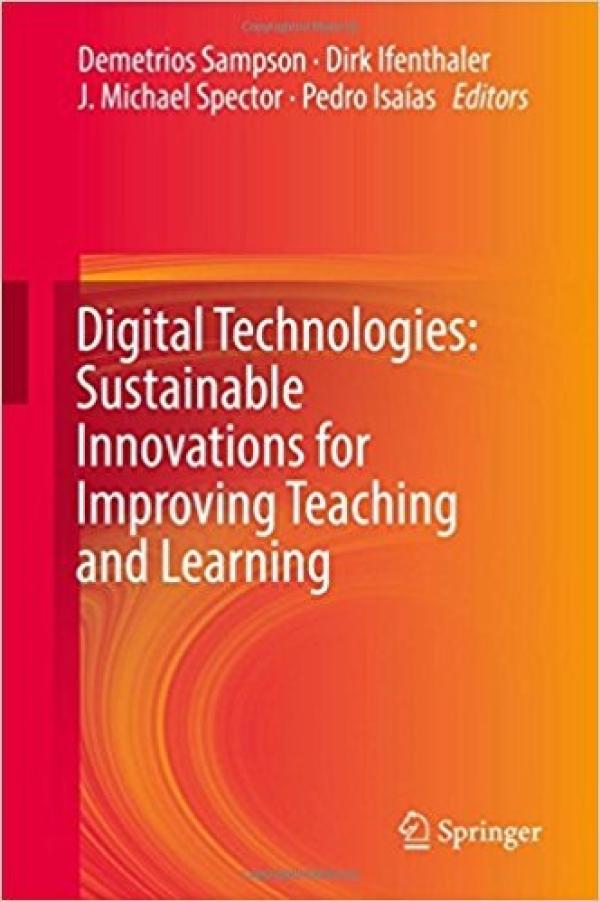
Graduate theological education is experiencing a variety of upheavals, including learning how to navigate the digital technologies transforming the teaching-learning process. Navigating these changes necessitates that graduate theological schools and seminaries adopt the mindset of an educational technology company. Editors Sampson, Ifenthaler, Spector, and Isaías have assembled a collection of international research articles in Digital Technologies: Sustainable Innovations for Improving Teaching and Learning. The articles are organized around four themes: “Transforming the Learning Environment,” “Enriching Student Learning Experiences,” “Measuring and Assessing Teaching and Learning with Educational Data Analysis,” and "Cultivating Student Competencies or the Digital Smart Society.” The rich data found in each of the articles will assist institutions in asking good questions as they seek to discern the instructional tools they will employ to enhance learning. The essays address the use of digital technologies principally in either a K-12 environment or college-level STEM programs. Despite their focus on different educational contexts, the essays are helpful in explaining the role digital technologies are playing in the educational environment and challenging one to think imaginatively about the implications for graduate theological education. Wrestling with the articles was enjoyable but imagining how they apply to theological education was enlightening and frustrating at the same time. The articles lack a shared definition of “learning,” this combined with the ends/outcomes of education being implied made assessing the educational value for theological education difficult. In the end, imagining the implications of these articles for theological education was more like making conjectures or discussion starters rather than the bases for working hypotheses. Digital Technologies will serve as a helpful resource when evaluating digital technologies for inclusion in an institution’s educational strategy. The international character and depth of the articles help one ask good educational questions when evaluating digital learning tools. Asking good technological questions consistent with one’s theological heritage is consistent with being an educational technology company, especially as theological institutions seek to be more nimble in identifying, assessing, evaluating, and implementing sustainable digital technology to enhance learning.

As a professor, I am caught in the midst of a revolutionary period in education and technology. Education has had a slow building relationship with technology and has even had a love-hate relationship with the use of social media, despite its impenetrable growing prevalence in our lives. For younger generations, social media has gone from phenomenon to cultural norm, and the debate regarding whether or not to integrate social media into the classroom becomes more relevant. Social media is a pandora’s box of opportune connection, knowledge and dangerous pitfall. Though you can live without it, living with it in the digital age puts you among the same pace with the rest of the world. It holds everything that the modern world relies on for information, culture, entertainment and social activity. Aside from the obvious risks of using social media, like distractions and negative digital spaces, I have always been a vocal advocate for using social media in the classroom. As classrooms are going more digital and even more online courses are being taught, I believe that social media becoming a necessary tool to enhance student engagement, teaching methodology and learning development. I can share social media news that is relevant to the class materials or have students find relevant materials from social media which are pertinent to the content of the class. This can be done intentionally in the classroom, but unintentionally, it occurs rather frequently. This is due to the fact that students are already on social media and are sharing, following and seeking information which may help them in their studies. Social media is used by students for their assignments, for support, and for information. Since the students are already on social media, at times it is important to meet them where they are. We only have to look briefly at the major paradigm shift in education as a whole. Social media and technology have become the primary tool for personal education in the past decade, yet when you examine the educational and academic landscape, the archetypical classroom setting with a student listening to the teacher’s lecture has not changed all that much. The conventional antics in education are as always, a far step behind. Students now are gravitating towards learning digitally, where the preference to engage in information and material at an autonomous pace and in a self-directed manner becomes a greater expectation. Younger generations have grown up learning in such a manner, and its elevated efficiency leads me to believe that it’s not the students that need to adapt to educators, but rather the educators that need to adapt to them. Students today can and should expect to learn anywhere they are any time they want; they should be able to have the option to have a diverse learning source, not just the formal teacher and peer, but the global environment of classrooms filled with other teachers and peers. This fosters the opportunity for energetic co-learning and co-creation, inciting more dissemination of information for a democratic audience in a digital space. This is one of the greatest values of social media: its openness and interactiveness. It breaks down the walls between student and educator, allowing for all to be both simultaneously. We cannot slow down the consumption of information online, nor can we slow down how it is disrupting the traditions of education. As a result, rather than being the owner of knowledge I feel my responsibility adjusting towards being a facilitator and guider of knowledge. When I post on social media, I feel as though it is a conscious act of preparing my students to understand how to use social media as an educational, positive and professional tool in the modern climate. Information can quickly be disseminated on social media as the classroom goes beyond the walls of a classroom. Furthermore, it allows my students the chance to send me questions, while also keeping them informed and updated on what is occurring in the classroom. This unique avenue generates new forms of engagement that I would not otherwise establish in the typical classroom setting. The future of education will not be limited to physical spaces and classroom doors. Students and non-students alike should be able to learn in relation to updated current technology that allows for learning without bounds. As educators and students, we need to welcome this philosophy and utilize social media for a progressive education and a right step towards the future. You can follow Grace Ji-Sun Kim on Twitter, Facebook, Instagram and LinkedIn.
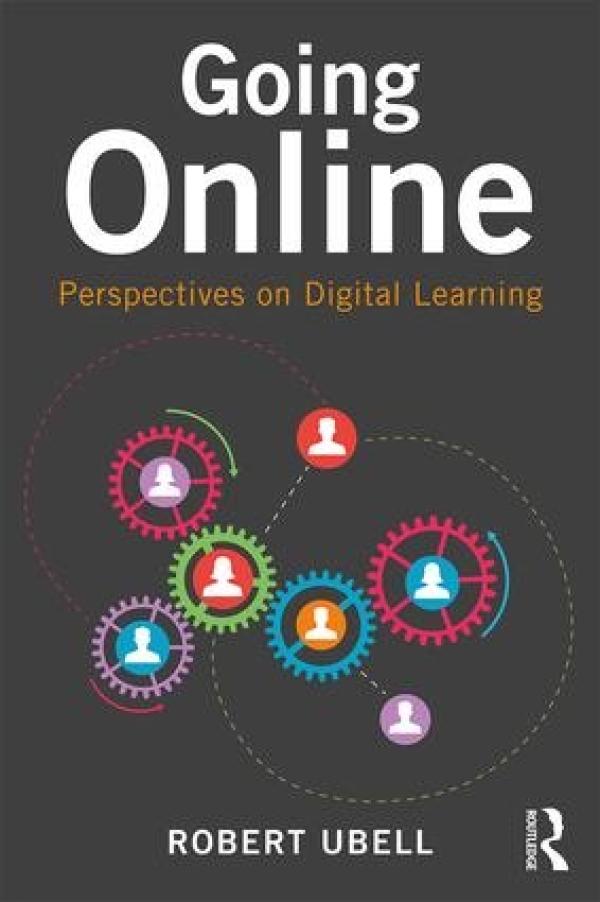
Going Online presents a hopeful view of online teaching. A professor in the NYU Tanden School of Engineering, Ubell seems aware that this position will contradict many professors’ perceptions. “Sitting at desks or moving about, our bodies and minds inhabit the classroom, often with the same ease and familiarity we find at home,” he writes, adding “Most of us assume it’s the ideal learning environment” (33). Going Online makes a case for recognizing the limitations of the face-to-face classroom and reconsidering the pedagogical practices that become possible outside of that setting. The collection might not persuade administrators and faculty whose familiarity with online education has led them to resist its expansion. However, it offers a useful survey of previous research and confronts pervasive misconceptions. These two features make it a valuable resource for sustaining conversations in universities looking to develop online experiential learning. In Chapter 1, “Dewey Goes Online,” Ubell writes, “Virtual education emerges as a workshop in which online students exercise functions essential for scholarship and professional life” (5). The professor’s role changes in an online setting because they “become facilitators, propelling students to engage in discourse through discussion and argument to generate and link ideas.” The move to an online format “often calls upon faculty to become far more engaged than in the classroom” (8). Going Online develops these two ideas – online courses facilitate active and experiential learning, and faculty become more dynamic and effective when teaching online – through theoretical discussion and practical applications. Going Online makes a point to dispel myths and misconceptions about online courses. Far from alienating or isolating students, online discussions unfold over time and provide space for reflection and “room for analysis, critique, and problem-solving” (9). The collection convincingly shows that the quality of online education equals or surpasses that of face-to-face instruction, but Ubell does not address the legitimate fears that can be summarized in one professor’s observation: “Machines have historically been used to increase profits by cutting the labor force” (54). In fact, part of faculty resistance stems from the low status attached to online courses. In “Why Faculty Don’t Want to Teach Online,” Ubell acknowledges that teaching online represents a risk for many untenured faculty. Those who contemplate migrating their courses online must confront the potential suspicion of colleagues. Ubell explores possible concerns such as “Will she be devalued, suspect, even ridiculed?” “Will her career be threatened?” and “Will she be exposed to hostile reactions from her colleagues?” (50). Alternatively, “will she be seen by some as adventurous, a risk-taker, an early adapter, unafraid of challenges?” (51). Going Online does not reassure teachers facing these risks, but this section asks faculty and administrators to confront the ways that prejudice against online education disadvantages those who shoulder those courses out of necessity or curiosity. These questions name problems and assumptions that might otherwise remain submerged in many conversations about program design. Ubell also acknowledges that the history of online education offers cautionary tales. “For years, for-profits dominated online industry” and greed turned many of those schools into “diploma mills” (55). Because of this history, many faculty at private and public universities fear that embracing online education means their institutions “will fall into the same contemptible void” (55). Ubell asks faculty to reframe this debate over online teaching: “the battle is not fought between brick-and-mortar and new digital space, but between old and new ways of teaching – between wise, old talking heads at the blackboard versus new approaches that encourage interaction among students and instructor” (55). However, learning to view the shift online in these terms is unlikely to satisfy the concerns of junior or contingent faculty worried about their status in the university; it will also do little to satisfy established faculty worried about how online programs will affect the status of their university. Ubell does not always take faculty objections to online teaching as seriously as I believe those objections merit, potentially limiting the reach and effectiveness of the collection. The concrete advice in Going Online will be particularly useful for academic programs or departments that are only now beginning to offer online courses. Chapter 3, “Active Learning,” by John Vivolo, Director of Online and Virtual Learning at the Tanden School, outlines technologies that make possible engaged discussions and interactive lectures. Chapter 7, “Migrating Online,” written with Sloan Foundation and Online Learning Consortium advisor A. Frank Mayadas, outlines the stages of designing an online program and situating it with an existing university structure. The strongest passages of the collection are those that describe the texture of an online class and acknowledge the practical needs that online programs meet. Mayadas writes: Schools that enter the online marketplace find that the largest fraction of students enrolling in their new online programs is drawn from nearby communities . . . Expect at first that most of your virtual student population will be regional – local students who are just as attracted to your programs as those who enroll on campus, but given various obstacles, are prevented from coming to campus. (70) Online courses are certainly more accessible to many students, and Mayadas asks readers to consider whether they may be more equitable too. For example, “Are women – who now make up a far greater proportion of students online than men – more likely to participate actively than in conventional male-dominated classrooms? What about the effectiveness of online learning for black, Hispanic, and other underrepresented students”? (69). Going Online does not elaborate on this point or explore these questions. Future researchers may want to take up this “next – and far more difficult – phase of quantifying the value of online learning” (69). As an early-career academic with experience designing and teaching online courses in rhetoric, composition, and literature, I recognized many of the advantages and pleasures that Ubell describes. In my experience, discussions that unfold online rather than in the classroom include more students and encourage careful thought rather than quick opinions. Often, online students who are geographically dispersed and working according to their own schedules are even more engaged than face-to-face students who display “eagerness, attention, and alertness” but “may just be performing according to conventional classroom rules” (48). Humanities teachers will likely bristle at some of Ubell’s descriptions of the face-to-face classroom, though. I share Ubell’s enthusiasm for online teaching and creative disruption, but I wondered if his dismissal of the conventional classroom as “artificial, often a space for listening, rarely open to practice and reflection,” reflects his experience in large lecture courses and the discipline of engineering (4-5). Many professors in the humanities build both online and face-to-face courses around critical reflection, active and peer-to-peer learning, and ethical argument. We would dispute the claim that “nothing has changed since Victorian times when classrooms and factories were built with pretty much the same purpose – for a docile workforce” (45). While this description runs counter to the experiences of many teachers, Ubell’s image of online courses will encourage readers who hope this growing form of education maintains the joy and rigor that propels our work.
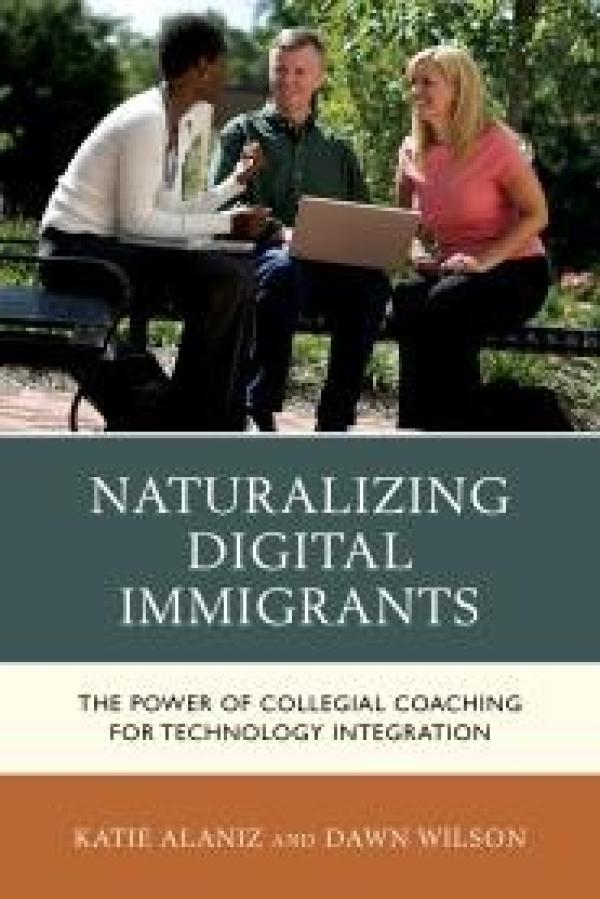
This short, easy-to-read book may inspire academic administrators to set up one-on-one relationships between teachers with the goal of increasing effective technology use within classroom settings. The book may not translate directly to those teaching in theological education because it is drawn from the authors’ experiences in K-12 teacher education graduate programs. Its focus is on technology integration in elementary, and secondary contexts and teacher education, even though marketing copy on the back cover might indicate otherwise. Frequent clichés and repetitive text are also distracting. A major conceptual problem in this book is the use of the idea of “digital immigrants.” In the first chapter, Alaniz and Wilson describe current students who have grown up with the Internet as “digital natives.” Their parents’ generation, who did not grow up with the Internet, is one of “digital immigrants.” This generational understanding of technology adoption does not advance the aims of the book. Technology integration in the classroom requires skill in both technology and pedagogy. Generational age is not a good indicator for teachers’ capabilities in these areas. In the last chapter, the authors attempt to nuance the generational understanding, but it is too little, too late. Despite these problems, the book presents an appealing method of collegial coaching for improved technology integration in teaching. Alaniz and Wilson ground their methodology in education research on the value of collaboration and conclude the book with testimonial evidence of the effectiveness of collegial coaching. The heart of the book is a recipe for setting up a coaching program, supplemented by brief examples from graduate students who implemented programs in primary and secondary contexts. The steps for setting up this sort of program seem well-considered and backed by practical experience. While Alaniz and Wilson might have devoted more attention to intercultural issues in coaching relationships, they offer many helpful suggestions for considerations in selecting participants and structuring relationships. Shifting from one-size-fits-all workshop sessions on technology to more focused coaching on technology integration is a strategy that may benefit all levels of education, not just the primary and secondary levels. Theological educators could have ongoing structured peer relationships that focus on integrating technology and educational resources into a classroom setting. Educational technologists and librarians in theological settings might utilize principles of coaching to help faculty utilize their resources in the classroom. It would be interesting to see this recipe for collegial coaching adapted to a theological education context, with greater sensitivity to intercultural dynamics in the academy and more nuance about generational facility with technology. With noted cautions, this book is recommended for educators, particularly educational technologists, librarians, and deans, who might use insights from a peer coaching model to help faculty better use technology. 072016