Resources
It is a commonplace that scholarship and teaching inform one another. Minimally, this means that the materials of research guide the formation of a syllabus. In courses that are introductory, however, teachers are called to reflect on the foundations of their scholarship. In this task, teaching serves to unsettle and provoke research, not only in the decision of what books to teach, but also in the course's argument. I propose that this argument be directed not toward a field in some ideal shape but toward the more elementary concepts of course, canon, and introduction themselves, since teaching an introductory course is perforce to consider the very nature of introduction. The three concepts of introduction, canon, and course are integral to thinking across the arts and sciences, nowhere more so than in the study of religion, where the work of Jonathan Z. Smith has tunneled, if only partially, into their paradoxes.
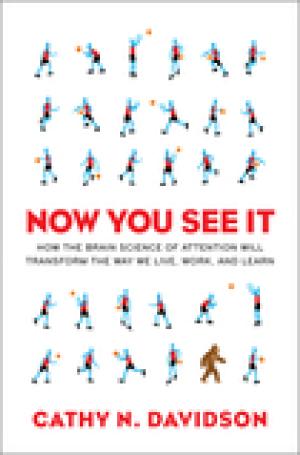
When Cathy Davidson and Duke University gave free iPods to the freshman class in 2003, critics said they were wasting their money. Yet when students in practically every discipline invented academic uses for their music players, suddenly the idea could be seen in a new light-as an innovative way to turn learning on its head. This radical experiment is at the heart of Davidson's inspiring new book. Using cutting-edge research on the brain, she shows how "attention blindness" has produced one of our society's greatest challenges: while we've all acknowledged the great changes of the digital age, most of us still toil in schools and workplaces designed for the last century. Davidson introduces us to visionaries whose groundbreaking ideas-from schools with curriculums built around video games to companies that train workers using virtual environments-will open the doors to new ways of working and learning. A lively hybrid of Thomas Friedman and Norman Doidge, Now You See It is a refreshingly optimistic argument for a bold embrace of our connected, collaborative future. (From the Publisher)
Inspiring Academics draws on the experience and expertise of award-winning university teachers to illuminate exemplary teaching practice. It is structured around five core themes: inspiring learning, command of the field, assessment for independent learning, student development and scholarship. Mirroring the vast range of practices and characteristics that constitute high quality teaching, 26 distinguished scholars from Australia, Canada, New Zealand, the UK and the USA recount and reflect on the personal and professional circumstances that have made them great teachers. Through its autoethnographic approach, this book provides captivating and illuminating personal explorations of the 'hows and whys' of excellent university teaching. (From the Publisher)
Journal Issue.
Most university teachers have ideas about the typical good or not-so-good student in their classes, but rarely do they share these thoughts with others. By keeping quiet about the preconceptions – or stereotypes – they harbour, teachers put themselves at risk of missing key evidence to help them revise their beliefs; more importantly, they may fail to notice students in real need of their support and encouragement. In this unique work, the authors explore UK and US university teachers’ beliefs about their students’ performance and reveal which beliefs are well-founded, which are mistaken, which mask other underlying factors, and what they can do about them. So is it true, for instance, that British Asian students find medicine more difficult than their white counterparts, or that American students with sports scholarships take their studies less seriously? Is it the case that students who sit at the front of the lecture hall get better grades than those who sit at the back? By comparing students’ demographic data and their actual performance with their teachers’ expectations, the authors expose a complex picture of multiple factors affecting performance. They also contrast students’ comments about their own study habits with their views on what makes a good learner. For each preconception, they offer clear advice on how university teachers can redesign their courses, introduce new activities and assignments and communicate effective learning strategies that students will be able to put into practice. Finally, the authors explore the ramifications of teachers’ beliefs and suggest actions that can be taken at the level of the institution, department or programme and in educational development events, designed to level the playing field so that students have a more equitable chance of success. Ideal for both educational developers and university teachers, this book: • reveals general tendencies and findings that will inform developers’ own work with university teachers, • provides practical guidance and solutions for university teachers to be able to identify and address students’ actual – rather than assumed – needs, • explores means of addressing and challenging people’s natural tendency to rely on preconceived ideas and stereotypes, and • explains an action research method that educational developers can use on their own campuses to unravel some of the local preconceptions that may be hampering student success. (From the Publisher)
With a unique focus on the relationship between assessment and engagement this book explores what works in terms of keeping students on course to succeed. Against a backdrop of massification and the associated increase in student diversity there is an escalating requirement for personalized, technology driven learning in higher education. In addition, the advent of student fees has promoted a consumer culture resulting in students having an increasingly powerful voice in shaping curricula to their own requirements. How does one engage and retain a group of students of such diverse culture, ethnicity, ambition and experience? Using examples from a variety of institutions worldwide this edited collection provides a well-researched evidence base of current thinking and developments in assessment practices in higher education. The chapters discuss: • Staff and student views on assessment • Engaging students through assessment feedback • Assessment for learning • Assessing for employability • Interdisciplinary and transnational assessment • Technology supported assessment for retention The book draws together a wealth of expertise from a range of contributors including academic staff, academic developers, pedagogical researchers, National Teaching Fellows and Centres for Excellence in Higher Education. Recognising that a pedagogy which is embedded and taken-for-granted in one context might be completely novel in another, the authors share best practice and evaluate evidence of assessment strategies to enable academic colleagues to make informed decisions about adopting new and creative approaches to assessment. This interdisciplinary text will prove an invaluable tool for those working and studying in higher education. (From the Publisher)
Every semester, colleges and universities ask students to complete innumerable course and teaching evaluation questionnaires to evaluate the learning and teaching in courses they have taken. For many universities it is a requirement that all courses be evaluated every semester. The laudable rationale is that the feedback provided will enable instructors to improve their teaching and the curriculum, thus enhancing the quality of student learning. In spite of this there is little evidence that it does improve the quality of teaching and learning. Ratings only improve if the instruments and the presentation of results are sufficiently diagnostic to identify potential improvements and there is effective counselling. Evaluating Teaching and Learning explains how evaluation can be more effective in enhancing the quality of teaching and learning and introduces broader and more diverse forms of evaluation. This guide explains how to develop questionnaires and protocols which are valid, reliabile and diagnostic. It also contains proven instruments that have undergone appropriate testing procedures, together with a substantial item bank. The book looks at the specific national frameworks for the evaluation of teaching in use in the USA, UK and Australia. It caters for diverse methodologies, both quantitative and qualitative and offers solutions that allow evaluation at a wide range of levels: from classrooms to programmes to departments and entire institutions. With detail on all aspects of the main evaluation techniques and instruments, the authors show how effective evaluation can make use of a variety of approaches and combine them into an effective project. With a companion website which has listings of the questionnaires and item bank, this book will be of interest to those concerned with organising and conducting evaluation in a college, university, faculty or department. It will also appeal to those engaged in the scholarship of teaching and learning. (From the Publisher)
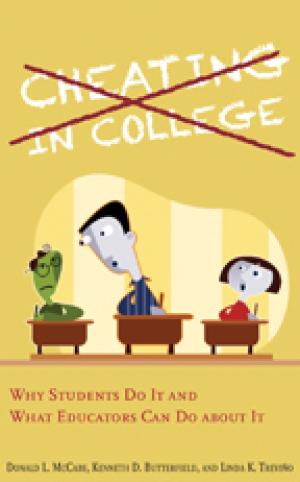
Today's students are tomorrow's leaders, and the college years are a critical period for their development of ethical standards. Cheating in College explores how and why students cheat and what policies, practices, and participation may be useful in promoting academic integrity and reducing cheating. The authors investigate trends over time, including internet-based cheating. They consider personal and situational explanations, such as the culture of groups in which dishonesty is more common (such as business majors) and social settings that support cheating (such as fraternities and sororities). Faculty and administrators are increasing their efforts to promote academic honesty among students. Orientation and training sessions, information on college and university websites, student handbooks that describe codes of conduct, honor codes, and course syllabi all define cheating and establish the consequences. Based on the authors' multiyear, multisite surveys, Cheating in College quantifies and analyzes student cheating to demonstrate why academic integrity is important and to describe the cultural efforts that are effective in restoring it. (From the Publisher)

Journal Issue.
The purpose of this study was to examine the gender bias in student ratings of effective teaching. Students in five colleges were invited to rate instructors on three factors: interpersonal characteristics, pedagogical characteristics, and course content characteristics. We analyzed group differences based on student gender, instructor gender, and student level. Ratings of pedagogical characteristics and course content characteristics yielded significant interactions between student gender and instructor gender, but no differences were found among groups on interpersonal characteristics. We concluded that gender bias plays a role in students’ views of effective teaching in terms of how students evaluate pedagogical and content characteristics and that this bias generalizes across student levels.