Resources
Field Education supervisors from 6 schools report on different learning community opportunities they facilitated among a selected group of supervisors, regarding each as a “community of practice.”

Journal Issue.
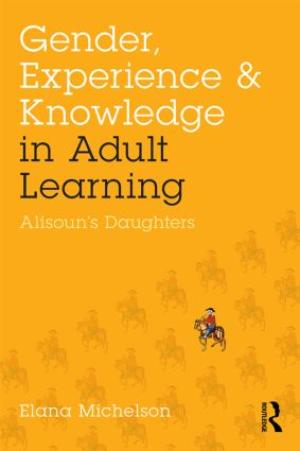
Click Here for Book Review Abstract: In this wide-ranging book, Elana Michelson invites us to revisit basic understandings of the 'experiential learner'. How does experience come to be seen as the basis of knowledge? How do gender, class, and race enter into the ways in which knowledge is valued? What political and cultural belief systems underlie such practices as the assessment of prior learning and the writing of life narratives? Drawing on a range of disciplines, from feminist theory and the politics of knowledge to literary criticism, Michelson argues that particular understandings of `experiential learning’ have been central to modern Western cultures and the power relationships that underlie them. Presented in four parts, this challenging and lively book asks educators of adults to think in new ways about their assumptions, theories, and practices: - Part I provides readers with a short history of the notion of experiential learning. - Part II brings the insights and concerns of feminist theory to bear on mainstream theories of experiential learning. - Part III examines the assessment of prior experiential learning for academic credit and/or professional credentials. - Part IV addresses a second pedagogical practice that is ubiquitous in adult learning, namely, the assigning of life narratives. Gender, Experience, and Knowledge in Adult Learning will be of value to scholars and graduate students exploring adult and experiential learning, as well as academics wishing to introduce students to a broad range of feminist, critical-race, materialist and postmodernist thinking in the field. (From the Publisher)
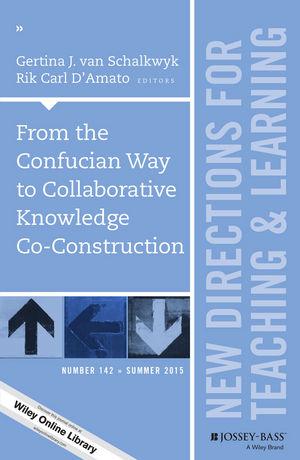
Click Here for Book Review Abstract: Sharing and engaging in interactions and discussion as required for collaborative teaching and learning can be a foreign concept to students coming from Asia or growing up in an Asian family. As such, this first volume in a two-volume edition helps lecturers, educators, and teachers create collaborative teaching and learning experiences with multicultural adult learners in higher education. Topics include: - assessment and evaluation techniques that focus on collaborative teaching and learning with diverse students - students’ cultural beliefs and strategies for outcomes-based collaborative teaching and learning in Asia, and - an understanding of the unique learning motivations of contemporary Asian students. This is the 142nd volume of this Jossey-Bass higher education series. It offers a comprehensive range of ideas and techniques for improving college teaching based on the experience of seasoned instructors and the latest findings of educational and psychological researchers. (From the Publisher)
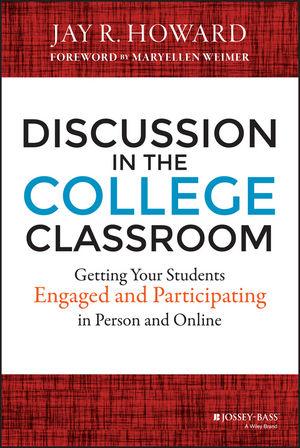
Click Here for Book Review Abstract: Second only to lecture as the most widely used instructional strategy, there's no better method than classroom discussion to actively engage students with course material. Most faculty are not aware that there is an extensive body of research on the topic from which instructors can learn to facilitate exceptional classroom discussion. Discussion in the College Classroom is a practical guide which utilizes that research, frames it sociologically, and offers advice, along with a wide variety of strategies, to help you spark a relevant conversation and steer it toward specific learning goals. Applicable across a spectrum of academic disciplines both online and on campus, these ideas will help you overcome the practical challenges and norms that can undermine discussion, and foster a new atmosphere of collaborative learning and critical thinking. Higher education faculty are increasingly expected to be more intentional and reflective in their pedagogical practice, and this guide shows you how to meet those expectations, improve student outcomes, and tackle the perennial problem of lagging engagement. Thoroughly grounded in the scholarship of teaching and learning, this book gives you concrete guidance on integrating discussion into your courses. You'll learn to: - Overcome the challenges that inhibit effective discussion - Develop classroom norms that facilitate discussion - Keep discussion focused, relevant, and productive - Maximize the utility of online student discussions The kind of discussion that improves learning rarely arises spontaneously. Like any pedagogical technique, careful planning and smart strategy are the keys to keeping students focused, engaged, and invested in the conversation. Discussion in the College Classroom helps you keep the discussion applicable to the material at hand while serving learning goals. (From the Publisher)

Responding to Jacques Derrida's vision for what a 'new' humanities should strive toward, Peter Trifonas and Michael Peters gather together in a single volume original essays by major scholars in the humanities today. Using Derrida's seven programmatic theses as a springboard, the contributors aim to reimagine, as Derrida did, the tasks for the new humanities in such areas as history of literature, history of democracy, history of profession, idea of sovereignty, and history of man. Deconstructing Derrida engages Jacques Derrida's polemic on the future of the humanities to come and expands on the notion of what us proper to the humanities in the current age of globalism and change. (From the Publisher)
This essay is part of a collection of short essays solicited from authors around the globe who teach religion courses at the college level (not for professional religious training). They are published together with an introduction in Teaching Theology and Religion 18:3 (July 2015). The authors were asked to provide a brief overview of the curriculum, student learning goals, and pedagogical techniques employed in their courses.
This essay is part of a collection of short essays solicited from authors around the globe who teach religion courses at the college level (not for professional religious training). They are published together with an introduction in Teaching Theology and Religion 18:3 (July 2015). The authors were asked to provide a brief overview of the curriculum, student learning goals, and pedagogical techniques employed in their courses.
This essay is part of a collection of short essays solicited from authors around the globe who teach religion courses at the college level (not for professional religious training). They are published together with an introduction in Teaching Theology and Religion 18:3 (July 2015). The authors were asked to provide a brief overview of the curriculum, student learning goals, and pedagogical techniques employed in their courses.
This essay is part of a collection of short essays solicited from authors around the globe who teach religion courses at the college level (not for professional religious training). They are published together with an introduction in Teaching Theology and Religion 18:3 (July 2015). The authors were asked to provide a brief overview of the curriculum, student learning goals, and pedagogical techniques employed in their courses.