Book Reviews
This global study of teaching, learning, and assessment goes beyond the typical single country context to extend to good pedagogical practice on six continents.The argument of each chapter is supported by examples of good practice accounts from around the world, a collection that forms a refreshing change from a generic case study model. Although the examples lean most heavily toward English-speaking institutions and classrooms, there is significant attention paid to various elements of pedagogy from many cultural perspectives. The author takes great care throughout the book to consider all elements of the changing higher education landscape, including the changing student body, changes in technology, and changes in expectations about the goals of higher education and graduate employability. The twelve chapters of this book take a comprehensive view of diversity in higher education teaching, learning, and assessment. The book opens with a consideration of cultural mores and assumptions that directly affect interactions in higher education. Brown looks both to the past and the future in subsequent chapters, noting pedagogical traditions and innovations in the context of today’s higher education landscape. She argues that we must adjust to a technology-rich world that necessitates more focus on “learning how and learning why than on learning what” (21). Her view of technology in the balance as both a distraction and a valuable addition to certain aspects of both teaching and learning is refreshing, as so many books either glorify or decry technology in classrooms and society. This ability to see things in the balance is one of the greatest strengths of this book: rather than arguing for a “best” way to teaching or learning or assessment, this book offers multiple possibilities from multiple contexts and thus leaves much to the reader to judge based on his or her context and constraints. Brown identifies a few global trends. The most widespread seems to be a move from transmissive to transformative education. She notes that there is a “movement from perceiving the university teacher as an all-knowing, unchallengeable authority figure” (27) and parallel a movement by institutions and disciplines toward encouraging learning outside of the lecture hall. Another trend is teaching toward the multiple literacies expected of a twenty-first century graduate, looking well beyond academic literacy to digital, assessment, and interpersonal literacies (88). Finally, Brown notes that all education needs to think of itself as taking place in a global environment. This book is itself a fine way to encourage broader thinking about pedagogical contexts in higher education: our students are shortchanged when we privilege our own pedagogical traditions and ignore the broader, global context of higher education. The strengths of this book are many. For instance, the author provides substantive and exhaustive bulleted lists in each chapter, a diverse set of highlighted good practice accounts, and a full chapter devoted to higher education teacher development. The book is easy to navigate, written in clear prose, and at once expansive but grounded in particulars. I would recommend this book highly to teachers and administrators in higher education across the disciplines.
As an African American female associate professor in religious studies, I heard my voice and I felt heard as I read many of the essays in this book. It is intentionally intersectional, addressing race and ethnicity (and to some degree sexual preference) as well as gender. The editors and authors are scholars and administrators in the field of sociology, generally. With this book they interrupt the culture of silence in higher education, which remains the gendered domain of white males where women continue to experience inequality. Case studies, personal narratives and experiences, qualitative (interviews) and quantitative research raise readers’ consciousness about oppressive structures and cultures that impact women in academe. Women have made gains in the academy in terms of their increased presence, but major challenges remain. In this sourcebook each essay builds on existing research and offers suggestions for changing oppressive structures and cultures. The book is divided into five parts, each ending with a case study, and each chapter includes a list of resources. The final chapter offers models for engendering change. The book was born among scholars concerned with bringing together service, scholarship, and activism. While much is said about women faculty in general, a number of essays focus on nonwhite women and specifically black women as the “double minority” in the academy. They are less likely to be mentored, promoted to full professor, granted tenure, and more likely to leave the academy. Part One addresses problematic structures, such as exclusionary practices (lower wages and less upward promotions) that require faculty action to address. Also significant are the horizontal impediments to shattering the glass ceiling and not just the vertical ones (increasing numbers of women). Another example is the uneven, inequitable service burden placed on women and the accompanying fairy tale advice to ‘Just say no to service,’ which only “exacerbates gender-blind sexism in academia.” In the latter case the author suggests that institutions “just don’t ask” unless they are prepared to acknowledge and reward women’s service labor. Part Two discusses the dissonance between structures and cultures. Often structures like institutional quotas and commitments to diversity work in favor of women’s presence, but institutional cultures are resistant, hostile, violent, and unhelpful. Part Three addresses exclusionary cultures, including those that protect disciplinary canons, perpetuate the white male as the “ideal professor,” and value problem portable over problem-based research, which devalue women and the interdisciplinary work of nonwhite women. Part Four discusses “chilly climates,” “contrapower harassment,” incivility, microaggressions, and mobbing that are pervasive and often unchecked. These behaviors have greater negative impact on women with consequences for their physical and emotional well-being and job productivity. One author suggests that women of color consider a “trauma-to-transformation” model that involves redefining self, brain detoxification, sense-making, and reconfiguring the social reality. I highly recommend this book to institutions that value diversity (without which academic excellence does not exist) and desire to create a healthy, productive environment for a truly diverse and representative faculty and administration. I also recommend it for female and male faculty and administrators impacted by cultures of silence and who are interested in disrupting and dismantling those cultures.
Published in the Fortress Press series, “Seminarium: The Elements of Great Teaching,” this affordable, concise volume is targeted for Protestant seminary professors in particular but will also be of value to those working in Christian higher education and ministry, more generally. The teacher-friendly format features three chapters of text by K. Johnston Largen, punctuated by sequentially numbered, stand-alone text boxes of “Praxis Points” by C. Lohr Sapp, and responses to each chapter and an epilogue by M. E. Hess. The text offers many useful resource references including texts, websites, and video clips. Quick Response codes intersperse the text and the relevant URLs are also provided in footnotes. The first chapter presents four specific examples of interreligious experience relating to Hinduism, Islam, Buddhism, and Judaism, in order to demonstrate the urgent and practical importance of interreligious education and dialogue. The second chapter offers a theological rationale for such learning drawing upon insights of comparative theology. The third chapter suggests expected outcomes and pitfalls, strategies for including interreligious learning within a theological curriculum, and considerations for assessing transformative praxis for students, faculty, and institutions. The format highlights the richness of collaborative work that coheres well throughout the volume yet offers distinct contributions by each authorial voice, modeling the value of dialogue in its overall presentation. Theological references are primarily Lutheran and Roman Catholic but also model dialogue within Christian diversity. A further dialogue which informs all aspects of this text involves pedagogical scholarship, particularly literature associated with adult learners. Each author demonstrates pedagogical depth and writes in a personal, accessible, and occasionally humorous tone. Since the authors emphasize the importance of meeting students where they are and structuring learning opportunities with this in mind, a great deal of attention is paid to resistance and fears some Christian students continue to have toward learning about other religious ways and practices. Readers who are not actively involved in communities or educational settings that reflect this tension and ambivalence may be impatient with the introductory nature of the volume. The authors write to convince and inform those who are beginning or seeking to encourage others to begin this type of transformative praxis.
Michael O’Donoghue writes that he has “attempted to create a work which [he] hope[s] is more of an educational thinking and production tool than a how-to-guide”(xi). The book does not quite achieve this particular goal because the author has, in fact, quite nicely done both. His paradigm for pedagogy’s interaction with video and his helpful sections on effective video creation gives the reader a philosophical as well as a practical grounding in the use of video in academic settings. O’Donoghue’s emphasis on teaching and learning ensures that every concept behind video production is linked in some way to a principle in teaching and learning. Making a pitch, or selling an idea for a video allows for review and reflection by teachers and students. Creating a framework for the film gives the educator an opportunity to clearly define learning objectives and outcomes. And a concern over the visual format of the film leads to a discussion on how teaching objectives are presented and received. While this may sound like a rather clumsy construction, O’Donoghue -- in part due to a clean and clear writing style -- pulls it off. As the educational justification is laid out for every aspect of multimedia production using video, readers begin to realize that something else is occurring. They are learning the technical aspects of video production and creation. While video production can seem intimidating, O’Donoghue walks the reader through the process from pitching and scripting to camera usage and post-production. His appendices add to the wealth of direction with an example of a pitch document, an illustrated storyboard, a production course structure, and a short section on lecture capture. But, by far, the best section in this book is the chapter of expert interviews. The author interviewed over twenty people on the use of educational video. He pared those down to the six who appear in chapter five, which is titled “Six of the Best.” And the title does not lie. Among the interviewees is are Sir David Attenborough, of natural history filmmaking renown, and Richard E. Mayer, one of America’s deans of academic multimedia usage. And there is a gem within this gem. The interviews are far ranging, illuminating, and different for each person. However, the final question is the same for them all: “Do you have suggestions for improving educational video productions?” Not only does the reader get very practical tips from these six but the author also gives the response to that question from all twenty-three persons interviewed. There is an embarrassment of riches here. The final chapter, concerning student production of a video, is interesting and practical but could have been longer. The further reading section and bibliography are also helpful and the index is surprisingly robust for such a short book. While the technology used in filming has changed in the last few decades many of the concepts of filming have not. Consequently, I see this philosophically and technically practical book being relevant and extremely useful for many years to come for educators in higher educational contexts.
This collection of ten essays examines globalization (the radical diversity and complex interconnections that characterize the present state of human existence in the world) and offers various methods for teaching and doing Christian theology in this context. Globalization has arisen, in large part, from the colonial expansion of western European nations, through trade and commerce, migration, travel, and mass communication, and has resulted in a crisscrossing and blurring of national and cultural boundaries (12, 40, 145). The first century Marcan imperative for Christians to “go into all the world” that was at first aspirational is now the reality of Christianity in the twenty-first century. The collection is divided into three sections. Part I defines globalization and encourages theological educators to take seriously not only the current pluralism in the world but also the diversity within Christianity both presently and historically (14, 29, 46). Part II examines the concept and practice of theological education, inclusive of methods for encouraging seminary students’ positive engagement with persons of other faith traditions (104). Part III goes further to suggest how theological educators can enable their students to achieve a deeper understanding of being and acting as persons of faith in global community. Just as important as the divisions of the collection are the prominent themes in this volume of essays. Some of these themes are: intentionality in seeking, welcoming, and appreciating encounters with other religions (51, 92); the role of theology in public life in addition to its functions in Christian churches and communities (12); the importance and desirability of dialogue in teaching theology as well as in the encounters between different religions and cultures (42, 54, 83, 109, 150); the enhancement of systematic theology and theological education through comparative studies and comparative theology (47, 100, 104, 109); the interrelatedness and mutual influences between local settings and global networks (79, 146, 165-166, 173); social justice as the common good and essential feature of global community (58-59); and global citizenship as participation in global networks and responsibility for improvement of the same by exposing and challenging systems of oppression and by working for social justice (59, 67, 88, 126). The collection represents a noteworthy start to critical reflection and modifications in teaching Christian theology in light of the diversity and pluralism resulting from globalization. The essayists describe their use of pedagogical tools such as field trips (51), sacred texts from various religions (52), roundtable discussion (152-160), service and study abroad (81-84, 169), non-western cultural sources (92-99), comparative studies in religion (52, 100), music and language arts (117-120), and autobiography for reconstructions of identity (78, 168-171). Further work is needed in analysis of the shifts within Christianity itself. Several of the essayists acknowledge that demographic shifts are tilting the population growth of Christianity towards the Global South – Africa, Asia, and Latin America. One essayist asks the question: What new or alternative interpretations of Christian doctrines will emerge in these areas? (38). Postcolonial theologies are already taking shape. Christian theology in the future will likely be the product of mutual learning between the Global South and the Eurocentric Global North.
If your school is in the process of transitioning to online learning, Integrating Pedagogy and Technology may be the only book you need – it certainly should be one of the first you read. Bernauer and Tomei’s work is brimming with very useful information for schools in transition. The authors have devised what they call an “Integrated Readiness Matrix” (IRM) to assist institutions both in discerning how ready their faculty may be for this change and in moving them toward greater technological and pedagogical proficiency. “The goal of the IRM and this textbook is simple: move higher education faculty incrementally from lower left quadrants to more advanced upper right quadrants” (80). Considering how best to integrate technology into instruction “requires all faculty to be conversant with the theories of learning, the taxonomies and domains of learning, a new methodology for preparing and developing college faculty for a career of classroom teaching” (vii). The book includes a chapter on educational psychology, exploring the unique features of five pedagogies: behaviorism, cognitivism, humanism, constructivism, and connectivism. It builds to address taxonomies of learning, pedagogical skills and competencies, and technological skills and competencies. The lists of competencies and learning objectives for faculty development in chapters eight and nine are worth going over with faculty even by themselves. The authors, from Robert Morris University in Pittsburgh, model educational theory, using advance organizers at the beginning of each chapter, for example. Chapters may end with review sections, indices of concepts addressed in particularly complex chapters, suggested readings, and so forth. The preface introduces preconditions for using the Integrated Readiness Matrix, which is considered “sufficiently valid and reliable to serve as a basis for faculty self-assessment and professional faculty development,” to determine where each faculty member’s pedagogical and technological skills need bolstering (vii). Another strength of this book is its applicability to various kinds of learners and institutional contexts. This material is valuable whether you are teaching undergraduates, graduate students, or other adult learners. Your field does not matter; this is not one of those texts where everything must be translated in order to be useful to theological or religious-studies faculty. Reflective teachers and institutional administrators concerned about how to develop faculty competencies will both find appropriate and important resources here. Many institutions of higher learning are already in the process of transitioning to more online offerings. But this often happens in a haphazard, unorganized way, leaving certain faculty to carry the technological burden for the entire institution. Alternately, online expectations are introduced or imposed, but faculty are not empowered and trained to make the best use of technological tools, or pedagogical considerations do not enter the discussion. This book can be used to assist entire departments in training faculty, generating conversation about the pedagogical sophistication necessary to use technology well, and balancing technological and pedagogical considerations while transitioning to online learning.

Invoking the name of the “Common Core” effort to establish national K-12 educational standards in its title, this is not a text directed primarily at college educators. It is important to ask, therefore, whether the authors’ approach is broad enough to answer the needs of the college classroom and whether their approach to teaching writing is of any use to the professor of theology or religious studies. The answer is “yes” to both. In an effort to “mine the gold” in the Common Core writing standards, Murphy and Smith identify six big ideas: teaching writing as a process, integrating the language arts, extending the range of student writing, spiraling and scaffolding, and collaborating. The emphasis on writing as process informs their entire project and the other themes are treated in individual chapters. Preparation for the book included conversations with “dozens of teachers,” with some “college teachers in the mix” (7). The second chapter provides a sample lesson plan and commentary designed to integrate the language arts; that is, reading, writing, speaking, and listening. Among the chapter’s helpful charts is a list of “strategies for writing with specifics” including “details,” “examples,” and “active verbs” (23). One can imagine a professor drawing from this list when helping a student enhance vague writing. Ideas for building student vocabularies and building community are equally transferable to the college environment. The third chapter takes on the challenge of extending the range of writing and acknowledges the difficulty students have when transitioning from descriptive to argumentative essays. With vignettes, ideas for writing exercises, and samples of student writing, the authors are able to provide some insight into the ways students struggle and how one might build bridges to help. In a particularly thoughtful college-level example, the professor has her students read exemplar restaurant reviews and collaboratively design a grading rubric based on the effective strategies observed in these reviews before writing their own. The fourth chapter examines how the pedagogical practices of spiraling and scaffolding produce better writers. By spiraling, the authors mean revisiting key concepts repeatedly at different layers of complexity. By scaffolding, they mean any temporary practice exercises or assistance intended to sharpen students’ skills. Within a list of examples is the suggestion that students spend some class time focusing on a single quote that supports their argument and assessing how to connect it to their own ideas. Reflecting on collaboration, the fifth chapter describes student-to-student, teacher-to-student, and teacher-to-teacher collaborative strategies. Drawing on the theme of collegiality, the authors use their final chapter to consider how teachers can best produce positive institutional change. This is the principle of the book as a whole: effective teaching practices should be sought among effective teachers. This slim volume will be of great interest to college educators. It provides meaningful insight into the struggles students experience when transitioning from high school to college writing and practical advice on how to help.
Reading, Writing, and Discussing at the Graduate Level A Guidebook for International Students by Rina Kim, Lillie R. Ablert, and Hang Gyun Sihn is a new resource for graduate international students and those who work with them in the academic setting. The three authors come from diverse personal and academic backgrounds and draw from their experiences as international students themselves and from working with international students in developing this text. They provide a guidebook for students who are proficient in English but struggle to understand the “academic culture and norms in the United States” (ix). Each chapter focuses on a different aspect of graduate level work; academic reading, in-class discussions, writing assignments, preparing oral presentations, and developing relationships with classmates and professors. The authors do a good job of stating the limited scope of their effort. They recognize that the text is not going to provide a comprehensive primer on academic writing or research, but they point out common ways in which international students are derailed in their efforts because they misunderstand expectations. Throughout the text, the authors draw on informal conversations they have had with students to illustrate common perspectives or misunderstandings. The scenarios they highlight help to clarify issues and suggest ways of moving forward. These scenarios provide some of the most helpful insights in the book. International students may find chapter two on “Engaging in Academic Discussions” and chapter five on “Developing Social and Academic Relationships” to be the most helpful because they discuss at length ways to build confidence and helpful hints for anticipating the atmosphere of classroom interactions in the United States. The most effective aspects of each chapter are the ways in which the authors show how perspectives and expectations differ even in basic items such as how reading lists are arranged in a syllabus or clarifying the expectation to write in your own words. The subtle nuances of the academic culture of the United States are dealt with in a relaxed manner, encouraging students to ask questions or seek help when necessary. The text does assume a high level of reading proficiency. This is stated clearly by the authors, but the writing might be too complex for the students who are seeking the type of assistance the book covers. Although the main audience is the international student, this book is probably more helpful for faculty members who are beginning to teach international students. The informal scenarios that are scattered throughout the book provide a helpful window into the mind of the international student. Faculty members or other mentors will find this text helpful as they shape assignments, engage international students in classroom discussions, and articulate expectations.
Digital Storytelling originated in the early 1990s in the matrix of what was then called “new media”: a mix of graphics, photography, videography, audio recording, and video and audio editing. As first developed at the Center for Digital Storytelling in California, workshop participants learned to create a two- to three-minute first-person story in a digital format that could be shared via the Internet. By 2000 when media production software became commonly available on personal computers, what had been the realm of professional artists and media producers became a potential playground where ordinary people of all ages could be empowered to craft and to share digitally a succinct, poignant, brief first-person video story. Since then, this form of storytelling has found advocates around the world: in small villages in Wales; in schools from elementary to college-level in the U.S.; in museum art programs in Australia; and in social service and social justice organizations in the U.S., Africa, and elsewhere; and in youth faith formation in Norway and Denmark. Major universities now offer education courses in this method, from the University of Cardiff in Wales to the University of Hawaii. ESL teachers have successfully employed this technique to help immigrants tell their stories. PhD students have written dissertations that explore the evolution and application of Digital Storytelling in a variety of settings, and media and cultural studies scholars have analyzed this phenomenon as it has been introduced in multiple cultures. While the original short format is referred to with initial capital letters, the wider field of digital media storytelling has evolved and now takes many forms. Patricia McGee has carved out a portion of this diverse world of digital storytelling and limited her comments to “Higher Education, Professional, and Adult Learning Settings,” which is still a very wide scope. She divides this well-researched work into three sections that provide excellent overviews of past storytelling traditions and new twenty-first century approaches; current institutional uses and emerging models for digital storytelling; and applications in diverse cultural and institutional contexts. She advises readers to turn to whichever section they find of most interest. Theological educators and religious studies professors will most benefit from exploring the third section on applications. With a little imagination, they can envision how the digital storytelling examples McGee cites can be translated for application in their classrooms and how their ministry students and graduates can use digital storytelling in youth ministry, faith formation, catechumenal processes, new members gatherings, church building transitions and anniversaries, and church websites. McGee, Associate Professor of Digital Learning Design at the University of Texas at San Antonio, is evidently a master of her wide-ranging, fast-evolving field. She is a good guide, one who will stretch the vision of theological and religious studies educators. By introducing this creative, communal digital storytelling process in their classrooms, their students can learn to empower themselves and others to claim their voice.
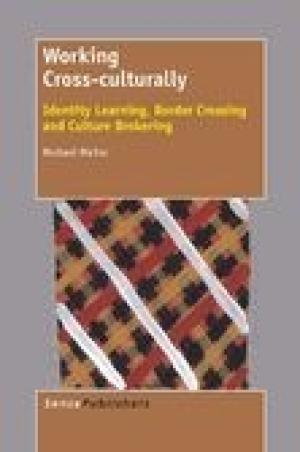
Michael Michie’s 2014 publication of his dissertation argues that previous research into cross-cultural teaching has focused on skills, methods, and curriculum, but ignores teachers. To address this lacuna, Michie interviews six professional, western, K-12 science teachers of indigenous students and investigates what qualities characterize successful cross-cultural teachers and how teacher training can prepare instructors for cross-cultural contexts. Michie’s work makes three contributions to pedagogical discussions of cross-cultural teaching. First, Michie provides a sustained examination of the ways cross-cultural experiences shape teachers into “culture brokers” or “border crossers.” Michie claims the most successful teacher of indigenous students learns to be a border crosser in his or her identity formation even before entering the classroom. Second, Michie analyzes successful border crossers and constructs a profile of a border-crossing teacher. Finally, Michie suggests what kind of training shapes teachers to be successful culture-brokers. Michie claims an “international” framework for his study (1), but limits his subjects to those teaching in western, English-speaking sites (Australia, New Zealand, and Canada, 141). Michie argues that his focused data allows him to speak more precisely, and leaves expansion of this deep, thorough analysis to successive studies. Michie’s project unfolds in six chapters. In chapter one he defines the project and identifies himself as a “participant-researcher” with his subjects (2). In chapter two, Michie reviews the literature on western teaching of indigenous children. He sifts the anthropological, biological, and ethno-historical studies on “border crossing” and “cultural brokerage” (5) to refine the terms. He defines culture “as the social environment in which an individual is raised and lives and includes a range of concepts and beliefs that is accepted by individuals as defining their group identity” (14). The role of education is to “help those growing up in a culture find an identity within that culture” (Michie cites Bruner 1996, 15). This move brings identity studies and questions of power into the forefront of pedagogy – the (western, powerful) identity of the teacher and the (indigenous, marginalized) identity of the students. Thus teaching requires dexterity and self-awareness in crossing cultural borders. Michie’s first contribution is to distinguish between terms in the literature. In his subjects, Michie finds that “border crossing” (“the ability of people to move metaphorically between cultures,” [50]) is a specific identity formed in “marginal people” (51). In contrast, “culture broker” (“a strategy which an individual can be used to promote cross-cultural understanding,” [51]) is the “role” that an “intermediary” chooses when mediating between cultures (52). Next, Michie proposes that teachers in cross-cultural situations can choose a mediating role while actively cultivating respect and appreciation for the cultures they move between (as border crossers do; 52, 79). In chapter three, Michie analyzes the participant interviews looking for evidence of border-crossing experiences and cross-cultural encounters earlier in life. Teachers of indigenous students report positive affective and cognitive experiences when they engaged (pre-professionally) indigenous and first nation people (73). Michie identifies three successive degrees of engagement in the teachers. “Border crossers” choose a transitory role and show “interest in the culture and aspirations of indigenous people”; “border workers” “continue to work at the border as allies of the indigenous people”; “border mergers” exhibit a fully bi-cultural identity and do not distinguish between the cultures they navigate (80-81). Chapter four examines how participants understand the role of culture broker or border-crosser and for what purpose they use that role. Chapter five evaluates participant ideas of how to enable teachers to cross cultural borders in their classrooms. Michie then defines what kind of training can best shape K-12 instructors to teach from a culture broker role. Finally, chapter six summarizes Michie’s conclusions and applies the best teacher training practice to specifically preparing western instructors to teach science as foreign cultural knowledge to indigenous students. This study can be applied to the pedagogy of religion in at least two situations. First is for college or seminary instructors to consider teaching the academic study of religion as a “foreign” way of knowing. How might students of deep religious conviction respond differently to a perceived exercise of dissecting their sacred text if instructors cross that cultural divide between confessional faith and academic study first? The same cultural crossing might bring “nones” into a new world of thinking about and reflecting analytically on religion. Second, Michie shows that, as professional teachers, our cultural identities and our ability to meet students have already been shaped – positively or negatively. Reflecting on the degree(s) to which we are able to meet our students, cross metaphorical and cultural borders, and broker academic culture with newcomers is critical to our growth as teachers.