Book Reviews
This volume is the most recent of a triumvirate of interrelated works Maiorana has recently published. Teach Like the Mind Learns builds off Fixing Instruction: Resolving Major Issues with a Core Body of Critical Knowledge for Critical Instruction (2015) and Preparation for Critical Instruction: How to Explain Subject Matter While Teaching All Learners to Think, Read, and Write Critically (2016). Maiorana’s larger project is an ambitious one. He takes aim, with broad brushstrokes, at rote-learning styles of instruction, a specter he calls “serialism” and describes as the “teaching profession’s weak default instructional strategy” (4). He contends that this pervasive style inhibits “our innate ability to think critically” (155). As an antidote, Maiorana offers his own unique instructional framework. He argues that subject matter is universal and critical in nature across disciplines. He also argues that one can teach how the mind learns, and as a result, promote teaching that gets students to write, speak, and observe critically. One can do this by utilizing “mind grammar,” which he defines as the “innate, systematic, and patterned way that the human mind encounters the world and all its subject matter” (6), At the core of mind grammar instructional techniques are what he calls “subject matter displays.” Much of the practical approach involves formal concept mapping and displaying the explanation of a certain term or concept with related activities. The book unfolds in two main parts: part one provides an overview of Maiorana’s theoretical basis for critical instruction, and part two offers numerous examples of activities and instruction sets using this framework. Teach Like the Mind Learns is a tough nut to crack. This is largely because it is a closed intellectual loop. The only other instructional literature Maiorana cites in footnotes and references in passing are his own two earlier works on the topic. He even instructs the reader to purchase his previous books so one can better follow the self-referential citations that abound in each chapter. The first-time reader must further master Maiorana’a distinctive vocabulary, from mind grammar to “Itechniques” and “Imethods.” Consequently, the learning curve for reading Teach Like the Mind Learns is steep. It is largely predicated on the assumption that the reader has read and embraced Maiorana's earlier works. There are some helpful insights throughout, including the example teaching exercises that make up the second half of the book. But as Maiorana’s approach avoids engaging with any other instructional literature beyond his own, it is ultimately not clear how one might use this approach in combination with other pedagogical styles and resources to improve classroom instruction. Further, he suggests a remarkable universality to his framework, regardless of specific context – from elementary through college-level instruction – a bold one-size-fits-all approach. In a world of opportunity costs, limited time, and limited energy, someone looking to explore “how the mind learns” would be much better off diving into the established science of learning literature. There are numerous accessible works on its foundations and praxis, and several that are specifically about improving instruction at the college level, such as James Lang’s Small Teaching (San Francisco: Jossey-Bass, 2016) and Donelson Forsyth’s College Teaching (Washington, D.C.: American Psychological Association, 2016).

In 2009, authors Ilarion Merculieff and Libby Roderick participated in the second of two higher education projects sponsored by the Ford Foundation’s national Difficult Dialogues initiative. This project was designed to “turn the tables” on traditional academic professors so that Alaska Native people would become their own teachers (iii). This book, Stop Talking, tells the story of the second project, laid out in a format that parallels the experience gained in a faculty immersion workshop with Alaska Native teachers, followed by an ongoing community of inquiry (chapters 1-5). The final chapters show the nature of change in pedagogy designed by faculty participants for one academic year and the assessment of the entire project, reflections, and strategies for changing higher education through indigenization (chapters 6 and 7). The goal of this project was to instill deeper understanding of traditional indigenous worldviews, issues, and pedagogies by fostering respect for different ways to be teachers and learners (x). Sixteen faculty members participated in experimenting with Native ways of teaching and learning and introducing “difficult dialogues” regarding Alaska Native concerns during a week-long intensive workshop. The flow of the intensive time together is outlined in the first four chapters. The format for teaching during the workshop included much silence, a slower pace, and no note-taking. Learning occurred by non-verbally internalizing that which was important because words, in the Aleut tradition, are considered a constraint on intelligence, getting in the way of living in the present; therefore, ground rules for the intensive workshop included paying attention to being part of a whole through deep connection, often wordless, thereby making one a “real human being.” Participants learned that Native pedagogies occur out of teaching practices such as slowing down to be in relationship with each other and the Earth, close observation and emulation, use of all senses in silence, storytelling, dance, and games. Participants used these practices throughout the week during daily workshops, and were invited to think about the courses they normally teach in light of such practices. The difficult conversation topics followed later in the week, when faculty participants began to deal with the institutional racism and the Western methodology of science and research used in institutions that ignores or devalues Native ways of learning and teaching. During the intensive, faculty began to integrate the particularity of their course material with a wider, deeper pedagogy. Afterward, the group agreed to meet monthly for one academic year to continue their community of inquiry. They conducted formal assessment of their work, and engaged in deep reflection together. Roderick’s call to this indigenizing of higher education is important: “If we can do these two things – learn from these ancient cultures fresh ways of approaching the tasks of learning while simultaneously working to overthrow the ongoing legacy of colonization that still plagues modern indigenous peoples – we will have accomplished a great deal” (ix). Indeed, such work is essential for equitable, deep education. This work is our future. This book, filled with story and wisdom, is our guide.
If you are a librarian or educator engaged in student learning, and are satisfied with the sameness and predictability of current methodologies, read no further. However, if you have need of developing strategies that are up-to-date, relevant, and promote shared perspectives, read on. Emerging Strategies for Supporting Student Learning equips the reader with an arsenal of educational approaches, geared for higher education. They are field-tested, validated by case studies, and include both North American and European perspectives. Like many other researchers focusing on emerging trends in education, Allen echoes the common refrain that today’s rapidly changing society necessitates “new approaches to support student learning” (1). Where this volume finds its niche and wields special power, is its ability to connect across disciplines – amongst librarians, information workers, and classroom instructors. It can also be utilized with students from undergraduate to doctoral level, and in varied settings. Among the trends included in this text are: student digital literacies, learning and teaching activities, designing face-to-face, blended and online courses, assessment, and issues of lifelong professional development. The chapters are divided into sections that include a concise introduction, subject content, summary, and references. Allen brings to her research an acute awareness of the challenges faced in higher education, having worked for several years in varied educational settings in the United Kingdom. She might even be faulted for showing too much concern when covering certain settings in minute detail. For example, she reminds us that because educators have so little choice about room allocation, “it is worth visiting it beforehand to check the facilities….This double checking could help you avoid being in an embarrassing situation” (126). This relentless attention to detail can also be viewed as her way of ensuring that such strategies are successfully executed. Throughout the text, we are encouraged to ask critical questions that will help inform the decisions we make about education strategies. When examining formative and summative assessment, the author offers a multitude of questions that might be asked beforehand, including: Why am I assessing? What type of assessment is better served? And where is the best place to do the assessment? (91-92). The strategies Allen offers are never dogmatically presented. They are, rather, offered in a smorgasbord manner. They are easily constructed and user-friendly. She encourages the use of ice-breakers, informational graphs, and e-posters at academic gatherings and as a way of allowing material “to be presented in a colorful and imaginative way” (87). Pedagogic models like flipped classrooms are viewed as a way of maximizing student engagement and which runs counter to conventional approaches to teaching and learning. Traditionally face-to-face classroom time is spent by a tutor explaining or presenting new ideas, and this may be followed by some activities. In a flipped classroom, students explore the material outside the classroom and then spend time with the tutor clarifying and developing deeper knowledge through discussion and activities. (116) Keeping up-to-date with professional skills is a high priority for this author. She suggests several digital resources across the spectrum to help make that happen, including the American Library Association (ALA), Flickr Creative Commons, MERLOT, and the National Digital Learning Resource (NDLR) – a “collaborative educational community in Ireland…. interested in developing and sharing digital teaching resources and promoting new teaching and learning culture” (110). The emerging strategies included in this book bear testimony that education is both evolving by the day and in need of constant need of revision. This book helps us move a little toward embracing good educational practice and relevancy.

This book is about preparing for a future already dawning on North American college campuses, a future belonging to “New Majority” (NM) students. Ross describes NM students as Latino/a, African-American, Southeast Asian, Pacific Islander, first generation, and low income. Evidence of NM students is statistically demonstrable, as with the 50% rise of Pell Grant applicants between 2002-13. Demographic surges suggest a “majority-minority” U.S. by 2050. These students often have an educational disadvantage, met in some places with "bridge programs" or other efforts to bolster their success. But is more needed? Are faculty aware and equipped enough to serve NM students, or will faculty continue to be befuddled when students do not speak up in class or react to assignments and grades in unexpected ways? This book addresses these issues by introducing professors to NM students so that they can better understand the cultural cues and expectations these students bring. Part I, "Strategies for Engagement," assesses ways of keeping students engaged, but with special attention to issues NM students face. Chapters begin with classroom vignettes that set up the problem the chapter addresses. Students may disengage because of “stereotype threat,” a socio-psychological phenomenon described in chapter four. Professors best confront this stereotype by bolstering self-confidence while pushing students to engage subject matter more deeply. Students are reluctant to ask questions in class not because they are uninterested, but because they fear sounding ignorant or come with cultural traditions of deference that discourage public questioning. This mismatch of expectations between teacher and students can be confronted through strategies presented in chapter five. Taken for granted as a privileged space with its own practices, the college classroom is strange new territory for NM students. Six chapters in parts II and III introduce strategies that build inclusion and confidence. For instance, NM students benefit from classroom cultures built around interdependence and teamwork rather than individual achievement, which can be perceived as selfish and disloyal in some minority communities. Journaling is another strategy that invites NM students to deeper reflection on a subject and builds connection with the instructor. It helps to overcome the assumption that learning is simply mastery of information delivered through lectures, as opposed to personal discovery and evaluation. Journaling is an important ingredient in the wider purpose of creating leaders for minority communities who produce personal observations, share insights, and opinions with confidence, contributions which are valuable not only for minority communities but also for the wider society in which they will participate. NM students will graduate and enter a workforce where they will continue to face debilitating stereotypes (the final chapter’s opening vignette is about Gabriela, a Latina architecture student who faced negative stereotyping on her first day). College classrooms should be spaces of empowerment for these students so they can begin building a professional identity during their educational experience. Professors can facilitate this with frank discussions of stereotypes NM students will face, by sharing stories of role models, and by cultivating good practices in communication and self-presentation. This book will sensitize faculty to the needs of this growing part of the student body. However, much of the information is applicable to students from all backgrounds, and will improve college teaching for all involved.

The Dean’s Demise offers a disturbing reminder that seminaries and the church are not exempt from the abuse of pastoral powers to coerce sexual demands from colleagues, students, and even children entrusted to their spiritual care. With over fifty years of experience in theological education in the roles of minister, professor, and dean, Richard Fletcher crafts a compelling fictional case study of Dean Karl Wolf and presents comprehensive viewpoints from the perpetrator, the victims and their families, and the school administrators. Fletcher starts the book by describing young Karl Wolf as a promising scholar while foreshadowing his potential liability by alluding to his insatiable need for admiration and power. Fletcher then takes the reader through Wolf’s academic rise to become the dean of a prominent divinity school, all the while sketching his sexual hunts. Wolf is indeed a predator. The reading experience feels almost voyeuristic at times. Fletcher evokes a complex range of emotions in the reader with the secret intimate details of affairs and their aftermaths. Wolf’s blatant disregard for the wellbeing of his victims and his self-serving lies fuel an emotional response and at the same time demand that one thinks through one’s feelings with regard to the physical, emotional, and spiritual damages inflicted on the victims and their families. In addition to providing a profile of the mind and actions of a sexual predator, in The Dean’s Demise we confront the response of seminary officials, including their theological and moral deliberations, and the process of how the school ends up resolving, or rather settling the sexual harassment case against the dean. In light of the multiple stakeholders presented in the unfolding narrative, this book is a rich resource for generating discussions on many fronts, including theological reflections on power and the brokenness of humanity, justice issues and accountability, personality and mental health issues in seminaries, and practical legality around sexual harassment cases. A limitation to the helpfulness of this book is that the content is outdated. Although the book was published in 2016, the accounts of the events are recorded from 1979 to the early summer months of 1993. The content of the book, the nature of Wolf’s sexual predatory behavior, and the ways the school administration respond, are consistent with the time period in which the book is set. Since the early 1990’s, sexual harassment awareness and training initiatives in workplaces and schools have increased. As opposed to the blatant predatory behavior of Wolf detailed in the book, now there are specific definitions and criterion of more nuanced behaviors which constitute sexual harassment. With concrete definitions, guidelines, and policies in place, today’s academic administration’s deliberation and handling of such cases is very different than the deliberation portrayed in the book that relied on collective wisdom. The school administrative demographics are another aspect which date the book – being all men, presumably white. With increasing female and minority faculty members, deans, and presidents in academic institutions, different understandings and experiences shape how power, abuse, and sexual harassment are defined and handled. Whereas all the victims in Fletcher’s book are female, in today’s reality there are more women in power positions that blur and render more complex binary and stereotypically gendered depictions of perpetrator and victim. As sexual predatory behaviors occur within the context of relationships of power and privilege, gender and cultural influences must be considered when deliberating sexual harassment cases.

Why do so few Hispanic males enroll in and graduate from institutions of higher learning? Why are Latinas, by contrast, enjoying so much more success than Latinos? Moreover, why is there a dearth of research addressing these questions? This book, which includes twelve chapters written by leading Latin@ scholars, addresses these questions with the goal of broadening readers’ contextual understanding, deepening their comprehension of the specific challenges faced by Hispanic males in higher education, and securing their commitment to Latino success. The book’s contributors adroitly explore the complex challenges that Latino males face in the context of American society and higher education. The book’s first two chapters discuss many of the socio-economic factors contributing to the current Latino “crisis” in higher education. They carefully examine the Hispanic gender gap and the ways in which it is manifested along the educational pipeline, alternate life pathways for Latino males (such as military, low-paying labor, prison), and factors that frequently hinder Latinos from enrolling in college (such as lack of financial aid literacy and inadequate academic preparation). Multiple chapters investigate key cultural factors that significantly impact Latino experiences in higher education. Chapters Four, Five, and Eleven, for example, focus on Latino identity and intersectionality, probing complicated issues (for example, relationships between caballerismo, Latino persistence, and high attrition rates) and introducing humanizing nuances (such as the Latino male privilege paradox). Chapters Two, Seven, Eight, and Nine pose critical questions about the role that familismo plays in hindering and promoting Latino academic success. Those chapters also address other relevant topics such as the unique features of Mexican sub-culture and various forms of Latin@ cultural wealth. The final section of the book calls on academics to more thoroughly research the crisis pertaining to Latinos in higher education. Chapter Ten describes research on college administrators’ levels of awareness about the challenges faced by Latinos in academia. Their findings, namely that administrators’ awareness not only varied widely, but also that some administrators resisted acknowledging problem areas altogether, underscore the urgent need for more research. Chapter Eleven suggests that studies which compare and contrast the experiences of Latinos and Latinas might yield much fruit, while the authors of Chapter Twelve advocate for a strengths-based, data rich, interdisciplinary approach to research on Latinos, an approach which is successfully modelled throughout the book. In conclusion, educational leaders and researchers are sure to find this book – and especially the new research that it presents – a valuable and generative resource. The book’s contributors helpfully shift the research focus from Latino students’ resiliency and deficits to exploration of the social and cultural factors that shape their educational experiences. While the authors do not offer many substantive recommendations for educational programming and practice or directly address issues pertaining to Latinos in graduate education, they do make a strong case for “ensuring that the success of Latino males in higher education” becomes a national imperative. After reading the book, one also hopes that educators will wholeheartedly embrace Latino success as a moral imperative.
With the ongoing Syrian refugee crisis quite literally fanning the flames of Islamophobia across Europe, Adem Aygün’s well-written and meticulously researched book makes for trenchant reading on the state of Islamic religious education for Muslim minorities in Germany. While Aygün’s particular focus is on Islamic youth in Turkey and among Turkish immigrants in Germany, the book raises questions about Islamic religious pedagogy that have larger, E.U.-wide implications, namely through its challenge to both how non-Christian religion is taught (or not) by the secular apparatuses of European universities and secondary schools, and the pedagogical methods for learning theology that are intrinsic to immigrant Muslim communities in a European country like Germany. The book will interest anyone who works on or with the models of faith development as pioneered by the American theologian James W. Fowler (1940-2015); as Aygün rightfully notes, Religious Socialization constitutes one of the first attempts to bring Fowler’s influential step-models to a non-Christian context (183), using Fowler’s “stages of faith” to frame how Muslim youth in Germany and Turkey see themselves in relationship to their religion and the larger, social world. This book is important reading for scholars who work on the state of theological education in Europe, particularly when it comes to non-Christian religions. Fowler, like William James long before him, decoupled belief from catechism or creed, and relocated it (via a developmental psychology derived from Piaget) in the personal experiences of the self. Some of the fundamental characteristics of Fowler’s hierarchical categories of faith development – such as self-realization, and the acceptance of complexity and diversity – are indubitably imprinted by the liberal Protestantism of the nineteenth and twentieth centuries, and it could be said that Fowler’s project was as much a (biased) theological one as it was objectively psychological, or sociological. Aygün’s book, thus, begins by posing a fascinating methodological problem: can Fowler’s typologies, tinged as they are with their echoes of Paul Tillich and H. Richard Niebuhr, even fit a non-Christian setting, where the relationship between the self, God, and the world ostensibly seems to have a fundamentally different kind of constellation? Aygün’s book is part sociological – his seventy in-depth interviews with Islamic youth from the bulk of the empirical chapters of the work – but also part theological, and the first chapters offer illuminating close readings of the Koran and the Islamic concept of Fitrah to demonstrate (in answer to this question) how critical thinking and self-reflexivity are arguably at the very core of Muslim faith. Reading Islamic theology through Fowler’s models, Aygün deftly argues, illuminates how Islamic traditions are more than adequately equipped with the kinds of theological tools necessary for grappling with the individual’s place in modernity, and the successful integration of the self’s belief with all the complexities of the global world (Fowler’s last, and highest, stage of development being the “universalizing faith” of a Mahatma Gandhi or Martin Luther King, Jr.). The empirical portion of Religious Socialization that presents and reflects on the results of Aygün’s extensive interviews provides some surprising juxtapositions between Turkish Muslims living in Germany and their peers in Turkey. Because of the lack of Islamic institutional apparatuses for Muslim migrants in Germany, the teaching and learning about the Koran has strengthened the family as the critical locus for value-building and faith formation, whereas Turkey’s complex and dense history of state secularization and religious politics has meant that Turkish youth have consistently had a much broader and more diverse exposure to the kinds of the theological education necessary for progressive faith development: the net effect being that religious belief among Turkish youth is “easily on average higher” on Fowler’s scale than it is for youth in Germany (183). A fascinating observation is offered by Aygün here, that the ad hoc system of immigrant mosque education that developed in Germany in the seventies and eighties (54-55) has meant that the mosque as a site of faith-formation plays a much more significant role than it effectively does in Turkey. Regrettably, Aygün notes, the dominant pedagogy offered in these German mosques remains a kind of medieval formalism that focuses on catechismal recitations, often at the expense of developing critical thinking and self-reflection. Ultimately, this kind of “imprisoning of the individual into traditional ways of thinking” (193) has hurt the viability of Islam as a public religion, as it loses its functionality within the pluralizing contexts of the E.U. Aygün is not simply casting stones: the book is a strong, pragmatic call for the German (and by extension, European) university and school systems to better integrate Islamic theological education into their curriculums, and thereby inculcate the kind of reflective and dynamic forms of belief that espouse the cosmopolitan values as present in the higher levels of Fowler’s scaled categories of faith development. Such an institutionalized religious pedagogy could help undo stereotypical prejudices against Islam (all the more resurgent now than at the time of Aygün’s original writing), aid in the coexistence of different religions, and even potentially benefit Turkey’s attempts to join the E.U. (197). There is, to date, very little of such institutionalization in place. The recently established partnership between the universities of Frankfurt and Gießen for a Center for Islamic Studies with a special emphasis on teaching (Religionslehrer) is one positive sign of development in this direction (and Aygün is now teaching at Gießen as a professor for Islamic theology and religious education). Given the extraordinary inflow of Islamic refugees into Germany over the last ten months alone – at least 800,000, by conservative estimates – more such university initiatives are urgently needed, both for the state of European inter- and intra-religious education, and perhaps for the fate of the E.U. itself, with its still laudable, if utopic, commitment to a pluralistic open society.
What functions occupy your time as an academic? Are they equally respected, sensibly arranged, and fairly evaluated? Are they well-coordinated with the mission of your institution? Do they complement the functions your colleagues carry out? Do they all contribute to student learning? If you have ever wondered about such questions, you must read this book. Adrianna Kezar and David Maxey, of the Delphi Project on the Changing Faculty and Student Success, gathered a distinguished group of contributors to produce this volume on the future role of faculty in U.S. higher education. They start by pairing two concerns often considered separately despite their proven interconnection: the erosion in recent decades of the traditional faculty model (the full-time, tenured or tenure-track faculty member), and student success. The unbundling of faculty roles, and the consequent re-distribution to assorted academic personnel, of curriculum development, course design, content delivery, assessment, advising, research, community engagement, and so forth—has negatively affected faculty-student interactions and therefore student learning and self-efficacy. Adjunct faculty members are not the problem. Even the disappearance of tenure is not the problem. The problem has been the random, reactive, and poorly conceived responses to market forces and technological revolutions in education. The volume goes on to raise many other concerns that changes to the faculty have effected, including: an evolving understanding of academic freedom based less on individual rights and more on collective responsibility, the way that internationalization of higher education and a global academic workforce challenge assumptions about U.S. supremacy, the need to base faculty evaluations on the success of the department as well as individual achievement, a shift in faculty development programs from mere technology training toward adult learning, and the pros and cons of customizing academic careers to support work-life balance. Contributors do not uncritically valorize the traditional faculty model; while they generally support the return to more full-time positions, they also recognize the need for flexibility and coordination in the design of faculty roles, alignment of those roles with institutional priorities, and collaboration rather than competition among communities of scholars. One specific innovation lifted up as noteworthy is the way medical schools have created multiple tracks (investigator, clinical-educator, clinical, research, and educator) that provide distinct but parallel career pathways for their faculty while simultaneously serving their institutional needs. Though the book does not conclude with a fully envisioned alternative model for the 21st century, several points of consensus do emerge, especially around the need for collegiality, professionalism, responsibility for students, differentiation and diversification of roles, and more expansive definitions of research and scholarship. This collaboration is a rare and refreshing example of one to which the contributions are evenly strong. Every chapter piqued my interest. Readers of this journal may especially appreciate the chapter on academic freedom because it is written by a religion scholar and has a familiar ring. Readers new to the literature on developments in higher education might first want to read Ernest Boyer’s 1990 Scholarship Reconsidered, referenced frequently by contributors. Envisioning the Faculty for the 21st Century will become an equally important and influential work. Works Cited Boyer, Ernest L., author. Drew Moser, Todd C. Ream, and John M. Braxton, editors. 2016 expanded edition. Scholarship Reconsidered: Priorities of the Professoriate. San Francisco: Jossey-Bass.
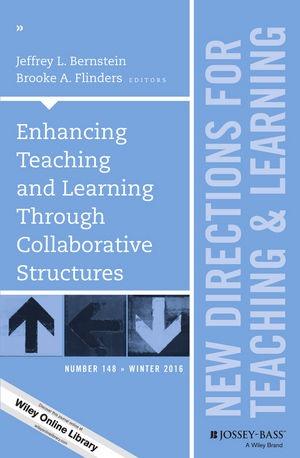
This volume of collected articles provides snapshots of collaborative teaching and learning in action at US universities. While the authors describe a range of techniques and structures, there is an emphasis throughout on intentionally building and sustaining communities composed of teachers, learners, and even community partners. Richard A. Gale (“Learning in the Company of Others”) and Jeffrey L. Bernstein, et al. (“How Students, Collaborating as Peer Mentors…”) illustrate the positive effects of collaboration in college courses. Gale succinctly articulates numerous benefits of collaborative teaching, from increasing fruitful ambiguity that can inspire critical thinking, to providing teachers with opportunities for “the systematic investigation of student learning” (21). Bernstein’s experience working with students as peer mentors shows that a collaborative approach to class leadership can embolden students to take risks with low stakes, improving their participation in brainstorming and creative activities. The majority of authors convincingly demonstrate that collaborative learning offers students benefits far beyond the immediate course or program experience. Ellen G. Galantucci and Erin Marie-Sergison Krcatovich (“Exploring Academia”) emphasize that their experience as undergraduate collaborative learners helped them prepare for their later work in graduate school and as educators. These authors note that the mentoring they received contributed to their professionalization and enabled them to discuss pedagogy confidently on the academic job market. Multiple articles address the potential for fruitful collaboration with community partners beyond the university. “Collaborative Structures in a Graduate Program,” by Robyn Otty and Lauren Milton, describes a multi-year Centralized Service Learning Model (CSLM) that combined the work of two graduate courses and several community programs. In their article “The Development of a High-Impact Structure: Collaboration in a Service-Learning Program,” Brooke A. Flinders, et al. illustrate students’ internalization of high-impact learning outcomes, including “participation in meaningful work” (44). One important contribution of this text is the collection of students’ testimonies. A number of the authors asked course participants to complete some form of self-assessment. Overwhemingly, students who worked as peer mentors or group leaders reported gaining confidence, independence, critical thinking skills, and practical experience that could be used in the professional world. In Flinders, et al., “The Development of a High-Impact Structure,” young professionals in the nursing field provided feedback about ways their participation in the service-learning program helped them prepare for clinical work. This volume offers a wealth of suggestions for designing learning communities; Milton D. Cox’s contribution (“Four Positions of Leadership…”) identifies traits that administrators and facilitators have found to be essential when organizing faculty learning communities. Each article clearly explains its authors’ methodology, making this a helpful resource for teachers who are looking for direction in implementing collaborative learning strategies. While it might have been helpful in some cases to learn more about how community partners assessed the contributions of university teams to their work, overwhelmingly the articles demonstrate that collaborative learning is beneficial for students and teachers. For those looking to build more collaboration into their courses, this set of articles provides inspiration and concrete guidelines
This sprawling volume, which incorporates co-written essays alongside those written by the main author, focuses on several themes in global higher education in the last half century, including massification, systemic inequalities, and the hegemonic role of English. Key areas where higher education has changed significantly include Asia, India, and Latin America; Africa still lags behind in many ways. The book is organized in five major sections: “The Global Context”; “The Implications of Globalization”; “Centers and Peripheries”; “Comparative Perspectives”; and “Teachers and Students.” This review will focus mostly on the final section as most relevant to the readership of this online publication. The authors aim high in their goal of surveying the landscape of rapidly globalizing higher education over fifty or so years. The first few chapters provide a modicum of historical perspective on higher education and go on to examine the most recent “revolution” in higher education through four interrelated forces: “mass higher education, globalization, the advent of the knowledge society and the importance of research universities in it, and information technology” (16). The author(s) note that these forces have fed the growth of privatization, international rankings, and burdensome systems of assessment, among other developments. The essays in the following sections focus in different and sometimes overlapping ways on those themes, noting that the recent internationalization of universities is a necessary response to increased globalization. Anyone who works in higher education would come away with a better general understanding, if not an in-depth knowledge, of trends in higher education after reading these chapters. Depending on the topic, Altbach and his occasional co-authors provide few citations for their claims; for instance, the chapter on “The Globalization of Rankings” includes just one reference, to an essay by Malcolm Gladwell in The New Yorker. Consequently, this volume will be of limited use for those wishing to pursue their own research in these areas. The final section (Chapters Seventeen and Eighteen) is titled “Teachers and Students,” but it is more accurately about the ways academic work is contracted for and compensated as well as reasons for student political activism. Both topics yield slippery data, so both chapters seem more tentative than definitive. It is clear from the data that they do use that disparities in remuneration and opportunity are widespread across academia worldwide. It is also clear that nobody truly understands the driving forces behind student activism except in certain local cases. Neither chapter addresses issues related to curriculum or pedagogy as they focus more on broader institutional and bureaucratic issues. This is perhaps necessary given the broad sweep of this book overall, but it also means that this book will be of less use to readers of this journal than one more focused on actual classrooms and pedagogical continuities and changes around the world. Despite this, readers looking for an overview of the ways globalization has driven the internationalization of higher education will appreciate the broad sweep of this volume.