Book Reviews

Not a pedagogical tool, “This book provides a detailed look at the current state of Latino/a theological education in the United States” (26). A compilation of research, it begins and ends using data to logically demonstrate the importance of theological education beyond denominations: (1) churches are anchor institutions in areas of poverty that provide critical services which are cost effective; (2) these churches partner to build social capital and personal relationships; (3) seminary educated religious leaders are better prepared to lead such vital churches. However, this is also an issue vital to denominations because demographic and religious adherence data suggest “Hispanic peoples are the future of Christianity” (469). Finally, it is an important issue for seminaries which not only wish to participate in that greater good beyond denomination by addressing diversity, but also wish to attract and retain faculty who are: comparatively young yet experienced, likely to hold more graduate degrees than required and speak more than one language, love teaching and excel as educators, are hard-working and open-minded, view their academic work as a vocation and persevere in their denominational affiliation, and who have a natural proclivity to span divides among races, partisan politics, languages, ethnicities as well as between seminaries and local churches. These are all descriptors of Latina/o faculty. Though lengthy, the book is an easy read due to its helpful introduction and chapters that both provide both an opening summary and concluding recommendations. Chapter ten is the most challenging because it moves the discussion beyond inclusion to justice: “push against tokenism, stereotyping, monocultural curricula….recognizing scholarship and teaching….[push for] greater transparency…” (326). Two chapters provide case studies on seminaries that are models of this inclusive justice. Another chapter describes the worthy efforts of the Hispanic Summer Program and the Hispanic Theological Initiative, both important partners for schools serious about increasing the number of their Latino/a faculty, which is a key take-away because “Latino/as beget more Latino/as” (445). Every positive outcome documented appears predicated on the presence of Latina/o faculty. Chapter thirteen is a groundbreaking study of Bible Institutes. Among the most important recommendations is a kind of mutual mentoring. Latina/o faculty need and want to be mentored; non-Latino/a deans and presidents with good will but poor skills concerning diversity would profit by listening to those faculty. If they do, everyone benefits. Another urgent need is continual training on diversity for faculty, students, staff, administrators, and board members. “Through Hispanic Eyes” (chapter fourteen) serves as an example. Although not exhaustive, the bibliography is comprehensive. An index would have been helpful, and given the repeated assertion that Catholic seminaries compare well to their Protestant counterparts, a case study of a Catholic seminary seems missing. Nonetheless, this is not a book to be shelved or filed, but rather one to spark necessary debate and urgent action.

The creation of a successful learning environment involves the examination and improvement upon current teaching practices. As new strategies emerge, it becomes imperative to incorporate them into the classroom. Student-Driven Learning Strategies for the 21st Century Classroom provides a thorough examination of the benefits and challenges experienced in learner-driven educational settings and how to effectively engage students in these environments. Focusing on technological perspectives, emerging pedagogies, and curriculum development, this book is ideally designed for educators, learning designers, upper-level students, professionals, and researchers interested in innovative approaches to student-driven education. Topics Covered The many academic areas covered in this publication include, but are not limited to: Literacy Development Non-Traditional Students Reflective Learning Self-Management Strategies Service Learning Student Creativity Virtual Learning (From the Publisher)
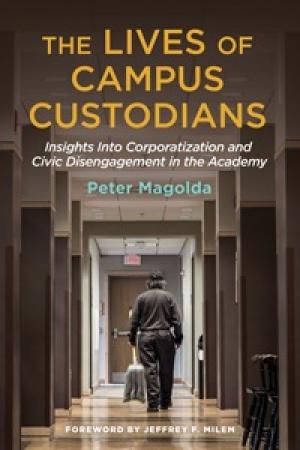
I decided to review this book because of a story one of my professors, Kenneth A.R. Kennedy, told me in college. While he was doing his dissertation research at a university in India, he learned the most not from the esteemed faculty, but from an “untouchable” custodian. Similarly, in the preface to this book, Peter Magolda describes Juanita “Pat” Denton, the head custodian of the residence hall Magolda was directing for his first full-time job, as his mentor: “I learned that custodians knew as much, if not more, about the residents and the condition of the residence hall than I did” (xix). The invaluable lessons he learned from Pat, combined with frustration that higher education scholars have virtually ignored custodians as subjects worthy of study, led Magolda, a professor emeritus of educational leadership at Miami University, to write The Lives of Campus Custodians. Magolda combines more than a year of participant observation, ethnographic interviews, and literature review to give us a valuable glimpse into what daily life is like for custodians on two different college campuses. I especially enjoyed the many tell-it-like-it-is quotes from custodians that Magolda includes, such as this one from George: “In 1974, HU was like a new world for me. . . . [Recently] I heard that the president thought the wages here were comparable with other jobs in the region. Comparable to what? They [new custodians] are still starting off at $9.35 an hour. And health care premiums continue to rise. . . . It’s not much higher than minimum wage. The university mismanages its budget, and custodians have to pay the price” (107). Such first-hand observations highlight the usually hidden impacts of cost-cutting measures and other corporate managerial practices on campus custodians, many of whom do not earn a living wage, and who, like Samuel, have to watch their money so carefully that he will only buy his mother her favorite kind of cake for her birthday if it is on sale (71). The book is also eye-opening about “community engagement,” and offers new ways to think about it. I teach a service-learning class every spring and have helped lead the faculty advisory group for our Office for Community Engagement. Yet until reading The Lives of Campus Custodians, I had never thought about having our students engage with an important but largely invisible community: the low-wage staff working at our university. As Magolda thoughtfully puts it: “Typically, higher education civic engagement involves working with communities outside the university, such as service-learning excursions to address societal ills. Yet the findings from this study suggest that subcultures within universities are equally in need of civic revitalization” (173). Moreover, Magolda challenges readers to consider, “Why does civic engagement by those on the margins, such as custodians, seem odd?” (188; Magolda provides several examples of civic engagement by custodians in the book). Toward the end of the book, Magolda offers a series of concrete suggestions for how to improve matters for both custodians and the university, directed at administrators, supervisors, students, faculty, and custodians themselves. These range from “sponsoring professional development workshops that provide custodians with essential human relations and communication skills to share their wisdom with the larger campus community” (198) to encouraging custodians to unionize (or find other ways to band together and bargain collectively). Unfortunately, there are also some serious problems with The Lives of Campus Custodians. First, the book is often quite repetitive, with the same phrases used almost verbatim in subsequent paragraphs (61, for example), and later chapters repeating previous material, even including the same quotes from custodians. Second, the book too often simply summarizes its findings, rather than analyzing them using relevant theoretical frames. For example, given the topic of this book, it seems very strange that structural and symbolic violence, internalized oppression, positionality, and even labor and immigrant history (many of the custodians Magolda interviewed were refugees from Eastern Europe) are never mentioned. Third, the book often feels heavy-handed in its critique of the growing turn toward “corporate managerialism” in contemporary American universities (a trend which I also find deeply disturbing); at times it seems as if Magolda wrote the book more as an opportunity to critique campus corporatization than to illuminate the lives of campus custodians. And fourth, the vast majority of the custodians Magolda interviewed and worked with were White – 99 percent at one campus, and at least 78 percent at the other (18-26). This means that the book has relatively little to say about racial inequality, which is a serious issue for custodians on many campuses (one welcome exception is a spot-on quote about how racial politics affects custodians by self-described “huge-ass Black man” Calvin [104]).
Derived from the authors’ year-long research study of a fifth-grade classroom’s experience with blogging, this work suggests that integrating student blogs into a curriculum is an effective way to promote student writing. According to the authors, requiring students to blog not only enhances their written communication skills by making writing a priority, but it also increases student investment in learning by providing a space for them to share their opinions, build content literacies across the curriculum, and learn in conversation with one another. Overall, this book provides educators with an accessible guide to incorporating student blogs into the classroom. It is divided into six chapters, plus a brief review of relevant works in digital literacy. In the first two chapters, the authors focus on how to integrate blogging. Chapter 1 highlights several important decisions that educators interested in teaching with blogs must consider – namely, how will student blogging contribute to one’s overall learning goals, what blogging platform to use, and whether the student blogs will be public or private. Once the answers to these questions are in place, Chapter 2 suggests effective methods for introducing students to the practice of blogging, as well as the importance of creating guidelines and procedures for safe and responsible online writing. Chapters 3 and 4 look at student blogging in action, suggesting that when students can practice and experiment with their writing in a low-risk environment they become more effective writers. Whereas Chapter 3 gives an inside view of the blogging instruction and learning that occurred in the authors’ fifth-grade classroom, Chapter 4 considers the importance of creating an interactive learning community that encourages dialogue and fosters student excitement for writing. Because digital spaces require students to engage with an audience beyond their teacher or peers, the authors contend that students are better able to engage their ideas in conversation with others and to see value in their writing. Finally, Chapters 5 and 6 outline several logistical concerns around student blogging. In Chapter 5, the authors cover basic tenants of copyright and fair use issues to help prepare teachers and students for the responsible use of the copyrighted works and images created by others. Following this discussion of digital citizenship, Chapter 6 discusses the importance of offering formative rather than evaluative feedback throughout the blogging process. The authors claim that regular, low-stakes assessment is foundational to supporting and developing successful student writers. Given the authors’ focus on elementary school writers, this book is perhaps most useful for K-12 educators who wish to begin incorporating student blogs into their classrooms. Nevertheless, those in higher education who are aspiring to improve student writing will also be able to glean sound pedagogical reasons for incorporating student blogs into our classrooms, as well as a helpful framework for how to do so. Unfortunately, several of the activities and examples provided by the authors throughout the book will be unhelpful given their primary and secondary school context.

Educational Justice: Teaching and Organizing against the Corporate Juggernaut addresses what the authors call the corporate assault on public education. The book provides detailed stories concentrated in the Chicago and Los Angeles public systems that outline struggles and successes in regard to public schools. This collaborative book was written by Howard Ryan with Debra Goodman, Joel Jordan, and Joseph Zecola. Ryan describes school reform as corporate: “a package of public policies, private investments, and informal processes through which corporate and private actors are seizing control of education”(23). Ryan names teacher unions that partner with billionaires as part of the corporate juggernaut that places control of education in the hands of those who do not promote the best intentions of public education and leads to privatization of the school system. Ryan provides an elaborate and involved example of organization and resistance to privatization by Kelvyn Park High School in Chicago. He details the movements by parents, children, and teachers that lead to victory in keeping this one school from being privatized. Joel Jordan describes in detail how teacher unions fought back against the corporate movement and frames a strategic approach to the fight against school reform. In addition to providing an outline and methods for organizing to fight corporate school reform, the authors demonstrate school transformation through organization. Debora Goodman focuses on critical literacy, democratic schools, and the whole language movement. Goodman draws upon insights from progressive education, particularly whole language instruction, and progressive educators like John Dewey, Lev Vygotsky, and Paulo Freire to build a theoretical framework. She contrasts theories of literacy and teaching to further develop her thesis. Ryan provides a transformational organizational method as he describes the practices of Soto Street Elementary School in Los Angeles. He argues against scripted reading programs and supports solidarity among teachers – accomplished through family writing workshops, advocacy for literacy, and the addition of books available to students. Using the same rationale and promotion of transformation of reading, Ryan and Zecola present ideas on a curriculum model using Crenshaw High School in Los Angeles. It is promoted through an extended learning cultural model, extended learning time for teachers, collaborative units of study, and collaborative mapping and history. Additionally, they outline the need for extending learning into the community through internships and learning opportunities for parents. This book and the work of the authors might be difficult for those in public education outside of larger urban areas to relate to. The book addresses a critical issue facing public education but is limited by only looking at schools in urban settings. The book is valuable because it addresses public schools and social justice in a way that is challenging. The authors raise consciousness about how easy it is to take money from corporate sponsors and then be lured into an educational system dictated by those whose knowledge of how education actually takes place is limited.

As the title indicates, this book is intended for those in the fields of urban planning and architecture. That said, with some translation, this slim volume is a helpful resource for those who seek to include more creative pedagogy in their theological and religious studies classrooms. I can imagine theology and religious studies professors using this book to inspire their own use of play in the classroom and to persuade skeptical colleagues of the value of play within the academy. Author Ron Kasprisin defines and defends the role of play in teaching and learning with passion and precision. Rooting his concept of play in the pedagogical theories of Friedrich Froebel (founder of the German kindergarten movement), Kasprisin describes play as “ self-activity, enjoyable, sensory, wondrous, and thoughtful” (4). Play is “experimental, flexible” (60), and dedicated to “creative problem-solving” that “requires openness . . . divergent thinking, and an appreciation for ambiguity and complexity” (62). He extols its power to unlock creativity thanks to how it “disables fear, failure, and creates voluntary intentions” (7). Kaspirin’s consideration of how play overcomes fear and unleashes creativity (in Chapter Two, “Object Learning through Symbolic Play” [35-38 in particular]) could stimulate new directions in how faculty promote critical thinking within students and how to encourage and absorb diverse perspectives within class discussions. Similarly, his exploration of how the studio environment nurtures play and its attendant creativity (Chapter 5, “Setting the Stage-Play Environment”) offers fresh ways to create classrooms with a high tolerance for failure and consequent high innovation. Key throughout is Kasprisin’s conviction that play offers a legitimate method of student-directed learning at all levels of education. The final four chapters (“How Do Designers Play,” “Object-learning with Play-tools/Skills,” “Object-learning Applications in Design and Planning,” and “Integration of Digital Technologies and Crafting Processes”) are the ones most closely written for those who teach students of urban planning and architecture. A careful reading of the Introduction, first three chapters (“Creative Problem-solving (CPS) for Design and Planning,” “Object-learning through Play: Object-learning, Constructivism, and Self-learning through Symbolic Play,” and “The Gifts of Friedrich Froebel”) and Chapter 5 (“Setting the Stage – Play Environment”) is likely to suffice for professors in other fields. In those chapters, Kasprisin lays out the qualities and functions of play and the value of creative problem-solving in education. His insistence that technological methods short-circuit creativity is of special interest to me. As one who resists the encroachment of technology at every level of education, I found his discussions of the limits of technology illuminating and affirming. I was surprised that the theories of Maria Montessori were not mentioned as her theories of early childhood education have also taken strong hold in a segment of American education. Influenced by Froebel, Montessori embraced a similar ethic of sensory learning and offers a range of materials for children to engage that is wider than Froebel’s. If you are persuaded by the value of play, her thought will provide additional resources for consideration.

“Stop telling your children that they are smart,” is the new rage in parenting advice. Research has demonstrated that praising children for their smartness tends to undermine their performance. Kids who believe that success is due to innate ability also tend to think that failure is caused by innate inability. When they encounter hard tasks, they are prone to give up and to view themselves, or the task, as inept. Nearly every college professor has experienced the frustration of such students, who often feel that their smartness entitles them to automatic A’s on every assignment, regardless of the effort, accuracy, or sophistication of their work! In Are You Smart Enough? veteran educational researcher Alexander W. Astin calls upon college faculty to recognize that our institutions have helped to create this problem. Looking at the primary measures that colleges utilize to evaluate their success – standardized test scores, retention and graduation rates, course grades and GPAs – Astin’s central claim is that postsecondary institutions are more focused upon identifying smartness than developing it. College rankings, for example, are heavily weighted toward the standardized test scores for incoming classes. Course grades and GPAs mainly serve to mark students’ progression toward degree completion, to identify low-performing students who may need to be dismissed, and to aid in admissions for graduate and professional schools. Standard metrics do not assess the information core to colleges’ mission: what students learn and when they acquire the knowledge. Postsecondary education, consequently, has become more concerned with identifying and acquiring smart students than with developing students’ intellectual and academic capabilities. Astin places much of the responsibility for this preoccupation with smartness upon faculty. While faculty often complain about the culture of entitlement that exists among undergraduate and graduate students, we create this culture through our admissions and grading standards, which imply that our job is to reward – rather than enhance – smartness. Many faculty view their jobs primarily as imparters of specialized content knowledge; we expect students to already possess the analytical and communication skills necessary to acquire that knowledge when they enter our classrooms. Astin claims that faculty preoccupation with student smartness is a product of our preoccupation with our own, as evidenced by institutional processes for hiring, tenure, and promotion. Just as colleges expect incoming faculty to be fully formed experts capable of displaying our smartness, faculty expect students to be sufficiently formed when they enter our classrooms. Astin does not merely critique the institutional culture; he provides concrete guidelines for shifting our focus to growing and developing student learning. In particular, he recommends utilizing narrative evaluations in course grading. He also advocates expanding our assessment of student development to include the affective outcomes that are often central to college mission statements: leadership, citizenship, and service. He writes that colleges should pay particular attention to students’ spiritual development, given that a central component of the college experience is students’ exploration of their sense of purpose, their moral and ethical commitments, and their self-development. Astin’s text is a significant contribution to the emerging literature critiquing our culture’s obsession with innate ability. It explores themes similar to those in Carol Dweck’s bestselling book, Mindset (Random House, 2006), but unfortunately does so with less substance and more redundancy. It would have been helpful if Astin had integrated evidence from educational and neurological research to support his core assumption that intelligence can be, and should be, developed among young adults. He could also have provided more substantive suggestions for changing academic cultures, with attentiveness to not only admissions and grading, but also to student support services, academic advising, institutional effectiveness, faculty governance, development, and alumni relations. Overall, Are You Smart Enough? is an important and thought-provoking text for postsecondary faculty. While primarily focused upon undergraduate institutions, its central argument is just as relevant to graduate and professional programs.

For the faculty member transitioning a course from face-to-face (F2F) to an online or blended learning environment, Kathryn Linder’s workbook is a wonderful resource. After opening with a couple chapters reviewing the key components of backward course design, developing appropriate course learning objectives, and assessment, the remaining chapters provide a step-by-step guide for an instructor to convert a course from a physical to a virtual teaching space. The chapters cover a variety of topics including effective learning activities, assessment methods, creating a social presence, using and creating multimedia, and social media engagement. Each chapter contains a short introduction to the pedagogical theory behind the topic (What Do We Know About…) followed by a series of guiding questions, worksheets, and templates for incorporating the theory into course development (A Step-by-Step Guide to…). After a summary of the key ideas, there are questions for faculty and administrators, followed by a graphic that illustrates course design steps and additions. Online resources are often noted for additional planning. An instructor or administrator is provided with all the tools and resources necessary for working through the process in a hands-on, orderly fashion. The book’s main strength is its highly practical nature, highlighted by the ready-to-use worksheets, templates, and checklists for every step in the process. Not only does it explain the desired resources, it usually gives real-life examples of how the tool was used in a blended classroom effectively. Another strength of this book is Linder’s ability to translate and explain technological tasks reasonably for the technophobe. Without talking down, she methodically explains technical components in understandable and achievable action steps for readers. Equally important, she recognizes that schools use different types of technology (for example, Learning Management System), and identifies the major software, programs, and platforms available, accounting for this variety in her instructions. There is little to offer by way of criticism of the book. More than adequate appendices and glossaries complete an already copious amount of resources. The solid reference section supports the extensive research, clearly supporting the material. Given the practical nature of this workbook and its many ready-to-copy worksheets, it is strongly recommended for faculty members transitioning a classroom course to a blended or online delivery format. Likewise, academic deans leading a group of faculty through a similar transition process will find this a one-stop resource, especially if they are able to partner with an educational technologist.
Habits of the Heart (Bellah et al., U C Press, 1985) was required reading in my first-year seminar in the late 1980s. That book, and the liberal arts education into which I was being initiated, changed my life profoundly. It introduced me to new modes of thought (sociology, philosophy, religious studies), instilled a critical sensibility (concern about individualism in American culture), and planted a seed about the importance of religion within a culture (and why it is worthwhile to study it). When I saw the name of one of Habits’ authors attached to a new book on integrated learning, something my own institution takes very seriously, I was intrigued. Sullivan is a senior scholar at the New American Colleges and Universities consortium, and on one level this book merely reports on distinctive activities and programs at some of the member institutions. Those brief descriptions can be helpful and inspiring, especially if your school is embarking on similar programmatic development. A sizeable appendix offers short campus profiles of the twenty-five institutions. In the introduction, Sullivan addresses his readers as people (parents, prospective students, future faculty) who may be “looking for a college that seriously tries to integrate the liberal arts, professional studies, and civic responsibility” (1). There is a dizzying array of initiatives, but the book succeeds in its agenda of persuasion: that the ideals of integrated learning are significant and worthy. Yet, there is a second aspect to Sullivan’s agenda, and at that level the book is a lot more interesting to those already situated in higher education. Woven throughout the book, Sullivan offers insightful commentary on the significance as well as the effectiveness of integrated learning. For example, at the end of the first chapter Sullivan connects the importance of service learning with emerging research in developmental psychology. Drawing on the work of William Damon who writes about the importance of forming a sense of “life purpose,” Sullivan argues that “growing into a mature, educated person committed to significant purposes requires living in a community where values are taken seriously and structure behavior in everyday life” (27). That is precisely what our more innovative programs can do: cultivate that needed sense of purpose, which in turn fosters resilience. But in Sullivan’s hands, resilience is not just about retention and graduation rates – it is part of a larger mission to produce a healthier civic culture with an engaged, proactive citizenry. Later, Sullivan posits, “the key factor is that the members of such societies share a sense of membership in some larger whole. This gives them an ability and willingness to recognize that the well-being of each group depends on cooperation with the others. Such shared expectations and bonds are the prerequisite for a functioning, pluralistic democracy” (60). For those in theology and religious studies, this book offers a larger context in which to understand the work of instilling the virtues of tolerance and understanding. Those involved in service learning, study abroad, civic engagement, or vocation-related programming will appreciate that such initiatives are celebrated in these pages. At this level, the book can be a needed tonic for beleaguered faculty. If you share Sullivan’s ideals and his sense of the role liberal learning can play in that vision of a pluralistic, democratic society, then this book serves as a reminder of how your work contributes to that mission.