Book Reviews
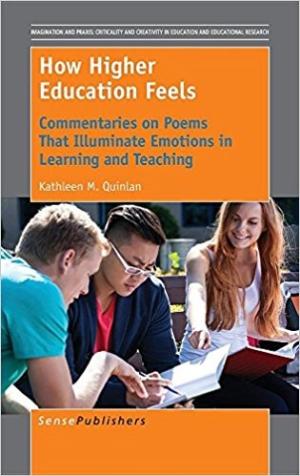
Studies in higher education seem to have given limited attention to the emotional aspect of the teaching-learning experience. Emotion has, nearly for the greatest part, been isolated from cognition. Underlining this distrust of emotion in academia, How Higher Education Feels, explores the less charted trails of emotional dimensions of teaching and learning. Holding to the hypothesis that emotions cannot be separated from rational engagements, the book attempts to demonstrate how emotion is deeply intertwined with thinking and reasoning in higher education. This book is thus about journeying with, and reflecting upon, the emotional landscapes of courses we teach and students we impact. The first two chapters set the stage and agenda of the book by outlining the need for study of emotions in higher learning, the methodology with which to explore emotional experiences, the significance of poetry in relation to emotions, and the conceptual tools used to examine the role of emotions. A teacher’s regulation of his or her own emotions in the context of student-centered teaching is a key element in the discussion. The next nine chapters each include ten to fifteen poems that address specific themes of experience in university education. Some of the key themes include: transition to higher education, taking care of students and ourselves (teachers), love of people and culture, love of arts and or science, success and failure, and introspection and retrospection. The poems were compiled to serve as case studies expressing and illustrating various feelings in relation to significant aspects of learning, teaching, and development. They are rich in content and language, duly accompanied by brief commentaries as well as a well-researched expert commentary that places the poems in their specific contexts. They are simple and complex, metered and irregular compositions just like the life and moods of many academics. Poems are personal and touching, deep and sensitive, and quite successfully serve the purpose of the book. While the poetry is meant to serve as case studies in emotion and feelings, the book seems to become a compilation of poems rather than a pedagogical discourse. Thankfully the commentaries, especially the expert commentaries, rescue the reader from being lost in the anthology of poems. The theoretical framework is also well conceptualized and the final chapter recaptures the mission of the monograph. It successfully shows the importance of emotion in experiences of higher learning from enrollment to graduation and beyond. It further shows the centrality of emotion and feelings of a student in relationship with subject, with teachers, with peers, and with self – all summed up, in this study, in poetic expressions. As the compiler of this groundbreaking work, Kathleen Quinlan of Oxford Learning Institute, deserves appreciation for pointing attention to an important direction in higher education – the centrality of emotion and its powerful expression in poetry. She has liberated emotion in education from being the sole property of psychology and opened it up, with the help of poetry, for reflection on its socio-cultural contexts. How higher education feels? It feels terrifically poetic!
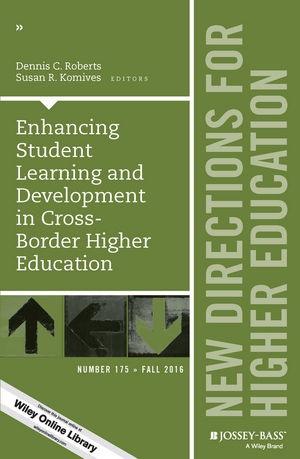
This volume is dedicated to cross-border education, a type of internationalization focused on education strategies that move across national and regional lines. Editors Roberts and Komives cite J. Knight’s description of internationalization as “the process of integrating an international, intercultural, or global dimension into the purpose, functions, or delivery of postsecondary education” (10). Internationalization, at first blush, may appear but a mere euphemism for globalization, a rather deleterious concept especially when partnered with education. Roberts and Komives, however, are quick to point out how internationalization differs from globalization in both purpose and process. Globalization promotes rampant product production, increased uniformity, the ubiquity of certain products and hegemonic narratives, and is often associated with the pernicious effects of the exploitation of vulnerable populations around the world. In contrast, “internationalization is a process of infusing international ideas across a variety of functions and experiences” in which “distinct attributes of identity are accorded value” (10). Internationalization, according to Roberts, “embraces the inevitable – a shrinking planet with growing shared reliance on each other” but also seeks to preserve culture (10). Cross-border education (CBE) goes beyond the traditional study abroad mindset; it requires “infusing international, cultural, or comparative perspectives in existing courses,” “modifying teaching and learning processes through virtual experiences,” and incorporating scholarship from other cultural settings to bring the world “home” to students within their own schools (16). It also encourages fluidity of people, programs, projects, and policies across national and regional lines and places a high premium on critical analysis of the cross-cultural application of educational practices. Section one addresses how to systematically study educational practices and evaluate their transferability to a different context. Darbi Roberts’ contribution requires readers to address how and why educational systems choose from which programs to borrow. Section two illustrates examples of student learning and development programs around the world (South Africa, China, UK, Mexico, and more) created to address specific populations and needs within their own cultural and national boundaries but which may prove incredibly useful for others throughout the world. Previously, much research on student learning and development originated in the United States, but this volume highlights the growing programs in other parts of the globe. McGlory Speckman writes about first-year village programs in South Africa, where this program was developed, and the need of many students from backgrounds of “economic, social, and political deprivation” for a communal and supportive environment as they transition to a university setting (34). Wong’s chapter is a fascinating foray into a unique population in China, students born under China’s 1979 One Child Policy, whose disruptive adjustment to university life requires universities to set up programs addressing this population’s lack of compromising skills and enhance their resiliency and self-reliance. These programs include everything from complicated team work, physical training, and mentorship to a simulation activity called the “city challenge” in which “students are given very limited pocket money and they have to earn their food by selling products they invent” (45). Chapter 5 focuses on a specific program at the University of Sheffield, UK, dedicated to “looked-after children” and “care leavers” (49). Encouraging this population towards higher education is a real challenge, as “only around 6% of English care leavers enter higher education at the age of 19, compared to 48% of a similar age in the general population” (53). Mexico’s legacy of political corruption, financial disparity between rich and poor, and a general lack of civically engaged citizens have created a challenging environment for local universities trying to educate their students to become leaders, according to Alicia Canton’s chapter. The Universidad de Monterrey (UDEM) has invested in numerous initiatives to encourage students to become involved in their communities such as implementing active pedagogies “connecting the student to current problems within the local community,” requiring every student to complete an internship at a local organization, offering cocurricular courses to develop leadership competencies, and mandating “every student perform 480 hours of service” (59-60). Section III moves readers back into the realm of theory, providing analytical tools for exploring data produced in specific student learning and development environments like those described in Section II. This section exemplifies how those designing initiatives to enhance student learning and development, especially in the arena of cross-border education (CBE), must explore the significance of context as well as content. Readers are prompted to explore prevalent cultural assumptions, national agendas, and various socio-political discourses which have informed and shaped their own definitions of learning and development, as well as those of the programs they wish to adopt or adapt. Broido and Schreiber’s chapter presents social justice frameworks for student learning and development as well as concise renderings of various pertinent dimensions of student development theories (identity development, cognitive-structural development, and self-authorship theories). Drawing on the work of Hofer and Weinstock, Broido and Schreiber note how “patterns of epistological development vary among cultures” and how cultural assumptions about knowledge, truth, and authority, can profoundly affect how students learn and develop (70). The general values of a culture “as well as the role of the family, religion, and social identity enhances a critical perspective on designing appropriate strategies for student learning and development” (75). Chapter 8 applies an ecological systems view to Singapore, a culture that highly values formal education, an attribute likely stemming from a belief among families that education is a passport out of poverty. Deference to elders and authority, possibly arising from a Confucian root in the culture, are attributes which lead to a particular learning environment, not unique to Singapore but definitely significant when considering program adoption across borders. Chen’s and Mathies’ contribution looks at increased interest in assessment and evaluation in the halls of higher education, in the U.S. and around the world, over the last few decades. The fact that college admission in many Asian cultures is controlled by the government via a national entrance exam, exemplifies just another way in which U.S., European, and Asian institutions approach education differently (89). Formerly faculty and now on staff as an academic advisor, I fully concur with the authors of chapter 10 that “in a cross-border educational paradigm, it is increasingly important for faculty and staff to orient their work and self-understanding of their roles to be that of educators” (93). The need for internationally competent staff will only become more critical in the future. Roberts and Komives close their volume with a look at how partnerships can enhance student learning and development by taking into consideration institutional motivations for transferring, adapting, hedging, or even avoiding certain programs or policies. Some aspects of student learning and development programs (such as career decision making, counseling, intercollegiate sports, student governance, fraternities and sororities, coed housing, and so forth) may work well in the “home” country but prove disastrous when transplanted into another environment. This volume will prove illuminating to any student affairs professional, academic advisor, study abroad or exchange coordinator, faculty, or administer within higher education today but it is especially germane to those directly or even tangentially involved with policy adoption across borders.

This intriguing 20-article volume edited by Kathleen Cahalan, Edward Foley, and Gordon Mikoski explores the question of integration in theological education. The editors, who also author multiple articles in this book, divide this text into four sections – schools, curriculums, courses, and frameworks – to engage integration. The authors represent a variety of disciplines in theological education including: practical theology, worship, Christian education, spirituality, ministry, leadership, and church history. In the introduction, Stephen Graham explains, “this book takes a very broad view of integration, using the term in three ways: making connections between bodies of knowledge, overcoming the divide between theory and practice, and enhancing what is called the ‘professional’ model by integrating intellectual, practical, and moral and professional aspects of theological education” (ix). Cahalan frames this volume with a very personal and robust essay. She writes, “I fear we have left it to the students to connect the dots between study, call, and ministry…the lack of integration in theological education and ministerial practice comes at a high price. It reverberates through the personal, ecclesial, and systemic messes we see every day in the church” (2). She then frames this book with various approaches to integration including: the split between theory and practice, divisions between various branches of theological study, and the integration between the intellectual, practical, and moral/professional domains. In the first section on schools, the authors consider integration across the wider school communities. Foley opens this section by examining the school as an agent in the integrating process. He broadens the concept of school to include formal, informal, and semi-formal education. After chapters on faculty development and renewal processes, Foley returns to provide a case study from Catholic Theological Union and an additional article to sum up this section. He concludes that “these are challenging times, but these challenges are also gifts, and they would be a terrible thing to waste” (71). The second section, on curriculums, addresses the opportunities and problems in the area of integration in theological programs of study. Cahalan begins by exploring the dynamics of seminary curriculum around the concept of integration. She argues that “if faculty want education to be more integrative, they have to do more than rearrange the courses and credits and defend their turf” (75). Then she outlines principles of curricular design to produce integrated learning. Her themes are continued in articles by David Rylaarsdam, who explores overhauling curriculum, Jeffery Jones, who gives special attention to the relationship between field education and the rest of the curriculum, and David Jenkins, who adds the needs of denominations to the mix of curricula drivers. The third section explores integration with courses. Mikoski starts breaking integration down to the course level including engaging the explicit, implicit, and null curriculum. After three well-developed case studies, Jeffery Tribble adds the concept of racial differences and Foley adds the challenge of online classes to the discussion on integration. Finally, in the last section, the three editors engage integration through three lenses: “as models, as practical wisdom, and as theology” (14). All three provide engaging conclusions that should propel readers to action. Although the target audience for this book is theological educators and administrators, this book offers important fodder for independent theologians and leaders of religious communities to consider. In addition to being well-written and clear, a very difficult task for an edited volume, this text unpacks some very complex educational theories and theological issues in accessible non-jargon packed language. Although this text could have benefited by exploring the politics and challenges of change in light of its call for integration, it presents a well-rounded and very worthwhile read. The concept of integration will remain an important topic for faculty, administrators, and religious leaders for years to come, and this book provides a valuable contribution to the discussion.

“Well-being” is a complicated construct with at least two referents: the hedonic tradition considering well-being as feelings, and the eudaimonic tradition which sees well-being as a relational activity, the practice of being well, or living life well. This volume explores the various implications and connections existing between well-being (by either definition) and higher education (5). In so doing, the contributions in this volume argue that higher education must change its focus to give “priority to and support for those experiences that make learning and well-being connected objectives” (11). In other words, the authors of this volume suggest that well-being is at the core of higher education, and therefore, institutions of higher learning ought to prioritize experiences that contribute to a student’s well-being. For those involved in higher education, the context for this volume is readily apparent. The landscape of education, as Laurie Schreiner describes it, is a perfect storm wherein, The most diverse group of students enters higher education from schools that have ill-prepared them for college at the same time that postsecondary institutions have shifted their focus to credentialism and financial sustainability. The promise of higher education, to empower students and broaden their capacity to engage the world as global citizens and whole persons, has narrowed to the point that is now perceived as simply a steppingstone to a better job. (136) It is within this context, and against this background that the present volume should be read. Well-being is not a silver bullet, and a focus on well-being in education will not solve all of these problems. But, as the diverse contributions in this volume illustrate, a focus on well-being either at the level of the individual instructor, in programmatic directions, or as an essential direction of whole institutions, goes a long way towards revitalizing the significance of higher education and towards ensuring that students benefit from the time they spend in college. The book is made up of thirty-four essays, which are organized into four parts. The first section is entitled “Analysis and Meaning” and deals with the task of defining well-being and describing it fully, with particular attention to the way in which the concept relates to higher education. The essays in this section are highly critical of the job skills or certification centered model of education and often shift into a defense of the liberal arts. By and large, their point is clear – college education has larger impacts on a student’s life than appear in the classroom, or on assessments of various types. These impacts include the practical factors of a student’s physical and psychological well-being both while they are in school and after graduation. There are also more abstract implications including the development of virtue, community, and citizenship. At the heart of all of these essays are the larger questions about the essential mission of higher education, and the equally difficult question of identifying the defining characteristics of educated students. The second section, “Manifestations and Implementation,” treats various issues brought about by re-focusing higher education onto the development of well-being. Key concepts articulated in this section are those of flourishing, self-authorship, and identity development, and there is also a sustained argument across several essays for the institutional re-definition of student success along with the concomitant implications for assessing success in a well-being paradigm. The third section, “Facilitation: Curricular, Pedagogic and Across Boundaries,” takes on some programmatic consequences of the preceding discussions of well-being. These essays take pre-existing institutional initiatives as something of a case study exploring larger questions of what shape institutions or initiatives focused on well-being would take. Well-being initiatives at Georgetown, George Mason, and Morehouse are analyzed, as are implications of campus carry legislation, and the impact of national goals related to degree completion on community college students and their well-being. The final section, “The Logic of Change: Why, What, and How?” postulates several different theoretical treatments of why institutions of higher education should take on the hard work of change and should reorganize their efforts and re-center their initiatives around well-being. Comparisons are drawn between institutional change in health care and that in higher education. Authors articulate the social/historical context that makes the time ripe for the reinvention of higher education. Also, the benefit of problem-based capstone courses, and particularly the reorganization of curriculum around such courses, are identified. Well-being is a tremendously important concept for the future of higher education, and this volume presents a variety of approaches to the application of well-being onto various aspects of the higher educational institution. Instructors can use this volume to consider ways of adapting their teaching towards the beneficial education of the whole student. Administrators would benefit from thinking through the implications that curriculum and institutional structures and approaches have on student well-being (and that of university staff and faculty). The individual essays are organized well and present cogent arguments. This volume is a great resource for anyone interested in the development of well-being in higher education.
Editors Khine and Areepattamannil contribute to the series Contemporary Approaches to Research in Learning Innovations with volume nine, Non-cognitive Skills and Factors in Educational Attainment. The premise for the volume is that non-cognitive skills are equally important, or are even more important, than cognitive skills for effective educative processes and student success (3). Examples of non-cognitive skills include resilience (grit or toughness), well-being, social awareness, curiosity, creativity, work ethic, self-evaluation, collaboration, self-regulation, self-confidence, and motivation (16). The book is organized in three parts: I – Introduction, II – Conceptual and Theoretical Underpinnings (on non-cognitive factors), and III – Evidence from Empirical Research Studies. In Part II, six chapters are devoted to the relationship between non-cognitive success in learning and the educational process. A key question is: “Why are non-cognitive constructs important?” (17). Research shows that the cognitive development of persons should be accompanied by intentional non-cognitive development for positive democratic citizenship and personal and social well-being. Authors call for teachers and policy-makers to be aware of the research that clearly shows the significance of non-cognitive learning, thereby challenging current curricula, teaching methods, disciplinary policies, student evaluations, activities, and utilization of assessments (chapter 3). Subsequent chapters in Part II focus on understanding roles of self-efficacy and emotional intelligence, a repertoire for educators based on their attention to non-cognitive factors, attitudinal changes regarding assessment and correlating interventions, and non-cognitive learning tied to academic performance. Part III provides evidence from empirical research studies that support non-cognitive factors being highly significant for student success both in school and after graduation. For example, self-confidence is a greater predictor of achievement than measures of socio-economic status (166). Passion, perseverance, and self-control contribute significantly to success as well (chapter 9). Chapter 13 provides recommendations for greater student success: provide self-regulation knowledge support for students to improve their preparedness; provide information about available supportive environments; evaluate creativity and practical skill sets equally to cognitive ability; and redesign education from a “fixed intelligence” foundation to a dynamic intelligence focus (311). Chapters 14 and 15 initiate a tested “mental toughness” curriculum for students, and analyze attributes required for such toughness. In contrast, the next chapter recommends socialization through school in early childhood that educates children in social norms and mores through the lens of justice, beneficence, faith, hope, and love rather than with fear, negativity, and external control (370). Issues of future wellness, performance in mathematics, and the impact of culture on non-cognitive skill sets follow in the final chapters. This volume provides exhaustive evidence for its premise. Yet, these studies challenge educators to think pedagogically about what we expect in the classroom and how we intend to educate the whole person in a dynamic learning conversation rather than in a “fixed” curriculum. This book is worthy of attention, and is likely best suited for faculty exploration in broad strokes rather than an essential read for all teachers.
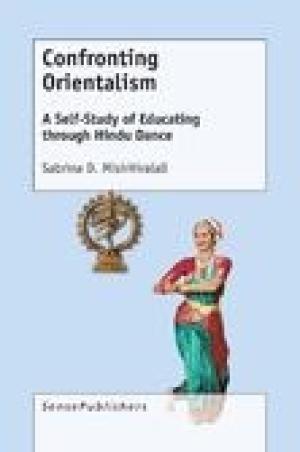
Sabrina D. MisirHiralall uses Kuchipudi dance rather than Western-based pedagogical and philosophical methodology to educate non-Hindus about her religious tradition. In her text, Confronting Orientalism: A Self-Study of Educating Through Hindu Dance, MisirHiralall describes her journey from learning this style of dance as a young woman to engaging learners in experiencing and thus better understanding the Hindu tradition through an epistemological approach that uses dance as means of dispelling perspectives based on a colonialist point of view and its subsequent influence on modern pedagogy. Her main purpose in doing so is to confront orientalism and address two of the primary lenses through which non-Hindus view what is called Hinduism. The first of these lenses sees adherents such as herself as exotic. The second lens imposes a Western understanding of religion on what she describes as a way of life (174). In an extensive introductory chapter, MisirHiralall describes personal experiences as a child, and later as a young woman, that led her to consider methodology drawn from traditional ways of learning that utilize dance, storytelling, and music, rather than from texts. Why she has selected dance as the primary means of educating becomes clear; Through dance, the stories that shape the religious life of Hindus come alive. Dance invites her as the educator to present an authentic approach that teaches and informs. Teaching through dance allows her to interact more with the learner in both preparing for and experiencing the dance. In subsequent chapters, MisirHiralall examines how effective teaching through dance can be and where it may not meet her expectations in overcoming orientalism. In her chapter “The Gazes,” MisirHiralall identifies different kinds of gaze: Imperial, Western male, and sacred. While her main objective is to encourage the sacred gaze, she describes how she continues to be subject to and the subject of the Western male gaze that perpetuates the exotic lens. The concept of gaze can be a complicated and multifaceted one. What she describes about gazes could also be applied to teachers and professors who encounter gazes of interest or disinterest. Gazes from learners are not limited to those she described. Instructors are subject to many types of gazes and are seen through many lenses. Because this is a self-study, MisirHiralall includes references from her journal and supports her stance on teaching space, gaze, and epistemology with extensive research. Her text invites educators to consider how extensively Western methodology permeates the educational system and what challenges should be faced in overcoming “the illusionary boundaries of the West and the East” (176). This work suggests a way forward by which educators could engage personal assumptions and pedagogical

A conservatory of music in my hometown annually brings to campus a famous singer who leads a master class for its voice students. This is a ticketed event open to the public and regularly draws a large audience. It’s simply fascinating to watch the singer teach. One by one, students come on stage, they perform pieces they have practiced for the occasion, and she offers her critique. Occasionally she offers a mini-lecture on some aspect of singing but mostly she makes students work certain sections of their pieces over and over, all the while offering correction, advice, and support. The audience hears how their music – which sounded pretty good, to begin with – improves with her coaching. While a master class is not the same thing as a studio, the two pedagogies share certain features. In my experience, teachers of religion and theology rarely make use of studio pedagogies; this book made me realize that we should. Studio pedagogy is typically defined by the following elements: lengthy design sessions conducted in large spaces where materials are readily available and works-in-progress can be publicly and permanently displayed. Instructors roam the space, stopping at individual desks to offer feedback that gets intentionally overheard by nearby students. Lectures and discussions are rare; studio pedagogy relies instead on coaching, modeling, correcting, responding, affirming or questioning choices, and occasionally offering on-demand content instruction. It combines authentic learning theory, constructivism, socialization into a profession, and the theories behind flipped classrooms and communities of practice. It shares features of other student-centered pedagogical approaches such as problem-based learning and service learning, although it focuses more on the process of students taking iterative steps toward a final, deliverable product of their own choice and making. This book is an edited volume presenting fifteen narratives by design instructors describing the studio courses they teach in fields like architecture, interior design, and instructional design. Contributors describe the joys, challenges, concerns, and vulnerabilities they have experienced through this sort of teaching. Overhearing their honest confessions and reactions is one pleasure of reading this book, and it gives the reader a taste of what being in a studio is like. This volume is also designed like a studio in that its editors explicitly eschew analysis and summary, preferring instead to “curate” the narratives and let readers draw their own conclusions. Indeed, religion and theology teachers might have to work hard to relate this book to their contexts. It will be most directly applicable to those in field education and those teaching certain kinds of performance or design – preaching, worship, ritual, or religious architecture. Yet its implications are valuable to all who are intrigued by non-native pedagogies. As I read, I kept asking myself, “Why do we keep our critique of student work private?” As one contributor points out, it is often when budding academics begin to share our work publicly that we take it more seriously, find it more gratifying, and believe it has value. Why shouldn’t our students experience the same?
The Introduction to the second edition of Multiculturalism on Campus states that the book’s purpose is to provide “a comprehensive resource for students, faculty, and higher education administrators about multiculturalism and diverse populations on college campuses”(1). In addition to that goal, the second edition sets out, successfully, to give “greater voice to students who are not part of the dominant cultures” (1). The format includes clear and succinct case studies that assist in revealing the experiences of each group of these students on college campuses. Authors include discussion questions at the end of their essays to assist in processing the material and to move the conversation forward. Arranged into three perspectival parts with substantive essays addressing “Awareness of Cultural Issues,” “Information on Cultural Populations,” and “Critical Consciousness of Cultural Competence,” the book itself is a model of diversity and inclusion insofar as each essay can be understood as a roadmap for those who are just beginning to engage with the topic of multiculturalism on college campuses or it can serve to enrich and affirm the understandings of those who have been working in the area of student development and multiculturalism. The essays in the section on “Awareness of Cultural Issues” address foundational questions through the application of sociological, psychological, and student development theories. The discussions related to describing multiculturalism and understanding the effects of oppression on student development (Chapters 1 and 2) are filled with insights that can be related to the foundational concepts which have helped to shape curriculum in social justice and Catholic social teaching. In Part Two, descriptions of the various cultural populations that enrich our college campuses accurately reflect the diverse picture that exists today. Chapters on gender – “Men and Women” (Ch. 12) and “Lesbian, Gay, Bisexual and Transgender Students” (Ch. 13) – as well as the “Adult Student” (Ch. 14), “Students with Disabilities” and “Religious and Spiritual Diversity among College Students” (Ch. 15 and 16) are extremely helpful in presenting a dynamic picture of the reality that is the American college campus today. The information in these chapters is supported with data and cultural insights. Studies cited in each of the essays in this second section serve as significant entry points for further research while at the same time enlightening the newcomer to the diverse cultural context that shapes the lives of today’s college students. The abundance of information contained in the essays may seem overwhelming at times. However, each essay concludes with recommendations and discussion questions that provide support for the development of action plans that focus on inclusion. The questions assist students, faculty, and administrators with engaging in constructive critical discourse that leads to effective strategizing. Part Three addresses the ways in which the development of “Critical Consciousness of Cultural Competence” can occur. In this section, we come to understand that an intersectional framework is necessary for successful progress in developing the critical consciousness needed to engage in the work of inclusion and diversity. The work of social justice education is noted as holding the key to effecting change or progress in this area (384). The concept of an intersectional framework as presented here can be of assistance to those of us who are teaching courses in Catholic social teaching or peace and justice, as it demands the same competencies as those expected from the application of Catholic Social Teaching. The mastery of content along with the recognition of intersection of the various cultural contexts that inform the lives of students is something that needs to reverberate throughout the curriculum in higher education if we are to move forward as a society. The creation of inclusive campuses is the first step in bringing about real societal change and Multiculturalism on Campus is a valuable tool in making that happen.
As diversity initiatives become more prominent in higher education, this volume features the perspectives of faculty on the progress and challenges of a diverse academy. The first-hand accounts shared through these autoethnographies manage to be simultaneously thought-provoking, memory-inducing, and pedagogy inspiring. Rather than a superficial treatment on numerical diversity when whiteness and its privileges are normative, this collection focuses on difference, but difference in this sense is not presented one-dimensionally. The editor offers, “When we focus on difference, rather than race, class, gender, disability, or sexuality only, we come to understand how each of these characteristics fits into the oppression/privilege paradigm much more clearly” (4). The book is organized by two overarching themes. In Part One, “Challenging Classrooms,” the authors describe the multiple ways and meanings of having their credibility or classroom authority challenged or accepted. For example, as the first and only professor, your very presence may be triggering for students, resulting in recognition, awkward expression, and then resistance. Student evaluations may indicate “pleasant surprise” that a Black professor “so smart and articulate” (51), and that the student didn’t really listen at first because expectations of a Black person went unmet. The chapters in Part Two, “Witnessing Protest,” acknowledge that college professors often teach life lessons in addition to the subject matter and that we may undergo transformations ourselves as we guide and mentor students through life situations, and as we bear witness to the experiences of students and colleagues. The contributors not only share their experiences as teachers, they also recall memories of being students themselves, including the impacts of shifting individual and collective identities. They describe resilience in the face of presumed incompetence, unwelcoming classroom environments, and unfavorable course evaluations. Challenged by their own recognitions, authors allowed their heightened awareness and sensitivity to inform self-reflection. For example, a student’s persistent inquiry about a contributor’s background and the kinds of schools that she attended resulted in the importance of recognizing her own “class privilege.” However, with that recognition came the worry that she “unconsciously wielded” that “privilege in order to combat racial stereotypes.” Another contributor raised the issue of the reluctance of embracing disability as diversity in the academy, offering that as “abject other,” disability is “viewed through frameworks of pathology and abnormalcy rather than those of identity and human diversity” (115). An accommodation as seemingly simple as making sure that the classroom community angled their bodies so that a student could read their lips created a richer learning environment for everyone. Throughout the narratives, there are pedagogical recognitions that lead to suggestions and models of small adjustments making meaningful impact. Students come with their own perspectives and should be encouraged to see themselves as “co-creators” of their educational experience (58). In a demonstration of the power and subtleties of language, one contributor instituted the “ouch” rule, whereby an offended person can say “ouch” and then pause for analysis of the offense (61). Some pedagogical insights arose from the students’ interpretation of and engagement with assignments. For example, in a photography self-portrait assignment, one student proactively cast herself in three stereotypes of Black women that she had often confronted, prompting visible discussions in effort to “redirect misperceptions” (78). The audience that may be reached by this book is wide-ranging, from graduate students to administrators and board members. All may benefit from the profoundly vulnerable, yet honest viewpoints offered.
As a second year professor at a graduate institution of higher education, David Garrett Way’s Handbook for Higher Education Faculty: A Framework and Principles for Success in Teaching helps me understand my role as a faculty member in higher education. Way’s work synthesizes his forty years of teaching experience with the hope that he can help beginning educators with practical teaching knowledge (6). Way’s goals are to prepare his readers to accomplish a multitude of tasks. First, readers will be able to successfully execute their teaching plans in and out of the classroom. Second, educators will encourage deep and lasting learning in students. Third, educators will effectively assess learning as an authentic process while also documenting all efforts throughout their career. Finally, educators will be prepared to be evaluated by others (13). Way puts forth his plan in seven well-executed chapters. In Chapter 1, “Teaching and Identity” (15), Way uses the maxim that teaching is to lecturing as being is to doing. Teaching is a larger concept than lecturing and being is a larger concept than doing. The integration of all of these concepts is conversation. Since teaching is about generating conversations, Way proposes that we must understand who we are as beings living in specific identities. While thinking through some teaching techniques such as “warming up” (25) and “think-pair-share” (26), Way uses these concepts to help educators take inventory of their own individual styles and evolving personal theory while putting conversations with students into practice. Chapter 2, “Reflection and Teaching,” examines the dialogue that educators have between their “Espoused Theory” and their “Theory-in-Use” (32). In essence, Way believes that as educators, we must approach our pedagogy with a theory that we want to embrace (such as fostering dialogue) while being aware when our espoused theory goes awry (such as dominating class time with lecture, thereby squelching dialogue.) In essence, our thinking around our teaching takes continuous time and reflection. Chapter 3, “The Role of Higher Education in Society” (45), asks one of the most important questions in Way’s work: “(w)hat risks will you be willing to make in your career to remain true to your strongly held values?” (54). Assuming that the humanities and sciences must both engage with society for the betterment of society, Way does not want educators waking up twenty years into a career and asking “How did I get here? Why am I doing these things?” (55). In Chapter 4, “Preparing to Teach” (57), Way thinks through the macro and micro dimensions of prep work in overall course design and individual class sessions. Reviewing best practices in macro and micro design, Way argues that backwards course design (a concept borrowed from engineering) prompts an educator to begin by deciding what students must accomplish by the course’s end. I found the example of Cornell’s James Maas’s use of varying the stimulus very enlightening. Varying the stimulus in his case means recognizing that the average person’s attention span starts to drift after 10-15 minutes (67). Accordingly, Maas may lecture for ten minutes on an abstract concept and then move to a concrete activity for students to engage. In Chapter 5, “Creating Effective Learning Experiences” (71), Way examines how educators can plan and execute plans to the point that students desire meaningful and sustained learning that is “transforming, sustained, emotionally charged, surprising, painful, empowering, and fulfilling” (72-73). Way argues that an effective learning experience is a “kind of space – physical, emotional, psychological, intellectual and even spiritual” (73). In Way’s experience, role-playing and simulation are two methods that accomplish this. Student assessment occurs over time while evaluation is the final cumulative process of assessment. Chapter 6, “Assessing Student Learning and Providing Effective Feedback” (87), provides principles for planning, assessment, rubric development, and peer evaluation. Way concludes his book with Chapter 7, “Professional Development: Document and Measuring Progress” (105), as the culminating push for teachers in higher education to begin accumulating documents and engaging in events that provide a framework for modeling pedagogical growth. While I thoroughly enjoyed reading and pondering deeply my own pedagogical frameworks, principles, and early experiences in teaching, I was left wondering if there could be a follow up to Way’s text that addresses the gendered nature of teaching. A recent study on student evaluations (“Student Evaluations of Teaching [Mostly] Do Not Measure Teaching Effectiveness” by Anne Boring, Kellie Ottoboni, and Philip Stark) suggests that student evaluations are systematically biased against women. As an African American female professor in higher education, I have already felt the ways gender impacts teaching identity in my own educational experiences. I wonder if there are specific tools, frameworks, and principles that provide female faculty and faculty of color a blueprint for pedagogical success. Notwithstanding this, I enjoyed reviewing this important work that is crucial for early career faculty.