Book Reviews
Research on Student Civic Outcomes in Service Learning: Conceptual Frameworks and Methods is the third volume in a series dedicated to research on service learning. This volume, with its timely focus on civic outcomes, is divided into three sections. It begins with an introduction to how student learning outcomes are embedded in service learning, then moves on to various theoretical frameworks by which one can situate research. It concludes with some nuts and bolts aspects of conducting research on student civic outcomes in service learning, defined as “a course or competency-based, credit-bearing educational experience in which students (a) participate in mutually identified service activities that benefit the community, and (b) reflect on the service activity in such a way as to gain further understanding of course content, a broader appreciation of the discipline, and an enhanced sense of personal values and civic responsibility” (10). All three chapters in Part One are useful to the novice in this research area. “Introduction to Research on Service Learning and Student Civic Outcomes” provides a taxonomy of service learning courses, with essential attributes and levels of development for instructors to improve the quality of civic learning opportunities within service learning courses along with clear factors for individual as well as institutional research and assessment. “Student Civic Outcomes in Higher Education” offers a helpful literature review of civic outcomes, while ”Student Civic Learning through Service Learning” concludes Part One with two pertinent questions: (1) What do we know about cultivating civic learning through service learning courses? (2) What do we still need to learn about how the variables of course design influence civic learning? One key point repeated in each chapter is that civic outcomes in service learning should focus on learning with others and not doing for others. Part Two explores research on civic outcomes in service learning through multiple disciplines and theoretical perspectives including social psychology, political theory, educational theory, philanthropic studies, human development, community psychology, critical theories, and activity theory. The chapter “Critical Theories and Student Civic Outcomes” most directly questions the “individualistic” and “server-centered” approach to service learning (184), noting, for example, that serving at a soup kitchen often counts as service learning but protesting does not (187). A critique of the AAC&U Civic Engagement VALUE rubric is particularly thought-provoking on issues of access and power (187-190). Part Three turns more directly to the how-to of conducting research with chapters on quantitative, qualitative, and longitudinal research along with chapters on institutional characteristics and using local and national datasets. One of the most interesting chapters in this section, “Documenting and Gathering Authentic Evidence of Student Civic Outcomes,” asks “What counts as good evidence of learning and for whom?” (303). The chapter identifies two challenges familiar to those who work with assessment: making outcomes explicit and collecting authentic evidence (304-305). Unfortunately, much existing research depends on indirect evidence, and the chapter recommends use of the AAC&U VALUE rubric along with ePortfolios to enable formative and summative assessment. Each chapter of the volume concludes with an extensive reference section. The volume is worthwhile for teachers and researchers who want to improve students’ service learning as a site for civic engagement.
Using examples of community and civic engagement (CCE) at Auburn University, this collection of essays provides readers with a lens through which to view a number of debates in higher education. In the broadest sense, the essays address the question of the role of higher education. More narrowly, they ask questions such as, how do universities respond to increasing public pressure to demonstrate clear connections between education and job placement? Since the volume focuses on civic engagement, authors ask what the ideal relationship between a university and its surrounding community might be. How, for example, does a public university foster such relationships, of what sort, and to what end? With increasing pressure on students to graduate in four years, along with widespread perceptions of higher education as a form of job-specific training, it may seem rather bold for educators to promote a liberal arts education. However, Brunner argues that one can address these questions by looking to the ancient Greek and Roman liberal arts models, which “foster personal growth and civic participation” (1). Through diverse case studies, the authors illustrate the high impact learning experiences that occur in CCE situations. For example, students in political science who do internships have a higher degree of satisfaction with the course, learn nuances about relationships between theory and problem-solving in a community, and often reconsider their career choices. This reconsideration results, in part, from the reflective component of CCE, which helps students make connections between classroom learning and their internships via writing assignments. These connections further illustrate the critical thinking (among other skills) that liberal arts education fosters – skills which align with employers’ desires in hiring. While much of Creating Citizens focuses on teaching and student-learning outcomes, Brunner also addresses the contentious issue of how promotion and tenure committees are to evaluate the work of engaged scholarship. How, for instance, does engaged scholarship measure up to traditional peer-reviewed scholarship? Again, this is not a new question, but one that nevertheless impacts pre-tenured faculty decisions for research plans. Brunner notes that engaged scholarship combines teaching and service, is as rigorous as other peer-reviewed scholarship, and upholds university missions and values by engaging faculty in mutually-beneficial, community-based problem-solving. In short, students, faculty, the university, and the community all benefit from CCE. Readers may wonder how the final essay fits within this volume; though interesting as a reflection on the role of non-native activist anthropologists working in India, the connection to the thematic foci of the other essays is tenuous. Overall, however, this volume would be of interest to educators looking for practical models of CCE that can be adapted to fit one’s own institutional location, mission, values, and vision for community relations. Land-grant institutions such as Auburn explicitly aim to promote application of research, in this case through CCE, a model that any institution of higher education would do well to consider adopting.
As a professor who teaches in an online education program, I picked up this book with interest for how it might inform my pedagogy. The content of the book, while relevant to my context of theological education, addresses more specifically the needs of organizations working for behavioral change in developing countries, particularly regarding available health interventions such as disease testing and immunizations. The authors address the mediums of radio, television, and internet, and how managers of these educational programs can best utilize different types of information sources. Early on, the authors distinguish between “Edu-tainment” and “Entertainment-Education.” Edu-tainment is a focus on education that employs insights from entertainment to keep learners engaged in the educational process and content. Entertainment-Education relies more heavily on the entertainment side in order to teach a certain topic or attitude, helping participants to empathize with characters in order to consider adopting behaviors similar to the characters. Entertainment-Education might look like a fable told to convey a moral – the story of the fable is interesting in itself, while the moral being taught is present but not foregrounded. With Edu-tainment, the same moral or lesson is present as in the fable, but the lesson or intended learning outcome is more directly named. While the title of the book contains “Entertainment-Education,” “Edu-tainment” is the main focus of the authors. Both approaches appeal to the “E Structure,” which is “Engagement of the audience, through Emotional involvement, which inspires Empathy for certain characters, who then provide Examples that demonstrate to the audience how they can accomplish the desired behavior, and also provide a sense of Efficacy for audience members, who make the desired changes or acquire that desired knowledge and gain a degree of Ego-enhancement (personal growth)” (8). Excellence in Edu-tainment requires a great deal of management and collaboration. The authors describe the various formats for Edu-tainment such as video or radio, and how the eventual product should be constructed with a team of writers, producers, and actors, with how lessons should be piloted with control groups to judge their effectiveness. Persons reading this for the sake of improving their online education pedagogy will feel overwhelmed by the expectations here, but learning about the possibilities for dramatic renderings of lessons with scripted dialogue can provide new ways to think about teaching for those interested in deepening their skills. While this book may not be directly helpful to theological educators because of its emphasis on behavioral modification in developing countries, it does provide some helpful tips.
Diversity and Inclusion in Higher Education is a well-timed book. Not only are institutions of higher education tasked with preparing students for a globalized and increasingly technically-driven future, many are still reeling from the recession of 2008. According to Smith, these factors push much needed institutional-wide transformation regarding diversity and inclusion from a centralized position to the margins of universities’ priorities. While use of the term diversity in the general study of higher education organizations means “variety in institutional types” (3), in Smith’s volume diversity, infers more. It “refers to historic and contemporary issues of how institutions reflect people from diverse backgrounds and how institutional transformation is occurring with respect to diversity and inclusion for all identities that have emerged as salient in given political, social, and historical contexts” (3). Set in three parts, Smith begins with a section on the significance of context and then directs readers to five fascinating case studies looking at the status of institutional transformation and diversity in South Africa, the UK, the United States, Brazil, and among indigenous institutions in the United States and New Zealand. Last, the editor explores the similar themes, as well as identifies significant differences, which cross-cut the various studies and looks ahead at possible future implications of policy and research regarding diversity and inclusion on institutions of higher education. Perhaps one of the most fascinating, albeit complex, aspects of studying human diversity is not just the great variety of salient identities (race, ethnicity, class, gender, sexuality, religion, abilities, etc.) but also the “increasing awareness that any given individual has multiple identities and that those identities intersect one another” (11). And the significance of one salient identity may differ given the national context. Smith observes that “while race has been central (though different) in both the United States and South Africa” there are places in Africa where “tribal affiliation, language, or religion” may be the more salient social identity among group members (10-11). Institutions are in no way divorced from the complexities and nuances of identity. Smith aptly notes that “institutions reflect the cultures, norms, values, and practices” of the people in the institution, “the historical and social circumstances in which institutions are developed,” and they “reflect the stratification and values of the larger society” (13). This also means that institutions easily replicate the dominant systems of social stratification and inequality if they are not careful. However, if they are intentional and committed to connecting diversity with the core values of their institution, they can “act as catalysts for change” (13). Jansen’s chapter on the complexity of institutional transformation in South Africa addresses the many boundaries still blocking Black students’ access to previously White universities, despite the end of apartheid. Jansen recommends seven fundamentals of deep transformation on a racially divided campus and walks readers through the treacherous terrain of the difficulties which South African institutions have faced. As the first Black Vice-Chancellor of the Free State, he has witnessed radical changes on South African campuses and provides some valuable insights for dealing with deep-seated suspicion between White students from conservative Afrikaans homes and Black students from political African homes. Both parties feel victimized and, while many of the students did not live through apartheid, Black students often “feel the legacies of those apartheid troubles in their personal circumstances” and many White students feel the need to protect the Afrikaans language and see the university as an “ancestral home” (38-39). The challenge for leaders like Jansen is balancing reform and reconciliation. Eggins’ chapter on institutional transformation in the UK addresses a half-century long upheaval in which the diversity of institution type played a significant role in the quest for diversity in higher education. Polytechnic schools developed in the 1960s and created a binary system of education. In 1992 “almost all polytechnics, together with a number of higher education institutions” were made into universities, to create a more unified educational system (47). Eggins maps out various “theoretical approaches to institutional diversity that address diversity and mission vertically and horizontally” (47). One of the most compelling aspects of this chapter is the author’s review of the effects of equality legislation on institutions of higher education in the UK. Moses’s chapter on the challenge of diversity for leadership in the United States offers readers clear and powerful suggestions on how institutions must reframe the case for diversity. She also enumerates five ways US institutions are linking their institutional goals to the value of diversity and provides readers with ways to think about diversity as it relates to other institutional core values. This chapter is pragmatically focused and makes an excellent resource for those in leadership positions within higher education, especially those challenged by “the institutional inertia that often pushes back against this kind of difficult cultural and institutional change” (69). Another poignant example of the varied and unique contexts in which institutions of higher education find themselves is illumined by Neves’ chapter on diversity in higher education within Brazil. As in the UK, equality legislation plays a significant role in Brazil’s embrace of diversity. Since the 1930’s, Brazil has been plagued by “the myth of racial democracy” which attempted to mask the overt racism (104). It took a new Brazilian Federal Constitution in 1988 which “defines racism as a crime” to legally recognize the work of social movements (especially among Blacks and feminists in the country) towards diversity and inclusion in Brazil (104-5). Although the Constitution “ensures free schooling at public institutions” only about one-tenth of Brazil’s higher education institutions are public (106). A highly competitive selection process which requires written exams (vestibular) means a majority of those admitted into the free schools hail from the best high schools and from the higher socio-economic classes (107). Neves expounds on the many programs implemented to help bridge the inequality gap, including access to “pre-university entrance exam cram courses” for African descendants and indigenous peoples, scholarships for low-income students, and support for projects that “produce knowledge on ethnic-racial themes” (109). Parker and Johnston look to indigenous institutions for insights into how universities can meet standards of academic excellence while honoring the culture and traditions of diverse populations. As they so aptly note, “education is not a neutral or objective concept” (129). Institutions of higher education are not value-free zones. They reflect the “societal norms established by the dominant group” (129). Often, merely by “carrying out their academic mission as usual” these institutions end up “perpetuating the very inequality and marginalization that higher education institutions seek to overcome” (130). In the US, tribal colleges and universities “must combine western and tribal paradigms for the success of their students” (133). In New Zealand, indigenous institutions (known as wananga) are theoretically and practically informed by “Maori knowledge, pedagogy, and philosophy” (136). Indigenous institutions take intentional steps to create environments which support their students and community members as well as prepare their students to engage in world markets often dominated by western cultural values. Institutions of higher education around the world could learn a great deal from their example. As disparate and unique as the institutions of higher education (HEIs) in these case studies are, Smith does an excellent job highlighting themes that cut across all of them. For each, historical and national context matters and even if race matters in all contexts, race matters differently in different contexts. The intersectionality of identities is complex. HEIs are reacting to expanding globalization, increasingly rapid changes in technology, fiscal austerity measures, and the political mood swings prevalent in public policy debate. There is hope, however. If HEIs are challenged in many of the same ways, perhaps they can learn from one another as well.
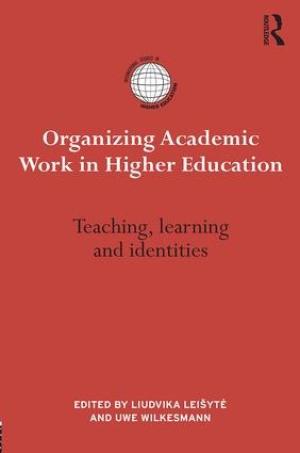
As much as teachers would like to argue to the contrary, the university is a business, an educational business to be specific. Universities, colleges, technical schools and the like are in the business of selling learning. They sell this product to those who see the need for education beyond the formative years, whether that be training in a trade or preparation for an occupation such as medicine, psychology, or religious service. Institutions of higher learning have been in existence for around a millennium, and have served as a tent pole artifact for institutional culture – universities have either set the bar of cultural progression or have fallen behind, sputtering to keep pace with the practitioners outside their hallowed walls who are establishing new trends and raising the bar set by the university. We seem to be in a contextual epoch that is squarely set between each of these extremes. There is still a hushed reverence that comes from finding a peer who attended Harvard, Stanford, Princeton, or Emory. Many in the academic community clamor to hear special lectures from Continental colleagues who have attended or are employed by Oxford, the University of Paris, or the University of Amsterdam. In some pockets, simply having a college or graduate degree can still mean higher pay, positional advancement, or advanced social standing. In the United States, we seem to be living in a time of both saturation and scarcity. Higher learning institutions are continually creating new and engaging programs to prepare interested individuals for securing employment in an ever-evolving, technologically-driven, globally-emerging marketplace. And yet the number of students seems to be shrinking as many weigh the cost of attending college or find that their career choice may not even require a college degree. Responsiveness to the changes taking place in society and academic preparation for those changes is of concern for leaders at universities, colleges, and trade schools. On one hand, the administration crunches numbers and devises business strategies to ensure that the institution remains open. On the other hand, faculty craft courses and develop programs to ensure that teaching is what keeps the institution open. This is the discussion that editors Leisyte and Wilkesmann present before the reader. Assembling over twenty scholars from across the globe, this volume demonstrates that the New Public Management model can be used to successfully organize institutions of higher learning. In providing specific examples from Germany, China, the UK, and the Netherlands, as well as individual authors speaking out of their own experiences, this volume shows how academic managers can integrate business-based operational models with rubric-based educational models to promote academic integrity and marketplace relatability. Change will continue to be the one true constant of the educational universe, and this volume provides a good map for the road ahead.
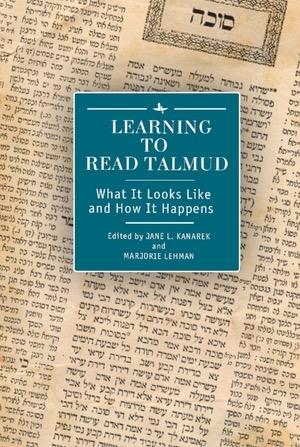
The subtitle says it all. This is not a how-to book that will teach one how to read the Talmud, but a book on how to teach others to read the Talmud. It is part of a “growing field of the scholarship of teaching and learning (SoTL), a field that seeks to expand the research agendas of scholars in a particular discipline to include research into the teaching or learning of that discipline or both” (xii). Each chapter is written by a different instructor of Talmud, all of whom have various methods and goals for teaching Talmud to their students. While the title might sound like it severely restricts its audience to those who teach Talmudic students, it doesn’t. Insofar as the book examines various methods for teaching a text that is both ancient and in a foreign language, the book could be useful for anyone who teaches primary texts, especially primary texts that involve a foreign or dated language. The book does not advocate a particular method of teaching or approach to reading the Talmud, recognizing that the best method and approach would depend on the goals of the class and the students’ previous exposure to Hebrew in general and the Talmud in particular. Some of the instructors focus more on the technicalities of the languages, such as Berkowitz and Tucker. Others, such as Gardner and Alexander, focus more on how one teaches the text to non-specialists. Kanarek examines the role of using secondary readings to understand the primary text in teaching. Whatever one’s style of teaching or goal for a primary text in a foreign language, one can find various ideas for how to implement them in the classroom. Each chapter gives a brief background as to the intent and assumptions of the instructor, specific examples of what was done, student feedback or responses, as well as post-class reflections. Berkowitz discusses the usefulness of study guides for assisting students in asking the right questions about grammar and vocabulary to aid their understanding and make technical terms seem less alien. Tucker exemplifies in his approach how to help students appreciate and not gloss over difficulties in the texts. Kanarek examines how different types of secondary readings can help students in different ways discover and appreciate issues in the texts. Gardner considers how explaining the narratives and surrounding culture aids non-specialists in understanding and appreciating the texts. Alexander structures her class to help students appreciate the possibility of more than one answer. All in all, this book offers some very practical ideas on teaching original and foreign texts.
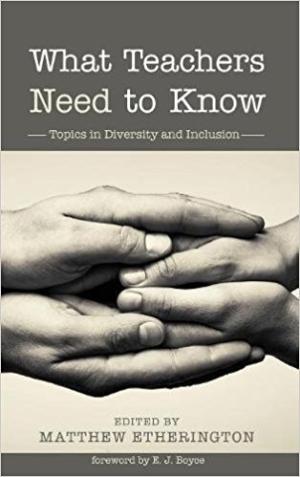
What Teachers Need to Know (Etherington, 2017) is a substantial text defining the diverse and inclusive experiences of contemporary education systems. The book is a compilation with three major parts: “Ethics,” “Inclusion and Teacher Management,” and “Worldview and Story.” Each chapter provides reading questions for use in a classroom setting or for deeper reflection. This is well-suited for an audience in higher education, especially for readers who could share personal experiences with diversity and inclusion topics after a practicum or time teaching. I would recommend this book for a post-graduate education library. The first part, “Ethics,” includes works by Sherick Hughes, Martyn Rouse, Jonathan Anuik, Chet Bowers, Eva Maria Waibel, the editor, Matthew Etherington, and James Dalziel. There is quite a range of topics in this section, but the Wabash Center reader might be particularly interested in Anuik's essay on faith-informed discourse. It is a study about the influence of missionary education on Indigenous beliefs, and how that reaches into Canadian public education today. It compels the reader to contemplate whether church and state can truly be separate in an educational context when there is such a significant inheritance of practice and values from a period dominated by religious influence. Part Two, “Inclusion and Teacher Management,” includes works by Peter J. Froese, Ken Pudlas, Lucinda Spaulding, Karen Copeland, Bruce Shelvey, and Ken Bradley. Spaulding's essay reflects the current shift of attention to patterns of bullying and puts forward the mechanisms school communities can provide for the resiliency of the students. Other essays in this section discuss topics such as mental health, special needs, and even bring in the parents' view on these issues as they exist in the educational system. This is an exceptional collection of essays on inclusivity. The third and final part, “Worldview and Story,” includes works by the editor, Matthew Etherington, Edward R. Howe, Adam Forsyth, Leo Van Arragon, Christina Belcher, and Cynthia à Beckett. This section has the most obvious correlation to religious studies within educational contexts. Topics include: tolerance, science and religion, and epistemology. This section could serve as an excellent initial reading for students in a practical theology or other contemporized religious studies capstone course. This book might not be a comfortable read in a public classroom, but maybe that is exactly why it should be read. Etherington's compilation offers academic theological reflection for secularized educational contexts. This book could be useful in a range of contexts. It may be particularly helpful to new teachers, parent associations, pastors of students, and community leaders.
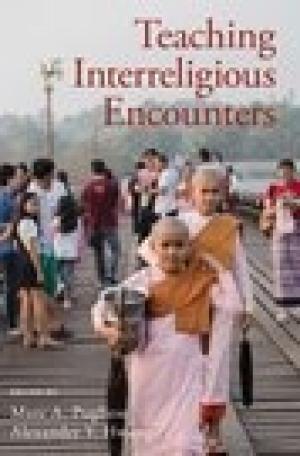
As many of the contributors to Teaching Interreligious Encounters point out, interactions with people of diverse religious commitments are becoming more frequent in the workplace, in civic affairs, and in many neighborhoods. Consequently, there is a need to help individuals develop the attitudes and aptitudes that will enable them to conduct those encounters in an informed, respectful, and personally satisfying fashion. This volume argues that education, particularly in the undergraduate classroom, can make a substantial contribution to preparing individuals to understand and participate effectively in a religiously diverse society. To that end, the contributors offer an array of resources, comments on course and assignment design, and concrete strategies to show students how to conduct themselves in and learn from “interreligious encounters.” Precisely what is entailed in such encounters and how they are to be enacted and understood receive a variety of answers throughout the book. At times, whatever lines might separate interfaith engagement from interreligious encounters, and either from comparative theology, and all of them from comparative religion do not appear in sharp focus. Some authors appear to use at least several of those terms as rough equivalents, while others strive to define their terms very clearly. For example, Eboo Patel and Cassie Meyer propose that “interfaith or interreligious studies is concerned primarily with the interactions between lived religious and nonreligious actors and communities” (300). Thus, they differentiate it from “comparative religions, comparative theology, and world religions” which they see as being less concerned with actual relationships and interactions. But several contributors cite with approval Francis Clooney’s statement that comparative theology “entails the interpretation of the meaning and truth of one’s own faith by means of a critical investigation of other faiths” (see 45), which would bring it closer to Patel and Meyer’s understanding of interfaith and interreligious studies. How to construct courses, course modules, and individual assignments to promote what Patel and Meyer call “interfaith literacy” receives a lot of attention. Joshua Brown, for example, describes and analyzes a course on political theology that uses examples from Christianity and Chinese religions. Jonathan Edelman provides a detailed consideration of the Bhagavad Gita as a theological text. Other authors focus more on pedagogical strategies. In one of the more interesting contributions, Devorah Schoenfeld and Jeanine Diller describe how they use the Jewish process of hevruta to encourage students to disagree with each other in their interpretations of texts while still remaining in conversation, recognize disagreements within and among religions, and value interreligious disagreement. Emily Sigalow and Wendy Cadge make a clear and strong case for the value of using case studies in teaching about interreligious encounters, something that several other contributors also mention. Most of the contributions emphasize that students can learn something personally valuable and meaningful from studying and especially participating in interactions with people who have religious commitments different than their own. This volume offers a rich set of suggestions about how to design and structure such learning opportunities.

“The definition of slow looking is straightforward,” writes Shari Tishman, “It simply means taking the time to carefully observe more than meets the eye at first glance" (2). Imagine taking students to an art museum and focusing on just one painting. You would be taking the time to support your students in looking, really looking at art. Can they list everything they see in the painting? Could they identify twice as many items if you gave them more time still? Does the painting look different if they move closer or change their angle? Are there interesting juxtapositions of objects, shapes, or colors within the painting? These questions are natural to slow looking. It is a rewarding classroom practice and an indispensable aspect of method in theological and religious studies. This book was written “with educators in mind” and it contains many practical ideas on how to use slow looking in the classroom. Examples range across disciplines: Virginia Woolf’s observations concerning “The Mark on the Wall,” zoological sketches of a caracal cat, and the mechanical intricacies of an old-fashioned office stapler, among others. Drawing on previous research, Tishman examines three dispositional tendencies involved in slow looking: ability, inclination, and sensitivity (145). Sensitivity is particularly critical; this is the capacity to employ slow looking in the appropriate context. As educators in the humanities seek to more clearly articulate the lasting benefits of our work, this careful examination of slow looking as an important lifelong skill is timely. The beauty of this title is its ability to focus on the benefits of slow looking as educational practice in a deep way. Many excellent books on pedagogy adopt a wide scope. They pull their lens back and look at course planning or broad curricular systems. Slow Looking has much to offer courses and curriculum, but Tishman is adept at returning continually to the exercise of slow looking to reveal its complexity and practical efficacy from different vantage points. According to Tishman, slow looking is a “learned capacity” foundational to critical thinking (7). Foundational, yes, but it should not be thought of as synonymous with critical thinking or be conceptually absorbed by critical thinking. Slow looking is its own discrete process. Tishman explains, “Slow looking is not primarily judgment oriented, though its fruits certainly inform good judgments. Rather, slow looking emphasizes deferring judgment in favor of apprehending the complexity of how things are at the moment” (149). There are three types of complexity: complexity of parts and interactions (anatomy, for example), perspective (different physical or conceptual vantage points), and engagement (interplay between perceiver and perceived). Teachers will already see how parsing complexity in this way can lead to extended classroom reflection on a given subject of observation and the process of looking itself. Slow Looking strikes the perfect balance between practicality and philosophical depth. Tishman writes fluidly and moves easily among descriptions of classroom technique, phenomenological analysis of observation, and the intellectual history of student-centered education. Slow Looking will be a continual source of inspiration in my own teaching and scholarship – it is highly recommended.
This book gives both more and less than what its title promises. For the editors of this collection, teaching “the whole student” requires engaged learning (“active, participatory, experiential learning that links doing with thinking”) and integrative pedagogy (“crossing and stretching traditional intellectual disciplinary boundaries”) (1). In turn, these commitments are part and parcel of a larger commitment to educating for social justice, and the essays take on a wide array of topics, including effective and balanced service-learning, learning communities “done well,” and the importance of meaningful, sustained diversity engagement. Some of the essays are rather auto-biographical while others focus on a particular course or program. As is the case with many books of this type, the collection is an uneven assortment, and it is not always clear how an essay pertains to the promised subject of “teaching the whole student.” For those reasons, it can be somewhat disappointing. Read in one way, however, hope emerges as a kind of connecting line and important theme. This is addressed most directly in the essay by Gillies Malnarich, who describes a moment of personal crisis as a teacher. She lay awake at night wondering, “What does it mean to educate for hope?” How can we make space for “raw, angry, heartbreaking, life-affirming hope… especially in our classrooms,” she asks, drawing upon both Paulo Freire and Rebecca Solnit’s writings (58). It also becomes clear that the kind of relational pedagogy being prescribed by many of the writers requires a willingness on the part of the teacher to bring his or her whole self into the classroom. In her essay on “Incorporating Social Justice into Teaching,” Kathleen Manning encourages readers to think of teaching as a spiritual act: “Teaching is not something learned once and perfected. The ever-changing nature of students, theory, and your personal and professional cycles as a person and professor make teaching an art. Because you are affecting people’s lives, approaching teaching and learning as spiritual practice places it in the realm of transcendence. Particularly when using principles of social justice to work toward a more just world, faith, trust, and authenticity must be part of the teaching and learning processes” (52). There are many helpful ideas and strategies here, including the “Where I’m From” poetry assignment, a powerful way for students to disclose important aspects of their identity and express “links between their faith tradition and ethnicity,” among other things (164 - the activity comes from Beverly Daniel Tatum’s Can We Talk About Race? [Beacon, 2007]). Some of the essays include useful appendices - see, for example, the collaborative learning self-assessment (77) or the chart describing experiential classroom activities to promote dialogue (143). Ultimately the strength of this book can be found in the questions that it poses more than in the answers it suggests. Each essay concludes with a set of reflection questions prompted by the content of the essay, and a patient, thoughtful reader could work her way through this book and be richly rewarded.