Book Reviews

Essentials of Online Teaching: A Standards-Based Guide could contribute to lively and relevant discussions about the challenges and opportunities of online courses. The book is unique because it takes the reader on a journey from the preliminary design of a course through its development and final phase of instruction. A further distinctive feature of the book is that it includes source materials from hundreds of teachers who have extensive knowledge of and experience with teaching online courses. By collaborating with such a diverse group of educators, the authors provide an impressive set of approaches to guide teaching decisions, assessing students’ progress, and reflecting on factors that influence a successful, online teaching experience. The book is a wonderful and needed resource that offers helpful models and examples of courses that integrate a range of interactive methods for learning such as discussion forums, blogs, and chats. The book begins with a general overview of online education and describes technologies for effective teaching as well as what a teacher should focus on before the semester begins. After offering suggestions on how to launch a successful online course, McCabe and Gonzáles-Flores examine how teachers monitor and support students’ learning once the course starts. In addition, they address ways to evaluate students during the middle weeks of a course and how to evaluate the effectiveness of the course design in case improvements are needed to enhance the teaching and learning process. Other important aspects of online teaching and learning are collaboration and assessment. The authors provide explanations and examples of how discussions and collaboration should work as well as how to evaluate standards of practice. In the Introduction, McCabe and Gonzáles-Flores discuss the scope of foundational theorists in distance education as well as the current work of researchers in the field. The book is a useful resource for teachers who are “new to online teaching or those who want to improve their practice” (3). This book will also benefit educational and corporate trainers, academic administrators, department heads, decision-makers, entrepreneurs, teachers, and students who work with online course development and training. In fact, anyone interested in education can use Essentials of Online Teaching: A Standards-Based Guide to “understand the challenges online instructors and trainers face and design products to serve their needs” (4). In an early chapter, the authors show how online education has evolved over the years and how various models can effectively work for teachers and students. Historically, online teaching as a “concept and term sprang onto the educational landscape in the late 1980s as computer conferencing software began to support interaction between teachers and students” (22). Eventually, those in education, including researchers, marketing professionals, and program developers started conversations that grew into new ways of instruction. In early conversations, these new ways used passive language that de-emphasized the personal dimension in teaching. According to the authors, passive language sends an incorrect message; namely, an implication that online courses are characterized, primarily, by automation rather than an active and interactive process of teaching and learning. Hence, this book describes an interactive process from beginning to end where students and teachers take advantage of asynchronous communication and do not allow remote access or intermittent exchange prevent engagement, reflection, or assessment. Recognizing the unique character of online courses, the authors encourage as much activity as possible by teachers helping students navigate the online environment through a variety of pedagogical and management strategies.
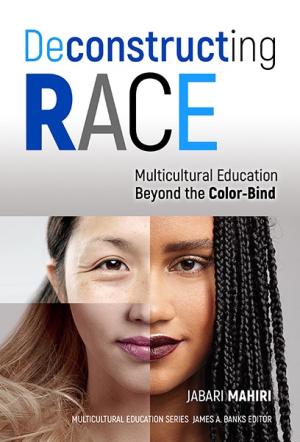
Deconstructing Race is a book written by a teacher to other teachers. It combines empirical data with critical race theory and pedagogical research with three objectives: at the theoretical level, the book offers teachers an overview of applied critical race theory; at the pedagogical level, Mahiri offers a wide sample of ethnographic data (mostly interviews) and literary analysis (Chapter 2) that both inform and illustrate the theoretical framework; third, and perhaps most importantly, Deconstructing Race offers an alternative framework “beyond the Color-Bind.” Aptly drawing on Derrida’s work, Mahiri diagnoses that “rapidly changing micro-cultural identities and practices of individuals cannot be contained in the static racial categories assigned by white supremacy” (7). The author advances the notion of “micro-cultures” to account for the myriad ways in which subjects assume different cultural positions, practices, choices, and perspectives. The hyphen in the expression seeks to underline the experience of multicultural individuals who always live in-between. The theoretical apparatus (Chapters 1, 2, 3, and 9) sandwiches a set of five chapters in which the author exemplifies the inadequacy of racial categories by presenting several interviews grouped according to the five official categories of race (briefly presented in chapter 3). The wealth of interviews and testimonies cannot be summarized here, but they all point to how institutionalized racial categorizations completely miss the mark as descriptors of identity. The ethnographical data amply demonstrates in turn that identitarian “boxes” cannot be decided in advance and theoretical notions need to be sharpened to reflect what Mahiri calls the phenomenon of hyperdiversity. For educators in the fields of theology, religious studies, or multicultural ministry, the main appeal of this contribution may reside precisely in the richness of its ethnographical survey and, more specifically, in the testimonies of subjects classified within a certain race. Their experiences push racial categories to come undone in favor of other “ancestral, ethnic, and national origin identifications” (78). Furthermore, this new construction of identities, Mahiri explores, is performed through digital media where subjects negotiate real-world and virtual identities – subverting the former by performing new identifications in the latter. From this standpoint, Deconstructing Race offers a glimpse of what resistance looks like in the age of digital media. Whereas the ethnographic account is definitely the book’s main strength, its theoretical framework calls for further elaboration. Mahiri takes a descriptive approach to ethnographic analysis with the subsequent advantage of presenting the experiences of the interviewed subjects in their rich complexity. However, self-descriptions are not sufficiently analyzed. For instance, to what extent is the emphatic insistence on the notion of “identity” (regardless of the axes that define it) not itself a philosophical project in need of deconstruction? How might a more robust analysis of contemporary capitalism – a concept mentioned a couple of times in passing but that names the cause, one might argue, of mass population movements that inform the identities presented – inform alternative racial imaginaries?
Advocates for the rights of people with disabilities have worked hard to make universal design in the built environment “just part of what we do.” We no longer see curb cuts, for instance, as accommodations for people with disabilities, but perceive their usefulness every time we ride our bikes or push our strollers through crosswalks. This is also a perfect model for Universal Design for Learning (UDL), a framework grounded in the neuroscience of why, what, and how people learn. Tobin and Behling show that, although it is often associated with students with disabilities, UDL can be profitably broadened toward a larger ease-of-use and general diversity framework. Captioned instructional videos, for example, benefit learners with hearing impairments but also the student who worries about waking her young children at night or those studying on a noisy team bus. Reach Everyone, Teach Everyone is aimed at faculty members, faculty-service staff, disability support providers, student-service staff, campus leaders, and graduate students who want to strengthen the engagement, interaction, and performance of all college students. It includes resources for readers who want to become UDL experts and advocates: real-world case studies, active-learning techniques, UDL coaching skills, micro- and macro-level UDL-adoption guidance, and use-them-now resources. (From the Publisher)
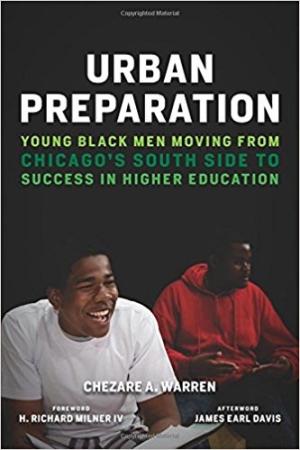
Urban Preparation contributes to a needed body of research on race that investigates “mechanisms, systems, structures, and practices that have a real bearing on students’ opportunities to learn” (vii). Urban Preparation highlights the scholarship of leading researchers who address questions related to race, poverty, achievement gaps, and the academic performance of minority students. An underlying thesis of Urban Preparation is that students in general, and minority students in particular, succeed when appropriate measures are in place. This is a resource for scholars in a variety of disciplines, including but not limited to: education, law, sociology, psychology, health, political science, and social work. The book begins with an overview of the Race and Education series at Harvard Education Press. The series editor, H. Richard Milner IV, lists several objectives that guide the series and he challenges those in power to work “for the good of humanity, to interrupt systems, policies, and practices that work only for some while others remain underserved” (ix). Reasons are given for focusing on the intersection of race and education and questions are asked related to poverty, transportation, housing, and employment, among others. In the Introduction, Chezare Warren explains why he wrote Urban Preparation: “to subvert dominant narratives that insist on casting urban-dwelling young, black men and boys as ‘at-risk’ or ‘disadvantaged’” (1). He shares the stories of these young people as counter-stories that portray them as hyper-vulnerable. He is also convinced that social inequities and stories of failure must be examined alongside counter-stories of resilience, persistence, accomplishment, and triumph. The book highlights the stories of seventeen young black men who are members of the inaugural graduating class of Urban Prep Charter Academy for Young Men, referred to as “UP.” UP is a high school for boys in the Englewood neighborhood which has one of the lowest median household incomes among Chicago’s Southside neighborhoods. However, UP is widely recognized for 100 percent of its graduating class gaining admission to four-year colleges and universities. Urban Preparation aims to: (1) describe the organizational design of UP; (2) examine the intersections of place and space to discern factors that motivate young black men to succeed against the odds; and (3) explore the factors that help narrow “opportunity gaps” for urban youth, and the implications of these factors (3). The book’s qualitative data consists of interviews, field notes, memos, and participants’ responses in order to construct a “coherent continuous narrative around dominant themes” that emerged from analyzing data (8). From the data, Warren chronicles the real-life experiences of the first graduating class by grouping the students into five composite characters with overlapping characteristics. The title of the book is derived from the school’s name but the book tells the stories of the seventeen students and “the meaning associated with growing up in an urban environment” (18). More than anything else, the book gives a better understanding of the academic and cultural strengths of urban minority youth in secondary and postsecondary settings. Urban Preparation is fundamentally a counter story as well as a critical study that challenges educators and all those interested in improving the education outcomes of black men and boys to listen to them and to learn from them.

In the opening chapter of his edited volume The Pedagogy of Compassion at the Heart of Higher Education, Paul Gibbs succinctly locates this collection of essays and the topic itself within the current environment of higher education in a way that will be familiar to many: “Given that the consumer model seems to resonate with the context of the majority of higher education institutions, what place do the virtues of humanity and spirituality have in a product-driven consumer service business model of higher education?” (9). It’s a question often asked, and it is one this volume addresses from a wide variety of angles and perspectives. The answer, from adding the sum of the essays here, is that humanity, spirituality, and other qualities of compassion can be observed, practiced, and cultivated in most if not all places within higher education. The variety of topics and perspectives in this volume provide detailed descriptions, arguments, and inspiration for just how such a pedagogy has been prevalent in the history of higher education, and how it can be integrated more into higher education today. Gibbs is mindful to be as expansive as possible in the perspectives he includes, and the book does include authors from the U.K., the U.S., Canada, Hong Kong, and Europe, with voices ranging from senior academics to students. This range demonstrates Gibbs’s point that the book “is neither overtly spiritual nor secular or agnostic” (11). For instance, Richard White’s entry traces compassion through Western and Eastern philosophy, and in doing so provides practical ideas to create a compassionate classroom. Kathryn Waddington focuses on “self-compassion, which involves self-kindness, a sense of common humanity, and mindfulness” (66). Self-compassion, Waddington shows, can influence a change in behavior and understanding at individual, group, and organizational levels. Gibbs is conscious of the structure and organization of this essay collection, and the essays flow well in conversation with each other. This element of the book makes for a very engaging read, and one that further encourages the links between multiple perspectives on compassion in higher education. Following the chapter on self-compassion, Irena Papadopoulos writes on intellectual compassion as a way of cultivating world citizenship, connecting the concepts of interconnectedness of social reality as stemming from twentieth-century philosophers Martin Buber and Emmanuel Levinas. From there, the discussion flows to the relation of compassion within the liberal arts, within Buddhism and Islam, and the transformative power of compassion within South Africa’s anti-apartheid movement. There is also a series of essays focusing on compassion in an institutional way. In The Pedagogy of Compassion at the Heart of Higher Education, Gibbs collects diverse ideas about compassion in higher education. This volume can serve as a guide, for individuals and institutions alike, for an engaging historical and topical conversation on the wide-ranging ways to integrate ideas of spirituality and humanity into realms that have increasingly come to seem consumerist.
Against the prevailing tide in higher education, Christine Harrington and Todd Zakrajsek argue that lectures, when prepared well and incorporated appropriately, are one of the most effective ways to enhance learning. The first part of their book is focused on making this case and on delineating the different forms a lecture can take. The second part of the book focuses on ways to make lectures more effective for learners. That second part takes up the bulk of the book (7 of the 11 chapters). The third part provides tools and resources for preparing and evaluating lectures. These final two chapters give helpful rubrics, charts, and questionnaires that can easily be adapted for one’s own lectures or for evaluating others’ lectures. This book would be a useful addition to an individual professor’s library and, most especially, to a center for teaching and learning library. Both authors of Dynamic Lecturing are trained in psychology and have experience in teaching and learning and faculty development centers, so the examples are often from social science or natural science classrooms. However, many of their suggestions could easily be adapted to theology and religious studies. Using research from the scholarship of teaching and learning, they argue that lectures are efficient and effective for novice learners but are less so for expert learners (by which they mean advanced undergraduates and graduate students). This book, therefore, would be most useful for faculty who frequently teach lower-division courses for undergraduates; it could still be quite useful for those wanting to make their lectures more effective, even if they work with other learner populations and use other kinds of teaching tools. This distinction between novice and expert learners is significant in the context of theology and religious studies: in certain courses, students may enter the classroom assuming they are the experts (for example, if the course focuses on their own religious tradition, especially if the professor is not another “insider”). Harrington and Zakrajsek’s discussion of techniques like pre-testing may be a way to address this unique dynamic: if a student took a pre-test and found that they did not know as much as they thought they knew, they might find themselves more open to learning from a professor’s lecture. As their title suggests, this is not a book about individual teaching choices, but rather is focused on research-based strategies: nearly every paragraph has multiple citations that refer the reader to studies done on teaching and learning. A bibliography accompanies each chapter, so references are easy to track down, if desired. The studies are often explained well, so the reader knows what the research suggests; there are times, however, when the conclusions seem overstated. For example, a study used to argue that lectures are more helpful than active learning sessions to novice learners is explained in a parenthetical note: 88% of students agreed or strongly agreed that a lecture helped them learn course content compared with 49% of students who agreed or strongly agreed that active learning sessions helped them learn course content (10). Self-reporting is not the same as demonstrating mastery of the content. In other places, the authors note that students are not always the best judges of their own learning (see, for example, studies on learners’ overconfidence [115]). The research cited throughout the book is not limited to self-reporting and includes very helpful data on what promotes student engagement and learning.
Creating Wicked Students: Designing Courses for a Complex World Paul Hanstedt Sterling, VA: Stylus Publishing, 2018 (x + 180 pages, ISBN 978-1-62036-697-4, $24.95) One might assume that a text called Creating Wicked Students would discuss types of “wicked” problems – complex social-environmental issues that cannot be solved with existing modes of inquiry and decision-making – that instructors might address through a problem-based learning approach. However, this work actually is an introduction to course design most useful for beginning instructors or those redesigning their courses according to sound pedagogical principles. Situating himself against those who view higher education as solely preparing students for the workforce or transmitting content, Hanstedt emphasizes the importance of instilling a sense of authority in our students by helping them develop skills and attitudes that will empower them to make meaningful change in the world. Hanstedt’s holistic vision of education includes attitudes and dispositions alongside skills and content mastery, and will likely resonate with instructors in religious studies and theology. Although he does not explicitly refer to our disciplines, he does offer examples, anecdotes, and insights from colleagues in a variety of fields and institutions, which is a strength of the book. He references seminal work in the scholarship of teaching and learning – including that of: George Kuh (2008, High-Impact Educational Practices, AACU); James Zull (2002, The Art of Changing the Brain, Stylus); and David Krathwohl (2002, “A revision of Bloom’s taxonomy,” Theory into Practice 41) – but does not engage with previous scholarship on wicked problems. Readers interested in learning more about pedagogical approaches to wicked problems could consult the work of the work of: Brown et al. (2010, Tackling Wicked Problems, Routledge); Carcasson (2017, “Deliberative Pedagogy as Critical Connective” in Deliberative Pedagogy, Michigan State University); or Lee (2016, “Systems Thinking,” in Resilience by Design, Springer). This book could be useful as an introduction to course design for someone less familiar with the fundamentals, such as how to develop measurable learning outcomes, align course goals with institutional goals, nest content within higher-order goals, engage students’ prior knowledge, or incorporate applied learning. The structure of the book allows for one to follow it step-by-step as a course design manual, and it also includes recursive “intermissions” to encourage reflection along the way. In addition, his discussion of how to prompt critical thinking through multiple-choice exams offers helpful strategies for encouraging students to explain their thinking on ambiguous questions with follow-up questions that explain or justify their choice (92-98).

Teaching Interculturally: A Framework for Integrating Disciplinary Knowledge and Intercultural Development Amy Lee, Robert Poch, Mary Katherine O'Brien, and Catherine Solheim Sterling, VA: Stylus, 2017 (x + 137 pages, ISBN 978-1620363799, $27.50) This book is “for intercultural pedagogy” and the authors are clear about their goal: “to foster a deeper knowledge and skill base of pedagogical theory/practice and, in doing so, seek to advance a critical intercultural pedagogy that is capable of supporting a profound shift in daily practice” (3). In arguing the need for this work, they critique universities for undervaluing teaching and failing to engage doctoral candidates in programmatic teacher preparation (8). The authors provide this sobering take: “Centers for ‘teaching and learning’ have closed, merged, gone ‘online,’ and become centers for ‘educational innovation,’ a discursive marker of the emphasis being on research and not on the people or process of teaching and learning” (18). This is a bold claim to leave hanging. Less controversial is their assertion that “you are teaching in and experiencing intercultural classrooms regardless of whether you want to, whether you are aware of it, and whether you think it is your responsibility or relevant to your discipline” (15). Readers will be hard pressed to leave this book with any doubt concerning the importance and relevance of intercultural pedagogy. The authors strike an admirable and concise balance between theory and practice. They aim to “disrupt” current teaching norms with a “commitment to make intentional, informed decisions that enable our courses to engage and support diversity and inclusion” (15). In their second chapter, they emphasize three values toward this end: (1) the pursuit of equity and inclusion in classrooms, (2) pedagogical humility while recognizing the developmental nature of expertise, and (3) the importance of reflection and revision. These values are modeled through the rest of the book. In chapter 3 authors Robert (Bob) Poch and Catherine Solheim share critical self-reflections on how their cultural identities, academic formation, and scholarship shapes their teaching. In chapters 4 and 5, Catherine and Bob provide case studies with specific examples of how thinking interculturally has changed their teaching practice. Helpful descriptions of actual classroom discussions and examples of modified learning goals, assessments, student work, and student feedback appear in abundance. Bob shows how his explanation-heavy PowerPoint slides of 2011 transition to primary source quotes, open-ended questions, and historical images by 2015. His transformed teaching “facilitated much more intercultural interaction” and “developed the capacity for each student to be an interpretive historian” (59). Catherine shows how the hard work of reflecting on the goals and outcomes for her “Global and Diverse Families” course prompted students to engage more deeply with cultures other than their own. The risks and benefits of her shift from a final exam to a synthesis-based summative assessment drawing on an ethno-narrative interview assignment are described with careful attention to detail and deep reflection. Carrying the theme of disruption forward, this book does not shy away from challenges and pitfalls. The final chapter discusses “productive discomfort” by providing tips for facilitating difficult classroom conversations along with real-life examples. The memorable case of a teacher bringing a heated online exchange between students back to a place of respect and collegiality is examined with characteristic humility. With numerous case studies and bracketed “Invitations for Reflection,” this slim volume practices a pedagogy of its own and is well-suited for individuals and groups seeking opportunities for practical and meaningful reflection on intercultural pedagogy.
This groundbreaking text does not approach teaching and learning from the do’s and don’ts (the mechanics and tools of pedagogy) but instead offers a comparative cross-national investigation of the goals and purposes of education in Singapore, China, Chile, Mexico, India, and the United States. What has each country set as its goals and purposes for the twenty-first century context of close global interactions and rapid information and communication technologies? And how does each assess tangible outcomes? An overarching inter-country similarity is that the goals of pedagogy result from both changes in each country’s contemporary particularity and in their evolving definitions of the global. For instance, in the twenty-first century, each country faces fast and fluid developments signified by the necessity of learning to learn, of competency of certification, and of online learning. How should teaching and learning respond? Should a nation or civilization choose the route of achieving adaptability to evolving goals? Or should a country center on the technical challenges related to a school’s function? Succinctly, goals mean who should learn what. These goals are not neutral or objective. Various stakeholders in society are vying for the appropriate ways of teaching and learning. Governments seek pedagogical goals that produce patriotic citizens; businesses want ideal employees; faith communities desire moral human beings; graduate schools look for highly educated applicants; not-for-profits hope for volunteer-minded people; and parents seek teaching and learning so their children can achieve meaningful employment or, in some case, simply employment. Drawing on a sophisticated and comprehensive study from the National Research Council (NRC), this book frames each of the six countries within three broad pedagogical rubrics – cognitive, intrapersonal, and interpersonal competencies – that are learned by both teachers and students. Each generic rubric contains relevant subsections. Specifically, cognitive competencies include cognitive processes and strategies, knowledge, and creativity; intrapersonal competencies include intellectual openness, work ethic/conscientiousness, and positive core self-evaluation; and interpersonal competencies include teamwork and collaboration along with leadership development. How does each country implement in practical concretes this NRC framework? The co-editors chose the NRC study because, in their research, it represents the most all-encompassing and science-based study of twenty-first century skills when compared to the other major studies in the world. The NRC readily admits that many aims within its teaching and learning investigations are not novel. But what is new (and is fundamentally different from all prior historical contexts) is that these sought-after competencies no longer belong to the elites of the world (including the United States). All countries now de jure or at least subscribe to a democratization of pedagogical goals for a diversity of citizens. Indeed, a vibrant twenty-first century country requires universal goals for each citizen. After an elaborate and nuanced review of the six countries, the book offers a concluding chapter with the following recommendation. Each nation necessitates a systems theory to integrate all aspects of a country’s goals, methods, practices, and assessment mechanisms to achieve the established competencies. The best system will be one that connects fluid, adaptable, logical, and coherent relationships among curricula, school organization and management, various teaching and learning approaches (such as independent study, didactic pedagogy, outdoor education, and project-based learning), effective communication mechanisms, and emotional buy-in from society’s stakeholders. I highly recommend this book for any civic-minded people, especially those wanting to achieve professional development for teachers and to prepare students for new ways of learning now.
Antagonisms, conflicts, and oppositions characterize societal relations. Becky Thompson acknowledges these realities throughout her book with careful attention and still makes the case for a post-oppositional approach. This is the book’s greatest strength, offering hope and healing through tenderness while walking through the ruin and devastation brought about by dominating power and systems of inequality. Thompson asks, “What rituals might we incorporate into teaching that invite the body into the classroom? What is it about the structure of academe that leads us to flee our bodies? How can we find them again? What risks will this take? What truths do we need to tell about our lives and our teaching that we have been hiding from ourselves, or barely whispering? How might inviting bodies into the classroom change how we seek justice in the world?” (13). Thompson responds to each of these questions by leading readers through an interdisciplinary and innovative collection of figures and concepts without sacrificing the book’s rigor. Given the hardening of boundaries and identities in discussions about power and privilege, Thompson’s work brings a refreshing proposal and argument for countering defensiveness and getting to “a soft place with each other” (36). For teachers of all stripes, this means overcoming a dichotomy between mind and body often inherited and passed along in the academe (64). Making a case for “embodied pedagogy” (39), Thompson lifts up the very essential need to facilitate a “resocialization process” (88) whereby students are enabled to feel connected with each other and themselves. Teaching with Tenderness is exceptional because it does not offer easy solutions. For instance, Thompson notes the difficulty of inviting in people’s personal stories “without encouraging an atmosphere where students feel they must share in order to succeed” (72). For teachers untrained in professional therapeutic strategies, overcoming the desire to “outsource the emotional content of our courses” (89) takes soul work and the willingness to deal with the messiness of what Thompson memorably refers to as “the warp and woof” of that which makes us all human (90). The book also offers an implicit challenge to teachers, scholars, and researchers for whom gathering data, research, and analysis is part of their bread and butter. While recognizing these as necessary, Thompson notes that academics need to conduct research “with” and not “on” the communities they are describing or analyzing (108). Thompson’s work speaks to those interested in carving out a new path in teaching and learning where there is neither exclusion nor appropriation, neither denial nor naiveté, neither easy solutions nor pages filled with jargon. This book is a must-read for anyone interested in the challenge and promise of interdisciplinary work that takes the whole person into account as part of envisioning a pedagogy where all things are done as if everyone mattered – body, mind, and all.