Book Reviews
The standard perception of higher education in the United States is that it is only for the elite (or those middle-class folks who are willing to take out massive loans to pay for their education). However, the founding concept behind public higher education was to allow all who wish to earn an advanced degree the opportunity to do so. Obviously, the schema appears to have changed. Financial considerations, admissions standards, and other limitations can produce obstacles to admission. One way to overcome these obstacles is the Community and Technical College system. This system has flourished as a result of offering skills-based training in a number of readily employable fields. Another way to surmount obstacles to higher education, and the one that is the subject of this review, is through community engagement. Community engagement occurs when an institution of higher learning opens its doors to the general public and seeks to partner with them in providing academic and professional training. Community can occur in one of two ways: the institution can seek partnerships with the public through campus events or community service, or the public can seek partnerships with the institution through fieldwork arrangements or training programs. Obviously, this can also be a two-way street where the institution and the community collaborate in the engagement process. Welch’s volume is based on the Carnegie Foundation’s significant research study on existing community engagement offices at several major American universities and the conceptual writings on community engagement by John Saltmarsh. Welch outlines the purpose of, platforms for, and programs involved with community engagement. The strength of the volume is Welch’s thorough analysis and systematizing of the Carnegie report. However, the volume promises more than that; it promises to provide practical direction for how schools can connect with their community to implement these platforms and programs. This is where the volume falls short of expectations. As mentioned previously, this book is quite voluminous when it comes to the analysis and quantification of the Carnegie study. And if it had simply stayed there, this would have been an insightful and thought-provoking volume that naturally leads to two other volumes by the same publisher that appear to be connected (Publically Engaged Scholars edited by Post, Ward, Longo, and Saltmarsh, and Community Partner Guide to Campus Collaborations by Cress, Stokamer, and Kaufman). However, the book also attempts to craft an implementation plan for community engagement. It waffles between institutions partnering with community liaisons to provide internships for human services or business students on the one hand and developing institution-based think-tanks that, through strategic partnerships, craft economic and political policy through instructor-student-sponsor relationships on the other. Ultimately, Welch’s volume becomes a never-ending firehose that could lead to bloated institutions scrambling to keep their doors open or to anemic institutions beaten down by unnecessary feelings of academic and professional inferiority.
Luis S. Villacaňas de Castro, an assistant professor in the department of Language and Literature Education at the University of Valencia in Spain, wrote Critical Pedagogy and Marx, Vygotsky, and Freire as a companion volume to his earlier book The Copernican Turn and the Social Science, which was published in Spanish in 2013. Villacaňas de Castro writes extensively in epistemology, critical pedagogy, political philosophy, and language education and publishes in both Spanish and English. This volume has three sections and an introduction. In the introduction, the author explores the Copernican turn, which involves paradigm-shifting theories. He argues that four scientific theories qualify as Copernican turns: Freud’s psychoanalysis; Marx’s works in sociology; Neo-Darwinism; and the Theory of Relativity. Villacaňas de Castro explains that “a Copernican turn thus involves two kinds of knowledge: about the object and the subject; knowledge about specific realities; and also new knowledge about how human beings should understand themselves in relation to those four objects” (2). He argues that each Copernican turn creates epistemological obstacles, and he engages these obstacles through the lens of the German concept Erscheinungsformen, which he translates as phenomenal forms. The author explores “the threats and difficulties that the Erscheinungsformen pose to teaching and learning, and how educators should negotiate these obstacles” (5). Villacaňas de Castro uses the works of Marx, Vygotsky, and Freire to translate the epistemological obstacles into pedagogical problems and then engages pedagogical approaches to solve the problems (7). The author argues that these pedagogical approaches justify participatory action research as the most effective educational approach. The first section deals with Marx, Freud, and pedagogy. In Chapter I, Villacaňas de Castro introduces the major concepts of Marxist sociology and Freudian psychoanalysis in terms of pedagogical approaches to address the epistemological obstacles. Section II explores epistemology, critical pedagogy, and the liberal principle. The two chapters in this section engage concepts from Marx and Vygotsky to unpack and engage Erscheinungsformen. Villacaňas de Castro argues that this chapter reveals “a theoretical blind spot in Vygotsky’s pedagogy…which it is in the interests of critical pedagogues to resolve” (46). The work of Freire becomes key as Villacaňas de Castro develops this critical pedagogy in the form of social democracy. The last part of the book, Section III, explores the theory and practice of educational action research. Using Freire’s pedagogical approach and John Elliott’s liberal pedagogy, the author concludes “that John Elliott does not provide educators with a liberal pedagogy, but rather an appropriate method for them to fulfill their main critical goal: to help students understand the nature of the key subject matters that determine their life in society” (114). This supports Villacaňas de Castro’s argument and he concludes that participatory meta-action research is “an effective measure to break the vicious circle both students and I have fallen into” (144). This book is a very complex and abstract argument. Villacaňas de Castro’s academic writing style will throw off many readers. His sentence structures are very long (including a 141-word sentence on pages 86 and 87) with many embedded clauses. This makes attempting to unpack the already difficult concepts of Marx, Vygotsky, and Freire more challenging. However, the author develops a solid case for a stronger critical pedagogy rooted in participatory action research. Theological libraries that support programs with components of theological methodology should add this text to their collections. In addition, faculty and graduate students who are working with participatory action research should read this book to explore the epistemological foundations of their methodology.
Inquiry-Based Learning for Multidisciplinary Programs is the third volume in this series that addresses inquiry-based learning (IBL). Appropriate to its subject of multidisciplinarity, this book’s contributors are from a wide variety of academic disciplines, work in different institutional contexts, and approach IBL in different ways. The strength of collecting together such variety is that almost any teacher interested in IBL can find inspiration and practical resources for teaching that empowers students and connects to their experiences outside the classroom. In introducing IBL, Blessinger and Carfora write, “IBL, as an approach instead of a specific method, is a cluster of teaching and learning strategies where students inquire into the nature of a problem(s) or question(s). The problem or question scenario thus serves as a mechanism and catalyst to engage actively and deeply in the learning process” (5). Ways to implement IBL include “case analysis or case creation, research projects, field word investigations, laboratory experiments, and role-play scenarios” in which students collaborate and become self-regulated learners (7). Readers who are unfamiliar with IBL can quickly grasp the concept, thanks to the editors’ opening chapter and to the other authors who explain the meaning of IBL in relation to other pedagogical concepts and movements. Readers who are familiar with IBL will find the case studies interesting because they show a common approach used in different countries, in undergraduate and graduate education, and in online and face-to-face education. Instructors of religion will find several ideas of interest here, especially but not only if they teach in interdisciplinary programs. For instance, William E. Herman and Michele R. Pinard point to how IBL connects with environmental and gender issues (51). The perspective on folknography illustrated by David M. Lucas and Charles W. Jarrett will be relevant for some courses in religious studies (67). Nicholas J. Shudak develops an approach of resonances for students learning about another culture, which would be applicable to learning in religious studies. He explains how finding connections between students’ own context and another helps them to develop a deeper understanding but also may water down some differences (91-98). Alia Sheety and Nicholas Rademacher, from departments of education and religious studies, describe their use of a flipped classroom, off-campus experiences, and student research projects for a collaborative course on social justice (124-130). After reading about the variety of approaches to IBL in different contexts, it is striking how many different learning activities fall under IBL. The editors point out that the case studies show how IBL in multidisciplinary programs enhances both student learning and instructor teaching (9). Indeed this book gives the impression that IBL is very appropriate for multidisciplinary teaching and learning, since its use of real world or multi-faceted problems necessarily asks students to learn outside the confines of one discipline. The book would have been enhanced by adding a conclusion in which the authors respond to each others’ analyses since, despite their different contexts, they offer an interlinking set of insights for contemporary higher education.
The contributors to this volume of the AAR Teaching Religious Studies series take different approaches to writing about teaching Buddhism. As the subtitle suggests, many of the essays focus on bringing teachers up-to-date on recent developments in scholarship. In their preface, the editors propose that the volume can be used “to revisit some of the key frontiers of knowledge in Buddhist studies, new arenas of study and application, and numerous topics that [instructors] should certainly revise in their presentations to students” (xiv). The volume thus endorses the idea that good teaching depends on familiarity with the best and most current scholarship in the field. There is little interaction with the extensive scholarship of teaching and learning. Throughout the book more emphasis is put on what teachers themselves need to learn than on how they can present that material to students. The contrast is sometimes striking. In the final section on Buddhism in new academic fields, for example, the interesting essay on the history of Buddhist-Christian dialogue only broaches the topic of teaching with a short list of “recommended course books,” without any commentary, after the bibliography of references used in the essay (see 294-5). But the next essay, on teaching Buddhist bioethics, follows a brief adumbration of the field with a detailed analysis of a particular course on that topic, including a clear delineation of learning goals, analysis of a particular case study on abortion that features a detailed scenario that can be used in class, a list of pedagogical considerations for such a course, and a brief annotated bibliography of resources. Readers will need to use this volume in different ways. Although it appears to be aimed primarily at teachers who have already devoted substantial effort to the study of Buddhism, many authors point out intersections with other academic fields, including ethics, environmental studies, economics, politics, gender studies, and philosophy. Three essays address Buddhism and the American context, with Charles Prebish offering a succinct history of the expansion of that sub-field and the concomitant growth of resources appropriate for the classroom. One essay, by Gary DeAngelis, focuses on teaching about Buddhism in the World Religions course, which, despite the persuasive critiques levelled at the concept, is still one of the most widely taught religion courses for undergraduates. Two essays offer distinctive takes on the familiar insider-outsider problem. Jan Willis offers a compelling account of teaching about Buddhism as a Buddhist scholar-practitioner, including sample assignments and her Buddhist rationales for them (155). She also notes the negative perceptions of her standing as a “real” scholar caused by her religious commitments. Rita Gross explores the flip side of that situation, recounting the resistance to her introduction of academic understandings of Buddhist history into her work as a dharma teacher for Buddhist students at a meditation center. Teaching Buddhism offers a rich array of resources for teachers, along with some specific suggestions about how to use those resources effectively in the classroom.
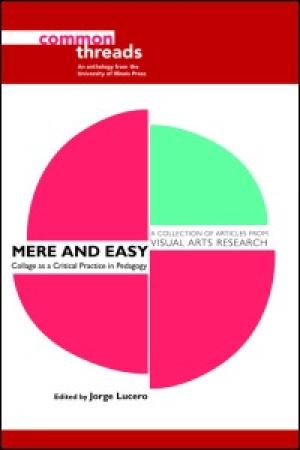
Author Jorge Lucero uses the term collage as a descriptor of a particular art form and also as a metaphor for juxtaposed ideas and themes in his edited collection of articles. Assessing collage compositions in general as stale and conventional, Lucero asks what would make collage a challenging and invigorating form for pedagogy and scholarship and attempts to model one way in his collection of essays. Collage is a form that uses what one can access in printed images, photographic images, and digital images. One can assemble collages online or by using any of a multiplicity of surfaces and means of attachment. Lucero describes the collage-making process as deceptively easy and seemingly simple. Yet these qualities of “mereness and ease” (6) can enable two seemingly non-related images to create transformative possibilities of a third thing that was hitherto non-existent but is engendered by the creative or cognitive dissonance of a juxtaposition that is non-linear and non-complementary. This edited volume on collage includes a variety of practical and theoretical papers that become an intentional collage of ideas. Lucero describes his choice and arrangement of disparate paper topics as a way to make this volume “a collage in and of itself” (7). This reviewer found it difficult to resonate or discover meaning in the choice and sequence of articles. Nonetheless, Lucero’s attempt to create a collage of scholarship intended to inspire readers to create a “new sort of some thing” (7) is unique and thrilling. Among the gems in this book is the chapter by Grauer who conceives of teenagers’ bedrooms as collages illustrating their evolving identity. Describing a bedroom as a canvas on which can be displayed a young person’s “unique artifacts and symbols” (25), Grauer highlights the importance of paying attention to how teens’ rooms offer images to reflect upon, experiment with, explore, and create one’s own identity. Guyas and Keys relate how an art installation of written scholarly work displayed in a public interactive space can be fertile ground for personal and professional growth. The content and process of the author’s dissertations were displayed in a gallery by hanging individual pages from the ceiling. Art work by the authors was placed on the walls alongside narrative interpretations of the process of art-making. Gallery visitors were asked to record responses or thoughts that occurred as they looked at juxtaposed materials and post their responses on the walls. “The gallery merged from an exhibition/installation into an open studio as visitors added to the evolving collage” (32). Lucero includes a qualitative study by Stevenson and Duncum of early childhood development. Observing children drawing and then recording the children’s verbal reflections on their collage, the researchers concluded that abstract symbolization through images develops as early as age three. Engaging the children in reflective dialogue is noted as one way to aid three to five year olds in the development of symbolic representations and understanding. Among the articles included in this compendium are a reflection on Freudian analysis of symbol use in the Little Hans case, an examination of the metaphorical cloning of images, and a verbal collage whose narrative and dialogue overlap but are not clearly related. Lucero’s collection stretches the reader creatively and uncomfortably to find non-linear and unique connections between disparate articles. Its most useful audience is art educators and art students, although other educators will find several selections to be intriguing and useful in non-art fields.
Few words strike fear in the hearts of post-secondary teachers more than “assessment.” Most faculty in undergraduate and graduate-level education are better-versed in their own specializations than they are in the more administrative aspects of their schools. Assessment often feels like one of those top-down assignments that faculty must add to their workload in order to get ready for the next accreditation visit. Darla K. Deardorff provides relief from this fear by removing the mystery from the process of assessment. She places it within the healthy context of enabling teachers to see if their work is actually accomplishing what they intend for it to accomplish, and, on a broader scale, if the overall mission of the institution is being achieved. Deardorff takes time to define all of the technical terms so that even those who feel like novices in this domain understand the issues, making it an easy read. The second half of the book is comprised entirely of appendices, full of succinct guidelines on how to create and implement an assessment plan along with examples of tools and processes used at various schools. The book begins in an engaging manner by using several myths regarding assessment as a foil to make a case for the importance of doing assessment well. The second chapter then looks at thirty frequently asked questions about assessment. Once the reader finishes the first two chapters, he or she is prepared to find out more about the distinctive aspects of international education and learn what goes into creating an effective assessment program – from start, through implementation, and finally to evaluation and revision. Most of this book would serve as a practical guide for anyone involved in educational assessment, but Deardorff relates the book most specifically to those engaged in international education, by which she means “efforts that address the integration of international, intercultural, or global dimensions into education” (29). This includes schools with study abroad programs, those with a strong international student or faculty presence on campus, or even those that are actively engaged in preparing students to work in other cultures or simply be better global citizens. This adds a level of complexity to the assessment process that traditional models of assessment have not addressed. While many books on assessment are geared more toward institutional assessment in comparison with other institutions or benchmarks, Deardorff is focused on student learning outcomes and how one knows whether or not they are being achieved. Special attention is given to whether or not methods of measuring these outcomes are both valid and accurate. There is no one-size-fits-all approach to this kind of assessment, but the processes outlined in the book should help any institution create an assessment plan that is both feasible and useful. While it is vital that faculty be heavily involved in this process, a good assessment plan will involve multiple stakeholders, will be integrated into the ongoing program of the school, will make use of both indirect and direct methods of feedback, and will make use of well-planned rubrics.
Former dean of the Harvard Graduate School of Education, Jerome Murphy writes as a seasoned educator about how to best care for yourself as a teacher in the midst of daily stress. This book applies to the stress of academia as well as ministry. It is a book I would recommend to students preparing to teach and to serve in ministerial vocations. Murphy highlights the source of stress that afflicts educators: our own responses to stress. When difficult situations arise, we tend to respond in one of three self-defeating ways: ruminating on the negative, rebuking ourselves, or resisting our emotions. Murphy draws from the literature on mindfulness to point out the health benefits of becoming aware of our emotions in the moment and accepting our shortcomings. As an alternative to the cycles of rumination, rebuke, and resistance, Murphy offers a list of instructions that help educators focus on their own values, summarized by the acronym “MY DANCE.” Each letter represents a phrase discussed in the following chapters. “Minding your values” advocates understanding our own life goals and naming our best version of ourselves. Knowing who we want to be helps us evaluate whether our actions are in line with our values. The next chapter, “Yield to now,” captures the importance of in-the-moment mindfulness, trying to stay present to ourselves and others, and includes exercises for practicing mindfulness. “Disentangle from upsets” also highlights the role of mindfulness in preventing us from being consumed by our stress. The chapter titled “Allow unease” instructs readers to attend to the discomfort of negative feelings. “Nourish yourself” emphasizes intentional self-care and practices of gratitude, while “Cherish self-compassion” takes self-care to a deeper level. The last element of the acronym is “Express Feelings Wisely.” In each of these chapters, Murphy brings in personal anecdotes from years of administration and leading workshops for teachers and school principals. He intersperses these lessons with some of his own personal struggles, such as his wife’s diagnosis with Alzheimer’s disease. In these glimpses of personal sharing, the reader gets a sense of how these practices of self-care have been imperative for someone who has transitioned from being a dean of a Harvard graduate school to a full-time caregiver for his wife of nearly fifty years as she slowly loses her ability to recognize him. This book draws our attention to the humanity of all educators: we are not simply vessels of information or mediums of higher learning. Each person has his or her own struggles in living daily life, on top of the demands of our teaching vocations. Attending lovingly to our limitations and caring for ourselves in the midst of these struggles is crucial if we are to be effective as teachers and healthy individuals. I recommend this book to anyone who wants to learn how to better care for themselves in the midst of life’s demands.
I was recently talking with my former doctoral advisor about a new position I accepted with the university where I teach. His seminary is exploring innovative ways of delivering courses, and I wanted his counsel as I investigate moving my programs completely online. As we were talking, he simply said, “The educational landscape has changed, and we must change with it if we are to survive.” This is something that I am fully aware of and advocate for. However it meant something more profound coming from someone who I respect, someone who has been at the forefront of practical ministry education and yet often concedes that keeping up today is more difficult than ever. It is time to change. And not just our feelings on distance or online education, for that is now simply a question of location. Education occurs in the classroom, and that classroom may be in a traditional face-to-face format or an online format or both. In short, distance or online education is here to stay. The challenge that is before us remains a consistent two-fold challenge: what content will we deliver, and how will we deliver that content. This two-fold challenge is both a matter of content and context (or community). It is because of this essential nature of education that constructivism has maintained such a central theory of education. Originally devised as an educational theory by John Dewey and provided a psychological foundation by Jean Piaget, constructivism is a process where a learner constructs meaning based on their subjective perception of objective reality. Briefly stated, constructivism is an active process where learners construct meaning together in a learning community through their shared experience rather than simply receiving processed information from an expert. Content is gauged against the individual and shared experiences of the learning community as meaning is generated out of conversation, collaboration, conflict, and consensus. All of this is essential to understanding the profound nature of this short collection of essays which is the focus of this review . Stabile and Ershler, the editors, have gathered together a team of educational constructivists to assess the theory’s continued validity in this social media era. By their own admission, “Social media is constructivist” because it “embodies constructivism itself as the users engage in the development of their own meaning” (1). While this volume tackles the enormous complexity that is the digital village, the technical use of social media is not the focus here. It is assumed that faculty are tweeting, instagramming, snapping, and pinning along with their students (or, at least, are aware that this is how people communicate today). No, the focus is on whether constructivism remains a viable option for engaging the learning process. Each of the authors seems to give a shared assent, then, to two assertions: (1) the social media era is inherently invested in crafting meaning through the shared experience of community engagement; therefore (2) constructivism remains a (if not the) viable learning theory because of its focus on crafting meaning through shared experience of community engagement. If we who teach undergraduate, graduate, doctoral, and post-doctoral students are going to remain relevant, then we must no longer see ourselves as experts who disseminate information to our paying customers. We must see ourselves as conversation partners, community facilitators, and wise mentors. We must begin constructing the classroom around a workable theory that respects our current digital age. Thankfully, for those who are unfamiliar with learning theories, Stabile and Ershler offer a timely and thoughtful collection of essays to introduce the reader to an essential theory that is still as useful today, if not more so due to the connectivity of the social media age, as it was when crafted nearly a century ago.
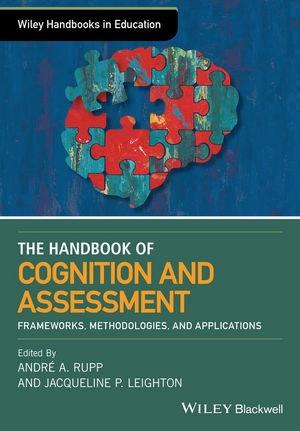
This is a book for assessment professionals; it is the rare teacher in higher education who would be able or willing to get this deep into the weeds of higher education assessment design and deployment. Many of the fifty-two authors contributing to this volume are affiliated with the Educational Testing Service and most seem to be practitioners of assessment for corporations or academic institutions. As the foreword clearly states, the authors are a mix of psychometricians and cognitive psychologists “bringing measurement science into real-world practice” (xx). The book is geared to a multidisciplinary audience, including “educational measurement researchers,” “assessment development practitioners,” and graduate students interested in the measurement of cognition. It is not suitable for classroom teachers interested in exploring course or program assessment. The greatest value of this volume for the average faculty member at any type of institution will be to provide a lens through which to view the many requests from higher administration to comply with particular types of assessment practices. The first part of the book, which comprises ten chapters, covers frameworks for assessment, and several of the earlier articles in this section are general enough to provide useful insight into assessment protocols. Most of the other two sections, focusing on Methodologies (six chapters) and Applications (seven chapters), are so detailed and technical as to be inaccessible to non-professionals in the field of assessment. A few articles stand apart from this: “Assessing and Supporting Hard-to-Measure Constructs in Video Games” by Valerie Shute and Lubin Wang, and “Conversation-Based Assessment” by G. Tanner Jackson and Diego Zapata-Rivera – both provide interesting alternative visions for approaching assessment and offer promising departures from the typical standardized written assessment. This volume is full of cutting-edge research on cognition and assessment couched in language inaccessible to those outside the field. The brief “Final Words” section contains a plea that classroom faculty should note: “in order for the work in this Handbook to have the best chance of finding its way into practice, we need to be ambassadors of this research while understanding that it will require time, patience, and functional prototypes to persuade clients and users to believe the scientific and social evidence” (586). This is not the entry-level volume that will allow faculty to help as ambassadors of this sort. This anthology will be of interest primarily to those whose professional focus for research or practice is cognition and assessment in education.
Foundations of Adult and Continuing Education lays a foundation of the history, theory, research, policy, and practice of the amorphous expanse known in North America as adult and continuing education. Undoubtedly constructed as a resource for graduate students in the burgeoning field, this text lucidly summarizes complex and daunting theory without stripping the data of interest and nuance. That is high praise for what could have easily been just another bulky textbook. Constructed of twelve chapters, divided into three sections, this work defines contemporary perspectives of the field, examines the foundations of the field, and focuses on the contexts of adult and continuing education (ix). The text gives a cursory summary of the historical rivalry between terms vying for lexical dominance of the then nascent field and while “there is still not a universally accepted definition today” one can trace certain themes and trends among the most noted definitions (3). The text presents different forms, purposes, and providers of adult education and even addresses the social forces affecting the expansion of the field (technological innovation, globalization and the global market, as well as seismic demographic shifts associated with rising levels of educational attainment, aging populations, and an increase in racial and ethnic diversity) (11-20). It outlines the prevailing historical patterns in adult participation and addresses some of the challenges that adult learners face, such as long waiting lists for ESL programs, limited formal educational background (especially among seniors [42-43]), the often-ignored relationship between social class and participation, as well as the influence race and ethnicity have on participation rates within adult education programs. Perhaps the most harrowing statistics are those involving unemployed and underemployed adults and the working poor. Foundations references the US Census of 2012 when reporting that 10.6 million Americans are among the working poor (59). According to this research, “women are twice as likely as men to be part of the working poor” and Hispanics and Blacks are “twice as likely as Whites and Asians to be among the working poor” (59). Educational attainment and working poor status appear to be linked as the U.S. Bureau of Labor Statics in 2012 reported that while only 2.1 percent of college graduates were categorized as working poor, “21.2 percent of those who had less than a high school diploma” (60) were categorized as such. Another startling revelation is related to the identity of adult educators. Identifying the boundaries of adult and continuing education (ACE) as a field is complex and requires educators to define not just education but also adulthood (“a relatively new social construct in American society” explored in greater depth in chapter 7), and to work in a field awash in acronyms and associations. They must try to construct a sense of professional identity in a field which necessarily works within structures of power and simultaneously challenges those structures (108, 117). Readers might be surprised by the inclusion of a chapter on philosophy in a text summarizing the history and vital components of what is commonly described as a predominately applied field. However, the inclusion of such is quite necessary considering that it is paramount to investigate “many ways of thinking” and the frameworks we use “for thinking about broader issues and social problems” (137). In fact, the authors describe philosophy in those exact terms. Coming from a religious studies background and being something of a theory-head, I found this chapter particularly engaging. It touches on everything from belief to Postmodernism and Critical Race Theory (CRT) and brilliantly illustrates the implications of such theory for the practice of education in general. The chapter, “Historical Perspective: Contexts and Contours,” is equally compelling because of its willingness to question the value of history for the field and investigate this history via its diffusion, “the spreading of ideas through newspapers, lectures, and academic and popular writing” (177). American history is intimately tied up with education and literacy: literacy and education took center stage during era of Reconstruction, illiteracy was viewed as a hindrance to the effort of the World Wars, and today, education and assimilation are still closely linked (191-192). Learning about the limited role the federal government is allowed, constitutionally, to play in the realm of adult education (as explicated in chapter 8) is eye-opening. The few times the federal government has stepped into the realm of adult education has had to do with immediate national interest (adult literacy, English language learning, literacy for military, and even job training for women working in production to strengthen the war effort of WW II) (264-267). The chapter “Technology and Adult Learning” could be a separate book itself. The protean nature of new technologies, the effect of technology on neural cognitive activities, and the dire need to develop “critical evaluative skills” in adults as well as in children in the age of the Internet are expertly addressed here (314). The two chapters dedicated to the expansive landscape of adult education map the varied spaces and contexts in which adult education takes place. While one chapter focuses on adult education within more formal contexts (within work, where adult education overlaps with the territory of higher education, inside programs of basic education and ESL learning, and military efforts), the other traces the outline of adult education as it occurs within a community context (faith-based programs, adult learning within museums and libraries, wellness programs, and civic engagement groups – especially those rooted in social justice). These two chapters spotlight just how diverse in topic, motivation, and method adult education can be. For newcomers to adult education like myself, the crisp explication of the regions and modes of what constitutes the field is exceptionally enlightening, as I have previously found it difficult to isolate what in fact constitutes, and does not constitute, adult education. While noticeably constructed with Education graduate students in mind, this book has something to teach anyone even tangentially interested in lifelong learning, community building, education, employment, and the effects of technology on North American culture. As an academic advisor working within the halls of higher education and a lifelong learner myself, I see this text as a great resource for graduate students and educators in all disciplines but I also recommend it to those invested in education and learning outside the confines of formal educational structures (church leaders, community organizers, volunteers, and policy advocates).