Resources
Discusses how college teachers can deal with multiculturalism in the classroom. Faculty arguments over diversity requirements in the curriculum; Intercultural education among students of diverse cultures and ethnicities; Strategies for multicultural discussions.
Emotions in the Classroom Connections in the Classroom The Medicine Wheel in the Classroom References Appendix A
In this article, Dwight Boyd focuses on a dilemma that is at the heart of sincere commitments to cultural pluralism. When the moral aspects of cultural diversity are fully appreciated, the "dilemma of diversity" is revealed as the tension point resulting from the acceptance of the fact of "reasonable moral pluralism" conjoined with the perceived need to morally ground prescriptive intentions to promote cultural diversity within a democratic society. After discussing this dilemma, Boyd analyzes three perspectives commonly found in response. He argues that each of these perspectives is inadequate by revealing how it fails to come to grips with one or the other side of the dilemma, despite its surface appeal. He then shows how, in each of these perspectives, this failure functions to conceal and protect dominant points of view within the diversity. He concludes by sketching out a positive direction for successfully addressing the dilemma of diversity hinted at in the successes and failures of each of the three perspectives.
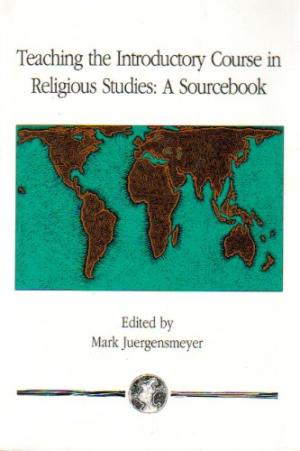
The objective of this volume was to collect resources to assist teachers of undergraduate courses in religious studies - especially those teachers whose training has been limited to only one religious tradition - and to provide reflection on the changing nature of the liberal arts curriculum, and the role that religious studies plays within it. (From the Publisher)
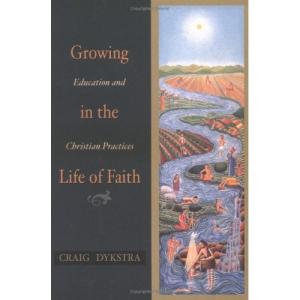
Craig Dykstra worked with Rev. Dr. Dorothy Bass to write Practicing Our Faith -- another classic book high on the recommended reading list. Growing in the Life of Faith explores the areas of ministry and Christian education with flair, sensitivity, and an imaginative compassion that is sure to touch and inspire readers, ministers, and educators. Dykstra's compassionate stance and creative and subtle nuances, respectful of varying points of view without denigrating any and beign supportive of general enlightened approaches parallels his work in the Lilly Foundation. (From the Publisher)
MODELS OF ADULT RELIGIOUS EDUCATION PRACTICE offers a foundational rationale plus a wide inventory of workable teaching procedures for vitalizing the religious education of adults. No other major book on adult religious education offers as wide a range of concrete teaching procedures as does this volume. The distinctiveness of this book lies in its holism. It provides concrete practical models for teaching cognitive, affective, and lifestyle outcomes to all kinds of adult learners in all kinds of settings. This volume has been widely praised by major authorities in adult education and religious education, including Allen Tough, Nancy Foltz, Ron Habermas, and Kenneth Gangel. (From the Publisher)
A key study for understanding the transformation of meaning in young adults. (From the Publisher)
The Active Life is Parker J. Palmer's deep and graceful exploration of a spirituality for the busy, sometimes frenetic lives many of us lead. Telling evocative stories from a variety of religious traditions, including Taoist, Jewish, and Christian, Palmer shows that the spiritual life does not mean abandoning the world but engaging it more deeply through life-giving action. He celebrates both the problems and potentials of the active life, revealing how much they have to teach us about ourselves, the world, and God. (From the Publisher)
The author argues for an organic or process approach to religious, moral, and theological education. She takes up five reigning educational methods (case study, gestalt, phenomenological, narrative, conscientizing), gauges their strengths, weaknesses, and theological promise, and offers practical reformulations of each method. (From the Publisher)
Wabash Center Staff Contact
Rachelle Green, Ph.D.
Associate Director
Wabash Center
greenr@wabash.edu