Resources
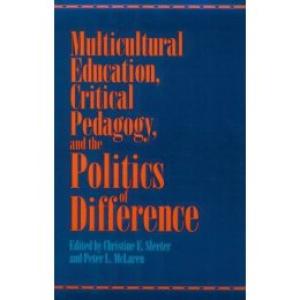
Here is a comprehensive view of leading theories and practices of multicultural education from scholars of various racial and ethnic groups. The perspectives of those often left out of scholarly debate are well represented in this book. Those perspectives offer significant insights into the ways in which dominant ideologies and classroom practices have functioned to serve only one segment of the American population. (From the Publisher)
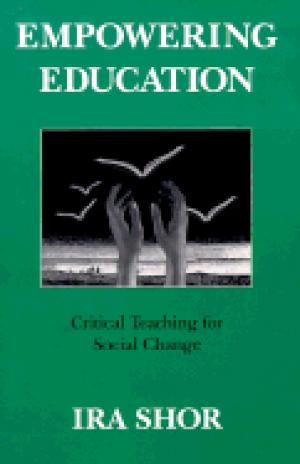
Ira Shor is a pioneer in the field of critical education who ror over twenty years has been experimenting with learning methods. His work creatively adapts the ideas of Brazilian educator Paulo Freire for North American classrooms. In Empowering Education Shor offers a comprehensive theory and practice for critical pedagogy. For Shor, empowering education is a student-centered, critical and democratic pedagogy for studying any subject matter and for self and social change. It takes shape as a dialogue in which teachers and students mutually investigate everyday themes, social issues, and academic knowledge. Through dialogue and problem-posing, students become active agents of their learning. This book shows how students can develop as critical thinkers, inspired learners, skilled workers, and involved citizens. Shor carefully analyzes obstacles to and resources for empowering education, suggesting ways for teachers to transform traditional approaches into critical and democratic ones. He offers many examples and applications for the elementary grades through college and adult education. "One of the most intelligent discussions of the unique function of education in a democratic society since the work of John Dewey. This theoretically compelling and practically useful book addresses the economic, political, and personal needs of students. Shor has emerged as the most reliable discussant of the uses of the work of Paulo Freire in the U.S."--James Berlin, Purdue University Ira Shor, professor of English at the Graduate Center of the City University of New York and the College of Staten Island, is author of Critical Teaching and Everyday Life, and Culture Wars: School and Society in the Conservative Restoration, 1969-1984, both published by the University of Chicago Press. (From the Publisher)
Questions about education for Christian ministry are currently the subject of lively debate in both Church and society. Major constructive proposals have been made from within several church traditions. Though Catholics have been a part of those ecumenical discussions, they are only beginning to contribute from their rich resources. This work is a dialogue with the questions and issues already raised in other traditions, with special attention to the contribution a Catholic perspective can offer. Education for Ministry asks questions about the whole range of ministerial activities that are coming to life in the Roman tradition in North America. It provides students with an opportunity to reflect on their preparation for a life of ministry. (From the Publisher)
If we take a passive view of classroom behavior, we fail in a crucial part of our role as educators: creating a democratic and effective learning environment for a diverse student body. (From the Publisher)
This volume in the New Directions for Teaching and Learning Series offers faculty writings on academic advising as a form of teaching. The issue examines several facets of advising including the university's role in supporting advising as an educational tool, faculty advisors as mentors, the relationship between advising and student assessment, and suggestions for faculty who want to improve their mastery of advising. Advising in specific academic areas such as humanities, sciences, and social sciences are included. Also, the volume includes a discussion of the unique advising needs of specialized student groups such as honor students, first year students, and members of ethnic or cultural minorities. (From the Publisher)
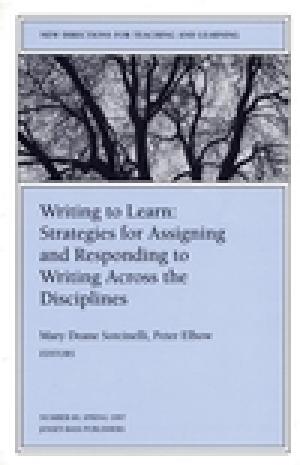
This volume provides instructors who teach writing with an array of strategies and philosophies about the way writing is learned, both in the context of a discipline and as an independent skill. Focusing primarily on the best ways to give feedback about written work, the authors describe a host of alternatives that have a solid foundation in research. This is the 69th issue of the journal New Directions for Teaching and Learning. (From the Publisher)
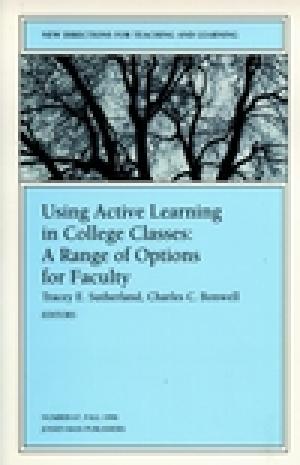
In this volume the authors take a second look at the use of active learning in higher education. The chapters describe the concept of the active learning continuum and tie various practical examples of active learning to that concept. They illustrate how important it is to consider context in the design of active learning to get maximum benefit. This is the 67th issue of the journal New Directions for Teaching and Learning. (From the Publisher)

It has been suggested that the greatest educational reform will come not through the sweeping changes of large institutionally mandated programs but through the small, day-to-day improvements that faculty members make in their own courses. The faculty is the first line of revolution in teaching; without their cooperation, no change is possible; with it, no challenge is impossible. This volume provides some insights into how individual instructors can make interesting changes in their classes and in their approaches to teaching in general. (From the Publisher)
New instructional programs and services involving technology are being established which have significant implications for the way teaching and learning will be conducted in the future. This volume contains 10 papers which examine some of the current trends in instructional technology in higher education and discuss implications for teaching and learning in the postsecondary setting. (From the Publisher)
Teaching and learning at a distance is an area of education that is growing rapidly alongside the technology that makes it possible. But success in this area requires more than advanced technology; it requires skillful instructors, well-designed courses, and students ready to learn from the format. This issue of New Directions for Teaching and Learning provides insights from experienced practitioners into what is needed to make teaching and learning at a distance successful for everyone involved. This is the 71st issue of the quarterly journal New Directions for Teaching and Learning. (From the Publisher)
Wabash Center Staff Contact
Rachelle Green, Ph.D.
Associate Director
Wabash Center
greenr@wabash.edu