Resources
Cousin to The Teaching Portfolio, which documents a broad sampling of a faculty member's pedagogical work, the course portfolio focuses instead on the unfolding of a single course, from conception to results. The volume covers defining features and functions, steps in development, audiences and occasions for use, and the course portfolio's place in the development of a scholarship of teaching and learning. It also includes nine case studies by faculty in a range of disciplines who have developed and used course portfolios, as well as an annotated resource list. (From the Publisher)
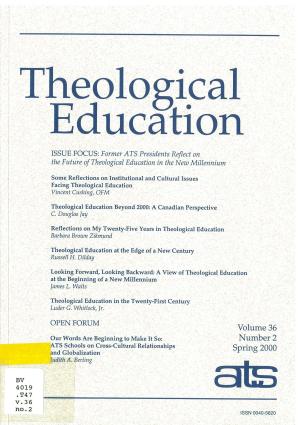
Journal Issue. Full text is available online.
A relative newcomer in higher education, service-learning nevertheless has caught on at campuses across the country. While thousands of students, teachers, and community partners are realizing the benefits of this experiential form of education, many others still have questions, particularly, "What exactly is service-learning?" and "How can I do it effectively?" This volume of New Directions for Higher Education answers both questions, beginning with a brief overview and then presenting a series of chapters on getting started, promoting reflection, and otherwise making service-learning work effectively in a variety of settings, from liberal arts colleges to research institutions. Both newcomers and veterans will appreciate the clear, practical advice on such matters as finding community partners, reaching diverse populations, and integrating service-learning and research. (From the Publisher)
Teaching is more, much more, than getting up in front of a class full of students and presenting information to them. It is, affirms distinguished educator, writer and lecturer Gloria Durka, a true vocation, "a calling that makes claims on our souls". Her book, which is written for teachers of all grade levels, is a journey into the soul of education and the heart of the teacher. In seven chapters, she covers such ideas as teaching from the heart; teaching courageously, creatively, wisely and morally; and, the greatest challenge of all, facing one's own vulnerabilities. Each chapter ends with prayers and reflections that help readers enrich their spirituality. (From the Publisher)

Journal Issue.
Journal Issue.

Journal Issue.
A little over a decade ago, Ernest Boyer's Scholarship Reconsidered burst upon the academic scene, igniting a robust national conversation that maintains its vitbaality to this day. This volume aims at advancing that important conversation. Its first section focuses on the new settings and circumstances in which the act of scholarship is being played out; its second identifies and explores the fresh set of values currently informing today's scholarly practices; and its third looks to the future of scholarship, identifying trends, causative factors, and potentialities that promise to shape scholars and their scholarship in the new millennium. One of the greatest legacies of Scholarship Reconsidered is the advocacy of a more holistic and humane approach to promoting, evaluating, and rewarding scholarship. This volume hopes to help nurture that legacy. This is the 90th volume of the quarterly journal New Directions for Teaching and Learning. (From the Publisher)

Maybe you'd like to combine the two loves of your life, teaching and scholarship, and perhaps build a satisfying and profitable academic career, but you're not sure if this is really what you want or how to go about it. Or maybe you've made up your mind but need some good advice on how to succeed. If so, this book is written for you. So You Want To Be a Professor begins with a discussion of jobs in academia and how to find them. Chapters cover a wide range of political skills for future academic success, including lecturing, organizing a course, meeting your first class, testing, maintaining a research program, and writing for publication. No other book provides such a practical overview of essential career-building skills. Even junior faculty will benefit from the advice in this engaging, comprehensive book. (From the Publisher)
An insightful approach to improving the process of education. (From the Publisher)
Wabash Center Staff Contact
Rachelle Green, Ph.D.
Associate Director
Wabash Center
greenr@wabash.edu