Resources

This monograph explores practical and theoretical issues in use of case studies for college faculty to reflect on and improve instruction. Six chapters: (1) describe teaching case studies, with an overview of how and why they are used; (2) explore the rationale for their use within the frameworks of scholarship and professional development; (3) present three brief case studies and suggestions for their use in discussion; (4) present reports from faculty groups who have written case studies, with their suggestions on how to proceed; (5) discuss nine issues that have emerged through the use of cases (how they can place the focus on learning as well as teaching, possible alternative formats, getting at the more subtle issues of practice, going beyond problems to the problematic, whether and how cases can represent best practice, including content issues, using cases to build on one another, creating occasions for more productive use of cases, and the impact of case use on teaching improvement); and (6) describe three possible scenarios illustrating how cases might contribute to a campus culture that takes teaching and learning seriously. Four additional cases and teaching suggestions are appended as is a list of 13 resource organizations. (From the Publisher)
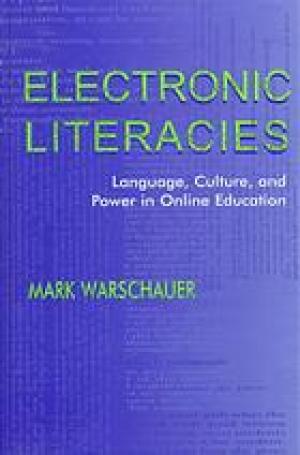
Electronic Literacies is an insightful study of the challenges and contradictions that arise as culturally and linguistically diverse learners engage in new language and literacy practices in online environments. The role of the Internet in changing literacy and education has been a topic of much speculation, but very little concrete research has been done in the area. This book is one of the first attempts to document the role of the Internet and other new digital technologies in the development of language and literacy. Warschauer looks at how the nature of reading and writing is changing, and how those changes are being addressed in the classroom. His focus is on the experiences of culturally and linguistically diverse learners who are at special risk of being marginalized from the information society. Literacies is highly relevant for those interested or involved in ESL, bilingual, and multicultural education; composition and literacy education; technology-based school reform; the social context of schooling, critical pedagogy, and cultural studies. (From the Publisher)
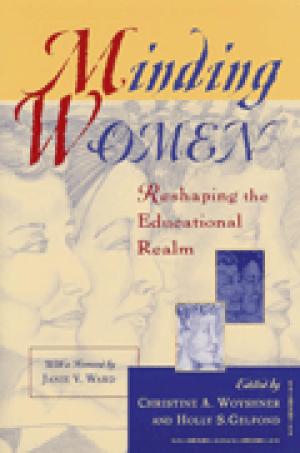
Research on women and girls has exploded during the past twenty years. Since 1977, when the Harvard Educational Review published Carol Gilligan's now-classic article "In a Different Voice," in which she argued so persuasively that women and girls must be understood on their own terms, researchers have been discovering, uncovering, and recovering women's ways of knowing, being, thinking, teaching, and learning. Minding Women charts the wealth of thought and writing related to women and girls and education that this process of discovery has produced. Minding Women begins with a "Classics" section--articles that call attention to the lack of research on girls and women and describe the effect this has had on knowledge and society. The contributors then discuss feminist pedagogy, and how it has changed and been refined over time. Girls and young women are the focus of the next section. Too often their voices and viewpoints are excluded from these discussions, so some of their own writings are included here. The book then explores women's educational history, showcasing some of the rich work in this area over the past twenty years. Identity issues are addressed in the final section, acknowledging that substantial differences exist among groups of women and girls on how they experience the world and their roles, prospects, and lives. (From the Publisher)
Abstract: Key figures in the field of non-hierarchical leadership development share their insights on conceptualizing, promoting, and assessing models of leadership based on teamwork, diversity, and service. This volume will be essential for theorists and practitioners in higher education. (From the Publisher)

This is the final volume in a trilogy of works that examine the impact of writing and reading about traumatic subjects. "Diaries to an English Professor" (1994) explores the ways in which undergraduate students use psychoanalytic diaries to probe conflicted issues in their lives. "Surviving Literary Suicide" (1999) investigates how graduate students respond to suicidal literature-novels and poems that portray and sometimes glorify self-inflicted death. In Risky Writing, Jeffrey Berman builds on those earlier studies, describing ways teachers can encourage college students to write safely on a wide range of subjects often deemed too personal or too dangerous for the classroom: grieving the loss of a beloved relative or friend, falling into depression, coping with the breakup of one's family, confronting sexual abuse, depicting a drug or alcohol problem, encountering racial prejudice. Berman points out that nearly everyone has difficulty talking or writing about such issues because they arouse shame and tend to be enshrouded in secrecy and silence. This is especially true for college students, who are just emerging from adolescence and find themselves at institutions that rarely promote self-disclosure. Recognizing the controversial nature of his subject, Berman confronts academic opposition to personal writing head on. He also discusses the similarities between the "writing cure" and the "talking cure," the role of the teacher and audience in the self-disclosing classroom, and the pedagogical strategies necessary to minimize risk, including the importance of empathy and other befriending skills. (From the Publisher)
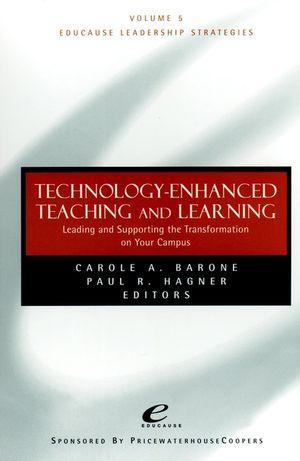
The ability of the Internet and the World Wide Web to provide a wealth of on-line information that can be easily accessed at any time is changing the basic structure and operations of organizations, especially educational institutions. Written by a blue-ribbon panel of contributors -- thirteen experts in various fields of educational technology and teaching and learning -- Technology-Enhanced Teaching and Learning: Leading and Supporting the Transformation on Your Campus offers academic leaders the advice they need to help their institutions initiate, implement, and manage the transformation in order to become Internet-based communication and learning environments. The authors show how leaders can meet the challenge of the information age and the student demand for interactive learning by creating supportive environments that allow faculty to adapt to and sustain this sweeping institutional transformation. This book offers the insights, practical suggestions, and strategies that are essential for engaging the campus community in the transformation process. (From the Publisher)
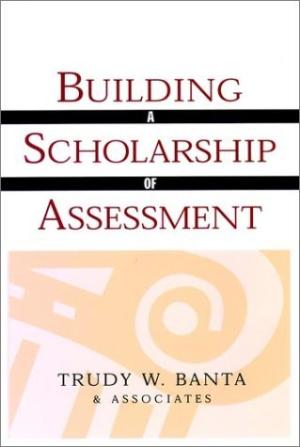
In this book, leading experts in the field examine the current state of assessment practice and scholarship, explore what the future holds for assessment, and offer guidance to help educators meet these new challenges. The contributors root assessment squarely in several related disciplines to provide an overview of assessment practice and scholarship that will prove useful to both the seasoned educator and those new to assessment practice. Ultimately, Building a Scholarship of Assessment will help convince skeptics who still believe outcomes assessment is a fad and will soon fade away that this is an interdisciplinary area with deep roots and an exciting future. (From the Publisher)

This text grew out of a symposium sponsored by the Lesbian and Gay Studies Special Interest Group at the American Educational Research Association conference in 1999, titled "Over the Rainbow and Under the Multicultural Umbrella." Twenty-eight educational scholars, theorists, and practitioners—most from the U.S.—contribute 19 chapters on the preparation of future teachers in such issues as the interrelationships of prejudice, sexual differences, teaching tolerance, discussing diversity, and deconstructing gender and sexual identities. (From the Publisher)
This anti-racist feminist anthology brings together diverse and challenging theoretical perspectives on the experiences of radical educators who work to redefine pedagogies for communicating the claims of both insurgent disciplines--Women's Studies, African-American Studies, Latino Studies, Ethnic Studies, Queer Theory, etc.--and radicalized versions of traditional areas of study--History, Sociology, Foreign Languages, Literature, Philosophy. The authors' analyses of where and how feminist teachers stand in the fray of conflictive classroom dynamics and institutional politics lead them to outline new inquiries into feminist pedagogy highlighted by an intense focus on identity, experience, and difference. In doing so, Twenty-First Century Feminist Classrooms opens a space for engaged feminist self-criticism that seeks to reinvigorate pedagogical practices grounded in multicultural feminist identities. (From the Publisher)
Wabash Center Staff Contact
Rachelle Green, Ph.D.
Associate Director
Wabash Center
greenr@wabash.edu