Resources
In this report, we review social science and library studies literatures on librarian-faculty relations, and present a preliminary sociological analysis of these relations. We find an asymmetrical disconnection between both groups: Librarians and faculty identify a disconnection that keeps the two separated, but only librarians view this disconnection as problematic.
Compared research papers before and after implementation of an inquiry-based library instruction program at the University of New Mexico to asses the program's effectiveness and consider its future development. Discusses increased collaboration between the library and the English department and suggests more training for instructors and greater emphasis on a rhetorical research approach.
New campus-wide initiatives and developing a technology now provide librarians with fresh tools for supporting and assisting faculty as fellow educators. Librarians can participate in instruction activities as collaborators and by acting as teachers to the teaching faculty Librarians can foster this interaction by cooperating in assessment and accreditation processes, and by joining in learning communities and writing programs. This article will explore ways that the librarian can partner in professional development with faculty by participating in curriculum planning and educational assessment.
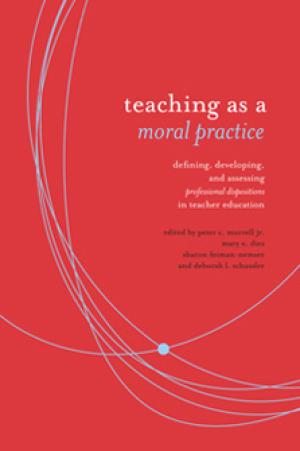
Sometimes understood as habits of mind, “dispositions” represents a new concept in teacher education. Conversations about professional dispositions in teaching often touch on issues such as attitudes, values, moral commitment, and social justice. Based on the American Association of Colleges for Teacher Education’s Task Force on Teaching as a Moral Community, this book addresses the philosophical grounding for the concept of teacher dispositions and examines thoughtful examples of emerging practice. (From the Publisher)
Spiritual formation is both an opportunity and a challenge for educators in Christian colleges and seminaries. How can students be nurtured and guided in developing spiritually within the curriculum? Drawing on a number of educators, studies, and arguments, this article develops a rationale for engaging in spiritual formation and for the use of practical assignments or "soul projects." A selection of such projects is grouped into genres, followed by a brief exploration of best practices and an evaluation of such assignments.
This book simultaneously provides multiple analyses of critical pedagogy in the twenty-first century while showcasing the scholarship of this new generation of critical scholar-educators. Needless to say, the writers herein represent just a small subset of a much larger movement for critical transformation and a more humane, less Eurocentric, less paternalistic, less homophobic, less patriarchical, less exploitative, and less violent world. This volume highlights the finding that rigorous critical pedagogical approaches to education, while still marginalized in many contexts, are being used in increasingly more classrooms for the benefit of student learning, contributing, however indirectly, to the larger struggle against the barbarism of industrial, neoliberal, militarized destructiveness. The challenge for critical pedagogy in the twenty-first century, from this point of view, includes contributing to the manifestation of a truly global critical pedagogy that is epistemologically democratic and against human suffering and capitalist exploitation. These rigorous, democratic, critical standards for measuring the value of our scholarship, including this volume of essays, should be the same that we use to critique and transform the larger society in which we live and work. (From the Publisher)
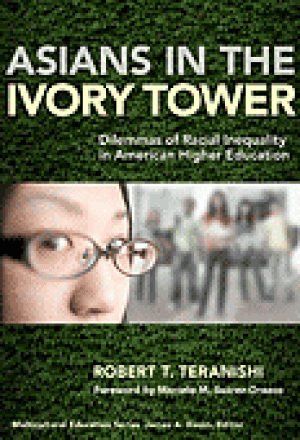
This timely and compelling examination of the experience of Asian Americans in higher education explores why and how Asian Americans and Pacific Islanders (AAPIs) are important to our nation's higher education priorities and places the study of AAPI college participation within a broad set of conditions through which all students must navigate as they pursue higher education. Teranishi captures the intersections of individual agency, social conditions, and organizational structures as synergetic forces that result in a range of postsecondary outcomes for subpopulations within the larger body of AAPIs.
College and university instructors continue to seek models that help students to better understand today's complex social relationships. Feminist, Queer, and Ethnic Studies scholars put forward compelling arguments for more integrative understandings of race, class, gender, and sexuality and for centering the experiences of women, people of color, and others traditionally relegated to the margins. Intersectionality is one such approach. In nine chapters, the contributors to this volume offer an overview of key tenets of intersectionality and explore applications of this model in faculty and instructional development in higher education. Gathered from across the disciplines, they draw upon a range of approaches to social identity formation, different theoretical models, and a complement of lived experiences. When read together, these chapters offer a systemic approach to change in higher education by addressing innovations at course, department, and institutional levels. Intersectionality does not advocate for a flattening of differences. Instead, it argues for another layer of critical analyses that acknowledge the powerful interplay of the many aspects of social identity to address the rapidly shifting ways in which we talk about and describe identities in society and the complexity of classroom dynamics in the academy today. By illuminating the interconnected nature of systems of oppression, we shine a light on the potential for disrupting the status quo and create stronger alliances for social justice. (From the Publisher)
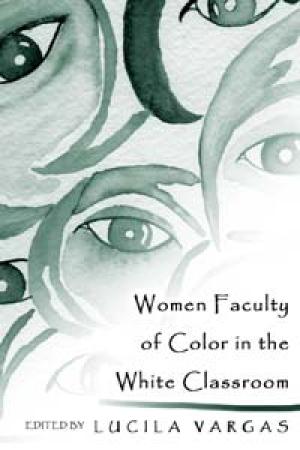
What is it like for women of color to teach in predominantly white college classrooms? This anthology is about the pedagogical implications of diversifying the faculty of higher education. It compiles narratives by women professors of color who interrogate their classroom experiences in predominantly white U.S. campuses to examine the impact of their social positions upon their classroom practices and their teaching-learning selves. The authors reflect upon their unique classroom challenges and talk about the teaching-learning strategies they use to find rewards in their interactions with students. This anthology explores the larger question of how social distinctions shape classroom social life and will be a resource for those concerned with enabling the diversification of the faculty of institutions of higher learning. (From the Publisher)
Wabash Center Staff Contact
Sarah Farmer, Ph.D.
Associate Director
Wabash Center
farmers@wabash.edu