Resources
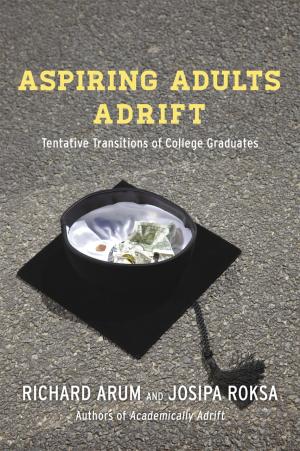
Click Here for Book Review Abstract: Few books have ever made their presence felt on college campuses—and newspaper opinion pages—as quickly and thoroughly as Richard Arum and Josipa Roksa’s 2011 landmark study of undergraduates’ learning, socialization, and study habits, Academically Adrift: Limited Learning on College Campuses. From the moment it was published, one thing was clear: no university could afford to ignore its well-documented and disturbing findings about the failings of undergraduate education. Now Arum and Roksa are back, and their new book follows the same cohort of undergraduates through the rest of their college careers and out into the working world. Built on interviews and detailed surveys of almost a thousand recent college graduates from a diverse range of colleges and universities, Aspiring Adults Adrift reveals a generation facing a difficult transition to adulthood. Recent graduates report trouble finding decent jobs and developing stable romantic relationships, as well as assuming civic and financial responsibility—yet at the same time, they remain surprisingly hopeful and upbeat about their prospects. Analyzing these findings in light of students’ performance on standardized tests of general collegiate skills, selectivity of institutions attended, and choice of major, Arum and Roksa not only map out the current state of a generation too often adrift, but enable us to examine the relationship between college experiences and tentative transitions to adulthood. Sure to be widely discussed, Aspiring Adults Adrift will compel us once again to re-examine the aims, approaches, and achievements of higher education. (From the Publisher)
This research explores key features of the scholarship of teaching and learning presented in nine higher education pedagogical journals. In an effort to better understand the domain in which the journal Teaching Sociology resides, descriptive and comparative analyses indicate that there is notable variation in the type of knowledge offered to teacher-scholars in different disciplines and in the patterns of authorship in terms of solo or multiple authors and gender. Teaching Sociology appears to fare well in comparison with other journals for the criteria examined. The critical issue of determining how this knowledge serves us in practice remains.
Surveys recent research in the preparation of future faculty, citing the nearly exclusive emphasis by graduate programs on preparation for positions in research universities, of which there are very few, at the expense of preparing students for the realities of the jobs that will likely begin their careers. Individual faculty choose what to emphasize to their advisees. Centralized standards for teaching education are rare. Also assess the results of directed programs on preparation for future positions.
A survey of 36 leading seminaries and rabbinical schools, evaluated on criteria for a sexually healthy and responsible seminary. These criteria measure sexuality content in the curriculum; institutional commitment to sexuality and gender equity (e.g., the existence of anti‐discrimination, sexual harassment and full inclusion policies); and advocacy and support for sexuality‐related issues.
Click Here for Book Review Abstract: This book is designed not only to provide you with a tightly focused set of strategies, selecting only the most fundamental and powerful, but also to offer you a user-friendly method to access your level of success through employment of the strategies. With the authors’ goal of measurable self-improvement in mind, they’ve developed a set of rubrics keyed to each chapter, allowing you to assess where you currently stand as an instructor. Using a Likert scale, the rubrics ask you to evaluate such things as your attitude toward teaching, your alignment of student learning outcomes (SLOs) in your classes with those of larger academic units, and your delivery of class material. At the book’s end you’ll find a series of rubrics that replicate those in the earlier chapters. Comparison of your responses after experimenting with the various strategies offered throughout the text should provide a solid assessment of the handbook’s effectiveness. So, you may start today on a focused, fast path to achieving teaching excellence in your classrooms. (From the Publisher)
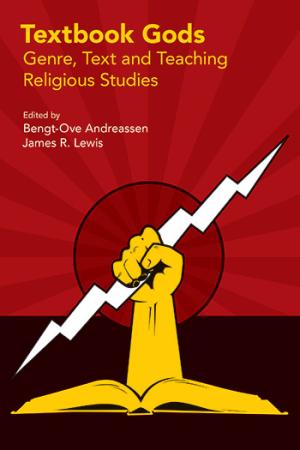
Click Here for Book Review Abstract: In recent years there has been a renewed interest in textbooks, partly because they have maintained their position as an important genre. Not too many years ago – and perhaps currently as well – many considered textbooks outdated or archaic compared with technological advances such as the Internet and different kinds of educational software. Despite these changes, textbooks for school subjects and for academic studies continue to be in demand. Textbooks seem to constitute a genre in which established truths are conveyed, and may thus represent stable forces in a world of flux and rapid changes. Textbook Gods offers perspectives on representations of religion and religions in textbooks. The contributions emerge from different contexts, ranging from European countries, to North America, Japan and Australia. (From the Publisher)
A creative organization of resources to support teachers created by the Carnegie Mellon Eberly Center for Teaching Excellence and Educational Innovation. Step 1: identify the problem you’re encountering (from a long list). Each problem is then described briefly. with links to possible reasons for the problem, each of which is then linked to various strategies to address the problem.
Although comparative theology is a continuously growing method in the study of religion, it is still relatively new and not widely accepted in either confessional or secular institutions. Scholars may face difficulty when seeking their institutions' acceptance for a comparative theology course. One way of generating interest and approval for such a course is by designing it from the center of the institution's mission. Professors can look to the institution's mission as a resource for teaching comparatively. We offer four examples from Catholic institutions of how this might be done. Reid Locklin offers further insights in his response to our explorations.
The editor of Teaching Theology and Religion facilitated this reflective conversation with five teachers who have extensive experience and success teaching extremely large classes (150 students or more). In the course of the conversation these professors exchange and analyze the effectiveness of several active learning strategies they have employed to overcome the passivity and anonymity of the large lecture format. A major point of debate emerges that contrasts the dynamically performative and highly informed and skilled lecturer with the “wasted time and money” that results from encouraging students to participate through various active learning strategies. Other themes include the importance of story telling in the religious studies classroom, the significance of the differences between students' learning styles, and the challenge of teaching and assessing critical thinking and communication skills.
A 1000 word essay in response to a Call for Papers: “Compare the pedagogy of your classroom and a Wabash workshop"
Wabash Center Staff Contact
Sarah Farmer, Ph.D.
Associate Director
Wabash Center
farmers@wabash.edu