Resources
A 1000 word essay in response to a Call for Papers: “Compare the pedagogy of your classroom and a Wabash workshop"
One page Teaching Tactic: at the start of each class session a student is assigned to summarize the previous class meeting.
A 1000 word essay in response to a Call for Papers: “Compare the pedagogy of your classroom and a Wabash workshop"
One page Teaching Tactic: a structured writing group for graduate students.
One page Teaching Tactic: specific prompts for student presentations of a religious artifact they select.
One page Teaching Tactic that moves students around the room to help them identify and discuss the major points in an assigned reading.
This essay provides an overview of the distinctive challenges presented to teaching and learning in religious and theological studies by the conditions and characteristics of “millennial” students. While the emerging literature on this generation is far from consistent, it is still instructive and important to engage, as students that are immersed in technology and social networking have different facilities and difficulties that educators would do well to carefully address and critically employ. Teachers in theological and religious studies are distinctly positioned to grapple with such conditions, particularly around the practices of identity formation, media literacy, and embodiment. Attention to the development of such practices engages key issues for both the millennial students and the religious and theological studies teacher: virtual reality, spiritual identity, globalization and violence, critical consumption and ethical creativity, focused and contemplative thinking, and intercultural and interpersonal respect.
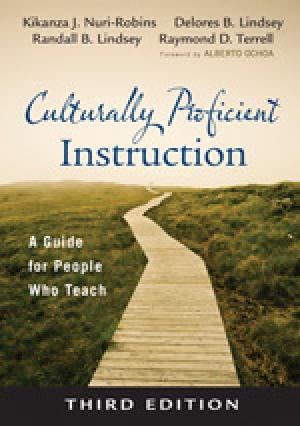
Are you doing all you can to improve teaching and learning? Culturally proficient instruction is the result of an inside-out journey of teaching and learning during which you explore your values and behaviors while evaluating the policies and practices of your workplace. The journey deepens your understanding of yourself and your community of practice. In the newest version of their best-selling book, the authors invite you to reflect on how you engage with your students and your colleagues as a community of learners. The third edition features a case study to show cultural proficiency in practice and: • An updated discussion of standards-based education guidelines • A conceptual framework for the tools of cultural proficiency • New language for understanding the microaggressions of dominant cultures • An integrated guide for use with study groups Each chapter contains reflective activities and group work conducive to collaborative professional development. Culturally Proficient Instruction is invaluable for anyone dedicated to creating an environment in which all learners can succeed. (From the Publisher)
This article emphasizes the need for religious educators to address the issue of divine violence in Scripture with students, and it offers various pedagogical strategies for doing so. The focus is on violent Old Testament texts, with special attention given to the issue of Canaanite genocide. A general framework for structuring class time around divine violence in Scripture is proposed which includes (1) encouraging students to encounter violent biblical texts firsthand, (2) helping them understand why people find these passages problematic, and (3) offering various options for dealing with the potential problems these passages raise. In the second half of the article, significant attention is devoted to a number of practical considerations that should be taken into account when talking about this sensitive issue in class. A brief word about assessment is offered at the end.
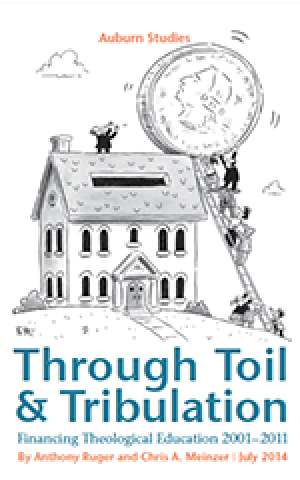
Revenues and expenditures of schools are analyzed for this ten year period. Enrollment trends, including extension sights and distance education, are reviewed. Qualitative factors that contribute to financial stability are examined, including findings from six schools whose financial performance was remarkably consistent and solid for this decade. (From the Publisher)
Wabash Center Staff Contact
Sarah Farmer, Ph.D.
Associate Director
Wabash Center
farmers@wabash.edu