Resources
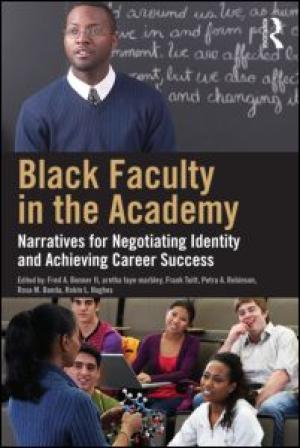
Click Here for Book Review Abstract: Through candid discussions and personal counter-narrative stories, Black Faculty in the Academy explores the experiences and challenges faced by faculty of color in academe. Black faculty in predominantly White college and university settings must negotiate multiple and competing identities while struggling with issues of marginality, otherness, and invisible barriers. This important book illuminates how faculty can develop a professional identity that leads to success in academe, while at the same time remaining true to cultural and personal identities. Through rich narratives, chapter authors situate race-related encounters at the center of their experience in an effort to deconstruct and challenge commonly held assumptions about life in academe. They also provide key recommendations and strategies to help faculty of color ensure their continued professional success. Framed by critical race theory, these stories show how faculty can successfully maneuver through all stages of a career in academe, including tenure and promotion, publication, mentoring, networking, teaching, and dealing with institutional climate issues. This valuable book is for faculty and administrators seeking to create an environment that nurtures professional growth and fosters success among Black faculty. (From the Publisher)
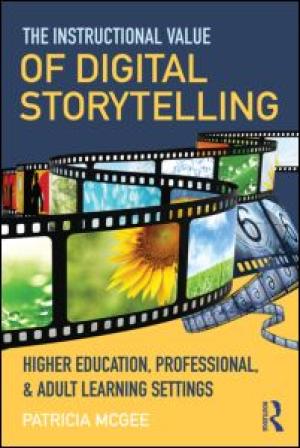
Click Here for Book Review Abstract: Although storytelling has been recognized as an effective instructional strategy for some time, most educators are not informed about how to communicate a story that supports learning—particularly when using digital media. The Instructional Value of Digital Storytelling provides a broad overview of the concepts and traditions of storytelling and prepares professors, workplace trainers, and instructional designers to tell stories through 21st century media platforms, providing the skills critical to communication, lifelong learning, and professional success. Using clear and concise language, The Instructional Value of Digital Storytelling explains how and why storytelling can be used as a contemporary instructional method, particularly through social media, mobile technologies, and knowledge-based systems. Examples from different sectors and disciplines illustrate how and why effective digital stories are designed with learning theory in mind. Applications of storytelling in context are provided for diverse settings within higher education as well as both formal and informal adult learning contexts. (From the Publisher)
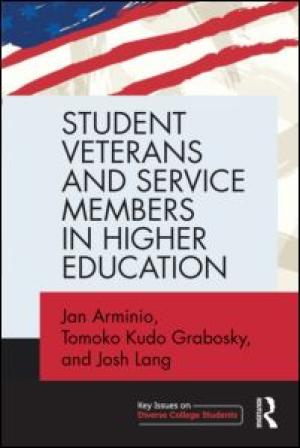
Click Here for Book Review Abstract: Student Veterans and Service Members in Higher Education bridges theory to practice in order to better prepare practitioners in their efforts to increase the success of veteran and military service members in higher education. Bringing together perspectives from a researcher, practitioner, and student veteran, this unique author team provides a comprehensive but manageable text reviewing relevant research literature and presenting accessible strategies for working with students. This book explores the facilitators and barriers of student veteran learning and engagement, how culture informs the current student veteran experience, and best practices for creating and maintaining a campus that allows for the success of these students. The latest to publish in the Key Issues on Diverse College Students series, this volume is a valuable resource for student affairs and higher education professionals to better serve veteran and military service members in higher education. (From the Publisher)

Click Here for Book Review Abstract: AAR Teaching Religious Studies Series (Oxford University Press) - Provides the most up-to-date scholarship for non-specialists on cutting-edge research on recovery of early meanings and recently excavated manuscripts - Offers an accesible description of Chinese cosmology - Studies the politics of the Changes during the Cultural Revolution for the first time in English - Presents an innovative analysis of references to women (From the Publisher)
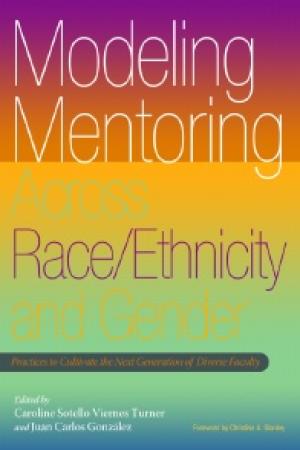
While mentorship has been shown to be critical in helping graduate students persist and complete their studies, and enter upon and succeed in their academic careers, the under-representation of faculty of color and women in higher education greatly reduces the opportunities for graduate students from these selfsame groups to find mentors of their race, ethnicity or gender. Recognizing that mentoring across gender, race and ethnicity inserts levels of complexity to this important process, this book both fills a major gap in the literature and provides an in-depth look at successful mentorships between senior white and under-represented scholars and emerging women scholars and scholars of color. Following a comprehensive review of the literature, this book presents chapters written by scholars who share in-depth descriptions of their cross-gender and/or cross-race/ethnicity mentoring relationships. Each article is co-authored by mentors who are established senior scholars and their former protégés with whom they have continuing collegial relationships. Their descriptions provide rich insights into the importance of these relationships, and for developing the academic pipeline for women scholars and scholars of color. Drawing on a comparative analysis of the literature and of the narrative chapters, the editors conclude by identifying the key characteristics and pathways for developing successful mentoring relationships across race, ethnicity or gender, and by offering recommendations for institutional policy and individual mentoring practice. For administrators and faculty concerned about diversity in graduate programs and academic departments, they offer clear models of how to nurture the productive scholars and teachers needed for tomorrow’s demographic of students; for under-represented students, they offer compelling narratives about the rewards and challenges of good mentorship to inform their expectations and the relationships they will develop as protégés. (From the Publisher)
Journal Issue. Full text is available online.
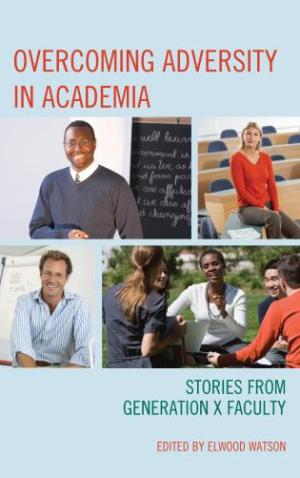
This collection of essays written by seventeen Generation X academics passionately, provocatively, and eloquently demonstrates the personal issues, conflicts, and triumphs that are definitive of this generation. These essays define the voice of an often overlooked and ignored demographic. (From the Publisher)
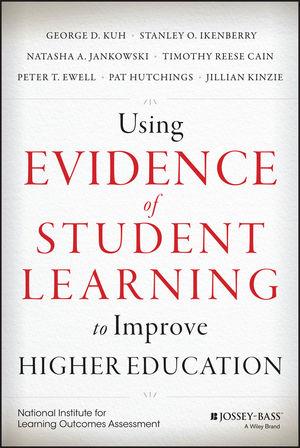
Click Here for Book Review Abstract: Dynamic changes are underway in American higher education. New providers, emerging technologies, cost concerns, student debt, and nagging doubts about quality all call out the need for institutions to show evidence of student learning. From scholars at the National Institute for Learning Outcomes Assessment (NILOA), Using Evidence of Student Learning to Improve Higher Education presents a reframed conception and approach to student learning outcomes assessment. The authors explain why it is counterproductive to view collecting and using evidence of student accomplishment as primarily a compliance activity. Today's circumstances demand a fresh and more strategic approach to the processes by which evidence about student learning is obtained and used to inform efforts to improve teaching, learning, and decision-making. Whether you're in the classroom, an administrative office, or on an assessment committee, data about what students know and are able to do are critical for guiding changes that are needed in institutional policies and practices to improve student learning and success. Use this book to: • Understand how and why student learning outcomes assessment can enhance student accomplishment and increase institutional effectiveness • Shift the view of assessment from being externally driven to internally motivated • Learn how assessment results can help inform decision-making • Use assessment data to manage change and improve student success Gauging student learning is necessary if institutions are to prepare students to meet the 21st century needs of employers and live an economically independent, civically responsible life. For assessment professionals and educational leaders, Using Evidence of Student Learning to Improve Higher Education offers both a compelling rationale and practical advice for making student learning outcomes assessment more effective and efficient. (From the Publisher)

Click Here for Book Review Abstract: A highly practical guide for new instructors teaching in any setting Regardless of the context, teaching is a tall task—and for those teaching adults, unique challenges await. Teaching Adults: A Practical Guide for New Teachers is chock-full of ideas that can be read quickly and implemented immediately in formal and informal settings, in classrooms and workplaces; in short, wherever adults are learning. Written with straightforward language that eschews jargon, yet grounded in theory, research, and practice in adult education, the book will benefit readers who have not previously been exposed to these ideas as well as more experienced teachers who seek new ways to reach adult learners. The book will serve as a resource to revisit from time to time as readers face new challenges and questions in teaching adults. Readers will delve into to a variety of topics, including: • A general teaching framework, including the author's four keys to effective teaching • An in-depth exploration of the primary components of effective teaching • An examination of the unique challenges involved with teaching adults, including how to best create a positive learning environment, overcoming resistance to learning, motivation techniques, and dealing with difficult or disruptive learners The book elucidates the techniques required to connect with adult learners and provide instruction that is specifically tailored to the unique learning needs of these students. (From the Publisher)
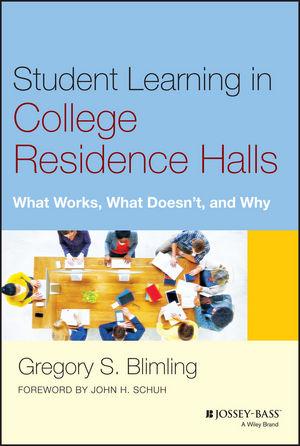
Click Here for Book Review Abstract: Grounded in current research and practical experience, Student Learning in College Residence Halls: What Works, What Doesn't, and Why shows how to structure the peer environment in residence halls to advance student learning. Focusing on the application of student learning principles, the book examines how neurobiological and psychosocial development influences how students learn in residence halls. The book is filled with examples, useful strategies, practical advice, and best practices for building community and shaping residential environments that produce measureable learning outcomes. Readers will find models for a curriculum-based approach to programming and for developing student staff competencies, as well as an analysis of what types of residential experiences influence student learning. An examination of how to assess student learning in residence halls and of the challenges residence halls face provide readers with insight into how to strategically plan for the future of residence halls as learning centers. The lack of recent literature on student learning in college residence halls belies the changes that have taken place. More traditional-age students are enrolled in college than ever before, and universities are building more residence halls to meet the increased demand for student housing. This book addresses these developments, reviews contemporary research, and provides up-to-date advice for creating residence hall environments that achieve educationally purposeful outcomes. • Discover which educational benefits are associated with living in residence halls • Learn how residential environments influence student behavior • Create residence hall environments that produce measureable learning outcomes • Monitor effectiveness with a process of systematic assessment Residence halls are an integral part of the college experience; with the right programs in place they can become dynamic centers of student learning. Student Learning in College Residence Halls is a comprehensive resource for residence hall professionals and others interested in improving students' learning experience. (From the Publisher)
Wabash Center Staff Contact
Sarah Farmer, Ph.D.
Associate Director
Wabash Center
farmers@wabash.edu