Resources

Tenth in the Service-Learning in the Disciplines Series, this book shows how both peace studies and service-learning have been developing new ideas of how social learning takes place as a community process in conflict situations and what the dynamics of peace building are. The process has created a new niche in academia for preparing students to become social change agents. The enthusiasm of the contributors in this book gives the reader a new vision of what is possible on college campuses in community-based peace and service-learning at a time when there is a critical need for peace-building skills. (From the Publisher)
The Art brims with practical tips on a range of need-to-know topics, including how to plan sessions; set up a class room; facilitate group work; deliver lively lectures; ask questions effectively; generate participation; assign projects; design tests and quizzes; use visual aids; assess courses; and more. (From the Publisher)
What if what we know about our brains and the way humans think was applied to the way we nurture each other in faith? Would we do it differently? What if we let cognitive science inform our educational strategies and the ways we help each other form our spirits? What if we began to believe that brain research and scientific investigation could reveal something of our spiritual nature and destiny?" These questions are at the heart of Jerry Larsen's fascinating and sure-to-be-talked-about book. Writing in a clear, accessible style, Larsen offers a model and methods for joining the discoveries of brain science with the work of religious education. He touches on the discoveries about the left and right brain thinking styles, multiple intelligence, memory mechanisms, meaning-making strategies and on the nature of consciousness. And he reflects on the belief that we can do religious education better if we take cues from what we know about the God-given network between our ears. This book is unique. There are no other books on the market on the subject of religious education and the brain. Enhanced with practical charts and illustrations, and with great ecumenical appeal, it will make useful reading for religious educators, religious professionals, and teachers. (From the Publisher)
Drawing upon 17 years of experience in theology, Dr. Kinast describes a step-by-step approach to help students and experienced ministers learn what their ministers teaches. Through examples, practical suggestions, and principles grounded in process theology, readers of this book explore the full range of resources needed for meaningful theological reflection. (From the Publisher)
Illustrates problems with free speech encountered by today's college and university administrators with fictional cases based on real life incidents involving inflammatory speakers, hate e-mail, art, and the Internet, and suggests guidelines. (From the Publisher)
This essay is a discussion of effective teaching in the science and religion classroom. I begin by introducing Alfred North Whitehead’s three stages of learning -- romance, discipline, and generalization -- and consider their implications for powerful pedagogy in the science and religion classroom. Following Whitehead’s three principles, I develop a number of additional heuristics that deal with active, visual, narrative, cooperative, and dialogical learning styles. Finally, I present twelve guidelines for how to use e-mail and class-based listservers to achieve some of these outcomes.
Learning from Our Lives is the first professional guide to using educational biography with adult learners. It offers anecdotes and narratives, interpretations and analyses, and numerous examples of different biographical approaches. Written for practitioners who conduct adult educational programs in formal or informal settings, this book can help teachers, trainers, career counselors, and human resource professionals to empower learners in assuming greater responsibility for their education and development. (From the Publisher)
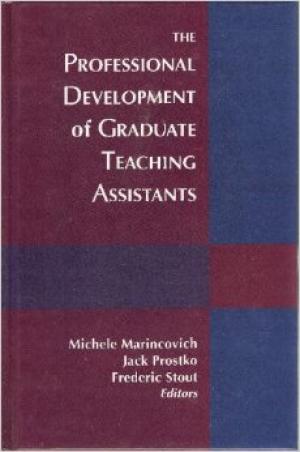
As both the need for and the expectations of teaching assistants in higher education rise, institutions must ensure that graduate TAs provide effective instruction. This comprehensive TA training handbook is an essential resource for those who prepare graduate TAs for their responsibilities in the classroom and for their overall professional development. Written by experts in the field of TA development, this book provides a clear framework for implementing and assessing an effective program. It is an ideal resource for all those who are interested in developing or improving TA training programs. (From the Publisher)
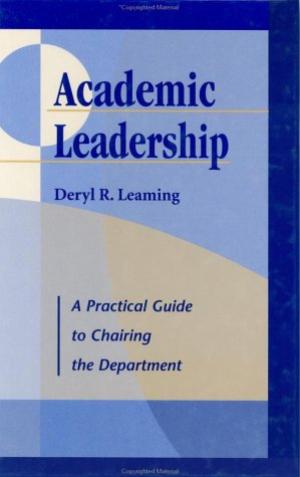
Dr. Leaming's book provides a comforting reminder that we need not waste time and energy reinventing the wheel. New and veteran administrators, particularly at the academic departmental level, can gain invaluable guidance by taking advantage of Dean Leaming's 30-plus years of experience. Whatever they are experiencing, he has already been through numerous times. He knows their challenges and anxieties, and, more importantly, the solutions to them. His book is written in plain, easy-to-understand language. It deals with everyday duties from attracting and hiring the most qualified people to dismissing those who don't work out, and from encouraging good teaching and research to dealing with difficult faculty members. The book also includes helpful summaries, checklists, tables and sample forms. Academic Leadership: A Practical Guide to Chairing the Department is a must-have resource book for the newly appointed department head that wants to avoid the trial-and-error management method. Dr. Leaming has been a department head at five universities and a dean at two. And he has laid out a roadmap that will come in handy continually for even the experienced person who still has a distance to travel down the administrative highway. (From the Publisher)
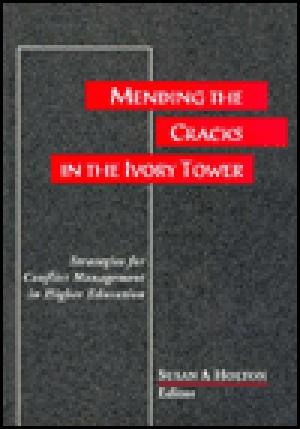
This book's 14 chapters provide models of conflict management and practical guidance for those working in institutions of higher education. (From the Publisher)
Wabash Center Staff Contact
Sarah Farmer, Ph.D.
Associate Director
Wabash Center
farmers@wabash.edu