Resources

Hiring new tenure-track faculty and seeing them through to tenure is an onerous responsibility for department chairs, with significant departmental and institutional consequences. The Department Chair's Role in Developing New Faculty into Teachers and Scholars is designed to help chairs with the three critical stages of junior faculty socialization: 1) recruitment and hiring; 2) the first year; and 3) evaluating new faculty performance. The authors offer concrete advice and activities; make extensive use of real-life situations; and provide generic examples of letters, checklists, and orientations that can be adapted to individual contexts. This book provides the tools chairs need to adapt habit and intuition into effective management practices. The advice will help department chairs achieve the mission and objective of their own units, as well as their colleges and campuses. (From the Publisher)
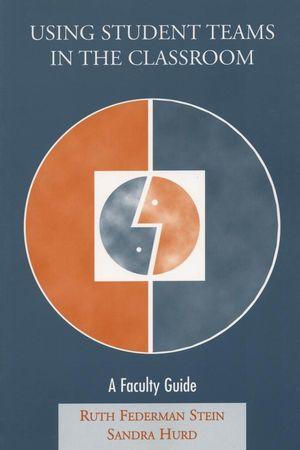
Teamwork builds cooperation, problem solving, active learning, and responsibility; such skills are increasingly important in both the classroom and in the workplace. For faculty who want to actively engage students with both the material and one another by using teamwork, this book answers many questions including: • What happens when one student dominates the group? • What do we do about students who sit back and are passive or resistant? • How can tasks be designed to elicit full participation and engagement of every student in the group? • How do we evaluate group work? The examples in this book are drawn from a wide variety of fields, including architecture, biology, ceramics, engineering, and English. The range of imaginative strategies—all of which include students working in groups—is evidence of the wealth of ways in which cooperative learning can be incorporated in college classrooms. The authors marry diverse examples and practical applications with solid explanations of the caveats of cooperative learning and a deep respect for how such pedagogical changes will challenge long-held beliefs and practices. (From the Publisher)

This guide will help teachers, individually and in groups, reflect on their teaching and renew their sense of vocation by exploring the inner landscape of their lives along Palmer's three dimensions--intellectual, emotional, and spiritual. The guide will raise questions, examine ideas and images, and suggest practices that emerge from the many insights in The Courage to Teach. (From the Publisher)

Journal Issue.
The dawning of the second millennium finds many Christian colleges and universities in a search for identity. Grappling with the often confused and misunderstood topic of academic freedom is essential to defining this identity. This new book by a widely respected practitioner offers the most articulate and informed discussion of academic freedom available. Anthony Diekema, who has spent the past forty years in higher education, provides a practical perspective on the much-maligned topic of academic freedom. The volume offers reflection on the extensive scholarly literature on academic freedom against the backdrop of personal experience. In the course of the book Diekema develops a sound working definition of the concept of academic freedom, assesses the threats it faces, acknowledges the significance of worldview in its implementation, explores the policy implications for its protection and promotion in Christian colleges, and provides some practical advice to those who are called to address the subject of academic freedom in their own institutions. As one might expect from a college president on a subject most often addressed by faculty—and among them usually by those who have been the “target” of actual academic freedom cases—this book is neither a totally sympathetic nor a thoroughly intellectual essay. Hoping to incite as well as to inform, Diekema, an unabashed defender of academic freedom, seeks to prescribe some movement in an academy that has lost its way toward an ethos of freedom. Critical yet constructive and hopeful, this volume is must reading for college administrators, faculty members, boards of trustees, students, and influential constituents of higher education. (From the Publisher)

At the end of the twentieth century, the ongoing battle between religion and public education is once again a burning issue in the United States. In this book, James Fraser shows that though these battles have been going on for as long as there have been public schools, there has never been any consensus about the proper relationship between religion and public education. Looking at the most difficult question of how private issues of faith can be reconciled with the very public nature of schooling, James Fraser paints a picture of our multicultural society that takes our relationship with God into account. (From the Publisher)

Journal Issue.

Until now, though seasoned practitioners know of the problems and have implemented solutions, a practical compendium of advice on teaching and learning in large classes has not appeared in the literature. This volume is an attempt to remedy that omission. It is intended to provide faculty who are teaching a large course for the first time practical advice that will ease the transition from small to large classes. It is the sort of volume every department head should hand out along with teaching assignments for large sections and pass on to colleagues who labor hard and conscientiously in these difficult instructional situations. (From the Publisher)

The postmodern condition, in which instrumentalism finally usurps all other considerations, has produced a kind of intellectual paralysis in the world of education. The authors of this book show how such postmodernist thinkers as Derrida, Foucault, and Lyotard illuminate puzzling aspects of education, arguing that educational theory is currently at an impasse. They argue that we need these new and disturbing ideas in order to "think again" fruitfully and creatively about education. (From the Publisher)

In honor of the new century and the twentieth anniversary of New Directions for Teaching and Learning, this issue reviews the past and current research on teaching, learning, and motivation, and envisions where the field is headed in the next century. (From the Publisher)
Wabash Center Staff Contact
Sarah Farmer, Ph.D.
Associate Director
Wabash Center
farmers@wabash.edu