Resources
Journal Issue. Full text is available online.
Journal Issue. Full text is available online.
Journal Issue. (This issue, and all "Spotlight on Teaching" issues prior to 1999, are not available on the AAR website.)
Journal Issue. (This issue, and all "Spotlight on Teaching" issues prior to 1999, are not available on the AAR website.)
Journal Issue. (This issue, and all "Spotlight on Teaching" issues prior to 1999, are not available on the AAR website.)
Based on the Situational Leadership model of Hersey and Blanchard, the Staged Self-Directed Learning Model proposes that learners advance through stages of increasing self-direction and that teachers can help or hinder that development. Good teaching matches the learner's stage of self-direction and helps the learner advance toward greater self-direction. Specific methods are proposed for teaching students at each stage, although many different teaching styles are good when appropriately applied. Several pedagogical difficulties are explained as mismatches between teacher style and learner stage, especially the mismatch between a student needing direction and a non-directive teacher. The model is applied to a course, a single class, and the overall curriculum.
The article is a theological reflection on the vocation of university teaching that describes the heart of the matter of what faculty do in the classroom. The author draws on personal narrative, social-psychological analyses of how insight occurs and contexts for insights are constructed, and sociological accounts of shifts that have altered significantly the context of university teaching and learning at the cusp of the millennium to make her case. She argues that the vocation of university teaching involves creating spaces of gracious play that are potentially transformative for students and faculty. Creating such spaces, however, draws faculty into an asceticism that can be understood as a spiritual path. The article is a revision of the author's 1999 St. Elizabeth Seton Lecture at the College of Mount St. Joseph, Cincinnati, Ohio.
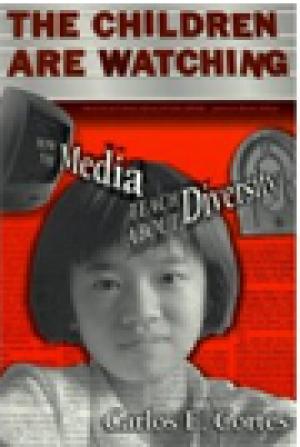
Carlos Cortés has been a first-hand observer and participant in the growth of multiculturalism and multicultural education from their birth in the social movements of the 1960s to the present day. In this unique collection of essays about diversity, society, and education, he provides readers with valuable insights, both from his own life story and from some of the most thought-provoking articles he has written over the past three decades. In many ways, Cortés's personal and professional story is the story of the multicultural movement itself, and this volume gives witness to the struggles and successes that Cortés and many others have experienced while striving to create a place for the voices, values, and visions of racial and ethnic groups in our culturally diverse nation and shrinking world. This one-of-a-kind reflective history: * Examines the evolving nature of multiculturalism and multicultural education as a dynamic and interactive process. * Features the perspective of a historian who has participated in the multicultural education movement. * Urges readers to reflect on their own lives, careers, and efforts to meet the challenges and opportunities of our increasingly diverse society. * Helps educators examine their own reasons for participating in the struggle to build a better multicultural future for our children. (From the Publisher)
Reinventing Ourselves examines the experiences of and lessons learned from a variety of institutions that pioneered new approaches for more effective teaching and learning. Many of the colleges included in this volume began as both educational and social experiments, representing new ways of thinking about educational goals, curricular organization, institutional governance, and faculty roles and rewards. With new calls for both rethinking our approaches to teaching and learning, and for reviewing the traditional boundaries within institutions and between disciplines, this book offers a rich store of ideas from which to draw. (From the Publisher)
Wabash Center Staff Contact
Sarah Farmer, Ph.D.
Associate Director
Wabash Center
farmers@wabash.edu