Resources
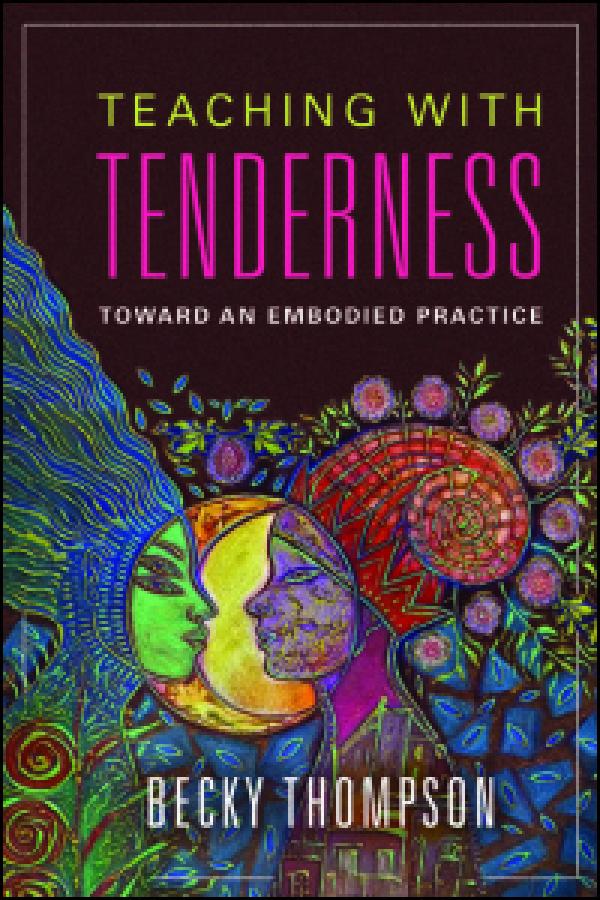
Click Here for Book Review Imagine a classroom that explores the twinned ideas of embodied teaching and a pedagogy of tenderness. Becky Thompson envisions such a curriculum--and a way of being--that promises to bring about a sea change in education. Teaching with Tenderness follows in the tradition of bell hooks's Teaching to Transgress and Paulo Freire's Pedagogy of the Oppressed, inviting us to draw upon contemplative practices (yoga, meditation, free writing, mindfulness, ritual) to keep our hearts open as we reckon with multiple injustices. Teaching with tenderness makes room for emotion, offer a witness for experiences people have buried, welcomes silence, breath and movement, and sees justice as key to our survival. It allows us to rethink our relationship to grading, office hours, desks, and faculty meetings, sees paradox as a constant companion, moves us beyond binaries; and praises self and community care. Tenderness examines contemporary challenges to teaching about race, gender, class, nationality, sexuality, religion, and other hierarchies. It examines the ethical, emotional, political, and spiritual challenges of teaching power-laden, charged issues and the consequences of shifting power relations in the classroom and in the community. Attention to current contributions in the areas of contemplative practices, trauma theory, multiracial feminist pedagogy, and activism enable us to envision steps toward a pedagogy of liberation. The book encourages active engagement and makes room for self-reflective learning, teaching, and scholarship. (From the Publisher)
An extended metaphor for teaching. This essay draws out the useful parallels between the best kind of teacher and the Good Witch of the North, Glinda, from The Wizard of Oz. Unappealing to many viewers or readers of the classic children's story, Glinda offers an inspiring reminder of four important pedagogical points: (1) the master teacher always treats her student as a peer; (2) the master teacher acknowledges and encourages her student's abilities but lets her learn how to exercise them on her own; (3) the master teacher is often not equivalent or even similar to anyone the student has encountered before; and (4) the master teacher is not a surrogate parent but a more distant figure.
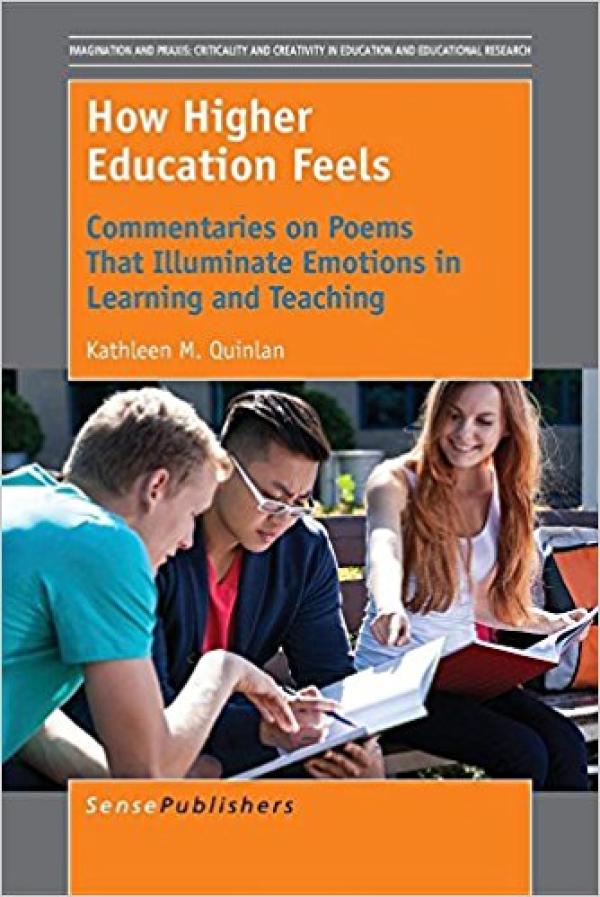
Click Here for Book Review Teaching and learning in higher education can evoke strong feelings, including confusion, anxiety, boredom, curiosity, surprise and exhilaration. These emotions affect students’ learning, progress and overall success. Teachers’ emotions affect how they teach and their relationships and communication with students. Yet the emotional dimensions of teachers’ and students’ experiences are rarely discussed in the context of improving higher education. This book addresses that gap, offering short, evocative case studies to spark conversation among university teachers. It challenges readers to reflect on how higher education feels, to explore the emotional landscape of courses and programmes they create and consider the emotional effects of messages embedded in various policies and practices. Following the student lifecycle from enrollment to reunion, each of the main chapters contains 10 to 15 accessible, emotionally-engaging poems that serve as succinct case studies highlighting how some aspect of learning, teaching or development in higher education feels. Each chapter also contains an expert scholarly commentary that identifies emergent themes across the cases and establishes connections to theory and practice in higher education. The poems-as-case-studies are ideal for use in faculty or educational development workshops or for individual reflection. A variety of theoretical perspectives and associated reflection prompts provide lenses for variously interpreting the poems. An appendix offers suggestions for structuring case discussions as part of educational development activities. The book promotes a person-centered discourse, giving voice to previously neglected aspects of higher education and reminding us that education is essentially a human endeavor. (From the Publisher)
Click Here for Book Review For 10,000 years, Alaska’s Native peoples have survived and thrived in some of the harshest conditions in the world. During that time, they perfected teaching and learning practices that ensured the survival of their communities and the wellbeing of their natural environments. Those ancient practices offer fresh insights for educators who care about the state of our world and seek ways to make education more relevant and engaging. This book describes a unique higher education project that broke some difficult silences between academic and Native communities by introducing a small group of non-Native faculty members to traditional Alaska Native ways of teaching and learning. It presents a model for a Native-designed and run faculty development intensive, strategies for applying indigenous pedagogies in western learning environments, reflection on education by Alaska Native Elders, and reports from participants on what they learned and what they tried in their classrooms. It is intended to stimulate discussion and reflection about best practices in higher education. (From the Publisher)
Click Here for Book Review The newest release from Bringing Theory to Practice, Well-Being and Higher Education, explores the multiple connections of well-being to higher education and why those connections matter—for the individual lives of students and those who teach; for the institution; and for whether or not the unique promise of higher education to a democratic society can be advanced and realized. The publication’s thirty-five original essays and provocations—by some of the most highly respected voices within and beyond the academy—address the theoretical underpinnings and practical expressions of these connections. Articles include “Higher Education, the Struggle for Democracy, and the Possibility of Classroom Grace”; “Why Well-Being is Fundamental to Liberal Learning”; “Honoring the Humanity of Our Students”; “Thriving: Expanding the Goal of Higher Education”; and “College Makes Me Feel Dangerous: On Well-Being and Nontraditional Students.” Well-Being and Higher Education opens the discussion on learning’s connection to well-being; responds to current challenges against the state of higher education today; and brings to the forefront a conversation considering the greater purposes of higher education and the need to preserve and revive the institution’s role to look beyond itself to a greater good. (From the Publisher)
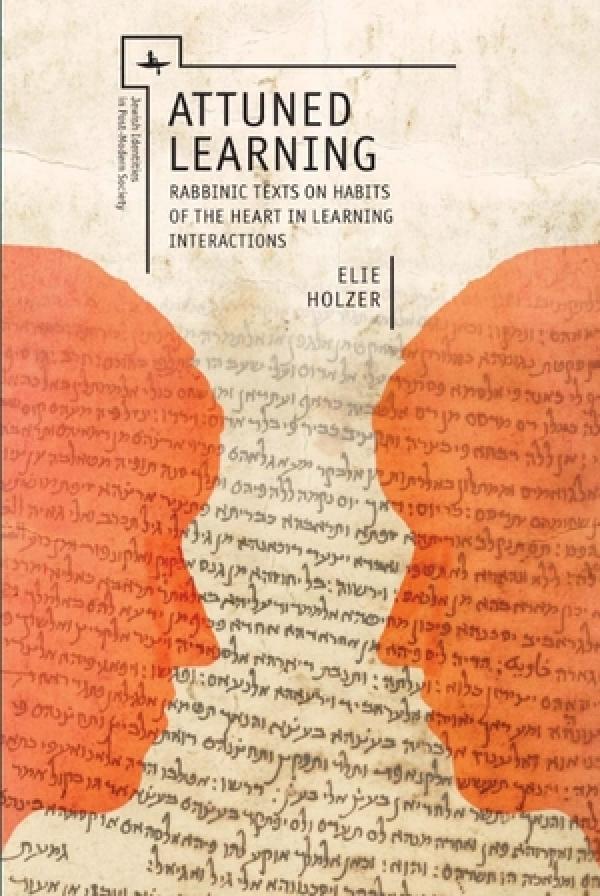
Click Here for Book Review Practice-oriented educational philosopher Elie Holzer invites readers to grow as teachers, students, or co-learners through “attuned learning,” a new paradigm of mindfulness. Groundbreaking interpretations of classical rabbinic texts sharpen attention to our own mental, emotional, and physical workings as well as awareness of others within the complexities of learning interactions. Holzer integrates pedagogical pathways with ethical elements of transformative teaching and learning, the repair of educational disruptions, the role of the human visage, and the dynamics of argumentative and collaborative learning. Literary analyses reveal that deliberate self-cultivation not only leads to ethical and spiritual growth, but also offers a corrective for the pitfalls of the contemporary calculative modalities in educational thinking. The author speaks to the existential, humanizing art of learning and of teaching. This book can serve as a companion volume for A Philosophy of Havruta: Understanding and Teaching the Art of Text Study in Pairs, adding a new dimension of its model of joint learning. (From the Publisher)
Click Here for Book Review Abstract: Academic Autoethnographies: Inside Teaching in Higher Education invites readers to experience autoethnography as a challenging, complex, and creative research methodology that can produce personally, professionally, and socially useful understandings of teaching and researching in higher education. The peer-reviewed chapters offer innovative and perspicacious explorations of interrelationships between personal autobiographies, lived educational experiences, and wider social and cultural concerns, across diverse disciplines and university contexts. This edited book is distinctive within the existing body of autoethnographic scholarship in that the original research presented has been done in relation to predominantly South African university settings. This research is complemented by contributions from Canadian and Swedish scholars. The sociocultural, educational, and methodological insights communicated in this book will be valuable for specialists in the field of higher education and to those in other academic domains who are interested in self-reflexive, transformative, and creative research methodologies and methods. (From the Publisher)
Click Here for Book Review Abstract: The concern that the democratic purposes of higher education -- and its conception as a public good -- are being undermined, with the growing realization that existing structures are unsuited to addressing today's complex societal problems, and that our institutions are failing an increasingly diverse population, all give rise to questioning the current model of the university. This book presents the voices of a new generation of scholars, educators, and practitioners who are committed to civic renewal and the public purposes of higher education. They question existing policies, structures, and practices, and put forward new forms of engagement that can help to shape and transform higher education to align it with societal needs. The scholars featured in this book make the case for public scholarship and argue that, in order to strengthen the democratic purposes of higher education for a viable future that is relevant to the needs of a changing society, we must recognize and support new models of teaching and research, and the need for fundamental changes in the core practices, policies, and cultures of the academy. These scholars act on their values through collaboration, inclusiveness, participation, task sharing, and reciprocity in public problem solving. Central to their approach is an authentic respect for the expertise and experience that all stakeholders contribute to education, knowledge generation, and community building. This book offers a vision of the university as a part of an ecosystem of knowledge production, addressing public problems with the purpose of advancing a more inclusive, deliberative democracy; and explores the new paradigm for teaching, learning, and knowledge creation necessary to make it a reality. (From the Publisher)
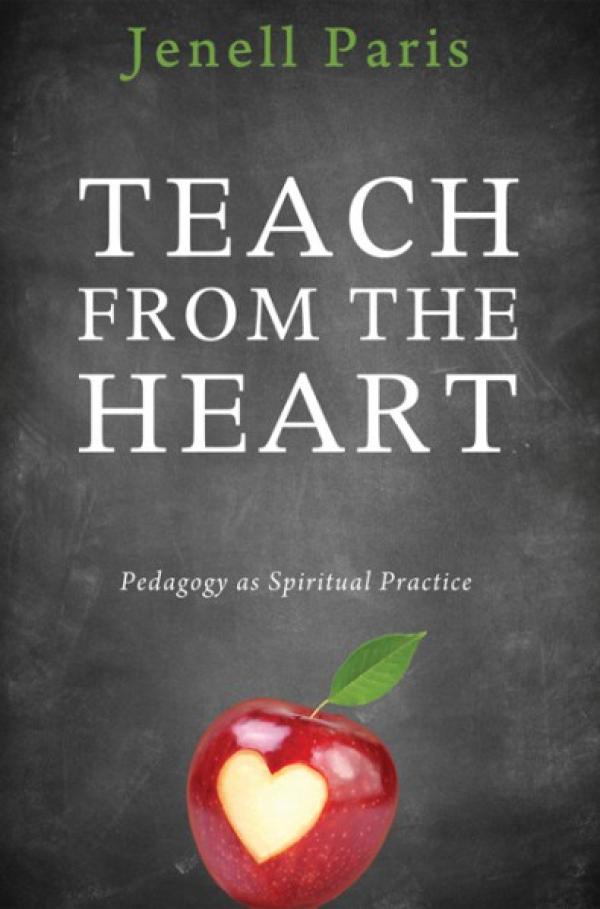
How can a teacher remain whole and happy, able to teach well for an entire semester, an entire year, and an entire career? Teach from the Heart is about finding, rediscovering, or holding on to the heart of the teaching life, which is, quite literally, the teacher's heart. It is an encouragement to take up teaching as more than a service to provide, a profession to master, or a job to perform. It is an invitation to artisanry, teaching as a craft that we master by working with our hands over long periods of time, producing results that bear the mark of their maker. Whether you're just beginning, or in it for the long haul, sit down with Teach from the Heart and deepen your heart for the teaching life. We need not bring to class the wisdom and knowledge we gained elsewhere; we can take up teaching as a spiritual practice, with the classroom as a sacred space for our own formation as persons. With nearly forty years' experience as both student and teacher, Jenell Paris's perspective is hard-won, but still lighthearted and enthusiastic. Teachers from any context will benefit: stories and examples include preschool, K-12, community education, and college teaching. (From the Publisher)
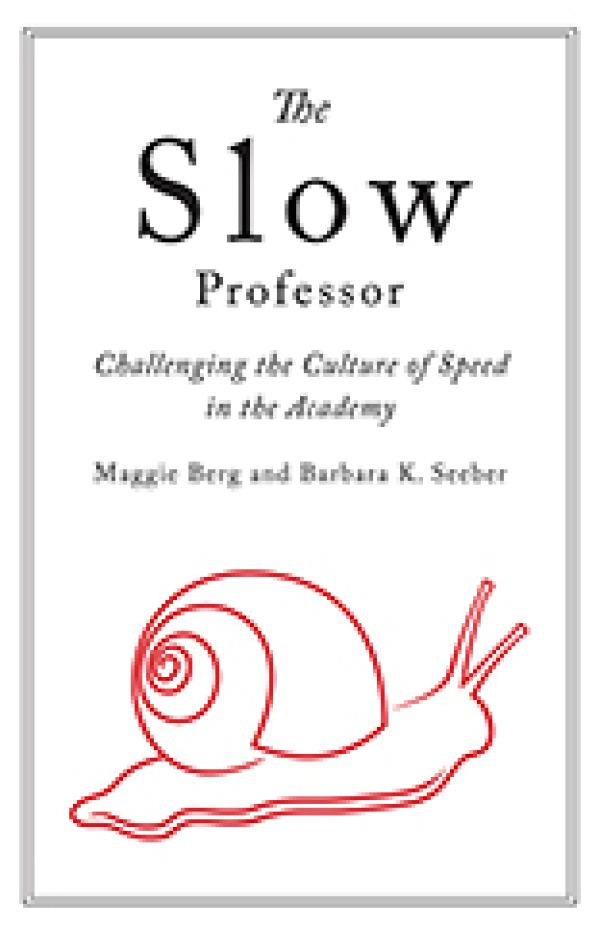
Click Here for Book Review Abstract: If there is one sector of society that should be cultivating deep thought in itself and others, it is academia. Yet the corporatisation of the contemporary university has sped up the clock, demanding increased speed and efficiency from faculty regardless of the consequences for education and scholarship. In The Slow Professor, Maggie Berg and Barbara K. Seeber discuss how adopting the principles of the Slow movement in academic life can counter this erosion of humanistic education. Focusing on the individual faculty member and his or her own professional practice, Berg and Seeber present both an analysis of the culture of speed in the academy and ways of alleviating stress while improving teaching, research, and collegiality. The Slow Professor will be a must-read for anyone in academia concerned about the frantic pace of contemporary university life. (From the Publisher)