Resources
You know the feeling.You have watched your students survive it. You have survived it yourself, many times. It is that shift from knowing to not knowing; from confidence to uncertainty; from expert to novice.Learning so often begins with a jolt of disorientation. It is uncomfortable. It can be exhausting. Over time, with patience and willingness, that discomfort usually gives way to new learning, relearning, even transformation.If you have ever wondered whether your body is part of the learning process, think back to how your body responds when you face something truly new: the queasiness, the sense of being under attack, the way fear can freeze you in place. For many of us, our bodies announce the loss of old truths long before our minds catch up. Disenfranchisement, feeling misplaced, confusion—these are not just ideas. They live in our muscles and our breathing.The disorientation of learning can be severe.I have come to believe that this disorientation is a signal. It tells us that we are entering a space of possibility, wonder, and generativity. That uneasy feeling is a sign that we are exactly where we are supposed to be. Pay attention to the breakthroughs when they come—because they do come.The most sensitive teachers stay in touch with what it feels like to be a learner.Some students greet new learning—or the loss of old knowing—with resistance, refusal, distrust, anger, or deep skepticism. Sympathetic teachers remember what it is like to move from being a competent, confident adult with swagger to feeling like an uncertain beginner, without the vocabulary to join the conversation. Learning can be emotional and unsettling. It can feel grief-stricken, like a small death of who we thought we were.I hold deep respect for adults who decide to learn new things. Those who dare to pursue degrees, learn new software, or tackle baking bread from scratch are risk-takers. I admire risk-takers, dreamers, disruptors.Stepping into classrooms, reading substantial books, participating in weighty discussions, exploring new worldviews, and encountering unfamiliar cultural knowledges—complete with assignments, deadlines, and grades—places learners in terrain marked by misunderstanding, uncertainty, surrender. These are not small shifts. They are life-altering, identity-reforming changes.Many students begin their studies assuming that coursework will affirm what they already know. Instead, they discover that genuine learning asks us to move from knowing to unknowing to new knowing. Few adults are prepared for this destabilizing journey.Deep study challenges what we assumed was settled and agreed upon. That cognitive dissonance is both disruptive and life-giving. Learning can be powerful.We need teachers who recognize how difficult learning is and who sympathize with their students, even as they gently invite them to lean into the formation of a reordered identity.Think about learning to ride a bicycle or surf a wave or drive a car. Fear was high and ability was low. What helped you push through was knowing that others had learned before you. You wobbled. You fell. You practiced—again and again—just to gain a small measure of proficiency. You strengthened your determination. And when the new skills finally took root, your confidence returned. Your swagger came back.Over the years, I learned to notice when my students’ swagger disappeared and disorientation set in. I watched their breathing in class. By mid-semester, their breath usually slowed; their bodies relaxed. I listened to how they used new vocabulary and interacted with unfamiliar concepts. By mid-semester, many of them were incorporating new words into their conversations—sometimes tentatively, sometimes playfully.I became a cheerleader for their attempts, even the unsuccessful ones. I designed assignments that did not assume students already knew what they had come to my class to learn. I created learning activities that acknowledged struggle and disorientation, then coaxed students toward deeper, richer, more flexible knowing. I learned to honor and even celebrate confusion as part of the process.The best teachers cultivate a desire to learn and build spaces for community. New learning is best done not in isolation but together.Do not be alone when confusion gives way to reorientation. Surround yourself—and your students—with people who will not be embarrassed or shamed, who will not humiliate others for not already knowing. The heart is too tender in the midst of learning to bear ridicule or blame.Classrooms need clear rules of engagement that foster community, make room for mistakes, and celebrate the courage it takes to learn.Making space for students to imagine new ways of living through engagement with new knowledges is both daunting and exhilarating. It is risky work. And it is worth it.Happy New Year!
[caption id="" align="aligncenter" width="562"] Egypt https://www.flickr.com/photos/ralphwatkins47/43570551171/in/album-72157669384150857/[/caption] What is the promise of documentaries for teaching and changing the world? Is the documentary the new pedagogical model for everyday classrooms? Is the professor of tomorrow not a lecturer or one who uses the Socratic method, forums, discussion boards, and blogs, but rather are they documentarians? Is the professor of the “now “ one who makes their own documentaries as content for their classes? Is this the game changer? Nick Fraser, in his book Say What Happened: A Story of Documentaries says, “. . . docs have morphed into contemporary essays, becoming a form whereby we get to experience highly provisional stabs at reality, but, far more than fictions, which are usually finished and fixed in their own reality, they are transformed by it. . . . . The best docs celebrate a sense of the accidental. And they matter. Like unknowable bits of the universe, they come into existence when a collision occurs.”[1] Fraser argues in his book that documentaries matter, they change the way we see and engage the world. Documentaries educate us, transform us, and challenge us. Fraser argues that the documentary is the new long form essay, it is what people are watching as they read. We are no longer a culture that is rooted solely in the literate and oral tradition, but a new tradition has emerged and it is the documentary as reliable scholarly source. If Fraser is right, and I believe he is, then how does this new reality expand our opportunities to teach in ways that are truly transformative and liberating? In my Evangelism and Social Justice course I assigned Michelle Alexander’s book The New Jim Crow: Mass Incarceration in the Age of Colorblindness along with Ava DuVernay’s, Oscar nominated documentary, 13th: From Slavery to Criminal with One Amendment and to my surprise this pairing was a game changers.[2] The students got it because they read, they saw, they felt it, and our conversation was transformative. The students were able to weave the two forms of scholarship together. In this class, we were wrestling with the fact that God calls God’s church to spread the gospel and that gospel is one of justice. God is on the side of the oppressed and God calls us to set the captives free. God calls us to see injustice, call it out and address it by correcting it. We spread the gospel by being the gospel. My students got it. One of my students said to me, “I finally get what Black theology is all about. I get it and I have to do something. Thank you so much for assigning the documentary. I see it now.” When she said, “I see it now!” this was eye opening for me (pun intended). It was the wedding of these two, the written word and the visual demonstration of that word, that help my students see. My students are used to watching Netflix, all of my students had a subscription or access to someone’s subscription and this viewing came natural to them. They live in the visual world and I have found that documentaries, like books, are a part of their scholarly diet. Why not feed this appetite? Do documentaries really make a difference? Can they change the way we see the world and then make us act on behalf of justice? Let me cite one case as example of just how powerful documentaries can be. The Fall 2019 edition of The ARTnews reported, “Agnes Gund believes in giving her art away, with donations of hundreds of works from her collection to the Museum of Modern Art spanning decades and others to the many institutions she has supported. But the 81-year-old philanthropist thought she could achieve more by selling a treasured painting after seeing 13th (Ava DuVernay’s,13th: From Slavery to Criminal with One Amendment). Feeling a call to action, Gund choose to sell her favorite holding . . . for $165 million to billionaire investor Steve Cohen, after refusing his overtures for years. She then used $100 million of the proceeds from the sale in 2017 to launch the Art for Justice Fund, a partnership with the Ford Foundation and Rockefeller Philanthropy Advisors currently working against the scourge of mass incarceration through concrete and poetic means.”[3] Agnes Gund’s worldview was changed by engaging the work of Ava DuVernay. Gund saw and she acted! Can we get our students to see and act? Can we employ the use of documentaries in our classes in similar ways we have employed readings in the pass? Can we make our own documentaries and have them replace our lectures? What does it take to make your own documentary? All it takes is a camera, editing software, and our no-permissions-asking selves to just go and do it. In my African Roots of Black Theology class, I created a two-part documentary to start the class. The students engage my asking the question in the context that gave rise to the question. It is a new and more visceral way for them to engage in a new form of contextual visual education. My students got to travel with me as I traveled through Egypt. I used the daily vlog as way to tell the story, share my questions, pondering and musings. The students go with me to where my story begins and it begins in Africa. I also created photo albums for all major stops along my journey so that students could pause and admire the still images in conversation with the moving images. I offer these examples as a testimony of my first attempts and I look forward to seeing yours as we ask what are the now / next in pedagogical practices? Sample Documentaries: Vlog Style [su_vimeo url="https://vimeo.com/355109032" title="Part #1: Out of Egypt"] Part #1: Out of Egypt I’ve Called My Son: A Son’s Journey Black to Africa (https://vimeo.com/355109032) [su_vimeo url="https://vimeo.com/355118012" title="Part #2: Out of Egypt Final Cut"] Part #2: Out of Egypt Final Cut ) Portraits of Egypt https://www.flickr.com/photos/ralphwatkins47/albums/72157669384150857 Giza Pyramids https://www.flickr.com/photos/ralphwatkins47/albums/72157693534362690 Sakkara, Step, Red & Bent Pyramid https://www.flickr.com/photos/ralphwatkins47/albums/72157697707740291 The Cairo Museum https://www.flickr.com/photos/ralphwatkins47/albums/72157696165977282 The Temple of Aset https://www.flickr.com/photos/ralphwatkins47/albums/72157698917086034 Edfu and Komombo https://www.flickr.com/photos/ralphwatkins47/albums/72157699345621995 Luxor https://www.flickr.com/photos/ralphwatkins47/albums/72157669383738737 Karnak https://www.flickr.com/photos/ralphwatkins47/albums/72157698915679014 East Bank Temples https://www.flickr.com/photos/ralphwatkins47/albums/72157671458282618 Denderah https://www.flickr.com/photos/ralphwatkins47/albums/72157696165292492 Abu Simbel https://www.flickr.com/photos/ralphwatkins47/albums/72157697695476081 References [1] Fraser, Nick. Say What Happened: A Story of Documentaries. Faber & Faber; London, 2019. p. 28. [2] Alexander, Michelle. The New Jim Crow: Mass Incarceration in the Age of Colorblindness. The New Press; NY, 2012. DuVernay, Ava. 13th: From Slavery to Criminal with One Amendment. Netflix; 2016. [3]Sheets, Hilarie M.. “Justice League: How Agnes Gund’s $165 Million sale of a beloved painting helped get others to join the fight against mass incarceration.” In The ARTnews Fall 2019 VOL. 118, NO. 3, p. 75-76.
“Toto, we’re not in Kansas anymore.” So many of our students have a “Dorothy” experience when they enter theological and religious education. Our classrooms are not what they have had previous experience of. Our classrooms are not the local church, not Bible college, not the family reunion, not church camp, not church conference, not undergraduate school, not job site; not anything like they have ever had to traverse. The location of our adult classrooms, for many students, is unique. And, once the degree is received, it will be a space to which they never return. Our classrooms, for so many, are the most foreign space they have ever ventured into. So many students are out of their comfort zones. They are away from home. While our teaching goals are rarely to comfort our students, teaching students who are upset, distressed, and skittish does not make for good teaching or good learning. Like many schools, we have a growing number of commuter students. My school draws from the boroughs of New York City, Jersey City, and Newark. While those of us who are familiar with living in the suburbs do not think of it as a “dangerous” space, those brothers and sisters who call the city home can find thick forests and dimly lit walking trails to be a problem. One night after class I was walking home. Home was on the other side of campus. Between the building where I taught and home was the baseball field, then an expanse of unlit trails through the campus arboretum. I had walked this route at night for many years with no fear or trepidation. After class, I passed a student getting into his car. Edgar (not his real name) was headed back to the City. We quickly exchanged after-class-pleasantries, then I resumed my walk toward the woods. Edgar called out to me in a concerned tone, “Doc, where you headed?!” I turned around and told him I was headed home and said, “Good night.” Edgar got in his car, raced around the parking lot until he caught up to me. He rolled down his car window and in a distressed tone called me to his car. I walked over–not sure what was wrong. He asked if I was going to walk through the woods–in the dark, alone. I said yes. He asked, “Please let me drive you home.” Feeling Edgar’s concern for me, I got in the car. During our five-minute drive, he expressed his anxiety for being in “the country.” I told him I had lived here for many years and felt comfortable walking, even in the dark, in spaces I had come to know. He told me that if I needed a ride home after class for the rest of the semester that he would gladly drive me home. Before this experience, I had considered that students might be uncomfortable with new ideas or new people or new values presented in our classrooms. I had not previously considered that students might be uncomfortable with being “in the country”–away from the city–uncomfortable in the terrain where they did not know the rules and the pathways were, literally, unlit. Suppose an obstacle to good teaching is the literal space we occupy? What if we have city people who have ventured to the country, or country people who have ventured to the city, and are fearful of this unfamiliar space? In either regard we have students who are distracted by their uncertain safety, worried if they will get back home safely and without incident. What does it mean to teach with this kind of discomfort in the room? Dorothy, of The Wizard of Oz, turned her situation into a quest. She constructed a journey which eventuated in her return home. So many of our students are not on a quest; they simply want to get a degree and the degree-giving-place is located in a place that is very foreign, a long way from home, but commutable. They commute to the foreign place and then return home each week. I suspect some students resign themselves to being uncomfortable for the duration of their education. Complicating the discomfort and anxieties of our students, another dimension to their discomfort is the experience of possibility. Author bell hooks said, “The classroom remains the most radical space of possibility in the academy.” So many students resist encounters with “radical spaces of possibility” preferring instead spaces which are reliable and previously known. My first teaching challenge was at age thirteen when I taught elementary-aged children in my church’s summer day camp. Snack time was a favorite moment in the day’s schedule. The teachers would gather all the children in one room and provide fruit as a snack. Ralph, age 10, never ate his fruit snack. He would complain and ask for cookies or chips. One day I sat with Ralph who was pouting. I asked, in earnest, why he would not eat the fruit. He said, “Because you don’t know what you’re going to get.” I told him that I did not understand. Ralph said, “If you eat an orange you don’t know if it’s gonna be sweet or sour. It might be juicy or it might be nasty. But if you eat an Oreo – they all taste the same. You know what you’re gonna get.” Many of our students find our classrooms too risky with possibility. They simply want to know, like Ralph, that they are going to get what they previously know, what they previously experience as dependable. When we say learning will be discovery, newness, encounter with the unfamiliar, even transformative–the Ralphs in our classrooms recoil. They do not want to be transformed. Some of the resistance and anxiety is that lots of people do not have an adventuresome spirit. Or more to the point, students will say that in their busyness they do not have time for an adventure. The thought of new ideas is worrisome, even burdensome, rather than motivational or inspirational. Students’ discomfort about risking the randomness of learning is anxiety producing and can make our classrooms woeful. The spring semester is upon us and my syllabus is prepared. Even so, I do not have strategies to relieve the many real discomforts, anxieties, and fears of my students. Edgars and Ralphs will likely be in my course as well as a few new kinds of fears I have yet to catalogue. By now I have enough experience to know that much learning can happen even when fears, uncertainties, and reservations are not calmed or eased. Beyond that, I know I need to be a non-anxious presence for the sake of all of my students and me.
Every time I walk into a classroom or workshop for the first time, I hear the voices of elders in the long, Black-led struggle for justice pressing the questions: “How are you going to bring people into the movement? How are you going to plant the seeds and bring forth a revolution of values?” My thoughts are always about what it means to model the just peace of the society that is and has yet to be. The orientation I bring to the classroom or workshop space is one of religion and nonviolent social change focused in civic engagement and social action. The tasks and challenges we face today in the religious studies and peace studies classrooms are not unlike those faced over the past several decades. Rev. Dr. Martin Luther King, Jr. gave his “Breaking the Silence: Beyond Vietnam” sermon 50 years ago. In the sermon King called us to a “revolution of values.”[1] The revolution of values is a move away from a thing-oriented society toward a human-oriented society. It helps to create a society where everyone has their needs met and no one is oppressed. King was speaking out against the value the United States placed on the evils of racism, materialism, and militarism. According to elder Grace Lee Boggs, a revolution of values and building up the Beloved Community, are "about redefining our relationships with one another, to the Earth and to the world; about creating a new society in the places and spaces left vacant by the disintegration of the old; about hope, not despair; about saying yes to life and no to war; about finding the courage to love and care for the peoples of the world as we love and care for our own families.”[2] The recent wave of political and social violence against Black and Brown people, women, queer, non-gender conforming people, and religious minorities is not new. It is just more overt. The risks of talking about religion, politics, and the politics of religion in the classroom are high. We see friends and colleagues being labeled “dangerous.” Yet, our tasks as teachers are to critique and improve society. We do the emotional and complicated work of instilling in our students' religious literacy, a political consciousness, and a sense of calling. A large part of moving students to political consciousness and calling is the idea that human beings are all connected to one another, to the past, to the ancestors, and to the future. In other words, becoming politically conscious is to move toward the understanding that who I am is related to who you are. Simultaneously, the move toward calling presses the idea that what I do is related to social responsibility. Ultimately, what I believe about and how I live has consequences for others. In my courses, religious literacy becomes a tool for moving students into a new political consciousness. Students learn about the beliefs and practices of a variety of religious traditions and the political implications of those traditions. Along the way, students are given the opportunity to reflect on their own beliefs and practices. The pedagogical tools I have found useful in the endeavor to create a revolution of values and a new political consciousness are: Be authentic and present. I try to think of my teaching in terms of a pedagogy of relationship and community. I spend time during the first weeks of a semester allowing students to get to know one another. I treat classroom spaces as community spaces. As the professor, this means being vulnerable and transparent. Students know when a teacher is not being real. I cannot ask students to share their personal stories and experiences without being willing to do so as is appropriate. Make it real. I ask students to reflect on why religious literacy and political consciousness are helpful in their work, their relationships, their vocation, and in their civic engagement. If students can make the material relevant to themselves they are more likely to take it with seriousness. Making it real means exposing students to practitioners and the stories of real people. Teachers having their limits and being transparent about those limits allows students to see do likewise. Be clear about the end goal. If the point is to move students toward a revolution of values, then we must develop a pedagogy of transformation and hope. Too often religious and political discourse is about what we are against. In the words of elder Vincent Harding, “No matter what form education may take . . . I am convinced that one of its most important responsibilities is to nurture the realization that we can change our lives for the better, that another creative, more democratic way of life is possible, that the seeds of such a new way are already alive within us, needing to be nurtured.”[3] In these times the stakes are very high. How are we bringing people into the movement? How are we planning the seeds for a revolution of values? What are working toward? [1] King, Jr., Martin Luther, “Beyond Vietnam,” Available online at https://kinginstitute.stanford.edu/king-papers/documents/beyond-vietnam. Accessed March 8, 2016. [2] Boggs, Grace Lee. “The Beloved Community of Martin Luther King.” May 20, 2004. Yes. http://www.yesmagazine.org/issues/a-conspiracy-of-hope/the-beloved-community-of-martin-luther-king. Accessed August 14, 2014. [3] Harding, Vincent, and Daisaku Ikeda. America Will Be!: Conversations on Hope, Freedom, and Democracy. 2013, 174.
I am a cyclist. I ride a hybrid commuter bike to work most days and have a road bike that has taken me up mountain passes and on to country roads outside of Dallas where views of fields and livestock replace the asphalt jungles of the Metroplex. I picked up cycling almost a decade ago when it became clear that I needed some kind of response to the combined stresses of pre-tenure professional life and young children at home. I got on the bike for outside time, physical challenge, and personal space. I’ve stayed on the bike for all of these reasons, and also for what time on the bike has taught me about attentiveness, mindfulness, thinking spaces, and more recently, about wobble: those moments when things slow down, or haven’t quite started up; when direction, volition, and commitment are in play. In cycling, wobble happens when mounting, dismounting or moving slower than 2 miles per hour, often during a turn. As things go, this is also when it happens in classrooms. When conversations aren’t strictly guided, when listening replaces lecture, when a set authority structure is open to flux, intellectual patterns can come a little out of balance and preconceived ideas can change. Put another way, transformative learning can occur. Without the wobble, feet firmly on the ground, we can never get on the bike and ride. My interest in wobble stems from some conversations about diversity and intellectual humility I’ve been having with colleagues from various places and disciplines, and also from a recent workshop for faculty and graduate students here at Southern Methodist University on conflict and conversation in religious studies classroom spaces (thanks to Wabash for funding this with a small grant). The workshop focused on understanding why contentious issues can be difficult to talk about, and also offered concrete methods for facilitating useful conversations across difference. John Sarrouf, an experienced facilitator and Director of Strategic Partnerships at Essential Partners, led that workshop for us. John was also kind enough to come and speak to my undergraduate class about the work he does. It was in that encounter that I saw wobble in action. John greeted the class and then asked if they were talking about the upcoming presidential election. My otherwise talkative, engaged, and engaging students shrunk at the very suggestion. Shoulders hunched, faces turned to their desks, they shook their heads. They were thrown off balance, visibly uncomfortable, almost at a standstill. Then, John asked what it would take to be able to have those conversations. Under what conditions could they speak? Their heads came up, they made thoughtful suggestions, and by the end of John’s 10 minute time, they had recalled productive discussions around Black Lives Matter, religious differences, and their experiences in our class. They had turned an intellectual corner and were up and riding (thinking) again. In an online discussion post that followed, one student mentioned a change in his thinking in response to a suggestion John made about talking to understand rather than to persuade. Something in the wobble allowed him to hear, consider, and embrace a suggestion. He learned something. As in mounting and dismounting a bicycle, the wobble needs to be controlled. Too much and forward momentum turns into a crash, too little and we never get that second foot off the ground. Now that I am attentive to wobble, though, and have learned to use it by letting silence happen in discussions — by getting mindfully out of the way, or by not shying away from controversy when it arises — I have come to recognize its real potential. Or more accurately, I can see it for what it is. Before I saw discomfort or disengagement, things I wanted to minimize. Now I am more likely to see the beginning of forward momentum. I see the beginning of transformative, interesting thought, even around topics as challenging as religion. I hope my students can see the same.
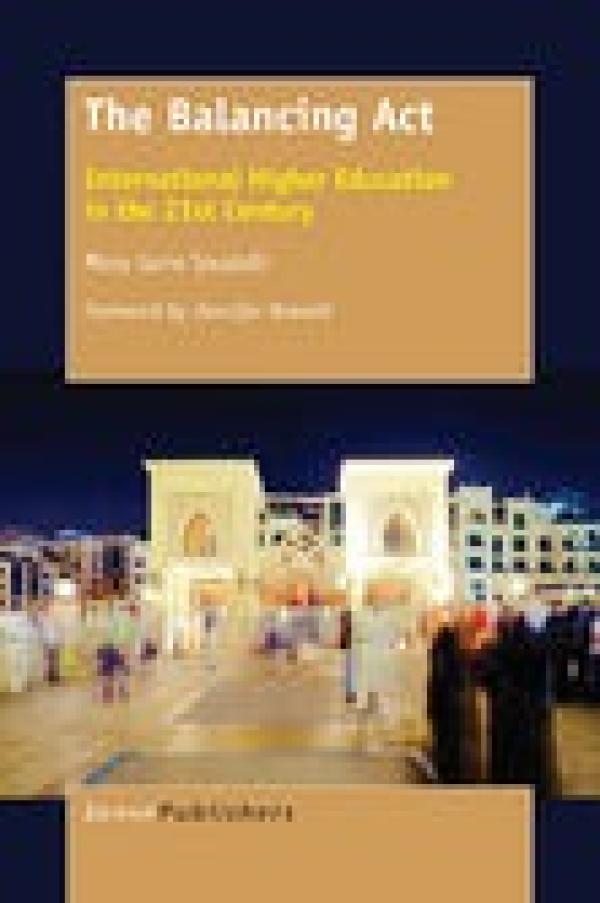
What can teachers of theology and religion learn from a text on contemporary global education? Moreover, “If our world is constantly changing, particularly with globalization, how can educators support the nature of change through curriculum, teaching, and learning, particularly in international contexts” (30)? Mary Gene Saudelli, a Canadian educator with a rich background of teaching abroad, highlights the significance of contextual considerations in twenty-first century teaching and learning through this case study of nineteen international educators at Dubai Women’s College in the United Arab Emirates. Within the pluralistic context of many of our classrooms, as well as the increased emphasis on internationalization in many of our institutions, theological and religious educators will benefit from Saudelli’s insightful analysis of contemporary educational theory and curriculum through a global lens. Divided into three modules, the first describes the context of the study along with a discussion of contemporary theories of adult learning, including sociology of education and change theories. Module 2 presents the international educators, the Emirati learners, and the curriculum. And Module 3 explores issues within the learning context: religion, culture, society, and language. Finally, a brief conclusion captures salient lessons learned from this case study with application to twenty-first century curriculum design. Saudelli’s analysis of contemporary learning theories in light of the global educational context is of particular significance as it represents the integrative thinking that is essential for our thinking and practice in culturally-responsive theological education. For example, she examines Knowles’ work on andragogy and Mezirow’s transformative learning theory from an international and intercultural perspective, indicating the implicit Western individualistic bias that undergirds these approaches to learning. Moreover, values such as empowerment or emancipation, lauded in contemporary adult education scholarship, may look quite different through the lens of a more restrictive Arab context. Saudelli’s description of twenty-first century learning and its implications for curriculum design is another helpful discussion. In her words, twenty-first century teaching and learning refers to “an orientation that recognizes the incredible change that has been ushered in by virtue of a dramatic technological evolution and advancements, globalization and cross-national migration of both people and information, and intense shifting of educational needs” (63). Such curriculum is interdisciplinary, experiential, balanced, and interconnected with both local and global contexts (63ff). Moreover, its design supports the development of key skills that students require to be equipped to address the opportunities and challenges in our ever-changing world. It may be instructive to consider how these criteria could contribute to shaping theological and religious studies within our own educational institutions. The section on faith is somewhat brief, especially given the enormous impact that religion has in the context of this study, the Arab world. And while the author does reference epistemological differences in the conclusion (179), a more robust discussion as to their significance for global education would be a welcome addition to her otherwise helpful synopsis in the final chapter. Thus, while the particulars of this case study may be unique, the author suggests that the text can be useful, “as a way to think about how we approach internationalization in education” (12). Moreover, its fresh perspective on curriculum and educational theory through a global lens is one that is worthy of consideration for contemporary theological educators.
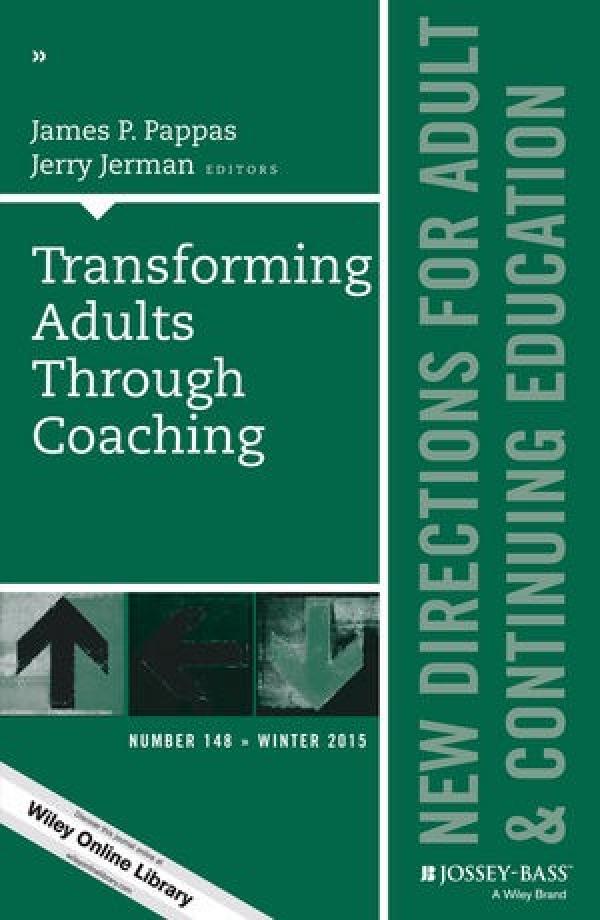
Transforming Adults Through Coaching (New Directions for Adult and Continuing Education, Number 148)
Coaching has grown exponentially as a professional practice and as a discipline in recent years. According to the International Coach Federation (ICF), the number of coaches worldwide increased from some 30,000 in 2008 to 47,000 in 2012. Coaches assist individuals with a variety of vocational and personal issues in both public and private sector organizations. As a result, many clients have become better prepared to reach their workplace and life goals. The field of adult coaching as a discipline has matured considerably alongside the practice itself. For example, studies of best coaching practices and analysis of coaching models abound. Professional organizations have formed and have begun to address such critical issues as training, certification, and ethical standards. Transforming Adults Through Coaching, edited by Pappas and Jerman, provides an introduction to the history, current practices, and possible future of coaching. Each chapter in this compact overview includes material that will benefit scholars, practitioners, and their clients. In particular, there is a solid review of adult development and learning theory with illustrative case studies and pertinent bibliographies. Pappas and Jerman acknowledge in their introduction that clarity is needed when considering what coaching is and is not. It is, they say, neither psychotherapy nor advice giving. Coaching is relational. It is ordinarily practiced with individuals and not groups. And, they underscore, the coaching relationship typically proceeds with a combination of questions and attentive listening. The results, they contend, can be transformative for clients. The first three chapters sketch the parameters for the field of adult coaching. The initial essay by Rachel Ciporen is “The Emerging Field of Executive and Organizational Coaching: An Overview.” Ciporen provides the reader with essential definitions and perspectives on coaching as well as a valuable list of resources for further study. She also notes some of the most common critiques of coaching, such as a frequent reliance on an “overly simplistic view of the learning and change process” (12). Carolyn Coughlin explores a major goal of adult coaching in “Development Coaching to Support the Transition to Self-Authorship.” Her essay describes how coaches, using their knowledge of adult development – especially body and mind theory and practice – can facilitate their client’s movement toward self-authorship. Adult learning theory provides a vital foundation for coaching. Elaine Cox’s contribution, “Coaching and Adult Learning: Theory and Practice,” identifies links between andragogy and transformative learning and how each connects with the practice of coaching. In addition, Cox addresses practical applications of these theories. Brief illustrative dialogues are included to show how the theories can impact actual adult coaching. “Coaching as a Strategy for Helping Adults” by Dorothy M. Wax and Judith Westheim focuses on the kind of issues adult learners bring to the learning environment and how coaching strategies can help them deal with professional and personal obstacles to success. Pappas and Jerman’s closing essay, “The Future of Coaching among Adult Populations,” outlines major directions and critical issues that lie ahead for the field. They underscore not only continued growth for coaching, but also the need for further refinements, including more specialization. These are some of the essays that make this brief collection valuable, not only for coaches and their clients, but for a range of helping professionals and researchers.
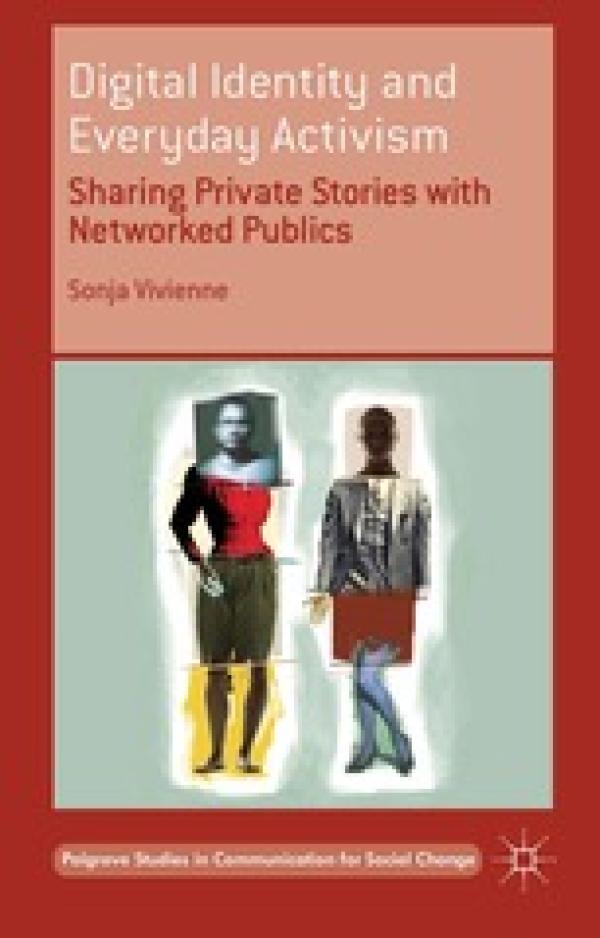
This small book is a brilliant example of grounded research that is thoroughly infused with theoretical insight and practical engagement. At first glance people looking for pedagogical wisdom might not be attracted by the title, but at the center of the book are questions of identity and everyday activism – topics that are vitally important in the midst of higher education contexts permeated with fears of “coddling students” and arguments over the value of “trigger warnings.” Vivienne is based at Flinders University of South Australia. This book draws on her background in media production and working with marginalized communities towards social change, and focuses on research she did with GLBTQ communities learning how to create in a specific form of digital storytelling: Digital stories are short (3-5 minutes) rich media autobiographical videos, combining personal photographs and /or artworks, narration, and music. They are traditionally created in a workshop context that takes place over 3-4 days and includes a story circle, technical instruction, and celebratory screening for fellow storytellers and invited guests. (3) Because persons within GLBTQ communities must constantly negotiate how they represent themselves, when and how they claim specific forms of identity, and in what ways they make these claims publicly, digital storytelling offered a compelling medium for a research project interested in exploring the challenges of sharing private stories with networked publics. The book is full of descriptions of how these stories emerged, with links to specific videos referenced available online. Vivienne’s work is both participatory and activist in methodology, drawing on the theoretical work of scholars such as Benhabib, Butler, Young, boyd, Jenkins, Bahktin, and Foucault. She ensures that the complexity of these theoretical interventions are made vividly accessible by using them to attend to the conundrums of claiming identity in the midst of highly contested spaces. She highlights the capacity of digital storytelling for reaching across various forms of difference: bridge building is reflected in the capacity to negotiate one’s position as a part of or apart from networked publics – including familiar, intimate, counter, and unknown. Digital storytelling creates opportunities to ‘bring things up,’ to broach difficult discussions ‘out in the open.’ Ownership of one’s position in society (as represented in a digital story) is reflected in the capacity to receive and give affirmation. Further, public expression of marginalized voices opens space for others to speak as they also negotiate how and where they fit in the world. As a medium that facilitates speaking across difference and bridge building, digital storytelling evokes the profound significance of participatory media as a widespread global phenomenon. (196-197) Along the way she defines and describes digital storytelling, everyday activism, erosive social change, and a concept she names “Intimate Citizenship 3.0,” as well as exploring issues of identity, nominalization, authenticity, coherence, and congruence in such media. Her research concludes with four specific findings: Institutions and facilitators can be transparent in actively acknowledging their discursive mediating influence upon the construction of individual and collective identities. [A]wareness of networked identity work provides an opportunity to sculpt congruent rather than coherent narratives and this labour can have both personal value and constitutive cultural value. [A]ctive consideration of distribution of private stories amplifies personal and social benefits, especially as a tool for everyday activism. [I]nitiatives benefit from reflective analysis of cross-disciplinary community engagement strategies, social movement theory, and strategic listening across difference. (205-206) While this book does not directly highlight pedagogies for religious studies or theology classrooms, it is full of stories in which workshop participants confront and contest religious claims their families, their communities, and broader “imagined” publics are making. By offering compelling descriptions of ways to engage such meaning-making that invite people into dialogue across various divides, this book embodies transformative adult learning and offers a rich collection of pragmatic advice for nurturing such learning.
his is the fourth in the Routledge Research in Religion and Education series. The series editor provides a Foreword distinguishing between religious education as formation within religious institutions and the concern of the series, which is education about religion. In this context, the essays address comparative theology as a process and as a pedagogical method in primarily, though not exclusively, undergraduate classrooms. Editors Brecht and Locklin provide a concise, effective introduction which establishes an overview of the intersecting thematic components of the collection: comparative theology, particularly the “departure-and-return” model as developed by Francis X. Clooney, SJ., and ways in which the digital culture of the millennial generation impacts epistemology and identity. The fifteen essays are arranged in three sections. The well-placed first essay, by Judith Gruber, offers a postcolonial critique of the comparative theological model as implicitly essentialist. Essays in the second group address issues of identity raised by millennials and the nature of the millennial classroom in relation to comparative theology. Essays in the third section discuss hands-on examples and specific pedagogical practices. An afterword by Clooney, in which he identifies “six recurring issues” which he finds in the essays and addresses sequentially, concludes the volume. Clooney’s frankly personal account of his own context in developing the departure-and-return model and his rejoinder to the charge of essentialism bring the dialogue to a fitting end. The diversity of the collection is rich in both content and authorial voices, some of whom are well-established scholars and others of whom are emerging, most teaching in religious studies or theology departments at public or private North American universities, though the balance leans toward Roman Catholic institutional affiliations. Editors Brecht and Locklin note that this collection is the fruit of a Wabash Center teaching workshop. The robust range of reflection invites readers into the feel of a working group of teacher/scholars who share a concern for facilitating transformative learning in the religion or theology classroom, yet who address this concern and comparative theology’s relevance to the millennial context in quite distinct ways. A brief sampling demonstrates the range of perspectives authors develop: soteriological privilege (Brecht); Muslim theology of tawhid (Hussain); embodiment and material culture (Gasson-Gardner and Smith); storytelling as a pedagogical method of African Traditional Religions (Aihiokhai); comparing dharma and moksha, works and faith, ethics and spirituality (Yadlapati); a voluntary female Jewish-Muslim textual study group (Golberg); and use of film in an online context (Sydnor). As Jeanine Hill Fletcher writes in her essay, “the work of the comparative theology classroom shares in this important work of shaping citizens in a multifaith world toward tolerance, appreciation, meaningful relationships, and the common good” (149). The same may also be said for religious studies classrooms. Many teachers of religion who are neither theologians nor comparativists by academic training will nevertheless find this collection useful and even inspiring for their pedagogical reflection and practice.
Debates about the purpose and quality of education tend to center on evaluative tools and the number of persons successfully completing courses of study. The assumption being that education’s primary purpose is to prepare a workforce for a competitive market place. These and several other assumptions about the process and goals of education are challenged in the encouraging text Turning Teaching Inside Out: A Pedagogy of Transformation. This collection of essays written by participants in the Inside Out Prison Exchange Program describe and analyze a pedagogy that in form, content, and process reflects the educational goals of developing critical thinking skills, integrative learning for comprehensive application, and empowerment. For those who value education as the forming of persons who can positively contribute to and impact society, this program is an affirmation of the promise and power of liberative pedagogies and service education programs. The Inside Out Prison Exchange program brings together students from universities and prisons to study and learn, initially about the criminal justice system and its social implications, but now encompassing a wide range of subjects: sociology, philosophy, performance art, social work, literature, and law. A liberative model based on the seminal work of Paolo Freire, students and teachers come together across multiple lines of difference to critically reflect on the social issues that impact and contribute to this nation’s alarming incarceration rate, especially of people of color. Utilizing a dialogical methodology, questions are raised, not only about the content of issues, but also about the very process of learning. A space of respect and mutuality is created through icebreakers and small group work, the negotiation of norms, and expectations. Learning is engaged with the basic assumption that all present are both teacher and student. Questions and dialogue lead to strategies for change and when the semester is over, many commit to the ongoing work of community education through projects that expand their experience to incorporate institutional decision makers, politicians, family members, and community organizations dedicated to improving the criminal justice and educational systems. These think tanks and policy development groups lead to praxis, concrete engagement of the systems that impact and contribute to the violence, and social integration explored in the class setting. The ripple effect moves beyond the prison walls and even the collaboration necessary to run this program and expand it internationally are a product of the mutual and collaborative relationships formed through this Inside Out transformational pedagogy. The essays include historical analysis of the current prison industrial complex, the personal transformation that humanizes social service professionals, the community and political organizing of alumni and the different contexts in which this model has been successfully applied, as well as articles about research methodologies and variations and outgrowths of the original program. The appendices helpful, offering models of the activities and frameworks utilized by the program. These first hand reflections provide rich material for analysis and application useful for all educators. I was left wanting more detail about the setbacks and challenges, especially as the program was replicated and expanded to different contexts. Some strategies are suggested (for example, start the collaboration with people on the ground not necessarily administration [30]) that suggest lessons learned through hard experience and I can only imagine the number of obstacles overcome given the stringent limits set by this particular context. This text invites educators to reconsider or renew their commitment to personal and social transformation. It is an important resource for those seeking to strengthen and improve education everywhere from the inside out.