Resources
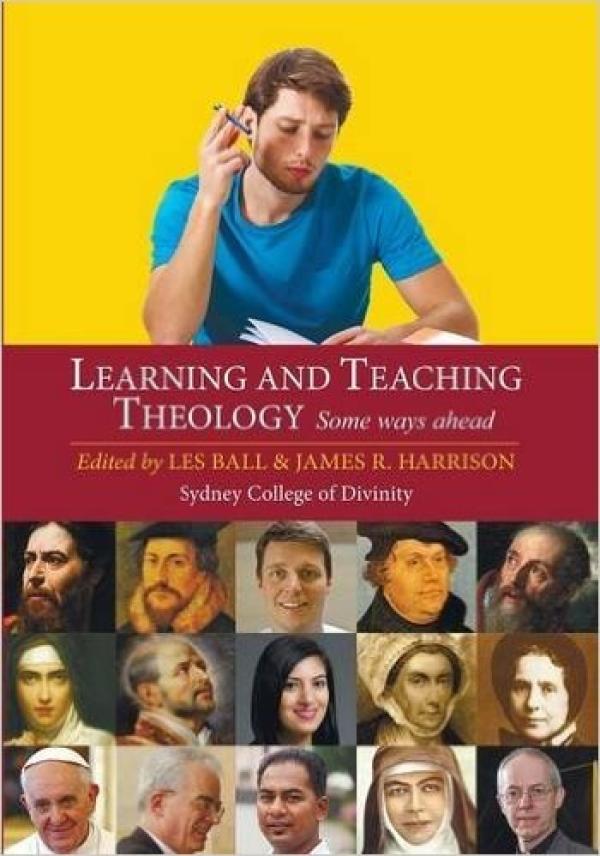
The genesis of this book was a Learning and Teaching conference held at the Sydney College of Divinity that focused on issues and practices in theological education from the perspective of Australia and New Zealand. The aim of the book is to “generate further impetus in charting effective ways to make progress along the important journey of delivering relevant contemporary educational experiences for the learners of theology” (7). For the most part the book succeeds in doing this. It contains seven sections. Section 1, and in particular the essay “Where are We Going,” sets the stage well for the other essays and sections of the book. This essay argues that the philosophical starting point for theological education is student-centered learning and teaching. This pedagogical philosophy then answers the questions about what shall be taught (content of theological learning and teaching), how it will be taught (methods of learning and teaching), and how the curriculum is built. Section 2 gives a biblical road map, using the apostle Paul as a model of a theological educator, that centers on learning communities and their effects on the immediate context and implications for theological education today. Section 3 constitutes a strength of the book since it brings together the philosophical, curricular, and theological theories about learning and teaching into an integrative whole connected to formational assessment. The various essays are informed by the works of David Ford and Walter Brueggemann, integrative and transformative learning theories, and multiple intelligences, to name a few. The book transitions in Sections 4 and 5 to a more practical focus that brings theory and practice together from the medical and health science disciplines to enhance theological education, and the use of technology. The two essays in Section 4 look at lessons that theological education can learn from medical education; they challenge theological education to move from an emphasis on competencies to a focus on capabilities that adapt to contextual changes that in turn improve ministerial practice. The essays in Section 5 center on e-learning technologies and its impact on the learner from formational, instructional design, gamification, and embodiment perspectives. The last two sections continue to emphasize practice and give creative examples of innovative practices from theological practitioners around teaching and learning methodologies. These include problem-based learning, transformative pedagogy in the context of cross-cultural experiences and traditional courses, and workplace formation. The last two essays feature teaching and learning from a non-Western context. The editors laid out the direction of the book well in that it generally moves from a theological, philosophical, and pedagogical core to learning and teaching practices. However, in a book of this nature with multiple authors, there is an unevenness in the depths of the essays. That is, some essays give excellent theoretical depth and description, fresh analysis of data, creative accounts of practice that oftentimes challenges the theological status quo, or thoughtful theological and pedagogical integration, while other essays do not. Having said this, the book does present fresh thinking and offers innovative practices about the theological education enterprise and as a result urges continual and effective development.

The up-tick of media covered violence in the USA, as well as the reports of violence from around the world, causes me to pause. While I believe that experiencing the pain, suffering, and uncertainty of the world is calling us to become a nation of compassion, forgiveness, respect and equity, I am also afraid. The Golden Rule or the rule of reciprocity is pursuing us with gusto and I am fatigued. The survival of the planet depends on our willingness to examine ourselves and change. It is mid-summer, and my attentions have turned toward preparing for fall and spring courses. Given the backdrop of terrorism and violence in the world – I feel tentative and uprooted. It is easy to slip into the narrative of “an eye for an eye.” Or fall down the slippery slope of thinking that the suffering of some “expendable” populations is acceptable if others can live well as a result- just collateral damage for the greater cause of democratized capitalism. The anxiety in the nation is palpable. The media identifies the acts of violence and hatred by their geographic locations; Nice, France; Orlando; Charlotte; Ferguson (to name a scant few). We are reeling from news coverage which includes cell phone videos of neighbors and family members who are shot, mauled, assaulted, maimed and murdered. Conversations are polarized about police corruption and arrogance. Colleagues, friends, and politicians are writing public letters in response; public manifestos in protest; public statements of dismay and clarion calls for change. I am appreciative that each literary piece is like a musical note in the score for a new symphony of resistance. In the straining for meaning – comparisons are drawn. Grasping for perspective, people are comparing this 2016 era of violence to the civil rights movement. People are harkening back to the days of blatant assassinations: JFK – 1963, Malcolm X – 1965, King – 1968, Bobby Kennedy – 1968. Others are saying that the flagrant violence dappling the nation is a-day-in-the-life for our brothers and sisters in Israel – or is the everydayness for our brothers and sisters in Beirut and Iraq and Afghanistan. Some people liken the current national violence of 2016 to nights in Watts or Camden or Chicago or Detroit – where nightly gun violence and murder is normal, routine, customary - terrorizing. They use the words of Malcolm X, “… the chickens have come home to roost,” as prophetic finger wagging. The mainstream news routinely including a person who is professing that terrorist attacks cannot change our (U.S.) way of life! The person, usually a white, middle aged, man, proclaims that we must live our lives, keep our habits, and not “let the terrorists win!” I suspect my definition of “terrorists” is more expansive than his. My 88-year-old father now refuses to attend the Saturday matinee for fear of being shot. The most piercing uproar and outcry is for - what to do. Thankfully, the counter-narrative is coming on strong. Organizations like #blacklivesmatter and the Samuel Proctor Conference, led by Dr. Iva Carruthers, are diligently, systemically, and effectively working on the issues of violence, corruption and white supremacy in thoughtful, strategic and transformative ways. These organizations are calling us to empathy, compassion, and justice so we all might live and our babies yet-to-be-born might know safety. As a Drew faculty person, I am thankful for Drew graduates who are on the front lines of the 2016 fight, the 2016 journey toward compassion. An exemplar from Drew is the Rev. Dr. William Barber, II, the President of the North Carolina State Conference of the NAACP and the National NAACP Chair of the Legislative Political Action Committee. When I think of Bill and his tireless work I know I do not teach in vain. Bill’s activism and public theology is shaped, not in spite of his theological education, but by his theological education. With discipline and faith, I tell myself to gather myself – I have to, with intention, keep myself grounded. I force myself to stretch beyond myself. My impulse, like so many of us, given the events of violence across the world, is TO DO SOMETHING! When I quiet myself and take a breath I re-purpose myself to commit to teach as a service of justice. I am convinced we must marshal our smartnesses/our best minds, our most creative spirits, our best innovators to solve the problems of violence, racism, militarism – which, if unchecked, will kill us. My fears are allayed when I think of gathering with my students in the fall semester. Embedded in my course content (explicitly or implicitly) is my yearning for them to be change agents. I believe to teach well is to instill in students the ability to discern work which is meaningful, work which is transformative, work which yields compassion and empathy for the stranger. I am looking forward to challenging my students to exercise and hone their abilities to think deeply, to think imaginatively, and to think with their hearts about new ways of being in the world. The world will become more compassionate when we teach and learn that we all are God’s children – no exceptions. Obscure classrooms in seminaries are full of people who will partner with and collaborate with Bill Barber and the others. My job is to train folks in such a way that they are not seduced nor intoxicated by the trivial, and who can engage the deeper issues of alienation, xenophobia, and hatred which are our plague. The old moorings are gone and the new ones are wrenching and cricking into existence. My job is to assist my students in doing work that is worth doing – the work of justice and compassion.

Tat-siong Benny Liew Class of 1956 Professor in New Testament Studies College of the Holy Cross [O]ne thing above all—to step to one side, to leave … spare moments, to grow silent, to become slow—the leisurely art of the goldsmith applied to language: an art which must carry out slow
Tat-siong Benny Liew Class of 1956 Professor in New Testament Studies College of the Holy Cross Five years ago, Yale law professor Amy Chua published a controversial book, Battle Hymn of the Tiger Mother. According to Chua, there is a basic difference in parenting practices between those of Asian (particularly.
Nancy Lynne Westfield Associate Professor of Religious Education Drew Theological School So central to my identity is teaching that when I think of the highest honor, the highest appreciation – I think of my gratitude for those who have liberated me through their teaching. I aspire, then, to instill in
Tat-siong Benny Liew Class of 1956 Professor in New Testament Studies College of the Holy Cross Recent studies suggest that African American students, despite the opportunity to attend college, tend not to major in disciplines that are linked to a high income generating future, such as a STEM field; instead,.
Sherry K. Watt has assembled talented “conscious scholar practitioners” to address the growing need to design university policies, programming, and classroom pedagogies that address difference. This book addresses both the theoretical and practical aspects of multicultural teaching. As the preferred term “conscious scholar practitioners” suggests, both aspects are vital for developing multicultural policies and teaching practices. Watt explicitly places the book within the model of radical pedagogy most commonly associated with Paulo Freire’s Pedagogy of the Oppressed and bell hooks’ conception of teaching for liberation. The challenge of the book is to translate the theoretical principles of this tradition into policies that shape institutions and to provide practical models for how these principles can be actualized on today’s university campuses. The book is organized into four parts. The first part lays out the guiding principles for transformative multicultural initiatives. Here the main terms found throughout the volume are laid out clearly and the general theoretical ground is set. Part two moves to the practical question of design and provides helpful tools that should be used during the beginning phases of design as well as how best to evaluate such programs at their conclusion. Since assessment is often difficult to conceive of in the midst of radical pedagogical models, this section struck me as particularly helpful for navigating such a pedagogy within the managerial space of the contemporary university. Part three provides six case-studies in which conscious scholar practitioners present their own programs. This is a valuable section because of the examples given, but perhaps most importantly because they offer valuable lessons learned in their unflinching self-analysis of their programs. Part four provides important reflections on the institutional challenges that exist for those trying to carry out the programs advocated and modeled in the volume. While reading this chapter I had hoped for more constructive advice for dealing with the various forms of institutional and individual resistance to multicultural initiatives, but many of the stories in these chapters highlight the main forms of resistance to radical pedagogical models in the contemporary university. This volume is not specifically directed towards educators in theology and religious studies. However, all of the chapters are intended to be adaptable to various contexts. For those scholars who want to deepen and center difference in their classroom and across their university this book strikes me as incredibly valuable. For departments of theology and religious studies seeking to form stronger links with other departments, staff members, and administrators, this volume can provide a common vocabulary and methodology. The volume may in fact be most valuable as a model that can facilitate interdisciplinary work as special attention is paid to multicultural initiatives within the physical and mathematical sciences. These fields are often neglected in radical pedagogy models, but as theologians and scholars of religion are encouraged to carry out more interdisciplinary teaching this volume may help frame such work within radical pedagogical models.
Nancy Lynne Westfield Associate Professor of Religious Education Drew Theological School The gaze. eager sparkle – happy batting of lashes – signaling “…go!”; cautious, diverted looks – at the floor or just “away”— ….no!-- down caste/mostly shut eyes, maybe even the downright defiant stare – fixed & cocked….Occasionally the gawk.
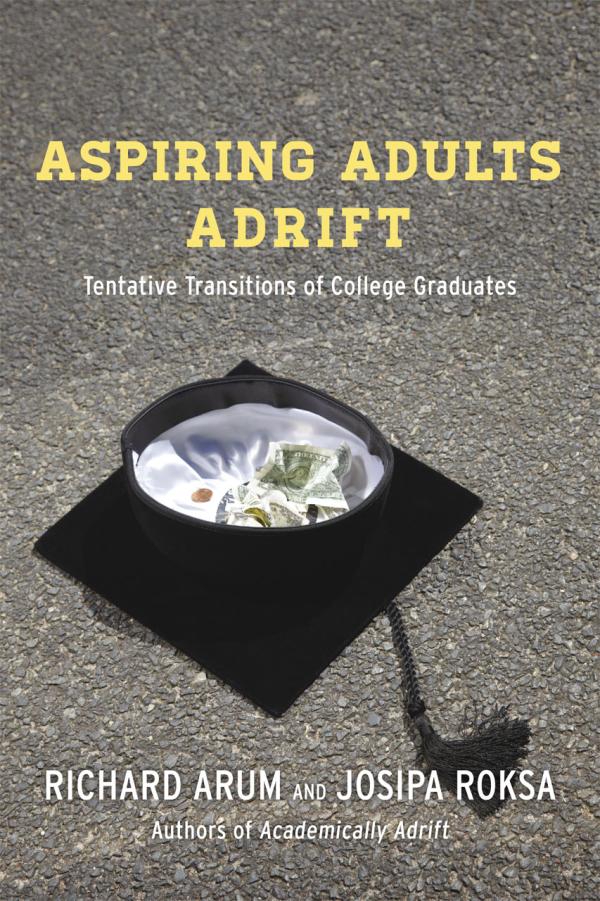
Aspiring Adults Adrift: Tentative Transitions of College Graduates, by Richard Arum, professor in the Department of Sociology at NYU and senior fellow at the Bill and Melinda Gates Foundation, and Josipa Roska, associate professor of sociology and education and associate director of the Center for Advanced Study of Teaching and Learning in Higher Education at the University of Virginia, is the much-anticipated sequel to the authors’ celebrated, often cited, and hotly debated Academically Adrift: Limited Learning on College Campuses (2011), which documented in great detail the academic gains – and stagnation – of some 2,300 students of traditional college age enrolled at a range of 4-year college and universities. In the 2011 report, students were measured on gains in critical thinking, analytical reasoning, and other “higher level” skills taught at college, and the results were not encouraging. The most often-cited findings included: 45 percent of students “did not demonstrate any significant improvement in learning” during the first two years of college; and 36 percent of students “did not demonstrate any significant improvement in learning” over four years of college. The main culprit for students’ lack of academic progress, the authors claimed, is lack of rigor, particularly with respect to critical reading and analytical writing. Aspiring Adults Adrift tracks the same cohort of undergraduates out into the working world into (what should be) adulthood, and documents their struggles to make the transition to traditional adult roles. The results of this follow-up study are no more inspiring: 24 percent of graduates living at home with their parents; 74 percent of graduates receiving financial support (in some cases quite substantial) from their families; and 23 percent of graduates in the labor market who are unemployed or underemployed. Despite these discouraging findings, however, the authors report that these graduates are quite optimistic about their futures, 95 percent of them reporting that they expect their lives to be better than their parents. The authors set out to determine what accounts for this optimism. One compelling argument put forward by Arum and Roksa is a theory given recent prominence by social psychologist Jeffrey Arnett in his notion of “emerging adulthood,” a new demographic identified as the period between eighteen and twenty-five years of age, a period of “self discovery” and “self exploration” during which adolescence is extended; a period in which these aspiring college-educated young adults struggle with identity exploration, instability, and self-focus, often do not live independently, are un- or underemployed, and do not have the income to be financially self-sufficient. Arum and Roksa put the blame, fairly or unfairly, largely on institutions of higher education, and their commitment to “promoting a personnel perspective that celebrate(s) self-exploration and social well-being” (11) – put more bluntly, that caters to the ethos of consumer society, and a broader “cultural adoption of a therapeutic ethic” (9): “both the students and institutions have put such a high focus on social engagement as a key component of higher education that the students have come to believe that it’s those skills and networks that are going to be critically important for their lifelong success.” The evidence, however, suggests otherwise; that the emphasis on social “engagement” at the expense of academic rigor is not achieving these results. “Widespread cultural commitment to consumer choice and individual rights, self-fulfillment and sociability, and well-being and a broader therapeutic ethic leave little room for students or schools to embrace programs that promote academic rigor” (136). It is, the authors contend, ultimately a mutually-reinforcing race to the bottom: “This may reflect the self-centered nature of emerging adulthood,” they write, “or the education system’s decreasing emphasis on preparing individuals for participating in a democratic society. Whatever the underlying causes of this tendency, colleges could adopt a more productive role in the development of values and dispositions for greater engagement with the world at large” (113). In essence, the responsibility is ours, as educators, to reject consumer satisfaction as “a worthy aim for colleges and universities” and “do more to help students develop the attitudes and dispositions they need to reach their aspirations” (134). Wherever the solutions lie to the oft-cited “crisis in higher education,” the authors of Aspiring Adults Adrift have once again contributed significantly to the centrality of educator-led reform.
In 1997, the International Conference on Adult Education (CONFINTEA) crafted the visionary Hamburg Declaration on Adult Learning and Agenda for the Future (UNESCO, 1997) claiming that adult education could contribute to “a world in which violent conflict is replaced by dialogue, a culture of peace based on justice . . . and the creation of a learning society committed to social justice and general well-being” (2-3). What is the value of an idealistic treatise like the Hamburg Declaration? And what does it matter to theological education? Religious education faculty want their teaching to impact student learners and to make a positive difference in their global communities. In an ever-changing world, it is essential that theological educators situate their teaching within the larger sociocultural milieu, recognizing how contextual realities inform and shape both the process and content of adult learning. The Hamburg Declaration demands that educators heed its call and answer its pedagogical implications. Contributors to this current volume were invited to provide a critical analysis of the Declaration’s core themes, particularly in light of political, social, economic, and cultural transformations occurring throughout the world today (4). They chronicle the challenges and opportunities that adult education has had in issues surrounding democracy, women, literacy, work, environment, technology, international policy, and economics – particularly in the years since the declaration was published. While today’s pressing concerns may differ from those in 1997 – for example, the changing nature of work and unprecedented advances in technology – nevertheless, a review of these themes may be instructive for how educators might examine related issues within the context of religious and theological education. The Hamburg Declaration follows from the emphases of adult educators such as Brookfield, Freire, Hooks, and Illich, who affirm the political nature of education. Political and social realities do indeed shape the context of student learning. In cultivating appropriate pedagogical strategies to address the most urgent global issues, Adult Education and Learning in a Precarious Age suggests that we pay heed to the process of framing problems and how these inform solutions. Reiterating the emphasis in Hamburg, co-editor Welton affirms an “ethic of dialogue respectful of the different moral and spiritual options” that is “best able to promote the learning process” (17). Such dialogue is essential as teachers engage students in critical reflection of relevant global issues. Yet, the preliminary analysis by the authors of this volume invites further interaction from an explicitly theological perspective. Although one may question the actual progress made on the concerns identified in the Hamburg Declaration and the role of adult education, this work still serves as timely inspiration for values-driven religious educators who are motivated by the pursuit of truth, justice, and ethics; who long to foster transformative education with impact beyond the classroom. As Nesbit, this volume’s co-editor, asserts, “What is possible is shaped, in part, by our visions” (98).