Resources
Recently, my burden, challenge, and task was to write my father’s obituary. Obituaries typically allow 800 to 1,200 words to depict and describe a person’s entire life. As a writer, this was a daunting task. As a daughter, it was impossible. How to proceed? After reading the obituaries of other family and friends - noting their style and form - I decided my challenge was to cover my father’s 90 years on planet Earth by giving facts and data. I wrote and then checked the accuracy of dates and spelling. The draft read like a file for a candidate for the witness protection program. I scrapped that version and launched into version 2. I soon stopped myself. My flowery prose and long sentences sounded like a rejected Hallmark card. Finally, I sat and considered my father and those mourning him. In this time of homegoing and celebration of life, what did I want to assure my family and community about my father? I decided, with resolute conviction, that I would write Lloyd R. Westfield was a noble man – because he was. The final obituary emphasized his courage, strength, and fortitude of care and concern – all traits of nobility. I told people about his life-long journey as a musician, special education teacher, school psychologist, and churchman. Mostly, I wrote about his passion for his family and for our African American community, and the many ways this love was steadfast. I wrote a good obituary – one that described my daddy as a man who was earnest, dignified, generous, and loving. I knew I was writing a narrative that rarely appears in racist America about Black fathers, yet it is a story that was my every-day, family experience. I wrote his obituary as a gesture of resistance against the distorted portrayals which slot all Black men into a few, flimsy, stereotypic categories assigned to them. Writing Daddy Lloyd’s obituary was an act of compassion for the un-named African American men whose stories of unwavering commitment to their families is un-appreciated, overlooked, or ignored. Writing dad’s obituary has made me consider how I write lectures. I do not often lecture in my courses, but when I do, how do I write what I write? Do I give the data and basic concepts, and then expect students to resonate with cold facts? Do I tell them “my version/my answer” to the question at hand without considering their perspectives, contexts, and situations? Do I spend time choosing vernacular which will invite them into deeper thought and heightened resonance, or simply rely upon the stilted, obsequious vocabulary of the religious academy? Do I lecture to my students the same way I would lecture to colleagues, and then wonder why students are lacking understanding when, in fact, it is my communication skills that are sub-par? Relying upon facts and data as lecture material is thwarted by the adage “Content is cheap.” In the digital age, students have as much or more access to data than the person who is lecturing. It is commonplace for Siri and Google to know more facts with greater accuracy than the person lecturing and for students to consult Siri and several search engines during the lecture. Learning to write lectures which resist multiple un-contextualized definitions, lists of statistics, and block quotes is a challenge worth attempting. The challenge is to design a lecture whose argument is not based upon a contrived or universalist understanding. We must lecture to demonstrate and expose our own modes of epistemological creativity and scholarly meanderings. In other words, lectures are more valuable to students if they are works of art rather than mundane spreadsheets set to words. Writing a good lecture takes time, as it is as much engineering and architecture as it is poetry and prose – a complex enterprise, indeed. My best lectures are those that have been given several times and have the benefit of re-consideration and rewriting after questions, answers, conversation with my students. Like my father’s obituary, any topic warranting the writing of a lecture will be much too large and expansive to be satisfied by one lecture. It behooves the writer to contemplate the needs of the students who will hear, witness, and glean from the lecture. Clarity about the viewpoint of the lecture is as important, or more important, than writing the thesis statement for the lecture. Students do not want the delusion of neutrality; they want to hear your opinion, consider your “take,” and then have the opportunity to resonate and align or disagree, question and debate. Good lectures are evocative, provocative, and able to bring complexity to the learning journey without befuddling the learners. When I consider the better/best lectures I have heard, the lecturer has exposed, claimed, and shared their own thinking rather than hiding behind a mask of non-committal to the material at hand. The lecturer made their own social location clear in the stance they took, rather than claiming some kind of generic essentialism to the work. And the lecturer worked at the craft of words, which helped me know what they were saying while they were saying it. Dense materials can be lectured, but the words to convey the density must be carefully chosen so the listeners, the students, can hear and access the materials. This is not a dumbing-down of material. This is the craft of writing in such a way that there is flow, synergy, and wide thresholds of encounter and discovery. Listeners must be able to see the pieces as well as the whole of a lecture. I suppose it is possible to elevate a poorly written lecture into a good lecture by the way it is performed; however, most of us cannot rely on our performance. Drawing the listener in, locating them in new worlds, challenging them to new perspectives, providing a previously unconsidered rationale – this is the “work” of a well-written lecture. We must not doubt that students are seeking disruption of, and a counter-narrative to, the hegemonic imagination that has been reveled as moral bankrupt at this moment in history. As I have learned from my beloved teacher, Katie Geneva Cannon, the best lectures seek to debunk, unmask, and disentangle so students might have the where-with-all to change the world toward justice. Writing an obituary is not easy. Writing a lecture is not easy. Each, in its own way, asks that we not ignore the tender fragility of our souls, but speak our souls into the room. Each written piece is the work of healing – us and them. The writing is simultaneously truth-telling, soul-speaking, and hegemony-challenging. I exhort you not to write lectures or obituaries if your goals are any less.
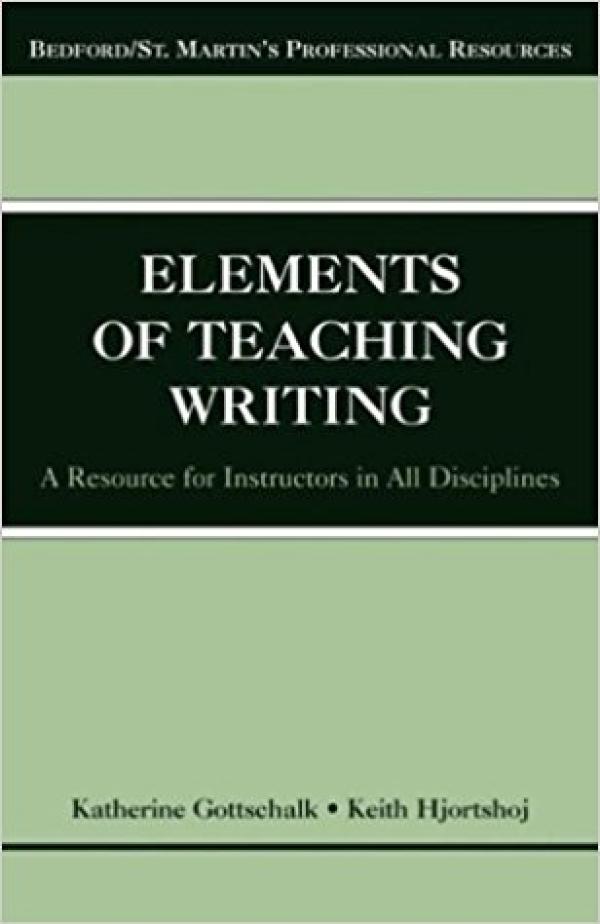
Drawing on their extensive experience training instructors in all disciplines to incorporate writing in their courses, Gottschalk and Hjortshoj provide time-saving strategies and practical guidance in this brief, well-written reference. Accommodating a wide range of teaching styles and class sizes, Elements offers reliable advice about how to design effective writing assignments and how to respond to and evaluate student writing in any course.
One page Teaching Tactic: working in groups to practice reading carefully and write academically.
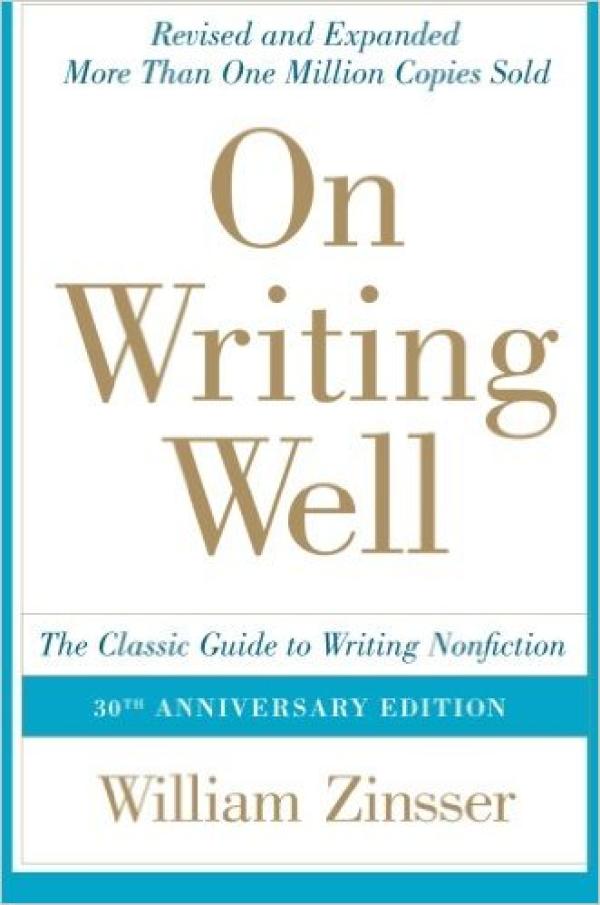
On Writing Well has been praised for its sound advice, its clarity and the warmth of its style. It is a book for everybody who wants to learn how to write or who needs to do some writing to get through the day, as almost everybody does in the age of e-mail and the Internet. Whether you want to write about people or places, science and technology, business, sports, the arts or about yourself in the increasingly popular memoir genre, On Writing Well offers you fundamental priciples as well as the insights of a distinguished writer and teacher. With more than a million copies sold, this volume has stood the test of time and remains a valuable resource for writers and would-be writers. (From the Publisher)
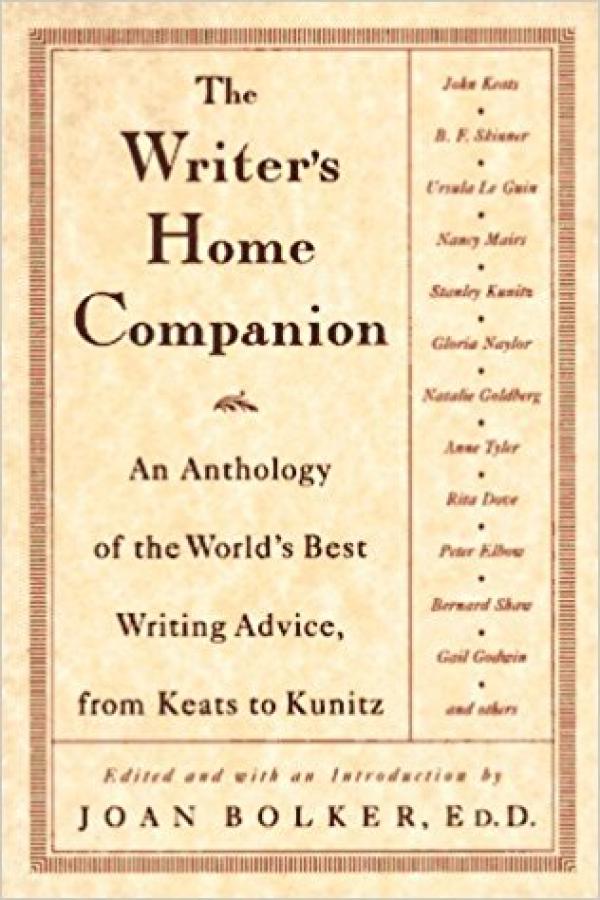
Writing is a solitary sport—but none of us can do it without good company at crucial moments. This spirited collection of inspiring and useful essays and exercises on the craft of writing is the next best thing to having an experienced writer at your side. These twenty-nine pieces, more than half of which have never been published in book form, include selections as unusual and diverse as behaviorist B. F. Skinner's "How to Discover What You Have to Say"; Brett Candlish Millier's investigation of the seventeen drafts of Elizabeth Bishop's poem "One Art"; Ursula Le Guin's "Where Do You Get Your Ideas From?"; Anne Eisenberg's "E-Mail and the New Epistolary Age"; and Nancy Mair's "The Writer's Thin Skin and Faint Heart." Other contributors include Gloria Naylor, Stanley Kunitz, Bernard Shaw, Natalie Goldberg, Anne Tyler, Rita Dove, Peter Elbow, and Gail Godwin. (From the Publisher)
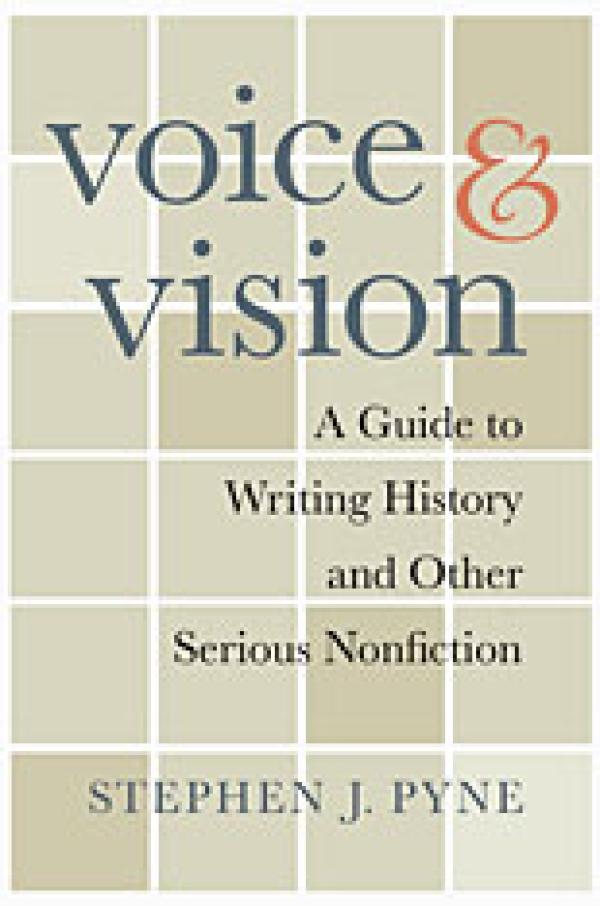
It has become commonplace these days to speak of “unpacking” texts. Voice and Vision is a book about packing that prose in the first place. While history is scholarship, it is also art—that is, literature. And while it has no need to emulate fiction, slump into memoir, or become self-referential text, its composition does need to be conscious and informed. Voice and Vision is for those who wish to understand the ways in which literary considerations can enhance nonfiction writing. At issue is not whether writing is scholarly or popular, narrative or analytical, but whether it is good. Fiction has guidebooks galore; journalism has shelves stocked with manuals; certain hybrids such as creative nonfiction and the new journalism have evolved standards, esthetics, and justifications for how to transfer the dominant modes of fiction to topics in nonfiction. But history and other serious or scholarly nonfiction have nothing comparable. Now this curious omission is addressed by Stephen Pyne as he analyzes and teaches the craft that undergirds whole realms of nonfiction and book-based academic disciplines. With eminent good sense concerning the unique problems posed by research-based writing and with a wealth of examples from accomplished writers, Pyne, an experienced and skilled writer himself, explores the many ways to understand what makes good nonfiction, and explains how to achieve it. His counsel and guidance will be invaluable to experts as well as novices in the art of writing serious and scholarly nonfiction. (From the Publisher)
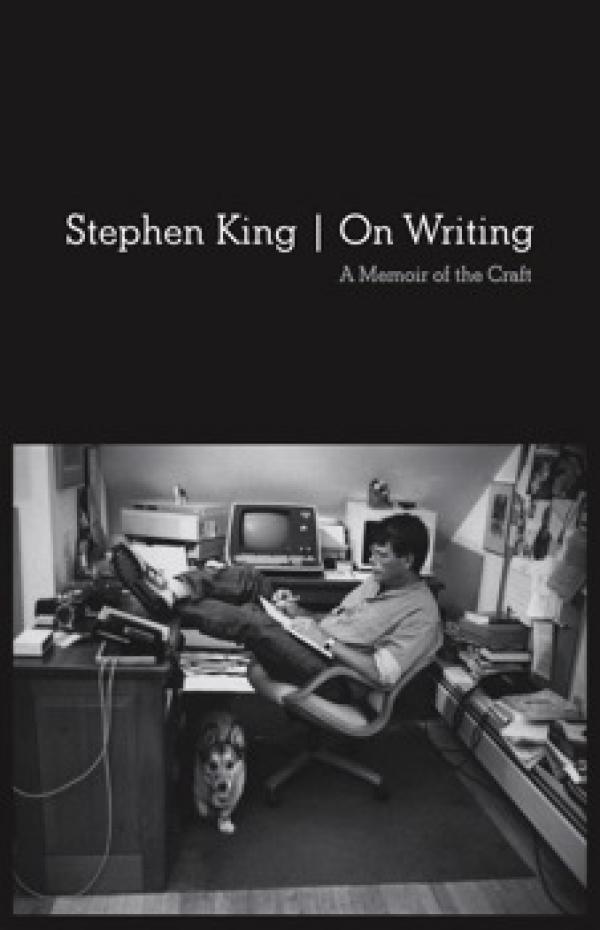
Immensely helpful and illuminating to any aspiring writer, this special edition of Stephen King’s critically lauded, million-copy bestseller shares the experiences, habits, and convictions that have shaped him and his work. “Long live the King” hailed Entertainment Weekly upon publication of Stephen King’s On Writing. Part memoir, part master class by one of the bestselling authors of all time, this superb volume is a revealing and practical view of the writer’s craft, comprising the basic tools of the trade every writer must have. King’s advice is grounded in his vivid memories from childhood through his emergence as a writer, from his struggling early career to his widely reported, near-fatal accident in 1999—and how the inextricable link between writing and living spurred his recovery. Brilliantly structured, friendly and inspiring, On Writing will empower and entertain everyone who reads it—fans, writers, and anyone who loves a great story well told. (From the Publisher)
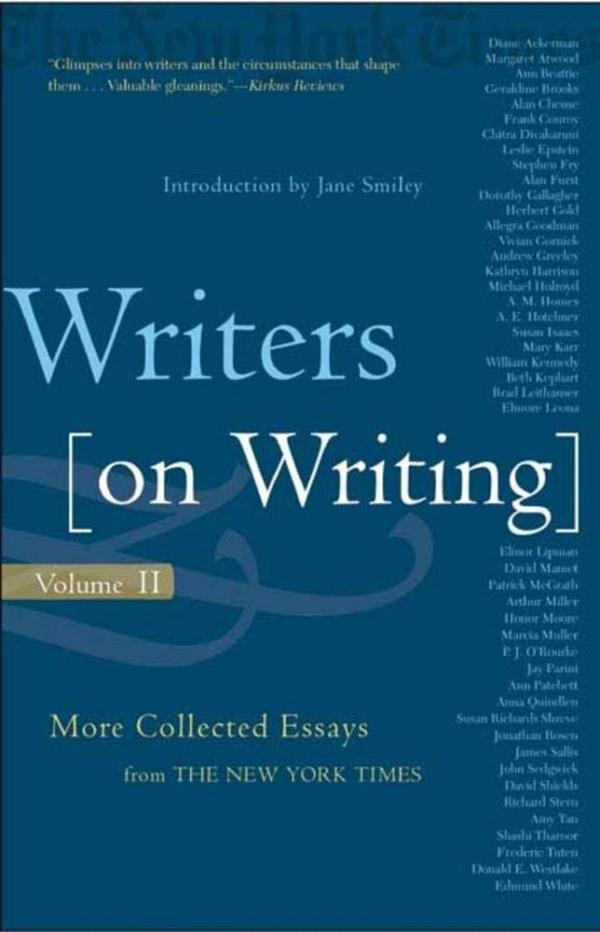
In a second volume of original essays drawn from the long-running New York Times column, Writers on Writing brings together another group of contemporary literature's finest voices to muse on the challenges and gifts of language and creativity. The pieces range from taciturn, hilarious advice for aspiring writers to thoughtful, soul-wrenching reflections on writing in the midst of national tragedy. William Kennedy talks about the intersecting lives of real and imagined Albany politics; Susan Isaacs reveals her nostalgia for a long-retired protagonist; and Elmore Leonard offers pithy rules for letting the writing, and not the writer, take charge. With contributions from Diane Ackerman, Margaret Atwood, Frank Conroy, Mary Karr, Patrick McGrath, Arthur Miller, Amy Tan, and Edmund White, Writers on Writing, Volume II offers an uncommon and revealing view of the writer's world. (From the Publisher)
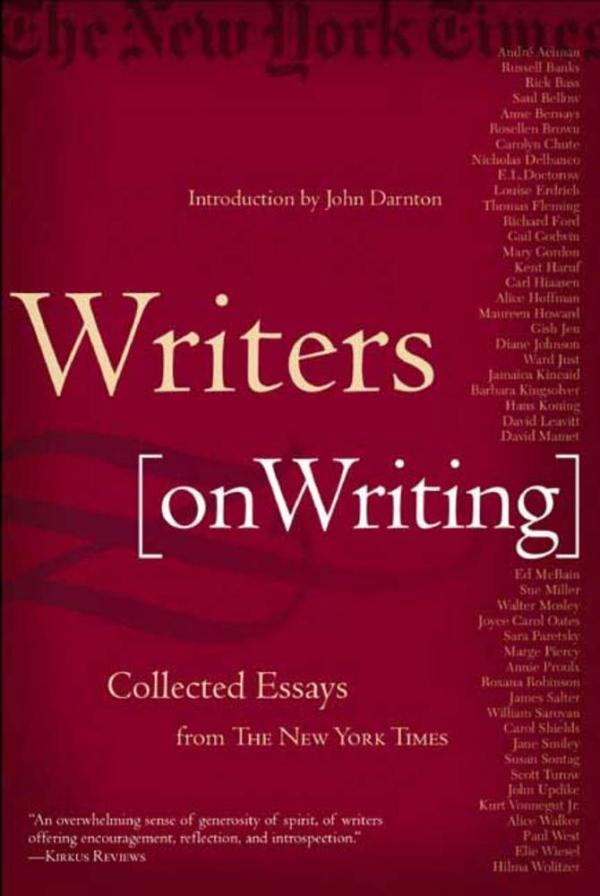
By turns poignant, hilarious, and practical, Writers on Writing brings together more than forty of contemporary literature's finest voices. Pieces range from reflections on the daily craft of writing to the intersection of art's and life's consequential moments. Authors discuss what impels them to write: creating a sense of control in a turbulent universe; bearing witness to events that would otherwise be lost in history or within the writer's soul; recapturing a fragment of time. Others praise mentors and lessons, whether from the classroom, daily circumstances, or the pages of a favorite writer. For anyone interested in the art and rewards of writing, Writers on Writing offers an uncommon and revealing view of a writer's world. Contributors include Russell Banks, Saul Bellow, E. L. Doctorow, Richard Ford, Kent Haruf, Carl Hiaasen, Alice Hoffman, Jamaica Kincaid, Barbara Kingsolver, Sue Miller, Walter Mosley, Joyce Carol Oates, Annie Proulx, Carol Shields, Jane Smiley, Susan Sontag, John Updike, Kurt Vonnegut Jr., Alice Walker, and Elie Wiesel. (From the Publisher)
Three arguments why we need the believing game: to help us find flaws in our thinking, to help us choose among competing claims, and to achieve goals that the doubting game neglects.