Resources
Click Here for Book Review Abstract: Promoting learning among college students is an elusive challenge, and all the more so when faculty and students come from differing cultures. This comprehensive guide addresses the continuing gaps in our knowledge about the role of culture in learning; and offers an empirically-based framework and model, together with practical strategies, to assist faculty in transforming college teaching for all their students through an understanding of and teaching to their strengths. Recognizing that each student learns in culturally influenced ways, and that each instructor’s teaching is equally influenced by her or his background and experiences, the authors offer an approach by which teachers can progressively learn about culture while they transform their teaching through reflection and the application of new practices that enrich student learning. The key premise of the book is that deepening student learning and increasing retention and graduation rates requires teaching from a strengths based perspective that recognizes the cultural assets that students bring to higher education, and to their own learning. Derived through research and practice, the authors present their Model of Cultural Frameworks in College Teaching and Learning that highlights eight continua towards achieving the transformation of teaching, and developing more culturally balanced and inclusive practices, over time. They present techniques – illustrated by numerous examples and narratives – for building on cultural strengths in teaching; offer tips and strategies for teaching through cultural dilemmas; and provide culturally reflective exercises. This guide is intended for all faculty, faculty developers or administrators in higher education concerned with equitable outcomes in higher education and with ensuring that all student cultural groups learn and graduate at the same rates. (From the Publisher)
Click Here for Book Review Latino males are effectively vanishing from the American higher education pipeline. Even as the number of Latinas/os attending college has actually increased steadily over the last few decades, the proportional representation of Latino males continues to slide relative to their Latina female counterparts. The question of why Latino males are losing ground in accessing higher education—relative to their peers—is an important and complex one, and it lies at the heart of this book. There are several broad themes highlighted, catalogued along with the four dimensions of policy, theory, research, and practice. The contributors to this book present new research on factors that inhibit or promote Latino success in both four-year institutions and community colleges in order to inform both policy and practice. They explore the social-cultural factors, peer dynamics, and labor force demands that may be perpetuating the growing gender gap, and consider what lessons can be learned from research on the success of Latinas. This book also closely examines key practices that enable first generation Latino male undergraduates to succeed which may seem counterintuitive to institutional expectations and preconceived notions of student behavior. Using narrative data, the book also explores the role of family in persistence; outlines how Latino men conceptualize fulfilling expectations, negotiate the emasculization of the educational process, and how they confront racialization in the pursuit of a higher education; uncovers attitudes to help-seeking that are detrimental to their success: and analyzes how those who succeed and progress in college apply their social capital – whether aspirational, navigational, social, linguistic, familial, or resistant. While uncovering the lack of awareness at all levels of our colleges and universities about the depth and severity of the challenges facing Latino males, this book provides the foundation for rethinking policy; challenges leaders to institutionalize male-focused programs and services; and presents data to inform needed changes in practice for outreach and retention. (From the Publisher)
Race continues to be a significant issue on campus. Underrepresented college students at low-diversity institutions reported more incidents of stereotyping, discrimination and harassment on campus. Data indicate more hospitable racial climates on the most diverse campuses and suggest that campuses must continue to work to improve intergroup relations even as enrollments begin to change. 
Latina/o College Student Leadership: Emerging Theory, Promising Practice examines Latina/o college student leadership and leadership development in higher education. This edited collection examines emerging frameworks, empirical research, leadership models, essays, and promising practices from the perspectives of scholars, educators, practitioners, and activists. Latina/o student leadership is analyzed through the lens of various institutional contexts (e.g. large research institution, community college, Hispanic-serving institution) as well as diverse intra-institutional contexts (e.g. academic, student organizations, student government, fraternities and sororities). The focus on theory and practice within various contexts, combined with an emphasis on student voice, helps provide deeper insight into how Latina/o students experience leadership in higher education, as well as how to promote and support the leadership development of Latina/o college students. (From the Publisher)

Based on dozens of face-to-face interviews, Sex and the Soul explores the sexual and spiritual lives of today's college students. Donna Freitas crisscrossed the country, visiting a range of America's colleges and universities--from public to private, Catholic to evangelical--to find out what students had to say about these highly personal subjects. Their stories will not only engage readers, but, in many cases, move them with the painful struggles these candid young women and men face. Indeed, the book uncovers aspects of college life that may unsettle some readers, especially parents. Many campuses, for instance, are dominated by the pervasiveness of hook-up culture. Moreover, many students see little connection between sex and religion, even as they seek one between sex and spirituality. Indeed, these observations hold true even at Catholic schools. Only at evangelical colleges is religion an important factor when deciding whether or not to engage in sex. But Freitas's research also reveals that, even at secular schools, students are not comfortable with a culture of casual sex, and that they do want spirituality, at least, if not also religion, to speak about what they should do and who they should try to be--not just what they should avoid doing. Sex and the Soul will offer readers the chance to hear college students speaking honestly about extremely sensitive topics, in a book that will be of great interest to students, parents, clergy, teachers, and anyone who wants to know what's happening on today's college campuses. (From the Publisher)
Click Here for Book Review Abstract: As a result of transnational migration, many countries are becoming increasingly ethnoculturally diverse, creating both new opportunities and challenges for practices of adult education. This volume examines the changing nature of adult education in the age of increased transnational migration and: • synthesize the latest research, policies, and practices in transnational migration and adult education, • examines the larger historical and structural issues of race and gender in immigration and newer theories, such as diaspora studies, in relation to adult education, and • provides examples and recommendations for enhancing socially just and inclusive adult education environments for newcomers. Transborder injustices and multiple dimensions of social justice permeate immigration dynamics and challenge adult educators to rethink social justice in a transnational age. This is the 146th volume of the Jossey Bass series New Directions for Adult and Continuing Education. Noted for its depth of coverage, it explores issues of common interest to instructors, administrators, counselors, and policymakers in a broad range of education settings, such as colleges and universities, extension programs, businesses, libraries, and museums. (From the Publisher)
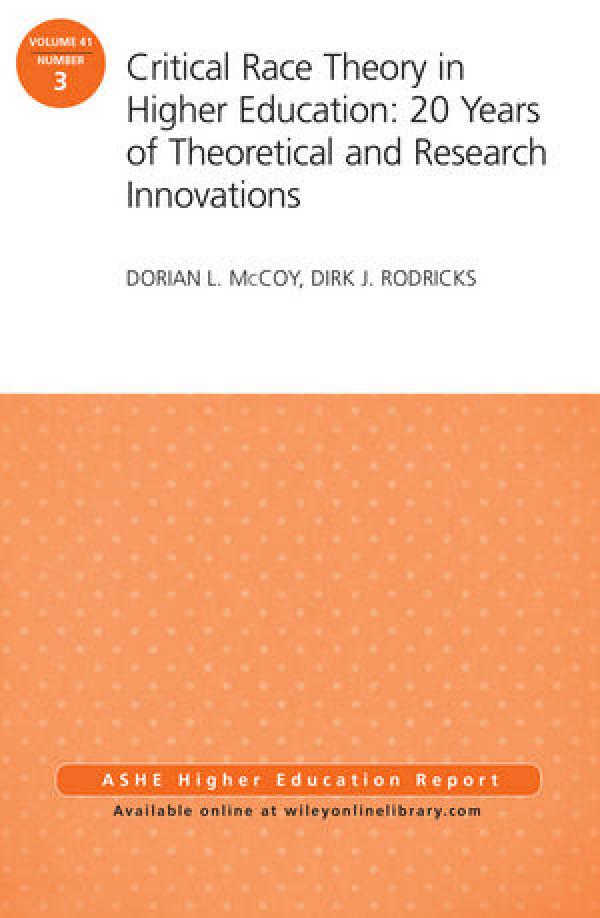
">Click Here for Book Review Abstract: Critical race theory (CRT) was introduced in 1995 and for almost twenty years, the theory has been used as a tool to examine People of Color’s experiences with racism in higher education. This monograph reviews the critical race literature with a focus on race and racism’s continued role and presence in higher education, including: • legal studies and history, • methodology and student development theory, • the use of storytelling and counterstories, and • the types of and research on microaggressions. The goal of the editors is to illuminate CRT as a theoretical framework, analytical tool, and research methodology in higher education. As part of critical race theory, scholars and educators are called upon to extend their commitment to social justice and to the eradication of racism and other forms of oppression. This is the 3rd issue of the 41st volume of the Jossey-Bass series ASHE Higher Education Report. Each monograph is the definitive analysis of a tough higher education issue, based on thorough research of pertinent literature and institutional experiences. Topics are identified by a national survey. Noted practitioners and scholars are then commissioned to write the reports, with experts providing critical reviews of each manuscript before publication. (From the Publisher)
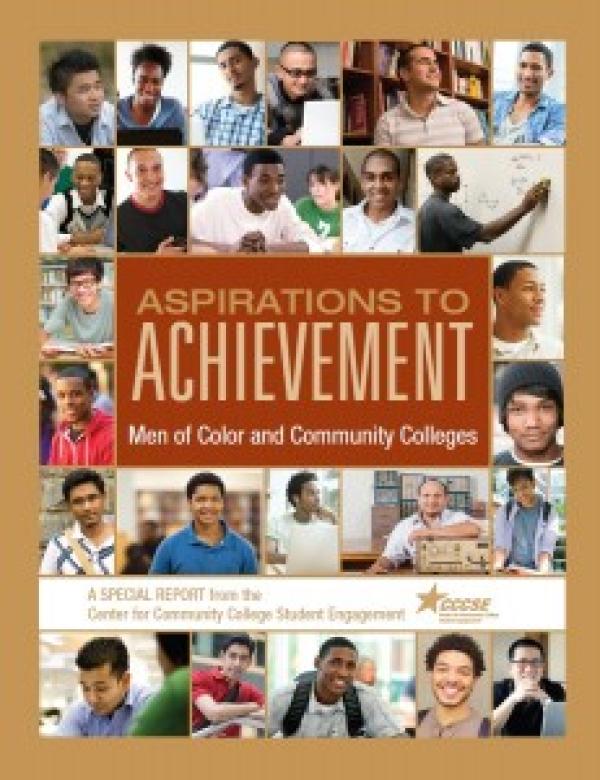
This report shares data related to readiness, student engagement, performance, and the achievement gap. The experience of stereotype threat is addressed and heard from the voices of students.  
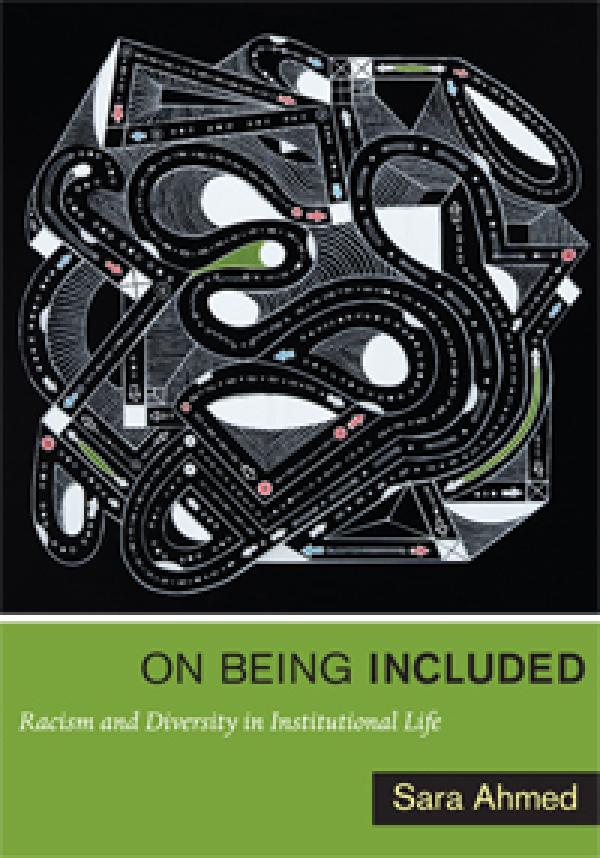
Click Here for Book Review Abstract: What does diversity do? What are we doing when we use the language of diversity? Sara Ahmed offers an account of the diversity world based on interviews with diversity practitioners in higher education, as well as her own experience of doing diversity work. Diversity is an ordinary, even unremarkable, feature of institutional life. Yet diversity practitioners often experience institutions as resistant to their work, as captured through their use of the metaphor of the "brick wall." On Being Included offers an explanation of this apparent paradox. It explores the gap between symbolic commitments to diversity and the experience of those who embody diversity. Commitments to diversity are understood as "non-performatives" that do not bring about what they name. The book provides an account of institutional whiteness and shows how racism can be obscured by the institutionalization of diversity. Diversity is used as evidence that institutions do not have a problem with racism. On Being Included offers a critique of what happens when diversity is offered as a solution. It also shows how diversity workers generate knowledge of institutions in attempting to transform them. (From the Publisher)
Click Here for Book Review Abstract: Higher education is facing unprecedented change as today’s graduates need particular skills, awareness, and knowledge to successfully navigate a complex and interconnected world. Higher education institutions and practitioners are under pressure to be attentive to internationalization initiatives that support increasingly diverse student populations and foster the development of global citizenship competencies which include, “problem-defining and solving perspectives that cross disciplinary and cultural boundaries” (Hudzik, 2004, p. 1 as cited in Leask & Bridge, 2013). Internationalizing Higher Education: Critical Collaborations across the Curriculum is for current and future faculty, student affairs staff, and administrators from diverse disciplinary, institutional, and geographic contexts. This edited volume invites readers to investigate, better understand, and inform intercultural pedagogy that supports the development of mindful global citizenship. This edited volume features reflective practitioners exploring the dynamic and evolving nature of intercultural learning as well as the tensions and complexities. Contributors include institutional researchers, directors and key implementers of EU/Bologna process in Poland (one of the newest members and one that is facing unprecedented change in the diversity of its students), international partners in learning abroad programs, and scholars and instructors across a range of humanities, STEM, and social sciences. (From the Publisher)