Resources
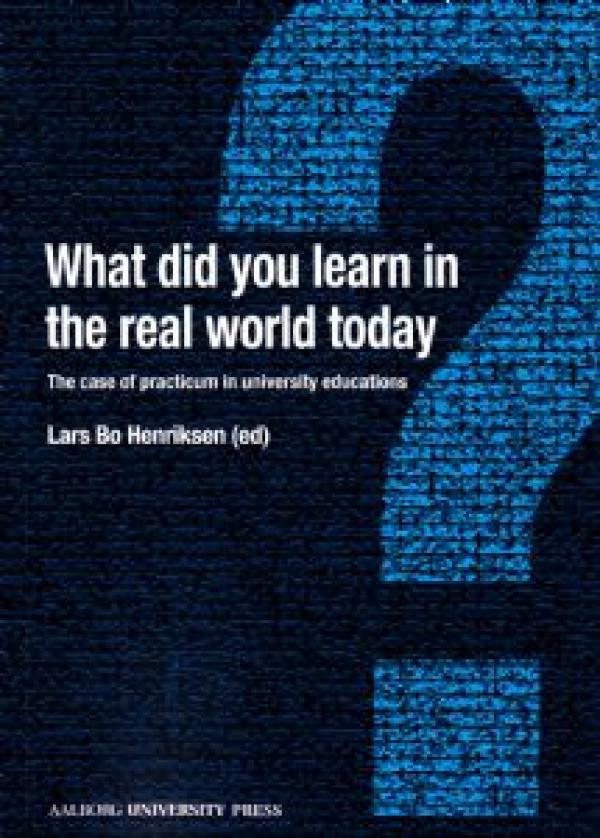
Click Here for Book Review Abstract: Practice, praxis, traineeship, internship, or practicum - these are all names for the specific arrangements where students from universities engage in real life experiences; in arrangements where they leave the secure tranquility of the university and enter into the chaotic world of work. Practicum is a very good way of learning, and it can be very interesting for all parties involved. The students appreciate it, even if it is cumbersome, frustrating, and requires a lot of work - work that is different from what they know in their previous encounters with the education system. This book asks a simple question in relation to practicum, paraphrasing Tom Paxton's song: What Did You Learn in the Real World Today? The question is asked without the irony of Paxton's original one, in order to find out what is learned in the practicum. The chapters in this book shed some light on this simple question. The question is confronted from philosophical and pedagogical perspectives, while investigating a number of cases of students' learning experiences in the real world. (From the Publisher)
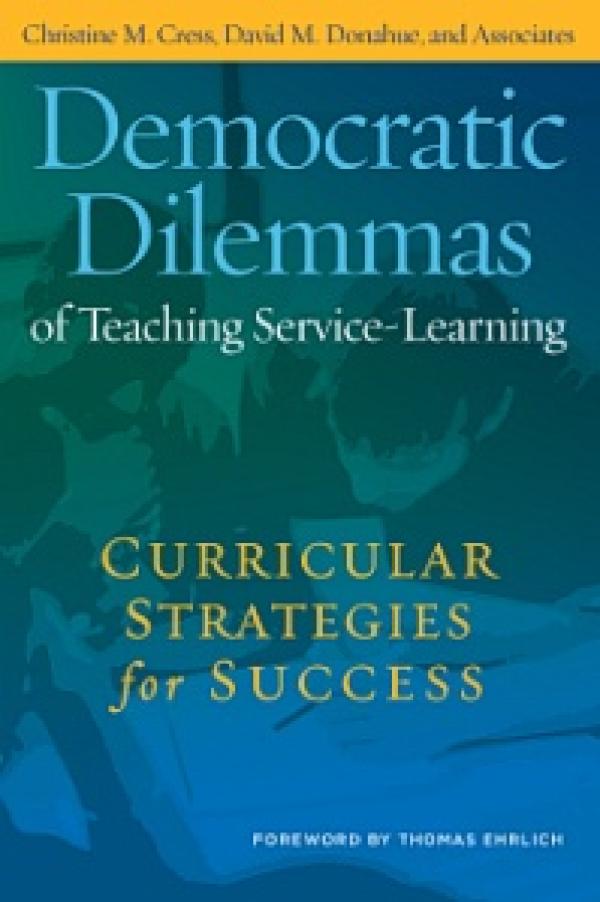
A college student wants to lead a campaign to ban a young adult novel from his child’s elementary school as his service-learning project in a children’s literature course. Believing the book is offensive to religious sensibilities, he sees his campaign as a service to children and the community. Viewing such a ban as limiting freedom of speech and access to information, the student’s professor questions whether leading a ban qualifies as a service project. If the goal of service is to promote more vital democratic communities, what should the student do? What should the professor do? How do they untangle competing democratic values? How do they make a decision about action? This book addresses the teaching dilemmas, such as the above, that instructors and students encounter in service-learning courses. Recognizing that teaching, in general, and service-learning, in particular, are inherently political, this book faces up to the resulting predicaments that inevitably arise in the classroom. By framing them as a vital and productive part of the process of teaching and learning for political engagement, this book offers the reader new ways to think about and address seemingly intractable ideological issues. Faculty encounter many challenges when teaching service learning courses. These may arise from students’ resistance to the idea of serving; their lack of responsibility, wasting clients’ and community agencies’ time and money; the misalignment of community partner expectations with academic goals; or faculty uncertainty about when to guide students’ experiences and when direct intervention is necessary. In over twenty chapters of case studies, faculty scholars from disciplines as varied as computer science, engineering, English, history, and sociology take readers on their and their students’ intellectual journeys, sharing their messy, unpredictable and often inspiring accounts of democratic tensions and trials inherent in teaching service-learning. Using real incidents – and describing the resources and classroom activities they employ – they explore the democratic intersections of various political beliefs along with race/ethnicity, class, gender, ability, sexual orientation, and other lived differences and likenesses that students and faculty experience in their service-learning classroom and extended community. They share their struggles of how to communicate and interact across the divide of viewpoints and experiences within an egalitarian and inclusive environment all the while managing interpersonal tensions and conflicts among diverse people in complex, value-laden situations. The experienced contributors to this book offer pedagogical strategies for constructing service-learning courses, and non-prescriptive approaches to dilemmas for which there can be no definitive solutions. (From the Publisher)
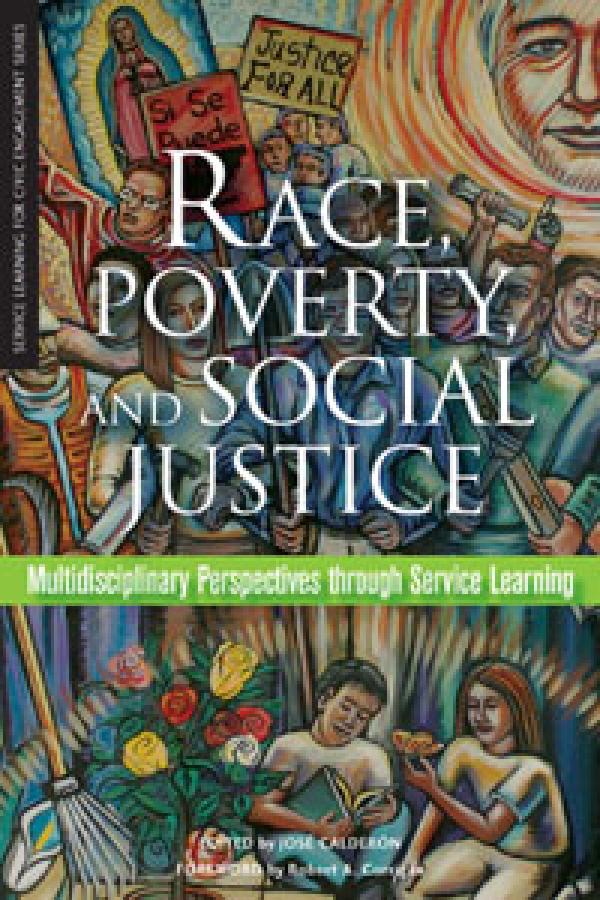
This volume explores multiple examples of how to connect classrooms to communities through service learning and participatory research to teach issues of social justice. The various chapters provide examples of how collaborations between students, faculty, and community partners are creating models of democratic spaces (on campus and off campus) where the students are teachers and the teachers are students. The purpose of this volume is to provide examples of how service learning can be integrated into courses addressing social justice issues. At the same time, it is about demonstrating the power of service learning in advancing a course content that is community-based and socially engaged. To stimulate the adaptation of the approaches described in these books, each volume includes an Activity / Methodology table that summarizes key elements of each example, such as class size, pedagogy, and other disciplinary applications. Click here for the table to this title. (From the Publisher)
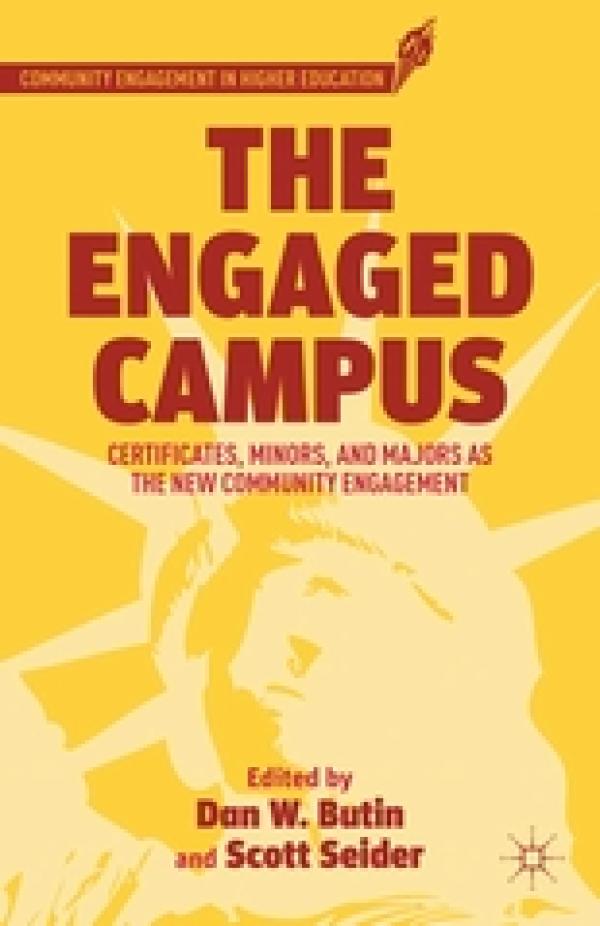
The Engaged Campus offers a set of emerging best practices and articulation of critical issues for faculty and administrators committed to developing, strengthening, or expanding majors or minors in community engagement at their respective institutions. (From the Publisher)

The Complete Guide to Service Learning is the go-to resource in the fast-growing field of service learning. It is an award-winning treasury of service activities, community service project ideas, quotes, reflections, and resources that can help teachers and youth workers engage young hearts and minds in reaching out and giving back. Author, and internationally known service learning expert, Cathryn Berger Kaye presents service learning—its importance, steps, essential elements, and challenges—within a curricular context and organized by theme. This new revised and updated second edition maintains the easy-to-use format of the original and is enhanced to reflect the most up-to-date information on service learning programs and pedagogy. Benefits include: • A blueprint for service learning, from getting started to assessing the experience • Integration of K–12 service learning standards new! • Inspiring quotations, background information and resources, preparation activities, real-life examples and community service project ideas that have worked for other teachers • 13 thematic chapters (including 2 new themes) covering topics commonly selected for service learning projects: • AIDS Education and Awareness • Animal Protection and Care • Elders • Emergency Readiness new! • The Environment • Gardening • Healthy Lives, Healthy Choices new! • Hunger, Homelessness, and Poverty • Immigrants • Literacy • Safe and Strong Communities • Social Change: Issues and Action • Special Needs and Disabilities • Hundreds of real-life field-tested service learning projects, including dozens of new projects • Ideas for fortifying service learning programs by incorporating global literacy and creating a culture of service new! • A CD-ROM with over 200 pages of forms and bonus materials including: • All of the planning and tracking forms from the book, many customizable  • 39 sample planning templates for all service learning themes at each grade level • 10 original essays written by experts in the field • More than 300 additional book recommendations • 22 author interviews, including new interviews with authors Laurie David, Allan Stratton, Cynthia Lord, Jordan Sonnenblick, Tony Johnston, Kathe Koja, Danica Novgorodoff, Dana Reinhardt, Janet Tashjian, Deborah Ellis, Sonia Levitin, Ellen Senisi, and more! “Bookshelf” sections describe hundreds of books that offer teachable moments about community service, responsibility, caring, and helping, as well as ways to encourage discussion and make the lesson last. Each of the more than 300 annotated book listings helps combine literature and service learning. (From the Publisher)
Service-learning is an exciting pedagogy and field of study, offering insight into how academic study and community engagement blend to create social change. In its most traditional conceptualization, servicelearning activities typically manifest within communities where outside individuals address a need. Service learning is purported to have a transforming effect on individual student perspectives by providing students the opportunity to interact with people and enter into situations that allow students to test their predisposition towards others. However, the literature on the impact of service-learning on participants' acceptance of diversity and development of open-mindedness reports mixed outcomes. The purpose of this book is to explore cultural tensions and dynamics within the field of service-learning. It is not meant to be an exhaustive review of the interplay between culture and service learning, but rather a starting point for an ongoing conversation about how this complex topic impacts the field. In 18 chapters, educators, students, and administrators investigate the cultural values of service-learning itself and the tensions created when this is at odds with the values of others within K-12 and higher education in the United States and abroad. Authors include community organization representatives, researchers, directors of offices of community engagement, university administrators, junior and senior faculty, and former service-learning undergraduate students. Submissions reflect a range of genres, including theoretical / conceptual pieces, position papers, case studies, and other traditional academic essays, challenging how students and community members are affected by the cultural tensions within service-learning engagement. (From the Publisher)
In this paper, I suggest that community-based learning can act as a “public space” for the exchange of religious and non-religious identities. By providing a space for the collaboration between religiously-affiliated Universities and non-religiously affiliated community partners, community-based learning offers the opportunity for the negotiation of what civic engagement means in a pluralistic society. This exchange can inform the conversation on the public role of religion by offering an example of how religious and secular communities can discover a common language through the realization of shared interests.
This article explores the educational concept of experiential learning, particularly in terms of service learning and situated learning. It proposes an alternative definition of an academic learning community, namely the role of primary social relationships as God-given contexts for learning. It concludes with practical application of the enormous potential for accomplishment of educational objectives through situated learning.
Education partnerships are central to – and often a requirement of – most education reform initiatives promoted by state and local governments, by foundations, and by business funders. Many fail for failure to understand the dynamics of their complex relationships. This book provides insights and guidance to enable prospective and existing education partners to develop answers to the questions that are critical to success: Why engage in this partnership? How can you communicate the potential benefits of partnership to motivate teachers, faculty, administrators, and community members? How do you select the best organizational structure and procedures for a partnership? How can you maintain open, deliberative discussion while respecting different histories and cultures? How can you produce compelling evidence that the partnership is worthwhile? Based on their observation of a five-year-long publicly funded partnership, research data, and the literature, the authors identify the principles that they consider critical to answering these questions. The authors do not minimize the differences and complexities inherent in partnership work, because they believe that doing so would be to present coherence and homogeneity where none exists. Instead, they seek to make evident how these principles underlie many different partnership situations. Thus, rather than presenting a package of best practices, or a cookie-cutter approach, this book presents the organizational principles for planning and implementing education partnerships, along with sets of strategies for working through them. The authors present the diagnostic tools for undertaking a deliberate and research-based approach to planning, designing, and managing a partnership. By surfacing participants’ often-differing motivations, and the practices and assumptions they bring to the table, the book provides the foundation for developing a constructive relationship. In scope, the book extends beyond school-university partnerships to include schools’ collaboration with state and local governments, nonprofit organizations, and the business sector. (From the Publisher)
The Serve Program at Ignatius University combines academic study of theology with a year-long community service project focused on combating poverty. An analysis of the Serve Program during the 2008-09 academic year revealed that participating students demonstrated a significant increase in their interest in theology; a greater desire to enroll in theology coursework; and a deeper interest in theology than classmates not participating in the service-learning program. Interviews with Serve participants revealed that their exposure to poverty and inequality through their service placements led them to read the program’s assigned theological texts with a particular focus on the authors’ messages about individual and social responsibility for struggling fellow citizens.