Resources
Numerous studies have chronicled students lack of trust in large social institutions, declining interest in politics, and decreasing civic skills. This book is a comprehensive guide to developing high-quality civic engagement experiences for college students. The book defines civic engagement and explains why it is central to a college education. It describes the state of the art of education for civic engagement and provides guidelines for designing programs that encourage desired learning outcomes. In addition, the book guides leaders in organizing their institutions to create a campus-wide culture of civic engagement. (From the Publisher)
This monograph examines what educational research reveals about five educational practices: first-year seminars, learning communities, service learning, undergraduate research, and capstone experiences. The authors explore questions such as: What is the impact on students who participate in these practices? Is the impact the same for both traditional students and those who come from historically underserved student populations? The monograph includes a foreword by George D. Kuh, High-Impact Practices: Retrospective and Prospective, and recommendations for how to improve the quality of high-impact practices. (From the Publisher)
This essay explores intersections among Jesuit, Quaker, and feminist theologies and pedagogies of social justice education in order to propose and elaborate an innovative theoretical and theological framework for experiential learning in religious studies that prioritizes relationality, called erotic education. This essay then applies the relational rationale of erotic education to interpret the author's design of a service or community-based learning component in a course about contemporary U.S. Christian social justice movements, offered in both religiously-affiliated and religiously-inspired liberal arts colleges. The course case study not only chronicles the author's evolving pedagogical praxis as a feminist theologian teaching in Jesuit and Quaker institutions, but also is grounded in how the author's course embodies erotic education, that is, how specific objectives, learning practices, and assignments build and bolster relationships among students (in peer-to-peer small groups inside and outside the classroom) as well as among students and their community sites. In developing this framework and implementing it within this particular course, the author argues that erotic education emphasizes the naming and training of our existential desires for interpersonal relations in order to upbuild not only the individual but also the common good.
This book offers a comprehensive rethinking of the theory and practice of service-learning in higher education. Democratic and community engagement are vital aspects of linking colleges and communities, and this book critically engages the best practices and powerful alternative models in the academy. Drawing on key theoretical insights and empirical studies, Butin details the limits and possibilities of the future of community engagement in developing and sustaining the engaged campus. (From the Publisher)
Educational theorist Richard Kiely highlights the central importance of “high intensity dissonance” in successful international service-learning. This essay applies Kiely’s model of dissonance and transformative learning to Intercordia, an international service-learning program offered at the University of St. Michael’s College and the University of Toronto, in partnership with the Non-Governmental Organization (NGO) Intercordia Canada. By placing its students in situations of significant vulnerability and weakness, the Intercordia program attempts to problematize familiar assumptions about the otherness of oppressed persons and thereby encourage an authentic sense of belonging across boundaries of difference. The results, as reported by participants in the program, are quite profound. At the same time, the program design invites critical questions about how, and to what extent, such transformative experiences of dissonance should be scripted for students as an expected and desired result of their international service.
Praise for Partnerships for Service-Learning "These case studies highlight the critical importance of reciprocity in campus-community partnerships. It is through the two-way interchange of knowledge and assets that service-learning achieves its democratic potential as a pedagogy with the power to transform education, campuses, and communities. The examples provided here offer rich and sophisticated models that will be invaluable for community as well as academic leaders committed to deepening the partnering process." — John Saltmarsh, professor of higher education administration and director, New England Resource Center for Higher Education, University of Massachusetts, Boston; and Edward Zlotkowski, professor of English, Bentley University "This practical guide explores the power and pedagogy of K–12 school and university partnerships. This educational 'how-to' is a superior resource and must-read for every school and community leader across the country." — Arlene C. Ackerman, superintendent of schools, Philadelphia School District "This is a rare book about partnerships. It provides testimony to the diversity of real-world problems that can be addressed though service-learning partnerships between K–12 and higher education. Required reading for future teachers, educators, and community leaders interested in building campus-community relationships that embrace collaboration and shared decision-making." — Ramon C. Cortines, superintendent of schools, Los Angeles Unified School District "This is a terrific set of diverse yet complementary case studies illustrating the great potential of P–16 educational partnerships benefitting allparticipants. This book helps explain why service-learning works so well for so many schools, universities, and community-based organizations." — Shelley H. Billig, vice president, RMC Research Corporation?? (From the Publisher)
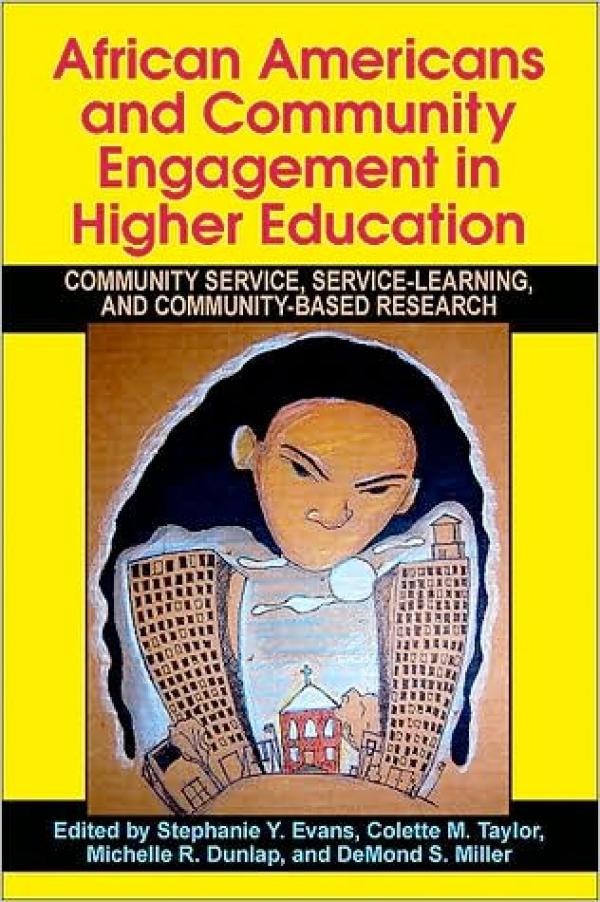
This book discusses race and its roles in university-community partnerships. The contributors take a collaborative, interdisciplinary, and multiregional approach that allows students, agency staff, community constituents, faculty, and campus administrators an opportunity to reflect on and redefine what impact African American identity-in the academy and in the community-has on various forms of community engagement. From historic concepts of "race uplift" to contemporary debates about racialized perceptions of need, they argue that African American identity plays a significant role. In representing best practices, recommendations, personal insight, and informed warnings about building sustainable and mutually beneficial relationships, the contributors provide a cogent platform from which to encourage the difficult and much-needed inclusion of race in dialogues of national service and community engagement. "This book validates the African proverb 'it takes a village to raise a child.' The topics are right on the mark and highlight the benefits of service-learning as an instrument of individual and community involvement and empowerment." - Festus E. Obiakor, coeditor of Culturally Responsive Literacy Instruction (From the Publisher)
The Guide to Service-Learning Colleges and Universities is a wonderful resource for college-bound students interested in making a difference in their communities and gaining valuable hands-on experience while earning college credit. All institutions chosen for the Guide excel at providing students genuine service-learning experiences and programs. The Guide contains a complete explanation of service-learning using licensed information from the National Service-Learning Clearinghouse, colorful articles from colleges and universities around the country, and exciting examples of how students from New York to Los Angeles and everywhere in between are becoming involved. Also included is a directory of all selected schools, admissions and service-learning contact information, easy-to-read college profiles, college fast facts, and course spotlights highlighting specific academic courses. Everything students need to know about what service-learning is, how they can get involved, and which colleges excel at service-learning is found in this comprehensive student-friendly guidebook. (From the Publisher)

In Safe Hands describes the evolution of voluntary service learning for teachers in the developing world. Hope One World (HOW), a charity of Liverpool Hope University, has provided needs-based service education for teachers in SOS schools in Africa, India and Sri Lanka for 20 years. The book is both uplifting and practical. Written by staff and students who took part in projects, it describes the inception of the charity and how it has developed. Each chapter starts with a pen portrait of a person who played a key role in a project, then discusses common issues such as: the collaborative development with Liverpool Hope staff of courses by the overseas teachers for their own staff; the opportunity for students to live in a safe environment for a month with the children and staff in schools in Africa, India or Sri Lanka and have a structured experience of work placement; accountability to the main funding agency; and HOW's passionate engagement with issues of social justice. Co-published by Trentham with Hope One World, winner of the Queen's Anniversary Award for service learning. (From the Publisher)
In The Spirit of Service , the contributing authors explore the intersection of faith, service, and social justice in higher education. Reflecting upon the role that higher education plays in preparing future generations of citizens and leaders, this book asserts that spirituality and values necessarily involve one's person—and that educators must begin to connect student learning with the human experiences of faith, service, and commitment to social justice. Each of the authors describes a teaching experience in order to critically reflect upon the divide in academic culture between responsible, rigorous, intellectual competence and personal values. The authors' lessons in success and failure are meant to provide guidance for all institutions that are committed to preparing young students to lead lives of leadership and civic engagement. Divided into three parts, this book: * Explores the meaning, practice, and implications of religions or spiritually motivated service * Offers specific examples from faculty for integrating faith or spiritual perspectives with service, including what has worked and what dilemmas remain * Focuses on specific dilemmas and implications for engaging in service for social justice Containing a wealth of practical suggestions and strategies, The Spirit of Service represents a conversation in progress; it is an attempt to understand how to help undergraduates integrate service and spirituality for the purpose of social justice. (From the Publisher)