Resources

For the last two years, I have taught a required class on evangelism for ordination at the United Methodist Church at Asbury Theological Seminary on the Orlando Campus during the summer and January terms. The course is structured as an intensive class delivered over five days. Over these two years, I have never had an African American student in class. For example, in the J-Term of 2015, there were 11 white students: 9 males and 2 females. In the summer of 2015, there were 22 students: 12 males (2 Kenyans) and 10 females. In the J-term of 2016, there were 23 students: 19 males (2 Filipinos) and 4 females (1 Chinese). In the summer of 2016, there were 26 students: 12 males and 14 females (1 Chinese-American female). Given this, I have been surprised by the fact that the student demographics at the Orlando Campus is 24% Latino/a and 28% African American. Maybe it is due to the southern UMC as it is known for its lack of pastoral diversity. The last module of the class is devoted to racial reconciliation and mission. Students read “Evangelization and Politics: A Black Perspective” by James Cone. As you could expect, this is the module when silence becomes unbearable as students wrestle with evangelicalism and white privilege. It is also the moment when all the students have “a black friend” or when “my roommate in college was black.” The superficiality of our conversations has been frustrating and such frustration grew to the point that I considered changing the last module to something else. It was at this point that I sought the help of a respected colleague. His suggestion was for me to change gears and examine my own experience of discrimination and history as a brown Puerto Rican in the context of North American imperialism and colonization. Using the new approach, I replaced Cone’s article with primary sources of Protestant missionaries to Puerto Rico in the early 1900s, a sociological article on “the Puerto Rican Problem,” and excerpts from Gloria Anzaldua’s La Frontera. By contextualizing the history of race relations between white North Americans, Puerto Ricans, and other Latinas, I was able to deconstruct the disregarding ethos of racism that is embedded in a systemic structure of oppression in the United States. In light of evangelicalism’s insistence of individual responsibility, confronting racism as a systemic issue brought its own complexities to our conversations. Students were more engaged in discussing issues of race and oppression in the historical context of mission and colonialism. However, the closer we got to contemporary issues, especially immigration, the tone of the conversation changed and the discomfort around ethnocentrism and negative views on immigration was palpable. A good example was when a white male student in the summer of 2016 recited the talking points of the Republican Party to the class. He referred to the negative impact on immigration on crime, employment, and US culture in general based on language and customs. To everyone’s surprise, because she never spoke before in class, only the female Chinese-American student confronted the speaker by telling her family’s story of immigration. Her mother came to the US with a temporary work permit, but after it expired she stayed. As years passed, she married an American man and became a citizen more than a decade after her visa expired. She confronted the white male student and the whole class with her story and showed the ethnocentrism and stereotypes embedded in US society against immigrants. I learned that even though I am in complete solidarity with African Americans in their quest for justice and respect, students saw me as a Puerto Rican who does not embody the African American experience. On the other hand, when I embody my experience and the history of racism against Latino/a people in the US, the perception and reaction in the classroom change. At the end, we are contextual beings and sometimes the best way to teach others about race is not through theories, but through our own experience with racism. What triggers public opposition to immigration? Is immigration a racial issue? What triggers racial resentment against undocumented immigrants? What is the value of the implementation of autobiography in the classroom? How should professors move from autobiographical data to theoretical articulations in the classroom? How can professors help students take responsibility for their assumptions of the other in a safe manner? Is this desirable, or it would a shock approach to student assumptions be better?
Have you noticed? The lexicon of the American mainstream media has shifted. Before the campaign season, the news only sparingly discussed notions of race. Any allusion to race was vague and superficial. Reporting of race was primarily reserved for assuring the public that criminals are either African American or Latino/a. Whiteness was rarely mentioned. White supremacy, which saturates US society, was mentioned even less. Any media analysis about the identity politics of race, class, gender, or religion was typically reserved for the interviewee to initiate or was the purview of “liberal” media. Occasionally, “the Black view” (as if there is the “normal viewpoint,” and the sole counterpoint is “the Black view”) would be brought into the conversation in the month of February or when discussing issues of “the inner city.” Overt acts of anti-Semitism or blindingly vivid acts of racial hatred had to be the headline story in order for a reporter to mumble an analysis which suggested hegemonic forces might be operative in US society. Most mainstream reporting treated each act of violence as if it were an isolated event. Hardly ever was there analysis and dialogue that suggested oppression is systemic, historic, and ongoing in our beloved democracy. Then it happened... The presidential campaign brought such bold, constant, and unrelenting hate-speech, outrageous acts of demeaning other-ed human beings, and outright, unfettered arrogance that the media was forced to change the run-of-the-mill lexicon by adding words usually heard in my graduate classroom setting. Reporting accurately so confounded the media that a different vocabulary had to be deployed. Words used sparingly, or if at all, are now common-speak in the public arenas: xenophobia, patriarchy, misogyny, bias, islamophobia, homophobia, prejudice, racism, sexism, classism and alt-right swirl through the everyday news reporting. My ear is refreshed to hear my preferred analytical vocabulary finally in the public and being nationally engaged. My heart is sick knowing that if these words are so commonplace and routine in the democratic dialogue of a pluralistic society, then we are near a brink of unprecedented social upheaval. I am, in an ironic way, appreciative that the national discourse was so overwhelmed with the need to describe the in-your-face hatred that it reached for important words. Pressing this new lexicon into extended service is paramount to our national dialogue on freedom and government. Until now, twenty-first century forms of racism, sexism, classism and heterosexism had morphed into expressions that were palatable to those whose highest values are niceness, pleasantry, and conformity. I am hoping this new lexicon is sparking a needed curiosity and that the new lexicon will assist persons to label their oppressive experiences for which they previously could not name but under which they suffer. Succinct naming of our fears and anxieties as well as interrogation of the structured hatred that perpetuates the “isms” is a powerful shift – we who teach, minister, and lead must sustain it. OMG! Then something else happened… Recently, the TV was on while I was busying doing something else other than watching it. My focus was jolted to the media broadcast when I heard a surrogate of the President Elect say to an interviewer, “The word racist no longer means anything. It simply means an angry, old [white] man.” The new lexicon had been noticed. Those who use post-truth hegemonic strategies are making efforts to redefine, distort, and garble these terms. This deceptive definition of racist has extracted race, power, domination and victimhood. The new definition infers white women do not have the power to be racist (Ugh!). Racism is now, literally, being defined as toothless, impotent, and ignorable. We are living in tumultuous times when words of hatred, corruption, exploitation and dehumanization can be redefined by those who reap the benefits of white supremacy and patriarchy. We must recognize the power of words and keep these tools in our own quiver – in public ways. The vocabulary that usually only inhabits my classroom spaces is now in the living rooms of average American citizens. We must not squander this moment. Those who are painfully acquainted with this vocabulary must take the time to assist those who are newly acquainted to these ideas and concepts. I suspect many people are hearing these words for the very first time. We must pause to discuss, define, and nurture this new public discourse clamoring to make sense and make meaning of all that is happening in the identity politics of our democracy. Listen for the new words in the media. Make a list, and then talk with your family, friends, teachers, students, parishioners, employees, etc. about their definitions and their importance as tools of liberation at this moment. Listen to the use of the words. Are they being sanitized? Are they being coopted to new meanings that give the impression that oppression is not vicious or evil? We who feel the gravity of current national politics cannot squander these teachable moments. Finally, to those of us who have the privilege and responsibility of regular interaction with students in classroom settings, let us integrate this lexicon into our classroom dialogues. Please do not hide behind the excuse that your academic discipline or course topic does not lend itself to a conversation which includes identity politics and injustice. Please do not rely upon the faculty of color to carry the burden of this conversation for the curriculum. Please do not depend upon the students of color to ask you a question after class. Being serious about this teachable moment will take your initiative, and perhaps, even a new approach to your own teaching and scholarship. In this moment of the new public lexicon, let our teaching struggle to stay abreast of the shifting political landscape and let us work-at a new sense of relevance and urgency for the formation of our students. Especially in our classrooms where our judgment is trusted, we must disentangle, expose, and de-fang the burgeoning pseudo-methodology which would intentionally distort and misrepresent the meanings of critical terms lest this dishonesty become preferable to our students. Our freedom deserves these conversations.

In the quest for understanding the dynamics of Muslim societies, understanding Islam is not always the key. This was the theme of my last post on Islam and Decolonization. I would like to offer more thoughts on a related topic: racism, or at least racial and ethnic prejudice, in the Muslim societies of West and Central Asia that I focus on in modern history classes I teach. (To be clear, I most often focus on Afghanistan, Egypt, Iran, Turkey, and Soviet Central Asia.) My purpose is to demonstrate that Muslim societies are in several respects not so very different from our own. I’m sure I’m not alone in finding that some of the students, especially undergraduates, arrive in the classroom with a spoon-fed narrative about Islam that is disturbingly unitary: Islam, which is a tangible thing, has certain characteristics wherever it has spread, including shari’a (also a tangible thing), oppression of women, rejection of modernity (another thing!), and, probably, violence. This uniformity is so resolute that it sometimes even elicits admiration. Whatever differences exist across the Muslim world are not as important as these commonalities. Talking about ethnic conflict, and the very real ethnic hatreds, prejudice, and stereotyping that I have encountered in every Muslim society I’ve lived in or visited, is a valuable endeavor in its own right as a tool of historical inquiry, and also a helpful way to complicate the unitary Islam narrative. The problem is the vast majority of my students understand ethnic conflict through one prism, “racism,” which cannot be avoided in the classroom. To say the least, “racism” is a loaded term, one that, for many students at my university, carries all kinds of historical baggage with little direct relevance for the societies I deal with in class. To eschew the term entirely, however, would represent a missed pedagogical opportunity. It is true that ethnic conflict in many Muslim countries lacks the characteristics of racism in North Carolina. However, many of my students have no other frame of reference for understanding a different society (aside from the framework of unitary Islam). My goal is to help students relate to the countries whose history we are studying in terms that are understandable and familiar. An example: one topic that comes up frequently in my classes is the relationship between Turks and Kurds in post-Ottoman Turkey. After students have done the assigned readings, my starting point is to ask: what is a Turk, what is a Kurd, and why is there tension today between these groups? In a dynamic session, several themes begin to emerge in discussion: language, region, culture, rural/urban origin, religion, and class. After exploring these themes in detail, it is possible to talk about the role of ethnic nationalism, the Turkish state’s language and education policies, and the social impact of rural-urban migration. The fact that region and class attract the lion’s share of attention in our discussions is meaningful. These are two themes that all of my students understand. My approach resembles that of my hero Miss Marple, who tackled every new case by framing it in terms of the characters living in her home village. It can be risky to ask students to learn about different societies through the frames they are most familiar with. But I almost always find that, if nothing else, students come out of my classes disabused of the fantasy of unitary Islam. In an insightful recent post, Sufia Uddin wrote about the implications of the “racing” of Islam in media and politics. I am interested in the possibilities and pitfalls of talking about race, and racism, among Muslims in the Islamic world. Where does our understanding of racism apply, and where does it not? How can American frames of reference be harnessed for students’ benefit, without reducing the complexity of other societies in their eyes? I welcome your suggestions and ideas.
Not too long ago I was invited to join a panel with the ambitious aim of putting into context for the campus community the rising tide of anti-Muslim sentiment and the Islamophobia industry behind it. I was specifically requested to open the gathering with a 10-minute Islam 101 in order to dispel common misconceptions of Islam and Muslims. The event was well-intentioned, but the initial framing of the event and my role in specific, I realized, would only serve to reinforce that religion and Muslim religiosity somehow lie at the heart of the problem. The part that was asked of me implied that there exists a mainstream, normative, conventional understanding of Islam that did not warrant prejudice. As this line of thinking goes, anti-Muslim sentiments would surely subside if only more people knew about this safe, good, and moderate Islam. According to this narrative, there is a right kind of Islam out there and the burden of responsibility lies with those right-thinking Muslims to push back and make themselves heard. What this narrative leaves unaddressed is the complicity and accountability of the larger majoritarian society in uncritically perpetuating anti-Muslim sentiments. Instead, religion is foregrounded as what matters most. This line of thinking eerily echoes the deeply problematic expectation that race issues in America are a “black problem” in which the burden of change lies with black communities. In both cases, the larger systemic social, political, legal, and economic issues are overlooked or worse, exonerated. My argument is not that Islam or religion is altogether irrelevant or unimportant in conversations like these. What is problematic is the continual recourse to find answers (and false comfort) in explanations centered on religious motive and identity when conflicts, crises, and tragedies transpire. When a discussion is framed narrowly around Islam or religion, we end up missing the bigger picture. The above event I described, which was eventually productively reframed, brings to the fore a particular pedagogical challenge that many scholars of Islam face. In the few minutes I was granted, how could I speak beyond the lens of religion to highlight other structural problems of greater significance? Part of the dilemma is one of time. When I think of my role as a teacher, I often take for granted the generous amount of time I have with my students each semester. Instead of a mere fifteen minutes, my students and I engage in conversation and critical inquiry on a wide array of topics related to Islam and Muslims over the course of fifteen weeks. With each class meeting we progressively build our knowledge base, nuance our language, and continually circle back to thorny issues with keener questions and alternative perspectives. When we are invited to speak we remain committed teachers, but we must carry out our work without the benefits that a semester of engagement affords. Moreover, we do not have the ability to slowly build a thoughtful base of knowledge. Speaking opportunities are typically topical and the range of topics we are asked to speak on can be dizzying, if not outright perplexing. We are invited to speak on the deeply problematic categories of terrorism and radicalization. We are asked to provide background and context to wars and conflicts in Muslim majority countries. We are asked to weigh in or explain headline issues like the refugee crisis, the position of presidential candidates, anti-Muslim hate crimes, and most recently the burkini ban across Southern France. Because of our place and position, our “expertise” on Islam is sought – never mind what our areas of specialization actually are. Time and again, we are deployed, both intentionally and unintentionally, to reinforce religion – especially Islam – as the primary frame of reference. While respecting the request and good intentions of event organizers, there are several ways we can work to change or better the discourse. Structural Reframing: Whether speaking individually or on a panel, the typical expectation is that we will say our part and then field a handful of questions. I have found it useful to collaborate with organizers well in advance in imagining alternative models of engagement. Might colleagues in other disciplines be invited in addition to or in place of ourselves? Would a roundtable or town hall style conversation be better suited for a larger audience? When faced with a smaller and more intimate group, could participants be engaged through a service experience or could the discussion be facilitated around a more reflective and participatory fishbowl dialogue? Interventions like these at the organizational level can be used to introduce a different horizon of understanding, one that extends beyond religious reductionism, by simply changing the angle of approach or the terms of the conversation. Engaging the Audience: At one-off events it is often difficult to gauge where an audience is coming from. It can be worthwhile to quickly poll or even pose direct questions to those in attendance to better understand their expectations and concerns. At times it can even be helpful to even call into question problematic premises or assumptions about the role and significance of religion. For example, questions of scriptural interpretation arise frequently at many events, especially those concerning violence. The assumption is that somehow the Qur’an directs the actions of its readers. Of course, human behavior is hardly driven by such a crude correlation of text to action. Moreover, texts, even scriptural ones, are incredibly malleable and open to interpretation. By simply spotlighting erroneous assumptions, the audience can be prompted to explore the many other factors and influences at play. Speak Beyond Religion: For a variety of reasons, strategic planning is not always possible. In fact, more often than not, I only have at my disposal the speaking time I am given and the content I choose to convey. In these situations, I believe it is still important to push past an exclusively religious frame of reference. Religion is only one identity marker that inflects the realities we face today, and yet the singular attention to religion in our attempts to understand these realities serves to obfuscate more pressing systemic problems that underlie them. We may be scholars of religion, but as our research and work in the field continually demonstrates there are many other intersecting power structures shaping the persons, societies, and ideas that we study. What structural inequalities are peoples responding to? What role do state actors and colonial histories have in creating, perpetuating, and worsening the situation in question? How is religion or Islam being coopted or instrumentalized? What are the identity politics at stake that continue to draw religion or Islam into suspicion? Speaking about religion and Islam is not just a matter of content, but also one of context. By drawing connections to wider cultural, social, political, and economic questions we can raise the level of discussion and deepen the narratives at work in the public discourse.
Joshua Canzona Georgetown University When I was teaching public high school, a colleague in the history department approached me to express his concern about our world religions curriculum. “I am scared to touch it,” he said. What he meant, first of all, was that he felt unprepared to teach about..

Cláudio Carvalhaes Associate Professor McCormick Theological Seminary Last time we talked about the body in the classroom. Our body, my body, the bodies of my students, are all shaped by institutional bodies that carry values, marks, love, deceptions, commitments and history. Just as our bodies carry constructions of race, gender,
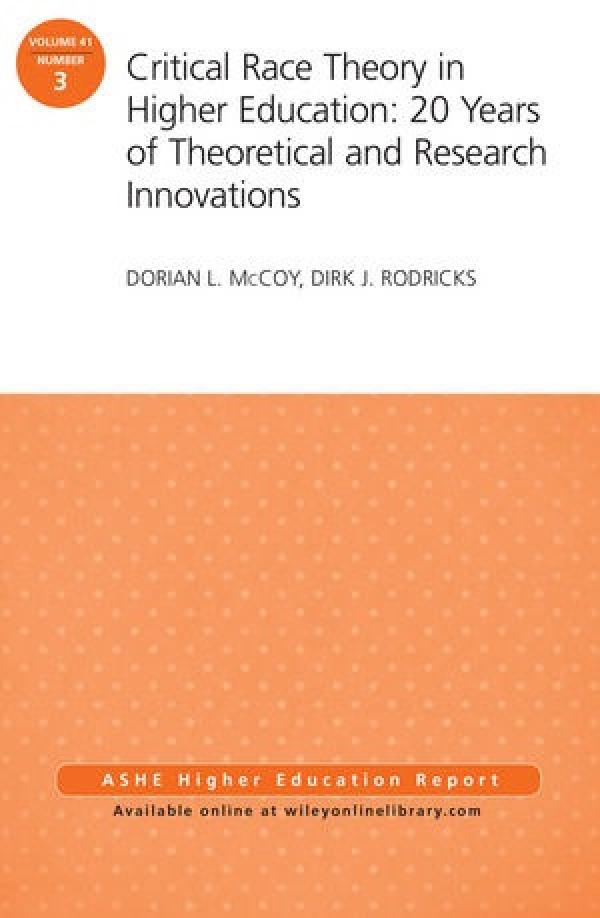
Critical Race Theory in Higher Education: 20 Years of Theoretical and Research Innovations is an in-depth description and analysis of critical race theory. The book addresses contemporary issues facing our society in general and higher education specifically. Dorian L. McCoy, a professor at the University of Tennessee and Dirk. J. Rodricks, a doctoral student at the University of Toronto collaborated on the book. It is part of the Higher Education Report periodical series. It is interesting that this book was launched during some disturbing times involving race in the United States. The book addresses critical race theory at the time when the slogan “Black Lives Matter” becomes the rallying cry against injustice and the attacks on black lives by the criminal justice system and police specifically. Although the book addresses this issue, it is not what propelled the authors to write it. The authors define critical race theory (CRT) as: "A form of oppositional scholarship that centers race and racism while challenging the Eurocentric values established as the accepted norm in the United States; is used to examine the unequal and unjust distribution of power and resources politically, economically, racially, and socially; a movement of scholars committed to challenging and disrupting racism and other forms of oppression; composed of the following key tenets: the permanence of racism, experiential knowledge, interest convergence theory, intersectionality, whiteness of property, the critique of liberalism, and commitment to social justice." (91) Throughout the book the authors take their definition of critical race theory and present research on each aspect of it. This not only serves to educate students in higher education, but also to enlighten those who are part of the hiring process. As one who has served on search committees at institutions of higher education, I find the research in this book to be very stimulating. The documented disproportionate number of professors of color teaching in institutions of higher education makes this research very helpful for search committees in these institutions. Astute people will use this information to further promote equality and even the playing ground in institutions of higher education. Critical Race Theory in Higher Education serves as an educational tool for administrators, board of trustee members, and faculty in higher education, especially for the ways by which it encourages deeper reflection on the subject. The weakness from this reviewer’s viewpoint is that the book becomes somewhat overwhelming with so many references. This sometimes causes the flow of reading to be cumbersome particularly when reading some technical terms. That said, McCoy and Rodricks have put together a large corpus of research on critical race theory that could be helpful to faculty teaching in North American contexts. The book is very timely as it explores a very important subject to address in our present time of heightened awareness of multiculturalism and pluralism. Overall this book is a valuable resource for all who have an interest in higher education.
Tat-siong Benny Liew Class of 1956 Professor in New Testament Studies College of the Holy Cross Recent studies suggest that African American students, despite the opportunity to attend college, tend not to major in disciplines that are linked to a high income generating future, such as a STEM field; instead,.
Nancy Lynne Westfield Associate Professor of Religious Education Drew Theological School The intent of racism is to dehumanize. Consequently, a prevalent strategy of racism is to convince caring people that non-white people are lacking - lacking in values, lacking in character, lacking in abilities, lacking in that which makes for
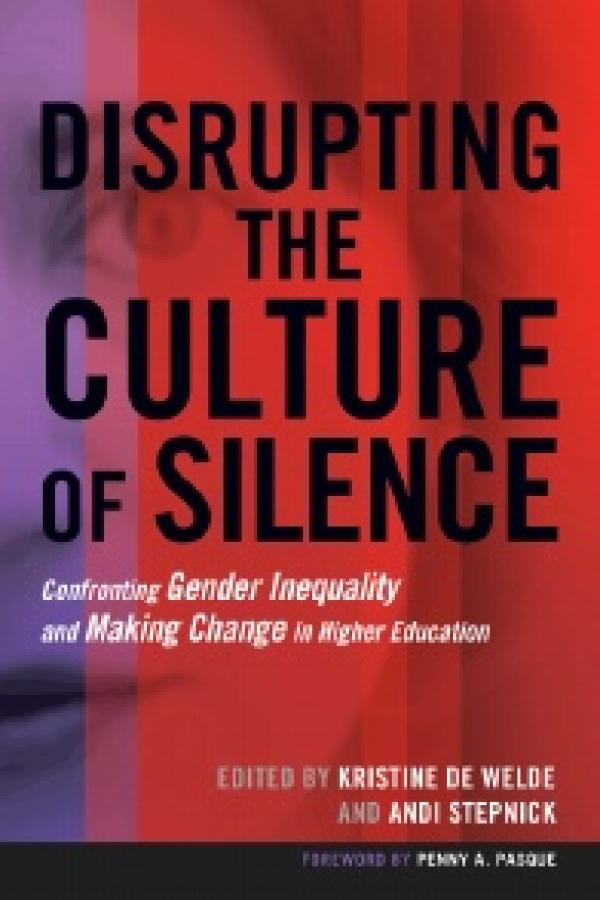
As an African American female associate professor in religious studies, I heard my voice and I felt heard as I read many of the essays in this book. It is intentionally intersectional, addressing race and ethnicity (and to some degree sexual preference) as well as gender. The editors and authors are scholars and administrators in the field of sociology, generally. With this book they interrupt the culture of silence in higher education, which remains the gendered domain of white males where women continue to experience inequality. Case studies, personal narratives and experiences, qualitative (interviews) and quantitative research raise readers’ consciousness about oppressive structures and cultures that impact women in academe. Women have made gains in the academy in terms of their increased presence, but major challenges remain. In this sourcebook each essay builds on existing research and offers suggestions for changing oppressive structures and cultures. The book is divided into five parts, each ending with a case study, and each chapter includes a list of resources. The final chapter offers models for engendering change. The book was born among scholars concerned with bringing together service, scholarship, and activism. While much is said about women faculty in general, a number of essays focus on nonwhite women and specifically black women as the “double minority” in the academy. They are less likely to be mentored, promoted to full professor, granted tenure, and more likely to leave the academy. Part One addresses problematic structures, such as exclusionary practices (lower wages and less upward promotions) that require faculty action to address. Also significant are the horizontal impediments to shattering the glass ceiling and not just the vertical ones (increasing numbers of women). Another example is the uneven, inequitable service burden placed on women and the accompanying fairy tale advice to ‘Just say no to service,’ which only “exacerbates gender-blind sexism in academia.” In the latter case the author suggests that institutions “just don’t ask” unless they are prepared to acknowledge and reward women’s service labor. Part Two discusses the dissonance between structures and cultures. Often structures like institutional quotas and commitments to diversity work in favor of women’s presence, but institutional cultures are resistant, hostile, violent, and unhelpful. Part Three addresses exclusionary cultures, including those that protect disciplinary canons, perpetuate the white male as the “ideal professor,” and value problem portable over problem-based research, which devalue women and the interdisciplinary work of nonwhite women. Part Four discusses “chilly climates,” “contrapower harassment,” incivility, microaggressions, and mobbing that are pervasive and often unchecked. These behaviors have greater negative impact on women with consequences for their physical and emotional well-being and job productivity. One author suggests that women of color consider a “trauma-to-transformation” model that involves redefining self, brain detoxification, sense-making, and reconfiguring the social reality. I highly recommend this book to institutions that value diversity (without which academic excellence does not exist) and desire to create a healthy, productive environment for a truly diverse and representative faculty and administration. I also recommend it for female and male faculty and administrators impacted by cultures of silence and who are interested in disrupting and dismantling those cultures.