Resources
Themes for a Spirituality of Pedagogy (1988 Madeleva Lecture in Spirituality), Maria Harris. An essay that focuses on teaching as a form of spirituality; five different themes that resonate in the lives of women are explored: silence, remembering, ritual mourning, artistry, and birthing. (From the Publisher)
Ira Shor is a pioneer in the field of critical education who ror over twenty years has been experimenting with learning methods. His work creatively adapts the ideas of Brazilian educator Paulo Freire for North American classrooms. In Empowering Education Shor offers a comprehensive theory and practice for critical pedagogy. For Shor, empowering education is a student-centered, critical and democratic pedagogy for studying any subject matter and for self and social change. It takes shape as a dialogue in which teachers and students mutually investigate everyday themes, social issues, and academic knowledge. Through dialogue and problem-posing, students become active agents of their learning. This book shows how students can develop as critical thinkers, inspired learners, skilled workers, and involved citizens. Shor carefully analyzes obstacles to and resources for empowering education, suggesting ways for teachers to transform traditional approaches into critical and democratic ones. He offers many examples and applications for the elementary grades through college and adult education. "One of the most intelligent discussions of the unique function of education in a democratic society since the work of John Dewey. This theoretically compelling and practically useful book addresses the economic, political, and personal needs of students. Shor has emerged as the most reliable discussant of the uses of the work of Paulo Freire in the U.S."--James Berlin, Purdue University Ira Shor, professor of English at the Graduate Center of the City University of New York and the College of Staten Island, is author of Critical Teaching and Everyday Life, and Culture Wars: School and Society in the Conservative Restoration, 1969-1984, both published by the University of Chicago Press. (From the Publisher)

It has been suggested that the greatest educational reform will come not through the sweeping changes of large institutionally mandated programs but through the small, day-to-day improvements that faculty members make in their own courses. The faculty is the first line of revolution in teaching; without their cooperation, no change is possible; with it, no challenge is impossible. This volume provides some insights into how individual instructors can make interesting changes in their classes and in their approaches to teaching in general. (From the Publisher)

This volume focuses on the ethical dimensions of teaching, bringing fresh insights and perspectives to inform ongoing discussions of ethics among faculty colleagues, administrators, and students. From these chapters emerges a dominant principle: responsibility to students is directly related to understanding of one's ethical self, and the first step in establishing that ethical identity is self-reflection. By teaching ethically, faculty members model and advocate appropriate behavior to students in a voice more effective than any proclamation. They also answer calls for accountability from the public, the press, and politicians. In all, teaching ethically requires transformations of structures, attitudes, and persons--faculty as well as students--if faculty are to meet fully their responsibilities to themselves, to their students, and to society. This is the 66th issue of New Directions for Teaching and Learning. For more information on the series, please see the Journals and Periodicals page. (From the Publisher)
This book provides an intimate view of how feminist teachers are revolutionizing higher education. Drawing on in-depth interviews and on-site observations, and using the actual words of students and teachers, the authors take the reader into the classrooms of seventeen feminist college professors at six colleges and universities - Lewis and Clark College, Wheaton College, the University of Arizona, Towson State University, Spelman College, and San Francisco State University. As these teachers integrate feminist and multicultural content into the curriculum, they demonstrate that pedagogy concerns not only "teaching techniques" but the whole process of the construction of knowledge in classrooms. Learning derives from relationships and interactions among teachers, students, and subject materials, not from any single perspective. In showing how the integration of feminist and multicultural content revitalizes the classroom, the book portrays innovative teaching in action. Feminist and cultural studies scholars have demonstrated that American higher education has traditionally represented the world in terms of the perspectives and achievements of a dominant minority. To educate students for a complex multicultural World, the voices of those who have been excluded need to emerge. There is widespread concern today about the quality of teaching in our colleges, particularly the predominance of lecturing and passive modes of learning. This important book presents a vision of teaching that counteracts the silence and alienation these practices engender. (From the Publisher)
Teachers as Intellectuals is a book for all practitioners and all members of the general community. Giroux demands reader involvement, transformation, and empowerment. He helps understand that the political relationship between schools and society is neither artificial nor neutral nor necessarily negative. Rather, school personnel have a positive and dynamic political role to play. (From the Publisher)

Henry A. Giroux is one of the most respected and well-known critical education scholars, social critics, and astute observers of popular culture in the modern world. For those who follow his considerably influential work in critical pedagogy and social criticism, this first-ever collection of his classic writings, augmented by a new essay, is a must-have volume that reveals his evolution as a scholar. In it, he takes on three major considerations central to pedagogy and schooling. (From the Publisher)
This book is a conversation between Antonio Faundez and Paulo Freire. They discuss their work in the Portugese speaking countries of Africa (Guinea-Bissau, Mazambique, Angola) and their attempts to apply the principles of empowerment through literacy that is their trademark. (From the Publisher)
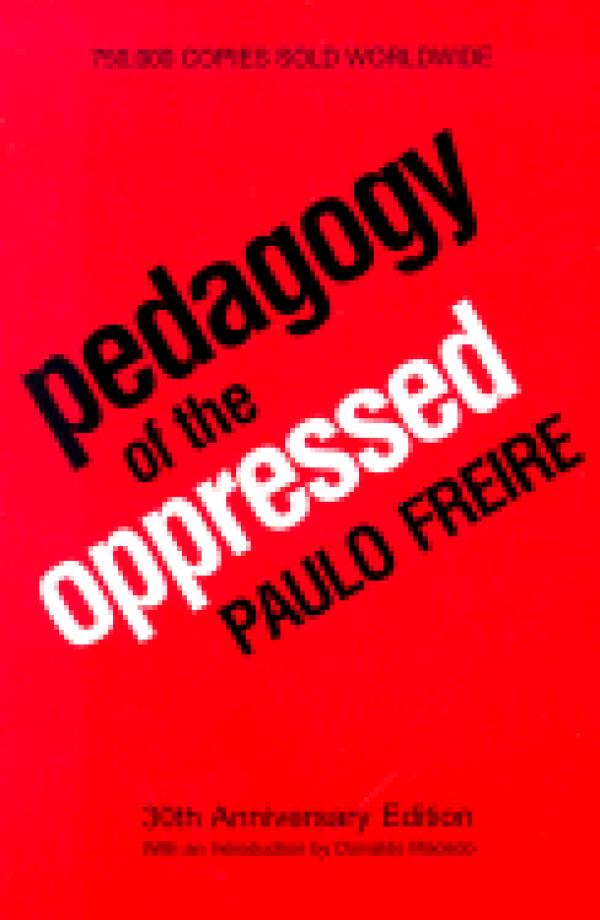
This text argues that the ignorance and lethargy of the poor are the direct result of the whole economic, social and political domination. By being kept in a situation in which it is practically impossible to achieve a critical awareness and response the disadvantaged are kept "submerged". The book suggests that in some countries the oppressors use the system to maintain this "culture of silence". Through the right kind of education, the book suggests, avoiding authoritarian teacher-pupil models and based on the actual experiences of students and on continual shared investigation, every human being, no matter how impoverished or illiterate, can develop a new awareness of self, and the right to be heard. (From the Publisher)
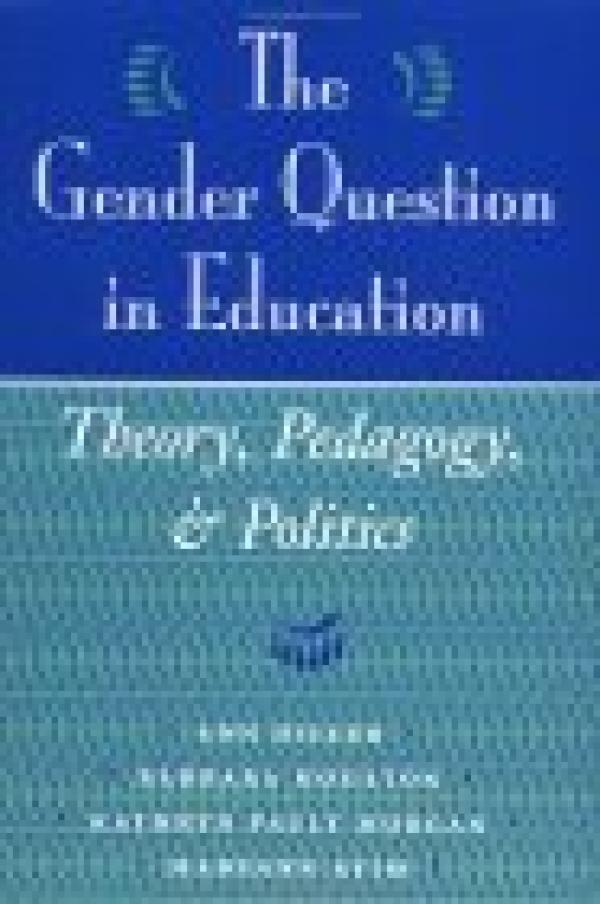
Four leading philosophers of education offer a sophisticated but accessible introduction to the central debates about the role of gender in educational practice, policymaking, and theory. (From the Publisher)