Resources
The term “pedagogies of cruelty” was created by the Argentine-Brazilian, feminist, anthropologist Rita Laura Segato.[1] Her development of the term has to do with the ways we must learn nowadays to get used to the cruelty of our times. This can be clearly seen in the ways governments are dealing with the SARS-Covid-19. As we have seen, politicians are telling us that this virus, whose first name is always absent, SARS- Severe Acute Respiratory Syndrome, is just a flu and some necessary death will happen in order for the economy to go back to normal if we all want to survive.[2] The perversity of capitalism demands an education based on violence, terror, and cruelty. One that destroys any form of solidarity or empathy. We have to learn to see suffering, cruelty, and death as normal, and even inevitable presences in our times. Since the liturgies of the state must be liturgies of cruelty, control, and death if it wants to survive, the pedagogies of this capitalistic economic system train us that we must accept any liturgical form of cruelty necessary. In other words, necropolitics needs necropedagogies. Thus, we must get used to the prison system because this is necessary for our safety. We must get used to debt because there is no way to live without debt. We must get used to climate collapse otherwise we can’t get all we want. We must get used to health care offered to some people and not all because the costs are too high to provide for all. We must get used to poor people dying because they have no reason to exist. We must get used to walls against foreigners because we can’t accept all immigrants. We must get used to mental illness because this is a crazy world. These “new” pedagogies of cruelty appear as a continuation of previous pedagogies of cruelty already normalized in our social living: we have already gotten used to the notion of private property, staggering salary differences, lack of rights for workers, use and abuse of women, the need to be constantly at war, and so on. The co-opting of the commons by private sectors have financialized health, education, and the earth, turning what is common into “resources” owned by a few proprietors. Due to that, Segato says we cannot understand the capitalism of our time without thinking about the owners of the world’s richness. The speed of the concentration of wealth is alarming, eroding the world’s entire networks of systems and balances. The case for education is the same. Turned into profit, we must now get used to education being for the few and accept its systems of cruelty. Thus, we must get used to student loans and large amounts of debt because higher education is necessarily costly. We must get used to the gap between schools’ administrators and teachers because, you know, it’s a matter of responsibility. We must get used to working for big endowments that grow off the exploitation of the earth and people because we need to offer a high-quality education. We must get used to paying adjunct teachers less and no benefits so we can compete in the market. The same argument surfaces in Brown University’s president Christina Paxson recent article where she calls for returning to campus this Fall. She says: “The basic business model for most colleges and universities is simple—tuition comes due twice a year at the beginning of each semester. Most colleges and universities are tuition dependent. Remaining closed in the fall means losing as much as half of our revenue.”[3] In other words, school is based on profit and we, the people, not the state, not the government, must pay the price for its existence. It’s simple! We must pay the salaries of high ranking business educators too. Pedagogies of cruelty aim at depleting any source of solidarity and any form of vincularidad, of connection between people, people with animals, and the earth. We must learn to cope with the pain of the other and make sure to pay attention to ourselves since this is a vicious world and we must survive at any cost. Using military strategies of deflating the power of pain of the other, pedagogies of cruelty teach us to look at the death of other and say: such is life, or what can we do, or I am sorry and move on. Who cares if the largest number of deaths due to SARS-Covid-19 are in poor areas and among minority people? Who cares if black people are dying in greater numbers? Who cares if poor white people are dying? Who cares if migrants are dying in private prisons or if black people are dying in prisons? They are all already expelled from society. What can we do? This is the crux of the pedagogies of cruelty: to take away any sense of agency and political action from us. We are lost. Both main political parties are suffused with these pedagogies even if in different modules and intensities. We feel we have no way to go. When we teachers go to the classroom, we come already indoctrinated by these pedagogies. To care for the students is getting more and more difficult. Both because they are not our business and because we must protect our schools so we can keep our standing. If we can fulfill the “learning outcomes” we are doing our job. The subjectivities of our students paired with their objective lives must be placed in a second plane of awareness. At the end, they are on their own as we are on our own too. We can lose our jobs at any time. Unknowingly, we reflect in some way or another, these pedagogies of cruelty in our classrooms. Our task then is to constantly raise a sign and scream: NO! we must continue to be in solidarity! We must continue to create bonds of affection and care! We must keep the threads of vincularidad, of connection, of mutual belonging. We must join other groups and expand the public spaces that have been encroached on by capitalism. We must foster communities of alterity, of other forms of living, thinking and relating to life. In Latin America, there are many communities who live on the exteriors of our systems: indigenous, quilombolas, raizales, palenqueras, communities led by women in the Amazon and the Zapatistas.[4] They are the deepest target of pedagogies of cruelty, for they still hold a counter narrative to the system. However, they are the ones who can teach us how to resist, how to create pedagogies of affection, of relationality, of vincularidad, of production of collective means of care and a common life with other people, species, and the earth. The task at hand is immense or even impossible. But as somebody said: Who said the impossible wouldn’t be difficult? [1] Pedagogies of Cruelty is a development of Hannah Arendt’s political education in Hanna Arendt, Origins of Totalitarianism. Segato understands the current form of ‘capitalism of cruelty’ as one that creates forms of education to keep the edifice of the system protected and moving. In her words, “the pedagogy of cruelty is the system's reproduction strategy… which is “absolutely essential to the market and capital in this already apocalyptic phase of its historical project.” in Rita Laura Segato, Las Nuevas Formas De La Guerra Y El Cuerpo De Las Mujeres (Argentina: Tinta Limón, 2013), 23, 80 [2] Trump’s Deadly Mistake In Comparing Coronavirus To Flu, https://theintercept.com/2020/03/25/coronavirus-flu-comparison-trump/?comments=1; Texas lt. governor on reopening state: 'There are more important things than living,' https://thehill.com/homenews/state-watch/493879-texas-lt-governor-on-reopening-state-there-are-more-important-things; Chris Christie argues for reopening economy because "there are going to be deaths no matter what," https://www.cbsnews.com/news/chris-christie-reopening-economy-deaths-no-matter-what/ [3] Christina Paxson, College Campuses Must Reopen in the Fall. Here’s How We Do It. https://www.nytimes.com/2020/04/26/opinion/coronavirus-colleges-universities.html [4] Eliane Brum, The Amazon Is A Woman, https://atmos.earth/amazon-rainforest-indigenous-activism-history/

In a previous post on this blog, I reflected on a common misperception among students preparing for ordained ministry and other leadership roles in Christian community: that studying theology in a formal sense is not of obvious utility in pursuing and exercising one’s larger vocation. I offered several reasons why that might be the case. And I described an assignment I had developed and used for the first time as a result of participating in the Wabash Center’s Teaching with Digital Media workshop. This project entailed making and sharing memes on theological themes and then reflecting on what was learned through that exercise. The goal was to give them a concrete experience of selecting specific theological concepts to communicate to a specific audience in order to elicit specific formational outcomes. The assignment required students to do small-scale, but active, public theologizing and employ techniques of metacognition to help them perceive more clearly the need for solid theological grounding as part of their formation and, by extension, for the formation they will be responsible for in others. For this semester, I created an assignment that amplified that intention by requiring them to offer a bit of formal theological instruction in a more direct and standard mode, but still in a digital form. The prompt for the assignment was this: Imagine that you are the rector of a program-sized parish. In substantive conversation with at least five readings assigned [in the previous unit], create a 5–7 minute presentation to teach your clergy staff about how one’s eschatological imagination can be a resource when engaging those of other faiths or of no faith. Create a TED-style talk, a narrated PowerPoint, a VoiceThread, or a video of another kind that your staff can view on their own time. It must include video, sound other than just your voice, and still images. Think carefully about what it is you want them to know and tailor the use of the technology to ensure that it is communicated to them clearly. Focus on the theology at the heart of your teaching. Ground your theology in the sources and be sure you let your hearers know when ideas are not your own, especially if you quote anyone’s writing. Students were given a deadline by which these presentations needed to be complete. I then posted them as separate threads in a Moodle forum open to the class. There was then a second deadline by which each student was “required to have watched all of the presentations and to have made substantive comments of a theological and/or pedagogical nature on at least three of them.” Finally, there was a third and final deadline by which students were “required to have replied thoughtfully to all comments made” on their work. I then viewed all the presentations and read through the discussions, and I assessed the projects based on a previously provided rubric of seven criteria, each with four levels: above standards, meets standards, near standards, and below standards. The seven criteria (with the maximum number of points earnable for each indicated in parentheses) were: use of sources (30), original and critical thinking (15), structure of presentation (15), pedagogy, meaning the clarity and achievement of the presenter’s learning outcomes (10), required elements (10), comments on peers’ presentations (10), and responses to peers’ comments (10). Interestingly, students were less intimidated by this assignment than by the meme assignment. Presumably, this has to do with the medium: all students have experienced an instructional presentation online, but not all are familiar with the syntax and culture of meme-making. During the Wabash workshop, we were encouraged to assign multimedia projects of this kind with very short time durations. Nearly universally, however, students bemoaned not having enough time to communicate all they wanted to say, wishing they had been able to provide more nuance in their presentations. I was surprised, but gratified, by this. Next year, I will increase the time limit, but I will also warn them that more time means a greater temptation to wander too far from the central idea the presentation is meant to communicate and that they must diligently maintain that focus throughout. The extent to which most students readily grasped the importance of providing ongoing theological formation for their clergy staff was highly gratifying. They attended to that task with rich creativity, substantive theology, and an inviting personal presence. As teachers-to-be, I think it was useful for them to see themselves and their colleagues in this role. Students were eager to discuss pedagogy in the forum, but a little less forthcoming about their specific theological choices. As the one evaluating and providing feedback on their approaches to the theological formation of others, I would like to know more about that and I will ask for more detail about that in the future. Overall, the use of digital media in connection with this assignment appears to have ignited the imaginations of the students to think about doing theological formation in the milieu they are most likely to do this in their careers: the parish. Education in formal theology in the seminary is meant to equip students for bringing the riches of the theological heritage and discipline to bear in the work of ministry. This assignment seems to have contributed well to that outcome.

Princeton Theological Seminary recently doubled-down on its commitment to residential theological education. As you can imagine, the transition online for an institution that has no online degree programming has been a shock to the system. However, last year, the seminary opened an Office of Digital Learning. With attentiveness to the needs of learners during this unprecedented time, we have been able to transition smoothly and have received overwhelmingly positive feedback from both students and faculty. As the Digital Learning Designer for the seminary, I have three suggestions for effective theological education during this crisis that I would like to share with you. I hope these ideas will inspire meaningful teaching and learning now that you’ve done the challenging work of transitioning online. #1 PRIORITIZE CONNECTION Right now, students may be feeling particularly unmotivated if what you are teaching seems abstract or disconnected from their lived experiences during this pandemic. By connecting your teaching to what they are experiencing, you will deepen the learning that takes place. Here’s what one PTS faculty member said about how they’re doing this: In today's class it was clear that many--especially those with children--are highly anxious. We tried to channel that anxiety--and the class's broad level of concern for what's happening in the world--directly into our discussion. . . if they were going to take time away from their families under these circumstances of global crisis, the class by golly had better be worth it. It had better be relevant to the crisis they/we are all experiencing. I found this to be very profound and instructive for seminary education in general. I will try to carry that sense of urgency and relevance into the other class as well to try to generate more investment on the students' part. Draw upon what’s going on in the world and in students’ lives right now and integrate that into your teaching. The best learning takes place when students are motivated and when content is relevant to their lives. For more, click here to read an article by Craig E. Abrahamson, a Professor of Psychology at James Madison University, about motivating student learning through personal connection. #2 CHOOSE LEARNING OVER CONTENT TYRANNY Content tyranny is what happens when you prioritize your content over student learning, when you become more focused on covering material than on cultivating growth. Your content is valuable, and you are most likely passionate about it. However, by letting go of some of your content, you may free up your students to learn better. If the current situation has forced you to drop some course content, let this reassure you. More content does not necessarily lead to more learning. Rather, students will learn better when you select your content carefully, deliver your content thoughtfully, and connect your content intentionally to their lived experiences. For more, click here to read an article by John G. Radzilowicz and Michelle B. Colvin from the University of Pittsburgh about reducing course content without compromising quality. #3 EMBRACE A CREATIVE SPIRIT You are all probably already doing this! The best teaching is a mix between science and art, and, in times like these, pedagogy feels more like artistic expression. If you are still engaging in synchronous learning, each online class session will be a practice in improvisation while teaching. Any number of difficulties might arise, but you can handle these with confidence and grace if you embrace a flexible and creative spirit. As a theological institution with a Reformed heritage, the faculty and staff also trust that the Holy Spirit is at work in the teaching and learning endeavor and in your creative improvisation. Even if technology fails and your words seem jumbled, we trust that the Holy Spirit is at work. For more, click here to read an address by Emilie Townes, the Dean of Vanderbilt University Divinity School, about teaching and the imagination. Taking classes online within a few weeks’ notice is no small task for faculty, students, or staff. At Princeton Theological Seminary, we are learning just how important each individual person is in the process of creating a robust learning environment. We are also learning how essential it is to be attentive to learners’ needs, to be willing to prioritize learning over content, and to be open to the imagination. May you all engage in meaningful connections with your colleagues and students and may you be open to the creative work of reimagining pedagogy during this pandemic. Has your institution embraced or struggled with these elements over the past few weeks? Has there been monumental growth, or is this culture of teaching already well established? Would you add a fourth insight to the list?

I’ve been reviewing instructional video presentations for a project. Primarily I screen them to review how effective the presenter is in applying sound pedagogy. It’s amazing how many basic rules of good communication presenters break—consistently—-even professional speakers and celebrated “master teachers.” The other side of the equation that puzzles me is the level of tolerance audiences seem to have for poor presentations. I wonder sometimes if we’ve seen so few well-delivered presentations that we’ve lowered our expectations, and therefore, demand so little of presenters. Most of the presentations I see are entertaining but not educational, even when they portend to be. Here are five elements that are consistently ignored or poorly handled by presenters—lecturers, instructors, or workshop leaders. If these had been given attention every presentation I reviewed would be improved tremendously. Focus. Presenters need to have ONE focus for their presentation or lecture. The question to ask oneself is, “What is the ONE thing this presentation is about?” When you identify it, then stick to that one thing. The most powerful presentations make the “one thing” a concept, sometimes called a "big idea." Therefore, the better question is, “What is the one concept I want to present?” To maintain focus, it is critical to avoid "scattered dialogue," digressions, or any verbiage that is not on point. If something is not related to or derivative of your big idea, don't talk about it. Scope. Scope has to do with coverage. Any one thing (concept) we choose as our focus can still be complex. The question is, “What is the cope of my treatment for this one thing I want students to learn and master?” Every element of the presentation—from illustration to visuals, should support and legitimately connect with the one concept you are presenting. Pace. The brain has its own rhythm for how it processes information. One element is the role of “attention span.” People have a longer attention span than we give them credit for due to the brain's capacity to "chunk" and make connections with the information it receives; but we have to help students make the connection. One key to helping students process information is the pace of the presentation. An effective rule is to change the learner’s focus every five to seven minutes (using "stimulus variation"), and you want to shift the pace every ten to fifteen minutes. Acquisition. In order for your presentation to be meaningful to the learners, they must be able to “acquire” the concept you are trying to teach. Students cannot learn what they don't understand. The question is, “Do my listeners comprehend what I am communicating?” Therefore, you need to build in points of “testing for comprehension” throughout your presentation. This includes testing for misunderstanding and providing correctives. The flow is: (1) provide exposition, (2) assess comprehension, (3) provide correctives, (4) link to previous, (5) bridge to what is next. Application. The final element that most often is missing from presentations is application. If your listeners or students are not able to immediately apply, at some level, what you are presenting then (1) it is not meaningful to them, and, (2) it will result in a failure of retention. If you cannot make immediate application of the one concept you are teaching, then your learners will tend to forget it as soon as they walk out the door. The next time you prepare a lecture, class, session, or workshop presentation, check to see how well you address each of the five elements for effective instruction.

Issues in Applying SLA Theories (hereafter Issues) comprises volume seven in the series, Critical New Literacies: The Praxis of English Language Teaching and Learning (PELT). What is meant by reflective teaching? In their article on writing, Zeraatpishe and Azarnoosh offer the following definition: “Reflection is regarded as a process through which teachers observe their beliefs and practices, assess, restructure their teaching and learning so that they can better situate themselves as agents of change in the immediate contexts of teaching” (165). Effective teaching, in contrast, involves conscious monitoring of student needs and progress, followed by corresponding adjustments in one’s instruction. Issues is a collection of fourteen essays by a global array of authors. Most hold doctoral degrees, with teaching experience ranging from assistant professors to emeritus professors. Several serve as editors of major publications in the field of Second Language Acquisition. Part One concentrates on six theories that have influenced language learning pedagogy. Part Two addresses eight skills necessary for learning a language. Theories explored in Part One include behaviorism, cognitive approaches, constructivism, connectionism, interactionism, and critical theories. Behaviorism’s attention to stimulus and response led to the emphasis on language drills found in the Audio-Lingual Method. Cognitive approaches bring together rationalist and empiricist viewpoints, valuing both Chomsky’s innate Universal Grammar and also the importance of learning through experimentation. Constructivism in language learning involves forming increasingly more complex categories of information by analyzing similar elements, whether individually (cognitive constructivism) or in community (social constructivism). Connectionism draws from the design of digital computers to consider how parallel distributed processing (or artificial neural networks) serve the task of pattern recognition. Interactionism holds that language learners benefit from conversational communication, which involves input, negotiation of meaning, noticing, and second language output. Critical Second Language teaching would value “a listening phase on the part of the course designer or teacher, and… finding out about the learners’ real lives and needs” (70), then creatively adjusting the course correspondingly. The remaining eight chapters turn from theory to praxis, exploring what it means to teach particular skills in a reflective and effective manner: pronunciation, grammatical competence, vocabulary, idioms, speaking, writing, listening, and reading. For example, instructors are encouraged to journal after class sessions to become attentive to trends in student performance of pronunciation. Grammatical competence can be enhanced by immersive use of illustrated fiction readings, with discussion and open-ended composition assignments. Vocabulary learning will be more effective as students are encouraged to master roughly 2000 words, whether isolated lexemes, word families, or phrasal vocabulary, so that they may produce them in speech and in writing. Idioms will be learned more effectively through a pragmatic approach that is attentive to context and the speaker’s aims. Speaking will improve as instructors facilitate conversation that is incremental and attentive to stages of students’ proficiency. Writing instruction can be segmented into eight discreet stages. And listening comprehension improves as students appreciate and attend to specific processes at work during periods of concentrated listening. Reading fluency, defined as the ability to read “effortlessly and confidently at a level of understanding and a rate appropriate for the purpose or task and the material” (Day, 203), requires automatic recognition of words which results from students having read large quantities of easy and interesting material. Instructors of English as a Foreign Language comprise the principal audience for Issues. Those who, like the reviewer, teach a classical language will benefit primarily from R. R. Day’s insights concerning literacy (199–208), and also from Nurmukhamedov and Plonsky’s essay on vocabulary (115–26).

Against the backdrop of growing debate over both the nature and value of higher education, David Cunningham and twelve scholars offer what they believe may serve as a “common purpose” – vocation. Along with the word, “calling,” vocation has theological roots, but Cunningham argues that a “more expansive” approach to the word “is attentive to questions of profession, work, and employment” and “encompasses a much broader range of concerns that will arise during a college student’s current and future life.” The writers of this volume do not believe that appealing to the concept of vocation will eliminate conflict swirling around competing visions of the academy, but they do believe that the concept appeals to both the roots of the modern university and the goals of faculty from across the academy (3). With that goal in mind, Cunningham and his co-contributors divide their effort into four parts. Eschewing a disciplinary-centered approach to their work, they instead consider “four different pathways or approaches through which the disciplines can come into conversation with one another: first by emphasizing certain themes that are common to them all; second, by borrowing concepts from one discipline that can apply to many other disciplines; third, by focusing on the future lives of undergraduates…; and fourth, by considering some of the institution-wide obstacles that need to be addressed if the language of vocation and calling is to be perceived as relevant to all academic departments and programs” (14). In a closing epilogue, Cunningham notes that the volume demonstrates that neither vocation nor calling exhaust the concerns that arise from their use in the academy. The words, “responsibility, character, virtue, mission, covenant, mapmaking, storytelling, performance, work, [and] leisure,” along with others, figure in the contributions to this volume (315). That should come as no surprise, he argues. From the very beginning, Cunningham commends a definition of vocation that is “capacious, dynamic, and elastic” (315, cf. 10ff.). Accordingly, he argues that one should approach the issue of vocation prepared to use multiple vocabularies that reveal different, but interrelated discoveries. To have a vocation means that one is shaped by that calling (317ff.); that one is summoned “from without” (319f.); that one must decide what to do (320f.); that those who are called inevitably consider their link to the callings of others (321f.); and that they are compelled to think about the impact their vocations will have on the future (322ff.). This is the second of three volumes in an ambitious and welcome effort to recapture the inspiration of vocation as a locus for higher education. The first, published in 2015 under the title, At This Time and in This Place, focused on pedagogy. The third, published in January of 2019 appeared under the title, Hearing Vocationally Differently, and expands on the vocabulary associated with vocation, relying on contributors from diverse religious traditions. One may well wonder what the prospects will be for the project of this series. Embattled as the academy is – by forces both within and without – one would hope that scholars will find a common inspiration that will lend new energy and focus to their work. But even cursory attention to the debates roiling college and university campuses underlines the truth that “an optimist is someone who is not in possession of all the facts.” It is difficult to believe that disciplines that are struggling to define a shared vision of the work that they are doing could agree on a vision for the larger work to which the whole academy is devoted. The task that the writers propose is made all the more difficult by the choice of “vocation” as the organizing principle around which they attempt to rally their readers. As Cunningham himself observes, the verb vocare is transitive (317). As such, it implies that one is not only called, but one is also called by someone or something. The absence of a shared understanding of who or what issues that call - if anyone or anything does – underlines how little shared vision may be in the offing for the modern academy. For theological educators the answer to that question and others ought to be easier to achieve, but anyone who teaches in the modern divinity school knows better than that. As seminaries struggle to address declining enrollments, degree programs are crafted with an eye to the individual’s goals and the notion of vocation – and the spiritual formation that accompanies it – has slipped again to the margins of theological education. Where it still lingers, it is necessarily governed by private definitions. In the meantime, seminary faculties differ with one another as much or more on such questions as the faculties at any college or university. The effort made by Cunningham and his co-contributors comes, then, as both question and indictment: What is it about the concept of vocation that leads even a small but brave cohort of scholars without shared confessional commitments to imagine that they can galvanize their work around the concept? The indictment is this: What are the factors that have relegated the question of vocation to the margins of the very institutions that gave birth to the vocabulary?
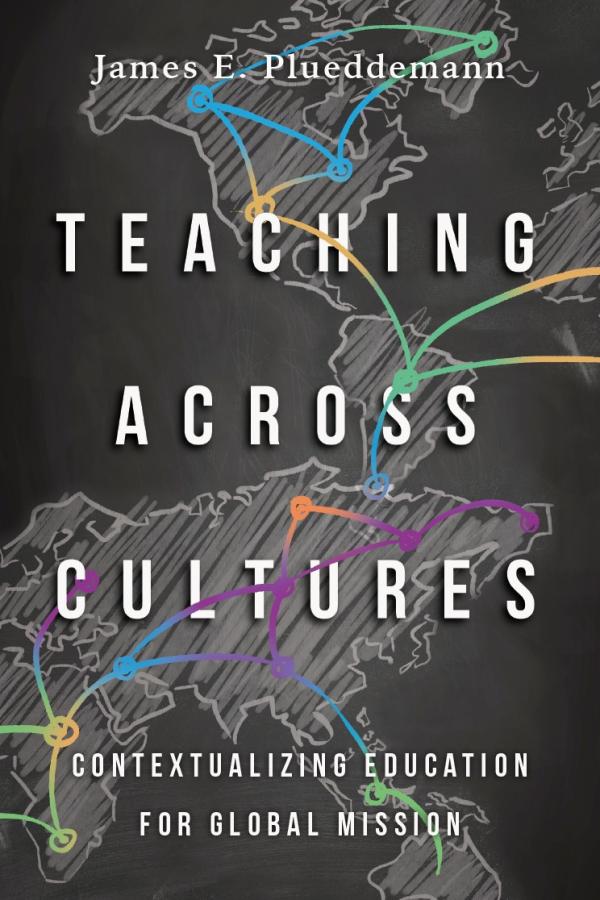
As a Roman trained missiologist who teaches intercultural pedagogy and ministry, as someone who grew up on the US-Mexican border and who has worked in religious formation since the age of twelve, I was drawn to this book’s title and cover design, a world map on a chalk board. I am blessed with a large number of international graduate students, most of whom will be returning to their home countries or will be called to work internationally. The book’s title seemed a tall order – but it did not in the least disappoint. Penned by a seasoned missiologist and professor who knows how to draw educationally from his extensive international travel and work abroad, the work is exceptionally readable, one which strives to integrate course content, or knowledge of the biblical tradition, with contemporary human experience, or alternatively phrased, an appreciation for an ongoing dialogue between a course being content-centered and student-centered. Plueddemann does this especially by engaging Edward Hall’s highly effective categories of “high and low context” styles of communication, together with Geert and Gert Jan Hofstede’s development of power distance. Filled with examples and anecdotes, not only from his own teaching but also from other practitioners appropriately placed at the end of every chapter, he makes a strong case for paying attention to biblical pedagogy, one which is profoundly experiential and cognizant of diverse contexts. His sources are carefully selected so as not to overwhelm the reader with jargon and very applicable to those wishing to respectfully do global Christian mission in a way in which Bible and culture inform each other, especially in contexts which are much more communal than our U.S. contexts. His brief inclusion of key learning theorists such as Piaget, Lewis, Dewey, MacDonald, and Freire show their continued relevance, and provide a necessary bibliography for further study. It is not often that we find good pedagogical material specifically aimed at teaching theology or religion, so this little gem is a welcome one, a work carefully tailored to shifting contexts, learning styles, and contemporary media globalization. Much to my amazement, Plueddemann’s tools can be applied to a variety of educational tasks such as teaching language, preaching, summer camp work, Sunday school, mentoring and coaching, and even parenting. His appreciation of the teaching potential of novels and other forms of art provides ways in which teachers unfamiliar with local contexts can begin to enter these learners’ worlds. Teaching across Cultures’ ecumenical sensibilities, similarly, such as the inclusion of the work of Thomas H. Groome, well-known in Catholic educational circles, makes it a useful text beyond the Protestant world. Will I assign this text? Definitely! My own use of some of the biblical and anthropological tools he cites will be enhanced by his examples of how they can be applied to educational and pastoral settings, not only to those which demand intercultural sensitivity, but even to those which we think we already understand.
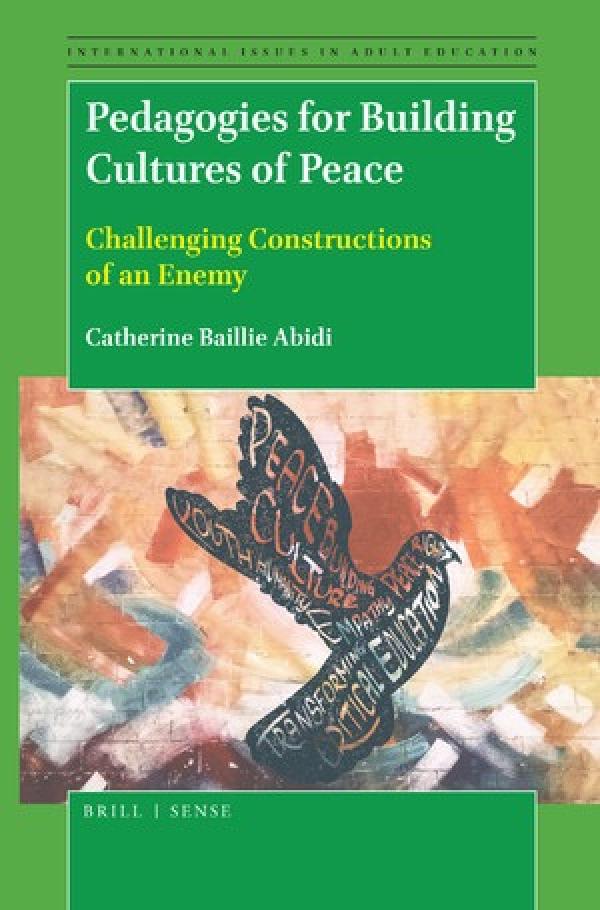
Social media and the daily news both mark the continued normalization of violence. Given that one of the chief aims of liberal education is toward personal development and the attainment of civic responsibilities, the normalization of violence is a central issue with which twenty-first-century educators must grapple. To this end, Pedagogies for Building Cultures of Peace is a useful resource both for centralizing current research on structural and cultural violence and the concomitant dehumanization of the “other” (Chapters 1-4). Further, the book details the many benefits of engaging youth in structured critical dialogue about their experience and internalization of violence in many forms and leverages this dialogic strategy for the transformational aim of building peace and destabilization of structural violence (Chapters 5-9). This book is a theoretical treatment of a specific dialogic experience examining the normalization of violence. It is evident that the experience was significant for the participants, and the detailed reporting of the participant dialogue helps make clear some ways in which structures of violence are normalized for these youth. However, as with qualitative research – the difficulty lies in transferability, specifically in the question of how generalizable the experience of these ten youth is for a broader audience. In part, this challenge could have been alleviated with a more detailed description of both the methods used in the dialogic process itself and by providing more information about the participants themselves. That difficulty aside, the central argument – that safe, collaborative, and critical dialogue functions as a viable pedagogical strategy for building real peace – is compelling, even if the author does not provide practical details for creating this type of dialogue or these types of spaces (a brief outline of the dialogic structure utilized does appear in Table 10.3). Readers of The Wabash Center Journal on Teaching will find the final two chapters the most beneficial. These summarize the dialogue and extract pedagogical implications, which are supported by research in experiential learning, social constructivism, relational epistemology, and power analysis. Taken together, these chapters provide a robust theory that must inform teaching aimed towards peace. As Abidi observes, “education that neglects to challenge normalizations of violence, and the relations that maintain violence as an accepted norm in society, further reinforces unquestioned ideologies of the dehumanized other” (113). It is, therefore, no longer an option to say nothing about the normalization of violence in the classroom – rather collaborative critical conversation must be employed towards the end of peace.
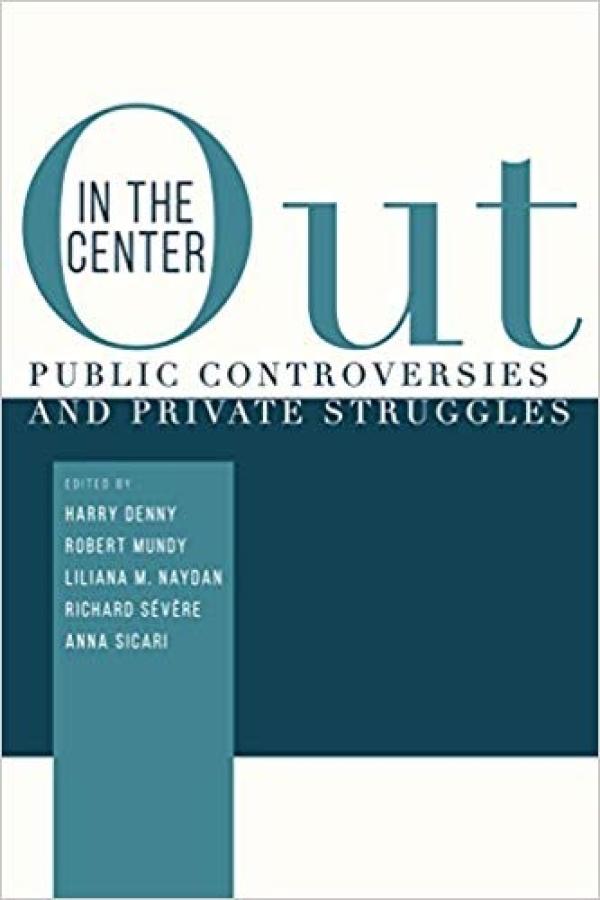
Out in the Center: Public Controversies and Private Struggles provides a fresh perspective on the inter- and intra-personal dynamics of writing center work. Building upon Greenfield’s and Rowan’s Writing Centers and the New Racism: A Call for Sustainable Dialogue and Change (2011), Condon’s I Hope I Join the Band: Narrative, Affiliation, and Antiracist Rhetoric (2012), and Denny’s own Facing the Center: Toward an Identity Politics of One-to-One Mentoring (2010), this edited collection presents the personal narratives of underrepresented voices in writing centers and invites critical conversation about the complexities of identity negotiation among tutors, writers, and administrators. While some writing centers claim to be neutral spaces where writing is engaged apart from the culture that produced it, this collection acknowledges the ways in which writing and collaborations around writing are always already both personal and political – shaped by a confluence of internal and external factors. Writers, tutors, and administrators bring their selves to the work, thereby making public their past, present, and emerging identities, which are inextricable from the social, political, economic, and cultural dynamics of the communities in which centers reside. The collection is organized into six parts – race, multilingualism, gender and sexuality, religion, class, and (dis)ability – some with more narratives than others. This imbalance likely speaks to the variety of submissions and also signals the need for even more narratives from underrepresented and marginalized perspectives. Additionally, while each part is purposefully arranged, the editors recognize that identities are intersecting and note in the review following each section that identity categorizations are fluid. Part I narrativizes the interplay between the reading or erasure of black female and male bodies in one-to-one consultations and the writing classroom and how those occurrences interconnect with public discourse on issues like black natural hair, Black Lives Matter, and black masculinity. Part II explores the benefits and complexities of multilingualism in the center and ways that tutors can leverage linguistic dexterity. Part III focuses on the role of gender and sexuality in the identity formation of writing center administrators and tutors. Part IV takes up religion, an identity-marker that is sometimes unseen, and asks how inviting disclosure of religious identities might challenge hegemonic norms. Part V considers how class converges with other identities in writing centers, inviting interrogation of economic standing and belonging. Part VI explores how learning differences can shape writing practices and influence pedagogical approaches to tutoring. The collection concludes with a final chapter and afterword that encourage readers to recognize the pedagogical and epistemic value of these lived stories in their own contexts and for future research. Engaging meaningfully and critically with these stories and the intricacies of intersecting identities that they underscore enriches our ability to create more inclusive practices in hiring, training, and tutoring – a worthy charge and a fitting ending for this valuable work.
What difference does Jesus Christ make for the way we teach the Christian faith? If he is truly God and truly human, if he reveals God to us and us to ourselves, how might that shape our approach to teaching Christian theology? Without a compelling theological vision of theological instruction and without a clear awareness of its unique goals, challenges, and temptations, our teaching will be out of joint with the subject matter, and we will waste valuable opportunities. Drawing on the work of Søren Kierkegaard, Karl Barth, and Dietrich Bonhoeffer, Adam Neder offers a clear and creative theological and spiritual reflection on the art of teaching the Christian faith. This concise and engaging book offers a wealth of fresh insights and practical suggestions. While addressed to teachers in academic contexts, the approach is broad enough to include anyone involved in teaching and learning Christianity. (From the Publisher)