Resources
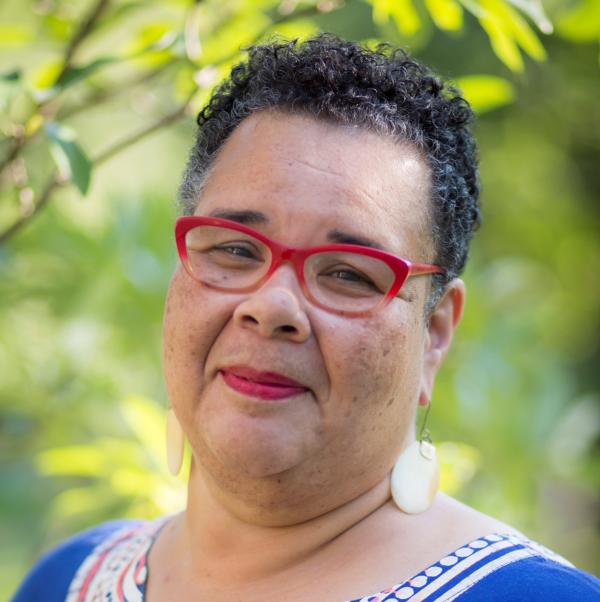
“With A Little Help From My Friends” was composed by John Lennon and Paul McCartney in 1967. The familiar song pronounces the power and necessity of friendship: What would you think if I sang out of tune, would you stand up and walk out on me? lend me your ears and I'll sing you a song and I'll try not to sing out of key. Oh, I get by with a little help from my friends mm, I get high with a little help from my friends mm, gonna try with a little help from my friends . . . The week after graduation, I got a call from a dear colleague. He was working on his syllabus for the upcoming summer semester. Having been in conversation for twenty years, he and I “get by with a little help” from each other. My colleague is a brilliant, multi-disciplinary scholar. Unlike me, he reads deeply across several academic fields - both domestic as well as international literature. He brings that expansive knowledge to our collaboration. I bring to our collaboration my scholarly knowing and, more important, my know-how in creativity, imagination, and the ability to make unorthodox connections in pedagogy, cultural politics, and beyond. Our phone conversation was “as usual.” My friend began by describing the focus of his upcoming summer course as well as the theory he was emphasizing in the course. He quickly summarized the required readings. He reminded me that it was a summer intensive, so he needed assistance in making good use of the time format. I asked if he needed to talk about assignments or learning activities. He said both. I took a few deep breaths, considered his topic, then intentionally imagined the graduate students in his course. Half of the enrolled students would be students of many races born in the USA, who will likely go on to serve communities close to home. The other half would be international, coming from countries in Asia, Africa, and the Caribbean, who might either serve white churches in the USA, or return home after graduation. My friend waited patiently as I thought. After my long pause, I asked, “Are you ready?” He said yes. I launched in by asking questions of clarification as if I were a student in his course. During that part of our conversation, he could hear the gaps in the course objectives and learning outcomes and he began to strategize ways to narrow the gaps and more directly address the student’s likely curiosity. Then, I brainstormed out loud about possible classroom activities that could take him and students out into the community near the theological school. We talked about possible resource persons to be brought into the classroom to make vivid the need for praxis-thinkers and doers. Once I got all my initial ideas spoken, I stopped. I asked if he wanted more. He said yes, so I continued until my imagination had run its course. Next, we turned to possible assignments as well as ways to elicit questions from students which would help them to bridge theory with community. By the end of our conversation, my friend had more than enough material to finish designing his summer intensive. The course was going to be brilliant! Our conversation was so well choreographed because of our reciprocity. I assist him with course development, and he helps me with editing and thinking more deeply about my publications. He has read and commented on almost everything I have published. I strengthen his work and he strengthens my work. We know our work is better because of the input of the other. “lend me your ears and I'll sing you a song and I'll try not to sing out of key.” Beyond the necessity of collaboration to strengthen and deepen our work, I would suggest networking is an under-utilized aspect of teaching and friendship. A little over a year ago, an alum from my school called me and asked if she could put me in touch with a friend of hers who was working on a new project. I said yes, only because of the respect I have for the former student. I was not, at that time, looking for any new projects nor was I looking for a consultant. Now, two years later, the person she put me in touch with, who is neither an educator nor a theologian, has become a consultant for our seminary and we are doing innovative programming in new areas. Had the consultant “cold called” me, I would have brushed him off. When a person I knew and trusted asked me to give time for a conversation, it was because of her influence that I paid attention and opened doors. Making use of our networks is opening ourselves to possibilities beyond ourselves. Making use of our networks entails that many of us must come-to-grips with the cachet and influence of our roles. So many of us undervalue our social position and make little use of the societal, intellectual, and material capital which we are afforded in our positions as teacher/scholars. We are people with juice! Making use of that juice for other people is part of our jobs. A new friend, who I met a year ago, told me that she drives her son to New Haven each morning for school. Since the commute is almost an hour, she stays in New Haven and writes at a local coffee shop, then picks up her son from school and returns home in the late afternoon. She is a professional writer so writing in a coffee shop is OK. I frowned at the thought of her working daily in a public coffee shop. The next day I phoned a colleague at Yale University. I asked him to take my writer friend to lunch because I thought they would enjoy each other’s company. I also asked him to give her whatever he could. I told my writer friend to expect a call from this Yale professor and accept the lunch invitation. They had lunch, and she now has access to the Yale University library where she works each day. He got a new and needed conversation partner for writing, editing, and publishing. All I did was recognize that I knew a guy who could help my friend, then I made the phone call. “Oh, I get by with a little help from my friends” The project I direct called the Social Justice Leadership Project was sponsoring a weeklong conference on our campus for spiritual writers about improving writing and getting published. We believe that public theology is, in part, about getting new voices into the market place. The weeklong conference has several worship services built into the schedule. I called a friend and asked her to plan and lead the worship services. She agreed, but asked why I did not do them myself. I said because you will do them better. The participants at the conference marveled that, during worship, we focused contemplatively upon the lives and prophetic witness of Toni Morrison, Mary Oliver, and James Cone. My friend, by way of liturgy, juxtaposed the ancient prophet Habakkuk’s text which reads in 2🔢 And the LORD answered me: “Write the vision; make it plain on tablets, so he may run who reads it” – with the lives of the prophets Morrison, Oliver and Cone. The final movement in every worship service was then to challenge the conference participants to align with these great persons in their own work of writing the vision. By the feedback and reports, the worship experiences for the aspiring faith writers had mystical, transformative qualities. “mm, I get high with a little help from my friends” So much of scholarship is constructed upon the flimsy falsehood of individualism, isolation, and self-aggrandizement. We make a mistake when we keep our work and our wants in isolation – hiding our light under a bushel. Our fears of having our ideas stolen, or having people turn down a request, or of opening up to the possibility of ridicule and shame must be overcome. Our work as scholar/teachers is best done in community, in conversation, with other people. Yes, I could tell you of a few incidents when my ideas have been stolen or simply attributed to someone else. But, these derisory experiences do not keep me from the joy and accomplishments which can only be realized through collaborating, networking, and using my cachet to facilitate the ideas and dreams of others in my community. My greatest successes have been due to the love, support and generosity of people who have helped me elevate my work, rise to the challenges of certain projects, and who have seen greater possibility in me than I saw in myself. This is the pay-off of collaboration, networking and friendship. This is the marvelous of being part of an intellectual community. Nancy Lynne Westfield Drew Theological School
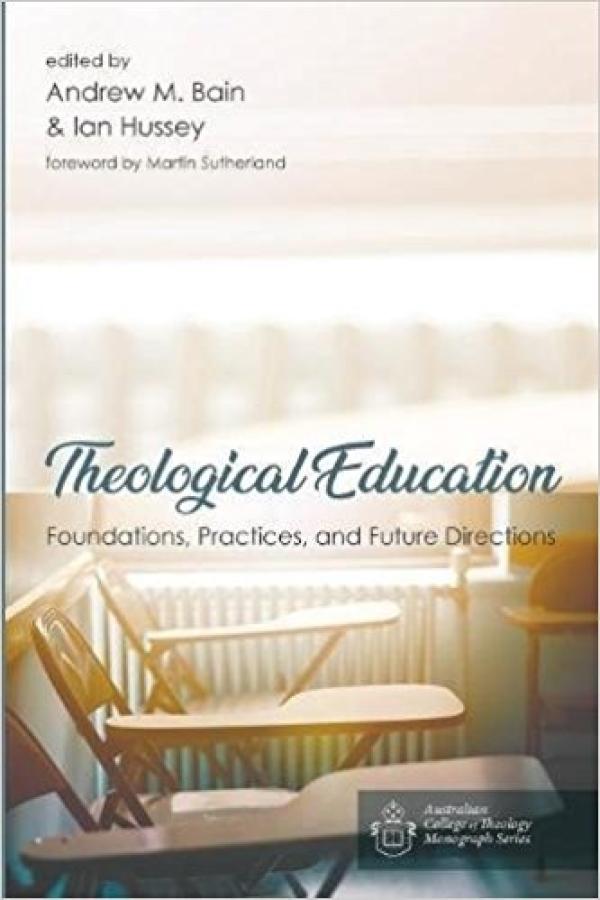
This edited volume of 21 articles explores the biblical and theological perspectives, historical foundations, current practices, and future directions of theological education in Australia and was published as part of the Australian College of Theology Monograph Series. The authors represent a wide array of theological disciplines including church history, Old Testament, New Testament, pastoral studies, Christian education, evangelism, spirituality, and theology. In addition to their academic disciplines, the authors come from a variety of backgrounds including adjunct faculty, faculty, administrators from academic intuitions and from the Australian and New Zealand Association of Theological Schools, as well as pastors mainly from evangelical perspectives. Building upon the concept that the church follows where theological education leads, the editors of this volume, Bain and Hussey, argue in their introduction that “theological education is too important a task to be done without careful and ongoing thought. The imperative to be reflective about how we go about our task as theological educator is amplified dramatically by the changing world in which we live” (xix). This volume attempts to survey this current reflection on theological education in the Australian context. The first section of this volume, Biblical and Theological Perspectives, offers three chapters that explore how the ontological view of the centers of theological education impact their praxis. These three chapters represent one of the most insightful parts of this book as the three authors all successfully explore how theological assumptions and perspectives shape how theological education has and is happening in Australia. Barker explains “I offer my reflections on how an evangelical understanding of what we are teaching should shape how we teach it” (4). Many of these same concepts emerge in Starling’s article, “The Scribe, the Steward, and the Inhabiting Word,” where Starling asks how these three metaphors “inform the way in which we seek to shape the curriculum for theological education in our own time and the institutions within which we teach it?” (25). In the second section, Historical Perspectives, six articles explore the historical foundations of theological education in Australia. These chapters examine a variety of themes including theological education in early Christianity, models of western theological education, the impact of American theological education (especially the recently closed Andover Theological seminary), as well as Australian specific chapters with histories of the Australian College of Theology and Sydney Missionary and Bible College. The third and largest section of this book, Current Practices, provides nine articles that examine a variety of current perspectives and groups within Australian theological education including: women, the Chinese immigrants, missional approaches, spiritual formation, attrition, cross-culture ministry, and an empirical exploration of who is currently engaged in theological education. The final section, Future Directions, offers three articles that explore future directions of theological education in the Australian context. Although these three authors provide solid chapters on telecommuting staff and challenges for theological education, this is the weakest section of this volume. After providing a broad foundation with historical perspective and current practices, the future directions lack the visionary perspectives of the rest of the book. It would have been wonderful if this section could have been expanded to examine many of the challenges identified in the Current Practices section. This title provides a valuable piece to the puzzle of theological education around the globe. Theological education is a complex endeavor and through the contextualization of various methods and historical models to it, the challenge of theological education can be addressed with wit and wisdom. This is an important volume and should be added to the collection of major theological libraries and institutions that explore the history of religion and/or approaches to theological education.

This edited volume (its authors primarily situated in England) offers a resource for those in higher education who face a rapidly changing educational landscape often marked by “increased marketization and bureaucracy” (ix). In looking at the peculiar distinctions of university pedagogy, this resource reconsiders the traditional academic tripartite roles of researcher, teacher, and administrator in light of growing challenges facing post-secondary educators today and especially in theological education and religious studies. These challenges include the increasing separation of these three academic roles from one another, the redefining of excellent teaching mostly in terms of assessment and evaluation, and finally, the reduction of teaching to a simple series of techniques and best practices. Pedagogical Peculiarities resists these trends through “deliberative dialogues” (xi) that reflectively peer into a wide swath of disciplines, university roles, and issues. In the first chapter, Stephen D. Brookfield raises two different kinds of peculiarities in university teaching. First, by teaching, educators simultaneously offer seemingly factual and neutral content amidst complex, and at times, competing internal opinions that stem from the multilayered structures of teaching. Thus, teaching is not so clean a process and is far more multifaceted than the passing on of content alone. A second peculiarity, “the contextuality of practice,” involves teaching plans that despite being mostly crafted in an educator’s solitude and internal space, experience a metamorphosis when they externally reach a student. Grand plans are adjusted and the deft teacher is left to alter plans “on the fly” (2). In the concluding chapter, “Building an Agenda for Academic Development on the Peculiarity of University Teaching,” Paul Ashwin reflects upon tensions that exist when thinking about university academic development. These tensions are between: (1) teaching as an individual and as a collective activity, (2) the local and the global in teaching, (3) complexity and simplification, (4) the practical and theoretical, (5) ideas of what it means to be an academic, (6) excellence and enhancement, and (7) the radical potential of university teaching and the tendency for conformity in university teaching (115-22). The opening and concluding chapters bookend three sections subdivided into three pedagogical identities: (1) Identity as it relates to teaching (chapters two and three); (2) Identity as it relates to the discipline (chapters four and five); and (3) Identity as it relates to the institution (chapters six and seven). The middle chapters probe Ashwin’s seven tensions through a variety of disciplines with hope of a better understanding of pedagogy and teaching. The book’s methodology, which includes dialogue, interview, case study, illustrations, and narrative, is a welcomed variation from resources written in prose. The cultural differences between a U.S.-based reviewer and a primarily U.K.-based text were apparent, but were easily clarified. Overall, this text raises important pedagogical issues for university deans, chairs, and academic development administrators. It also spurs conversations for current or aspiring academics who are rethinking their identity as teacher-scholars amidst shifting needs in higher education.

Over the past few months, the entries in this blog series have attempted to provide guidance and insight related to the pedagogical challenges of teaching traumatic materials. The series was initiated to provide a sense of reassurance about facing these challenges. By discussing the range of challenges, the variety of approaches, the multiple potential topics, and the significant questions, it may, of course, have had the opposite effect. Readers of the series may be even less confident that they can engage such topics in their classrooms. In my final entry, then, let me try and make the case for why—pedagogically—traumatic materials belong in our classrooms. First and foremost, and this is consistent with everything I’ve said in my contributions, as teachers of religion, we don’t decide to introduce traumatic materials into our classrooms; they are already the warp and woof of our subject matter and of our students’ lives. We can make decisions to avoid such materials and topics or to try and ignore their affective charge, but we can’t avoid them if we are treating our subject well. Since we have to engage traumatic materials, we should be mindful of what they can do in our classrooms, to our teaching, and for our students. Traumatic materials are, for all kinds of complicated, and unpredictable, reasons, interesting. They have a charge that engages and enlivens students. They demand a response. Traumatic materials are complex. They require a wide range of approaches—both disciplinary and interpretive. To treat traumatic materials well, students will have to think like historians, like textualists, like rhetoricians, like sociologists, like psychologists, like ethicists, like political theorists. They will have to think about questions of nation, identity, power, race, sex, class, and cultural difference. Traumatic materials cannot be mastered. They cannot be mastered by teacher or student. This means they necessarily create a collaborative learning environment in which everyone has a chance to shine and everyone has a chance to listen. They require patience, and attention, and stillness, and reflection. But because they are so complex, when we begin to understand them, there is a genuine feeling of accomplishment that not only vivifies the learning environment but also gives students (and teachers) a sense of capacity and competence. Finally, and perhaps most importantly, traumatic materials are difficult. Not just difficult to comprehend and interpret, but emotionally, affectively, psychically difficult. They demand something of us. They demand something more from some of us than others. But this means that teaching traumatic materials generates a situation that calls for a certain ethical attentiveness. Students and teachers are required to listen to each other more carefully, to respond to each other more thoughtfully, to sit with each other more patiently. We must learn how to recover from slips, and mistakes, and hurts. In his Netflix special, “Thank God for Jokes,” comedian Mike Birbiglia notes that jokes are sites of offense, insult, and even danger because jokes are always about someone. (He references as an extreme case of this problem—the Charlie Hebdo shootings—a traumatic event that brings together jokes, violence, and religion.) Similarly, traumas always impact someone. But Birbiglia goes on to observe that because jokes are always about someone, they create an invitation to attend to each other with great care and sensitivity, to make sure that we are not rushing to judgment, or taking each other’s words out of context, or quickly ascribing ill motives. The attention that Birbiglia claims jokes can foster in us sounds a great deal like the habits of scholarly attention that we want our students to develop. Let me be clear: we should not use traumatic events and materials instrumentally to build skills in our students. The last thing we need is to establish some new pedagogical trend that posits trauma as the new tool for engaged student learning! At the same time, we should not be afraid of the challenges posed by traumatic materials because, as I’ve said in my contributions to this series, the challenges are not so different than the challenges posed by teaching generally. And, as I am suggesting here when there are sound reasons for considering and investigating traumatic events, the rewards of engaging them with our students are quite rich and profound.
Over the past several years, there have been any number of events that have prompted professors to abandon their syllabi and lesson plans and create space for addressing events unfolding outside the walls of the classroom. This in-breaking of the contemporary, this pressure of the immediate, is often traumatic in nature. It frequently relates to histories of racism, nationalism, imperialism, xenophobia, misogyny, or homophobia. It may stem from global, national, community, or even campus contexts. Not all professors and students will feel the force of the blow in the same way. Addressing the affective, psychic, cognitive, and physical after-effects of our “shared” reality transpiring alongside course content poses any number of significant pedagogical challenges. As much as current events may require a certain agility, presence, nimbleness, and attentiveness, I want to think instead about the pedagogical challenges of teaching course material that demand similar skills. What happens when one is teaching a topic that is still unfolding? In some ways, virtually anything taught in the religious studies classroom is still “live” in important ways: this, in fact, might be something that we are trying to get our students to understand. If I am teaching Hebrew Bible, I will have to grapple with the ways that Christian students read those texts because of what they’ve heard in church or Sunday school. If I am teaching about material religion, I will have to grapple with disputes around Confederate memorials, insofar as they are sites of sacred meaning—left or right—for many people. And, of course, if I am teaching about Islam or new religious movements, I will have to negotiate the complex and disparate motivations and (mis)understandings that prompt students to enroll in my classes. But some topics, of course, are more alive than others. As I’ve mentioned in previous posts in this series, I recently taught a course on the Catholic sex abuse crisis and am scheduled to teach it again in the coming academic year. Although Church officials and apologists are invested in characterizing the crisis as something that is finished, resolved, and in the past, this is a polemical position, not one grounded in the evidence. New allegations of abuse surface on a weekly—if not daily—basis. New information about what bishops, cardinals, Vatican officials, including the Pope, knew, did, and failed to do surface with as much frequency. We continue to gain greater insight into the global scope of the scandal—both historically and contemporaneously. With every positive step forward—in terms of policy changes or the rhetoric of pronouncements—there are just as frequently significant strides backward. There are stories about study commissions, and institutional apologies, and advocacy groups, and the vagaries of each that continue to shape the crisis and its meanings. And, then, of course, there are the parallel stories of sexual abuse and misconduct as it has been practiced and ignored by a range of other institutions. When I was last teaching the course, I would always make sure and spend an hour prior to going to class to see whether some big story had broken since we last met that I needed to address in class. Sadly, the Internet in all its glory never failed to provide. Although this ever-moving target of what I need to include in my course is anxiety provoking, there’s also a calming freedom in these circumstances. I don’t need to try and master the material because I can’t. This inability, on my and my students’ part, creates a very different classroom dynamic. I never had to come up with strategies and practices to encourage collaborative learning; I only had to pay attention to what we were trying to understand. We necessarily had to cooperate, to pool information, to treat each other as equal partners in our common endeavor. I was able to drop the weight of the fantasy of “coverage,” which let both me and my students slow down, breath a little, and reflect on the material in front of us more thoughtfully. And, of course, the attempt to understand—rather than the accomplished feat—is always at the forefront of everyone’s minds, underscoring the invaluable lesson that learning is a process and not an achievement. While the Catholic sex abuse crisis—and some other topics—are obviously and keenly living animals that demand this kind of pedagogical attention, we can learn something from such material about how we might want to teach generally. What do you teach your students about that continues to grow and change, to influence and shape the contemporary moment? How can you attend to those features and dimensions to create a different experience of learning, conversation, and inquiry?
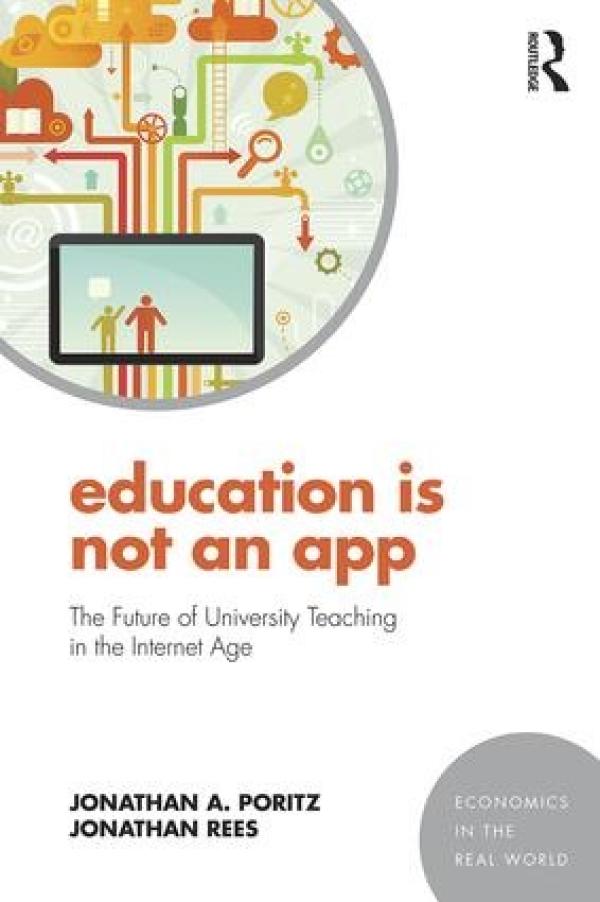
This book captures the frustration of many faculty who are witnessing the decline of faculty governance against the rise of administrative fiat, particularly in areas that impact pedagogical choice. In seven main chapters, the authors provide a detailed view of the systems and decisions that are so often thrust upon faculty. They do a superb job describing the landscape of MOOCs, FLOSS, and LMS in everyday language. They deal with a broad range of issues to show the ways in which faculty are being (sometimes willingly) deskilled through technology. These authors are not dismissive of technological innovation, but they are wary of some aspects of it. They are aware that this book will quickly become outdated but teachers will find that the evidence and core arguments presented here remain worthy of attention. Education is Not an App is a manifesto of sorts, calling faculty to embrace their freedom to make pedagogical choices, a freedom that is often smothered by administrative decree. For instance, the authors argue, new learning management systems are often presented to faculty as across-the-board, time-saving solutions for all, not as the political flashpoints they should be. For these authors, educational technology tends to “seek constrained truth for the advantage of specific powers that be” (3), just as the simplest app constrains as it empowers. Several key assumptions and at least one conclusion here might irk some readers. First is the assumption that face-to-face education is superior to online education, with very limited exceptions. The authors assert that the work that happens between people in classrooms produces more critical thinking, and therefore more meaningful learning than most experiences online. This reader agrees, but not all will. Another assumption is that faculty will have the ability (or the interest) to keep current with new technologies and will have institutional support in using the ones they choose, a lofty goal on both counts. Few faculty have the time to school themselves on emerging technologies, and pressures such as student evaluations reward conformity. These authors conclude, quite rightly, that faculty jobs are in danger because of the “the kind of university governance that makes this kind of [edtech] abuse possible” (37). This book highlights many issues that raise concern (not least, the rise of “instructional designers”), but we do not yet know that student learning suffers in this tech-heavy environment. The authors focus more on academic freedom and far less on student learning. Poritz and Rees are correct that educational technology – with its unbundling and deskilling and administrative oversight – threatens academic freedom and the autonomy of thought we hope to teach our students. It invites monitoring and assessment that faculty should resist; at the very least, teachers should consider at length the costs of simplifying their teaching lives through technology. “At the risk of sounding alarmist” (74), faculty in all disciplines should read this book. Even those who resist as much as possible should be aware of the changing landscape. We gain and lose in the decisions that we make, but we stand to lose more from decisions made for us.
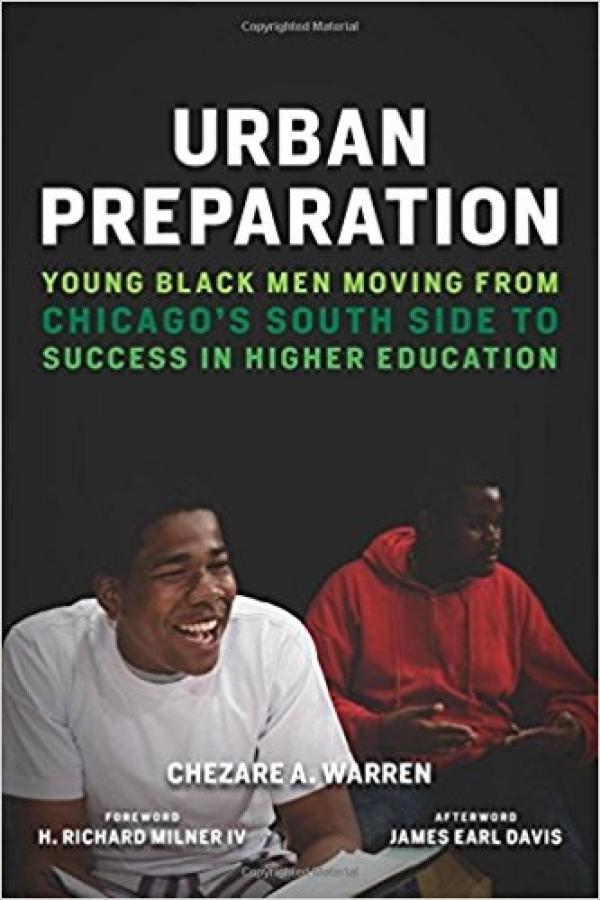
Urban Preparation contributes to a needed body of research on race that investigates “mechanisms, systems, structures, and practices that have a real bearing on students’ opportunities to learn” (vii). Urban Preparation highlights the scholarship of leading researchers who address questions related to race, poverty, achievement gaps, and the academic performance of minority students. An underlying thesis of Urban Preparation is that students in general, and minority students in particular, succeed when appropriate measures are in place. This is a resource for scholars in a variety of disciplines, including but not limited to: education, law, sociology, psychology, health, political science, and social work. The book begins with an overview of the Race and Education series at Harvard Education Press. The series editor, H. Richard Milner IV, lists several objectives that guide the series and he challenges those in power to work “for the good of humanity, to interrupt systems, policies, and practices that work only for some while others remain underserved” (ix). Reasons are given for focusing on the intersection of race and education and questions are asked related to poverty, transportation, housing, and employment, among others. In the Introduction, Chezare Warren explains why he wrote Urban Preparation: “to subvert dominant narratives that insist on casting urban-dwelling young, black men and boys as ‘at-risk’ or ‘disadvantaged’” (1). He shares the stories of these young people as counter-stories that portray them as hyper-vulnerable. He is also convinced that social inequities and stories of failure must be examined alongside counter-stories of resilience, persistence, accomplishment, and triumph. The book highlights the stories of seventeen young black men who are members of the inaugural graduating class of Urban Prep Charter Academy for Young Men, referred to as “UP.” UP is a high school for boys in the Englewood neighborhood which has one of the lowest median household incomes among Chicago’s Southside neighborhoods. However, UP is widely recognized for 100 percent of its graduating class gaining admission to four-year colleges and universities. Urban Preparation aims to: (1) describe the organizational design of UP; (2) examine the intersections of place and space to discern factors that motivate young black men to succeed against the odds; and (3) explore the factors that help narrow “opportunity gaps” for urban youth, and the implications of these factors (3). The book’s qualitative data consists of interviews, field notes, memos, and participants’ responses in order to construct a “coherent continuous narrative around dominant themes” that emerged from analyzing data (8). From the data, Warren chronicles the real-life experiences of the first graduating class by grouping the students into five composite characters with overlapping characteristics. The title of the book is derived from the school’s name but the book tells the stories of the seventeen students and “the meaning associated with growing up in an urban environment” (18). More than anything else, the book gives a better understanding of the academic and cultural strengths of urban minority youth in secondary and postsecondary settings. Urban Preparation is fundamentally a counter story as well as a critical study that challenges educators and all those interested in improving the education outcomes of black men and boys to listen to them and to learn from them.
In the opening chapter of his edited volume The Pedagogy of Compassion at the Heart of Higher Education, Paul Gibbs succinctly locates this collection of essays and the topic itself within the current environment of higher education in a way that will be familiar to many: “Given that the consumer model seems to resonate with the context of the majority of higher education institutions, what place do the virtues of humanity and spirituality have in a product-driven consumer service business model of higher education?” (9). It’s a question often asked, and it is one this volume addresses from a wide variety of angles and perspectives. The answer, from adding the sum of the essays here, is that humanity, spirituality, and other qualities of compassion can be observed, practiced, and cultivated in most if not all places within higher education. The variety of topics and perspectives in this volume provide detailed descriptions, arguments, and inspiration for just how such a pedagogy has been prevalent in the history of higher education, and how it can be integrated more into higher education today. Gibbs is mindful to be as expansive as possible in the perspectives he includes, and the book does include authors from the U.K., the U.S., Canada, Hong Kong, and Europe, with voices ranging from senior academics to students. This range demonstrates Gibbs’s point that the book “is neither overtly spiritual nor secular or agnostic” (11). For instance, Richard White’s entry traces compassion through Western and Eastern philosophy, and in doing so provides practical ideas to create a compassionate classroom. Kathryn Waddington focuses on “self-compassion, which involves self-kindness, a sense of common humanity, and mindfulness” (66). Self-compassion, Waddington shows, can influence a change in behavior and understanding at individual, group, and organizational levels. Gibbs is conscious of the structure and organization of this essay collection, and the essays flow well in conversation with each other. This element of the book makes for a very engaging read, and one that further encourages the links between multiple perspectives on compassion in higher education. Following the chapter on self-compassion, Irena Papadopoulos writes on intellectual compassion as a way of cultivating world citizenship, connecting the concepts of interconnectedness of social reality as stemming from twentieth-century philosophers Martin Buber and Emmanuel Levinas. From there, the discussion flows to the relation of compassion within the liberal arts, within Buddhism and Islam, and the transformative power of compassion within South Africa’s anti-apartheid movement. There is also a series of essays focusing on compassion in an institutional way. In The Pedagogy of Compassion at the Heart of Higher Education, Gibbs collects diverse ideas about compassion in higher education. This volume can serve as a guide, for individuals and institutions alike, for an engaging historical and topical conversation on the wide-ranging ways to integrate ideas of spirituality and humanity into realms that have increasingly come to seem consumerist.
Against the prevailing tide in higher education, Christine Harrington and Todd Zakrajsek argue that lectures, when prepared well and incorporated appropriately, are one of the most effective ways to enhance learning. The first part of their book is focused on making this case and on delineating the different forms a lecture can take. The second part of the book focuses on ways to make lectures more effective for learners. That second part takes up the bulk of the book (7 of the 11 chapters). The third part provides tools and resources for preparing and evaluating lectures. These final two chapters give helpful rubrics, charts, and questionnaires that can easily be adapted for one’s own lectures or for evaluating others’ lectures. This book would be a useful addition to an individual professor’s library and, most especially, to a center for teaching and learning library. Both authors of Dynamic Lecturing are trained in psychology and have experience in teaching and learning and faculty development centers, so the examples are often from social science or natural science classrooms. However, many of their suggestions could easily be adapted to theology and religious studies. Using research from the scholarship of teaching and learning, they argue that lectures are efficient and effective for novice learners but are less so for expert learners (by which they mean advanced undergraduates and graduate students). This book, therefore, would be most useful for faculty who frequently teach lower-division courses for undergraduates; it could still be quite useful for those wanting to make their lectures more effective, even if they work with other learner populations and use other kinds of teaching tools. This distinction between novice and expert learners is significant in the context of theology and religious studies: in certain courses, students may enter the classroom assuming they are the experts (for example, if the course focuses on their own religious tradition, especially if the professor is not another “insider”). Harrington and Zakrajsek’s discussion of techniques like pre-testing may be a way to address this unique dynamic: if a student took a pre-test and found that they did not know as much as they thought they knew, they might find themselves more open to learning from a professor’s lecture. As their title suggests, this is not a book about individual teaching choices, but rather is focused on research-based strategies: nearly every paragraph has multiple citations that refer the reader to studies done on teaching and learning. A bibliography accompanies each chapter, so references are easy to track down, if desired. The studies are often explained well, so the reader knows what the research suggests; there are times, however, when the conclusions seem overstated. For example, a study used to argue that lectures are more helpful than active learning sessions to novice learners is explained in a parenthetical note: 88% of students agreed or strongly agreed that a lecture helped them learn course content compared with 49% of students who agreed or strongly agreed that active learning sessions helped them learn course content (10). Self-reporting is not the same as demonstrating mastery of the content. In other places, the authors note that students are not always the best judges of their own learning (see, for example, studies on learners’ overconfidence [115]). The research cited throughout the book is not limited to self-reporting and includes very helpful data on what promotes student engagement and learning.
“The definition of slow looking is straightforward,” writes Shari Tishman, “It simply means taking the time to carefully observe more than meets the eye at first glance" (2). Imagine taking students to an art museum and focusing on just one painting. You would be taking the time to support your students in looking, really looking at art. Can they list everything they see in the painting? Could they identify twice as many items if you gave them more time still? Does the painting look different if they move closer or change their angle? Are there interesting juxtapositions of objects, shapes, or colors within the painting? These questions are natural to slow looking. It is a rewarding classroom practice and an indispensable aspect of method in theological and religious studies. This book was written “with educators in mind” and it contains many practical ideas on how to use slow looking in the classroom. Examples range across disciplines: Virginia Woolf’s observations concerning “The Mark on the Wall,” zoological sketches of a caracal cat, and the mechanical intricacies of an old-fashioned office stapler, among others. Drawing on previous research, Tishman examines three dispositional tendencies involved in slow looking: ability, inclination, and sensitivity (145). Sensitivity is particularly critical; this is the capacity to employ slow looking in the appropriate context. As educators in the humanities seek to more clearly articulate the lasting benefits of our work, this careful examination of slow looking as an important lifelong skill is timely. The beauty of this title is its ability to focus on the benefits of slow looking as educational practice in a deep way. Many excellent books on pedagogy adopt a wide scope. They pull their lens back and look at course planning or broad curricular systems. Slow Looking has much to offer courses and curriculum, but Tishman is adept at returning continually to the exercise of slow looking to reveal its complexity and practical efficacy from different vantage points. According to Tishman, slow looking is a “learned capacity” foundational to critical thinking (7). Foundational, yes, but it should not be thought of as synonymous with critical thinking or be conceptually absorbed by critical thinking. Slow looking is its own discrete process. Tishman explains, “Slow looking is not primarily judgment oriented, though its fruits certainly inform good judgments. Rather, slow looking emphasizes deferring judgment in favor of apprehending the complexity of how things are at the moment” (149). There are three types of complexity: complexity of parts and interactions (anatomy, for example), perspective (different physical or conceptual vantage points), and engagement (interplay between perceiver and perceived). Teachers will already see how parsing complexity in this way can lead to extended classroom reflection on a given subject of observation and the process of looking itself. Slow Looking strikes the perfect balance between practicality and philosophical depth. Tishman writes fluidly and moves easily among descriptions of classroom technique, phenomenological analysis of observation, and the intellectual history of student-centered education. Slow Looking will be a continual source of inspiration in my own teaching and scholarship – it is highly recommended.