Resources
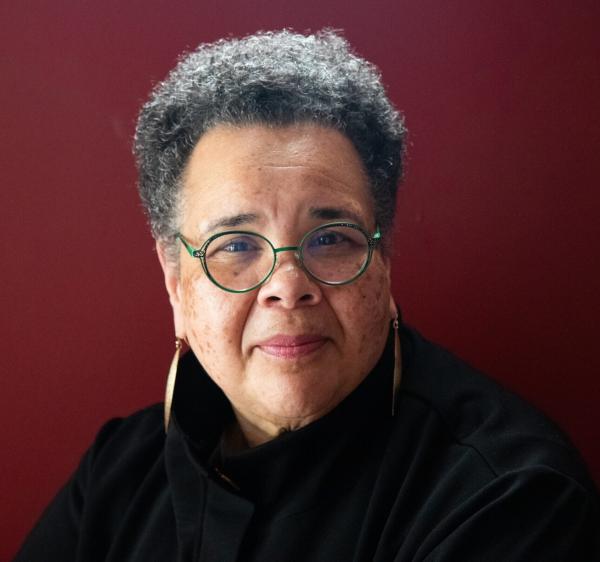
The practice of writing and publishing can be among the most life-giving dimensions of scholarship, and, at times, among the most difficult. Recently, I have held both joy and fear in the same open hand.My latest book is now available: Thinking Teaching: Stories, Insights, and Strategies to Ignite Reflection, Discussion, and Imagination.Thinking Teaching is a collection of blogs I have written for the Wabash Center over more than twenty years. In many ways, this volume most fully reflects my pedagogical commitments, both in content and in form. The book gathers sixty-six essays shaped by story, memory, wonder, and hard-earned wisdom—offerings intended to help teachers teach with greater imagination, reflection, and care. Each essay concludes with questions designed to spark conversation and communal discernment.Throughout the book, I draw from my experiences in classrooms and on faculties, while also leaning into the teachings and memories of family life. Womanist pedagogical commitments guide the work deeply. I understand education as a practice of emancipation, healing, and human flourishing. My hope is that this book will serve as a companion for individual readers, small groups, and faculty communities seeking richer conversations about teaching and the teaching life.Anyone who has published a book knows that writing and publication rarely unfold in a straight line. Books often arrive through detours, disappointments, revisions, unexpected grace and help from friends and colleagues. This was certainly the journey of this manuscript’s becoming.Around 2014, I began to imagine my Wabash blogs as a collected work. Though I had not written them according to a systematic plan, I sensed that together they traced meaningful terrain for colleagues engaged in conversations about teaching. I prepared a proposal for an anthology of these essays and carried it with me to a conference where scholarly and trade publishers gathered in search of new projects.I shared the proposal with several publishers. Most were not interested. Then, during a conversation with a fifth editor, I began to feel hopeful. We had a lively and engaging exchange about teaching, writing, and audience. As the conversation came to a close, she said gently, “Of course, you will expand each blog into a full chapter—right?”My heart sank.I wanted the brief essay form—those 750 to 900-word reflections—to remain intact. I believed the short form carried its own integrity, accessibility, and power. After thanking her for the conversation, I quietly set the project aside. With disappointment lingering close by, I placed the dream of a book-length collection on the back burner.Then, in 2022 I met Donald Quist. Donald became both editor and thoughtful conversation-partner for my writing life. He helped me trust my voice again—particularly my love for short-form creative nonfiction. What began as a professional collaboration soon grew into a relationship marked by shared imagination, intellectual curiosity, and mutual trust. Donald’s editorial guidance deepened my writing, clarified my sense of purpose, and refined my voice. Through his encouragement, I began once again to believe that these collected essays could make a meaningful contribution to theological education. Without hesitation, Donald urged me to pursue the book anew.With renewed confidence, I returned to the manuscript.I then called Jack Seymour for help. Together, we shaped a table of contents that finally felt coherent and spacious. My earlier attempts had been tangled and overworked. From among hundreds of blogs, Jack helped identify sixty-six essays for inclusion in the volume. I prepared a proposal for Wipf and Stock Publishers, and in the spring of 2026, the book came into the world. Somewhere between 2014 and 2026, this book slowly found its way toward becoming. Some books, this book, require more time to ripen before they are ready to meet the world.One of my deepest joys connected to this book is its cover art. The cover features an original painting, Eden #13, by Najee Dorsey, artist and founder of Black Art in America in Atlanta, Georgia. The artwork is luminous and beautiful. For the past two years, the Wabash Center and Black Art in America have been in creative partnership. Through that collaboration, Najee has generously shared his work and encouraged artists within his gallery community to contribute artwork for scholarly book covers. This partnership has blessed us in ways both marvelous and unforeseen.When I received the email from the publisher announcing that Thinking Teaching had been published, I felt an overwhelming sense of gratitude, joy, and humility. The dread and frustration that accompanied parts of the journey seemed to fall away. In their place was a deep appreciation for the possibility that my work might accompany colleagues, nourish meaningful conversations, and encourage more liberative approaches to teaching and learning.Reflection QuestionsIn the blog, I describe my resistance to expanding the brief essays into long chapters because I trusted the “integrity, accessibility, and power” of short forms. What forms of wisdom or truth might theology and religion teachers overlook because academia privileges length, complexity, or abstraction?Who are your trusted conversation partners who cheer you on, bring needed skills and expertise, and allow you space to shine in your writing and scholarly work? List them. Thank them.The writing of some books “require more time to ripen.” What in your teaching life is still ripening? What unfinished idea, classroom practice, or project might need patience rather than productivity?What are your practices of relief and release when dread seizes you? How can you better handle disappointment and rejection?For the colleagues who you mentor, advise, and support, how will you encourage their persistence, agency, and tenacity for their creative work?When your work brings you satisfaction and joy, how do you celebrate? How do you show appreciation for those who assisted you?

I was asked for pictures of me while teaching in the classroom. An organization I’m part of wanted them for one of their platforms and I obliged. I asked a student to use their phone to take pictures of me during one of our class sessions. I asked them to do it discreetly so the pictures could be as candid as possible. And boy were they candid—and revealing! I was rolling laughing as I saw myself in all kinds of animated postures: down on one knee, face looking upward, arms outstretched toward the sky; all manner of facial expressions and creative hand gestures; nutty drawings of giant circles and spirals on the chalkboard as I tried to explain who-knows-what concept. It was a surprise to me that my teaching style was so animated and a bit dramatic. And while it amused me to see this about myself, it did not make me self-conscious, for even though I had not realized this about myself, my students surely had known me this way the whole time. I got to see what my teaching looked like a little better and know that while there is no single way to teach, I surely had mine. The larger point, of course, is that there is no blueprint to how we embody our teaching, and the more we understand this and understand ourselves, the better we can move into our own. I had received an earlier lesson on embodiment the very first time I presented a paper at the annual meeting of the American Academy of Religion (AAR). I hated every minute of my first paper presentation: I hated the podium—how much it blocked my sense of connection with the listeners and made me feel like I could not see everyone clearly. I hated the microphone because it meant I couldn’t move about and I had to stand on my tiptoes to try and keep it at the right level. I hated reading the paper because it meant I was the only one speaking that whole time. It was a stressful and miserable experience. The following year, then, when I was to take part in a commemorative panel scheduled in one of the very large presentation rooms at AAR, I knew I had to find a way to change my experience of presenting. Through a friend, I received acting coach tips to help me feel more comfortable and confident about presenting. The advice in a nutshell was to experiment and play with the embodiment of the activity: practice being at the podium, around it, in front of it; explore ways to change my spatial relationship with the listeners, the paper, the microphone. Play with time, pauses, moments of possible interactions with the listeners, even if not explicitly verbal. She told me to listen to what my body was telling me through its discomfort—what exactly was not working? —and to explore ways to address and attend to the cause of the experience. I should accept that presenting in the traditional way did not work for me and explore and play with various adjustments and shifts to discover the approach that did work for me. Effectively, she released me from the idea that there was a single blueprint for conference paper presentations and encouraged me to bring myself, mind and body, to discover my own. In my last post I wrote that “we teach humans, not subjects,” and argued that in our teaching it is important to attend to the humans before us first and foremost. It is likewise important to attend to ourselves, to who we are in the wholeness of our mind and body, and to allow ourselves to feel and sink into the embodiment of the teaching relationship. Teaching is relational as much as it is embodied. And it takes some experimenting to find one’s grounding within them both. But before receiving the tips from the acting coach, I received an invaluable tip from a student that has remained with me since my first week as a professor. The Faculty Development team at my university invited students to join the new faculty for lunch and an informal Q & A during the new faculty orientation event. I asked the student sitting at my table, “If you could give one piece of advice to new faculty, what would that be?” He said, “Let us see you as human, sometimes. Be ok showing us your ‘non-professor human side’; it helps us relate to you better.” I always remember that tip—it reminds me that it is okay to bring my peculiar, embodied self to the relational activity of teaching and to give myself permission to sink into it, even with its flair and dramatic gestures. What’s yours?
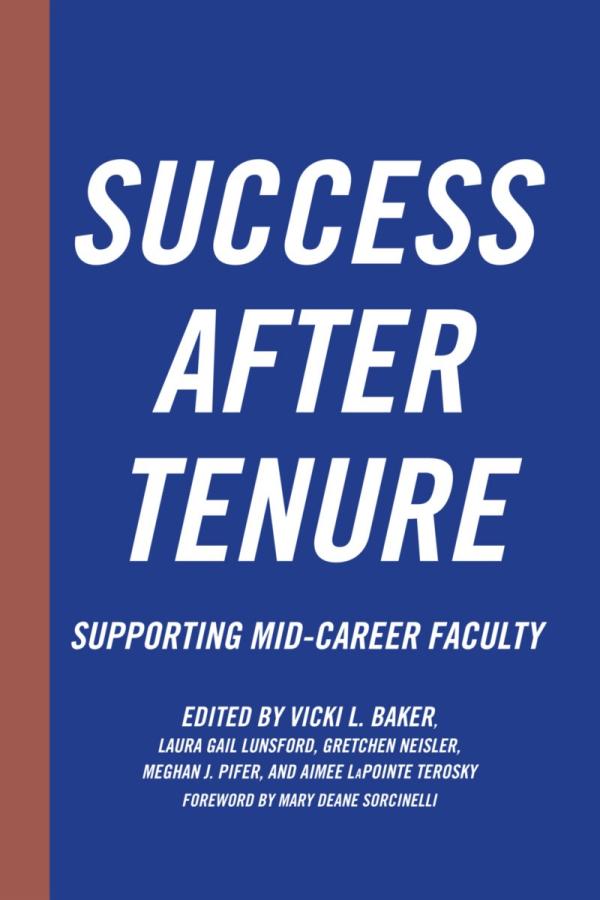
This book brings together leading practitioners and scholars engaged in professional development programming for and research on mid-career faculty members. The chapters focus on key areas of career development and advancement that can enhance both individual growth and institutional change to better support mid-career faculties. The mid-career stage is the longest segment of the faculty career and it contains the largest cohort of faculty. Also, mid-career faculty are tasked with being the next generation of faculty leaders and mentors on their respective campuses, with little to no supports to do so effectively, at a time when higher education continues to face unprecedented challenges while managing continued goal of diversifying both the student and faculty bodies. The stories, examples, data, and resources shared in this book will provide inspiration--and reality checks--to the administrators, faculty developers, and department chairs charged with better supporting their faculties as they engage in academic work. Current and prospective faculty members will learn about trends in mid-career faculty development resources, see examples of how to create such supports when they are lacking on their campuses, and gain insights on how to strategically advance their own careers based on the realities of the professoriate. The book features a variety of institution types: community colleges, regional/comprehensive institutions, liberal arts colleges, public research universities, ivy league institutions, international institutions, and those with targeted missions such as HSI/MSI and Jesuit. Topics include faculty development for formal and informal leadership roles; strategies to support professional growth, renewal, time and people management; teaching and learning as a form of scholarship; the role of learning communities and networks as a source of support and professional revitalization; global engagement to support scholarship and teaching; strategies to recruit, retain, and promote underrepresented faculty populations; the policy-practice connection; and gender differences related to key mid-career outcomes. While the authors acknowledge that the challenges facing the mid-career stage are numerous and varying, they offer a counter narrative by looking at ways that faculty and/or institutions can assert themselves to find opportunities within challenging contexts. They suggest that these challenges highlight priority mentoring areas, and support the creation of new and innovative faculty development supports at institutional, departmental, and individual levels. (From the Publisher)

This second edition of the informative and influential The Essential Department Chair offers academic chairs and department heads the information they need to excel in their roles. This book is about the "how" of academic administration: for instance, how do you cultivate a potential donor for much-needed departmental resources? How do you persuade your department members to work together more harmoniously? How do you keep the people who report to you motivated and capable of seeing the big picture? Thoroughly revised, updated, and expanded, this classic resource covers a broad spectrum of timely topics and is now truly more than a guide—it's a much-needed desk reference that tells you "everything you need to know to be a department chair." The Essential Department Chair contains information on topics such as essentials of creating a strategic plan, developing and overseeing a budget, key elements of fundraising, preparing for the role of chair, meeting the challenges of mentoring to increase productivity, and creating a more collegial atmosphere. The book also explores the chair's role in the search process, shows how to conduct a successful interview and what to do when it's time to let someone go. And the author includes suggestions for the best practices to adopt when doing an evaluation or assessment. The Essential Department Chair, Second Edition, contains a wealth of new, realistic case studies to equip leaders in this pivotal position to excel in departmental and institutional life. (From the Publisher)

If higher education is to fulfill its vital social mission, new department leaders must be prepared for their positions and get up to speed on the basics quickly, educating themselves about the role and continuing to learn on the job. In this second edition of his classic resource, Don Chu outlines the proven ideas and strategies new department chairs need in order to do their jobs well. Thoroughly revised and updated, The Department Chair Primer contains information that addresses the current pressures and challenges in higher education and offers practical suggestions for responding to them. Filled with illustrative examples, the book gets straight to the heart of challenges and issues. Each chapter details a particular problem, includes a brief introduction to the topic, and provides tips on how to deal with the situation. Covering a wealth of topics, The Department Chair Primer -Explores the chair's role as department leader -Offers suggestions for handling stress and conflict -Includes information on budgeting, resource management, and development -Contains strategies for professional development, people management, and working with challenging personnel -Presents ideas for handling department communications, student development, and strategic positioning Written in a concise and accessible manner, The Department Chair Primer is an ideal resource for the busy new department chair. (From the Publisher)

Mid-career faculty comprise the largest segment of the academy yet there is scant empirical evidence for the policies and practices related to mid-career faculty. The aim of this chapter is to provide an introduction to the lives of mid-career faculty working at institutions of higher education in the United States. The National Study of Postsecondary Faculty, conducted in 2004, served as the source of the demographic information and included a sample of 1,080 public and private not-for-profit degree granting postsecondary institutions, as well as a sample of 35,000 faculty and instructional staff (National Center for Educational Statistics, 2004). An analysis of recent articles related to mid-career faculty provided a theoretical foundation from which to begin our exploration into the topic. (From the Publisher)

If a title reflects a book’s content, then this work is a particularly good case in point. The authors consistently refer to various real-life examples from the sphere of education in order to highlight the importance of attitudes and dispositions. While thus staying true to the book’s title, the authors additionally share pieces of wisdom from the field informed by years of experience. Education is a service industry. Educators and trainees are called to serve and not to be served. While this may seem like commonsense, the authors remind readers that commonsense is not all that common and the problem of entitlement is not as uncommon as one would like it to be (26). In this light, the authors make the case for the assessment of dispositions along with accompanying narratives that will address the issue in a professional and timely manner (38). While offering critical feedback, however, coordinators and instructors are simultaneously encouraged to keep in mind the need for reassurance, support, and empathy for students who are teacher candidates. The book is filled with humor, allowing readers to let their guards down a little and see the need for inculcating professionalism in work settings. The authors narrate accounts of students in training who cite seemingly legitimate reasons for absences only to be caught – thanks to social media – going on cruises. The authors offer other cases, such as those who try to outmaneuver school buses pulling out of parking lots just to get ahead. Then, believe it or not, are those who speak inappropriately to students, including saying, “You don’t like my jacket? Well, your momma liked it last night” (42). Working with future educators, the authors argue rightly, necessitates being proactive. While entitlement and lack of professionalism are matters of utmost concern when working with teacher candidates who are adults, these very adults also have particular lives that bring up questions of shelter, work-school balance, adequate food, parenting and other familial responsibilities. “Can you be proactive? Yes! Should you be proactive? Yes! Does it take time? Yes! Does it take work? Yes! Is it worth it? Absolutely!” (47). Through such series of questions and responses, the book presents a wealth of material in a readily accessible manner to teacher educators. Educators are warned that perfectionism may come at the cost of unsustainable superficiality. Reminding educators that “we are they,” the authors note that “what we create together will ultimately serve our students, schools, and communities” (55). The emphasis on creating together means that authentic, professional, and healthy relationships and partnerships are acknowledged as being at the heart of a successful field education experience (55). Such relationships and partnerships need constant tending and care, much like a garden (54-55). As readers make their way through the book, a realization soon emerges. Transcending the this-is-my-obligation attitude in order to come to a place where “we make promises and keep them” (59) is key. Commitment, talent, and care for the educational setting are tested by problems, dispositions, and attitudes (77). Anyone interested in navigating these realities would benefit from engaging this work.
The blizzard of the world has crossed the threshold and it has overturned the order of the soul. -Leonard Cohen[1] I still remember vividly the fear and frenzy swirling around my graduate school the days and weeks after September 11, 2001. As the blizzard of physical and spiritual violence and their inevitable outcome of war blew around campus, classes went on. Sitting in a classroom for two hours at a time and listening to lectures on systematic theology seemed--to me, at least--pointless. I can remember only two of my professors mentioning in class the terrorist attacks and their aftermath. One professor stormed into the classroom the morning of September 12, in a fury, declaring: “We need to bomb ‘em!” He then uttered something about holy wrath. When the US eventually did bomb Afghanistan on October 7, another one of my professors openly wept in class. She was concerned, as was I, about the number of innocent lives that would be lost in the ensuing war. In a move deemed controversial around the Theology Department, she hung a poster on her office door entitled “Death Toll,” which she updated daily to reflect the current count. It was to her office hours I went when I was trying to find my way through the storm of confusing thoughts and emotions. So many people around me were indifferent to the suffering of others. So many seemed to be separated from their souls. “What’s the point of going to class anymore?” I remember asking her. I had been thinking that my time would be better spent dropping out of school and becoming an activist. Actually, I had a similar crisis of conscience during my undergraduate studies, I told her when I almost quit school for what seemed like a nobler cause. Now a professor myself, when I reflect back on these difficult moments during my student years, I can identify what annoyed me so much about so many of my theology classes: they were irrelevant and disengaged from the serious events surrounding us; their aim was to transfer content. No one seemed to care, except for the one professor from whom I sought guidance, about teaching us to apply the knowledge we learned to the context around us. That education entails not just knowledge, but also attitudes, skills, and practices may seem to be a universal pedagogical value. But, if it is, it is not universally carried out. For example, in the Catholic neck of the woods in which I teach, formation is understood to entail four pillars: intellectual, spiritual, pastoral, and human. Seminarians, permanent diaconate candidates, and lay students preparing for ministry are to be formed across these pillars in order to emerge from graduate theological programs as integrated, healthy ministers in their churches and communities. So often though, these pillars operate as mutually exclusive silos. In many programs, I have seen, for instance, theology professors are responsible for intellectual formation, while field educators and priests are in charge of the other three pillars. Sometimes little to no conversation happens across those responsible for each pillar. The student moving through such a program is the sole agent of integration between the four pillars. As I know from my student days, this doesn’t work very well. The soul feels separated from the intellect and the conscience, and the feeling of disintegration is heightened, and becomes too much to bear, when living in times of war, amidst racial and economic injustice, ecological ruin, political deceit, and greed, etc. The importance of integration and integrity have been made clear enough in the current US presidency. To take just one example: consider the foolishness of the POTUS (President of the United States) delivering a speech on the responsibility of Twitter to millennials during his visit to Saudi Arabia. When our world leaders act in such a way, demonstrating a separation between intellect and soul, or a wholescale overturning of “the order of the soul,” to use Cohen’s words again, we need to help the students in our classrooms make their way through “the blizzard of the world,” lest they be lost, too, in the madness. Course syllabi and outlines need to be revised. Term assignments need to be rethought. Discussions in class need to be redirected. All of this needs to happen so that we give students the time and space in our classes to learn how to apply knowledge to context and practice. In a brainstorming session of my “Classics of Christian Spirituality” course I taught last semester, I was edified deeply when one of my students had the idea to apply the Spiritual Exercises of Ignatius of Loyola that we had read for class that day to a community night of reflection for peace and discernment during politically turbulent times. I have also learned that students need the chance to receive feedback on their efforts because it is far more difficult to apply the information they learn in class than it is to memorize it and regurgitate it back to a teacher on a test or in paper. Giving them opportunities to act across the four pillars, or simply place their knowledge in the service of praxis, is critical for their formation as engaged citizens in church and society. If we are concerned about the declining registration rates in theological and religious education programs in North America, we might need to step up our game in terms of formation. If it weren’t for the teacher I had in the Fall of 2001 who kept things real and relevant for me, I doubt I would have registered for any more classes either. [1] Leonard Cohen, “The Future” © 1992 by Sony Music Entertainment, Inc.

Like many teachers, I was trained to expect student’s participation in the classroom to be many things at once: prepared, right on the issue at stake, ready to offer deep insights and if possible, be passionate. I also was trained to exclude the needs and subjective experiences of my students, expecting them to bracket their suffering, their sorrows, and their traumas, at least during class time. Oh, and I was trained to expect students to be as text-based as I am, even though reading habits have changed. I still resent it when the connections made in class are not related to the texts. After a while, it is so easy to catch students who are just pretending that they have read or make a comment based on a line on page 78 without having actually read the text. I get really frustrated when students don’t read the assigned texts or when they are not fully present, having their hearts and minds elsewhere. All of these forms of participation in class demand practical responses from the professors that are not as clear as we might hope. Let me give an example: one day a student offered a harsh critique of the book we were reading. I asked him to name what in the book he didn’t like. After 3 attempts to continue with his critique, it was clear he didn’t read a thing. What do I do? Call him out in front of everyone? Talk to him in private? Wait until the end of the semester? Other forms of participation, or non-participation, are part of the experience of the class. Students who “participate” by sleeping in class, or using their phones and computers. There is the gaze of the one who is checking emails and looking at Facebook. And there are the smiles, facial reactions, and even laughter when they are texting. All this is why I tend not to let students use computers or phones during class. But how to do that when the readings are on their computers, or when the cares of the world are (often) more compelling than what our students find in our classrooms? When we have only their bodies, and not their minds and hearts and spirits, passions and convictions, strong yesses and necessary nos, then what? Maybe we have to be open to the possibility that some of our students are part of conversations they cannot tell us unless we ask and are open to what we will hear. Besides the objective forms of grading participation regarding reading texts, there is so much more that is at stake when our students are in the classroom. I had a student who would sleep every day in my class. For a long while, I thought about sending him an email saying he couldn’t make this class his bedroom. But then, I decided to talk to him personally. We met and he then told me that life had been very difficult for him, that he was working overtime to take care of his unemployed mother, his little brother, and teenage sister. He apologized. What do I do? Tell him if he continues this way he cannot pass? Find ways to help him when I don’t have time to help? Keep him in the class for as long as I can until he resolves his problems? Another student was quiet all the time. Couldn’t speak. Talking to her I learned she was going through very difficult personal times, but couldn’t say what it was. She kept quiet. What to do? Flunk her? After the semester was over she decided to talk to me and told me she had become pregnant but had lost the baby. She could not make sense of her life, and the only places she found some sort of sustenance, relief and perhaps even coherence was the classes she took that semester, including mine. Another student received the news that his mother was terminally ill. He missed more classes than he was allowed in order to pass this class. What was I supposed to do? Objectively speaking, knowledge is a composition of several issues. Knowledge is not only about the present of abstract thinking but also by what is around us, with its feelings and emotions, the composition of social classes, objects and images used, sensations around expectations, fears and hopes, general conditions of life. The best forms of learning are the ones that can integrate all these aspects of life in direct and/or transversal ways. But for students in crisis, the ‘best forms of learning’ may require each teacher to bend a bit, to listen a little longer, to walk with the student an extra mile as she is able. Does that mean that every teacher needs to be a therapist or a chaplain? Yes and no. Perhaps more yes than no? Well, yes because when we teach we are teaching about the whole life and not only about the specifics of a certain discipline/knowledge. Even the specifics of a certain knowledge influences the whole way of living. And no, absolutely no, since we are not professionals in these areas, and we do not have the required formation, and cannot offer the appropriate care. In classrooms, there are so many borders to negotiate and fundamental boundaries that must be kept and honored. To deal with each case that arises in our classrooms is always so difficult to discern. But if I am unwilling to listen, or if I am captive to my objective model of learning, I may be injuring my students while professing rigor, standards, and policies. How teachers and students learn together is a wonder for me! How we survive a whole time together is a mystery to me! And when we witness transformed lives is a miracle to me! These truths are sometimes too much for me. For you, too?
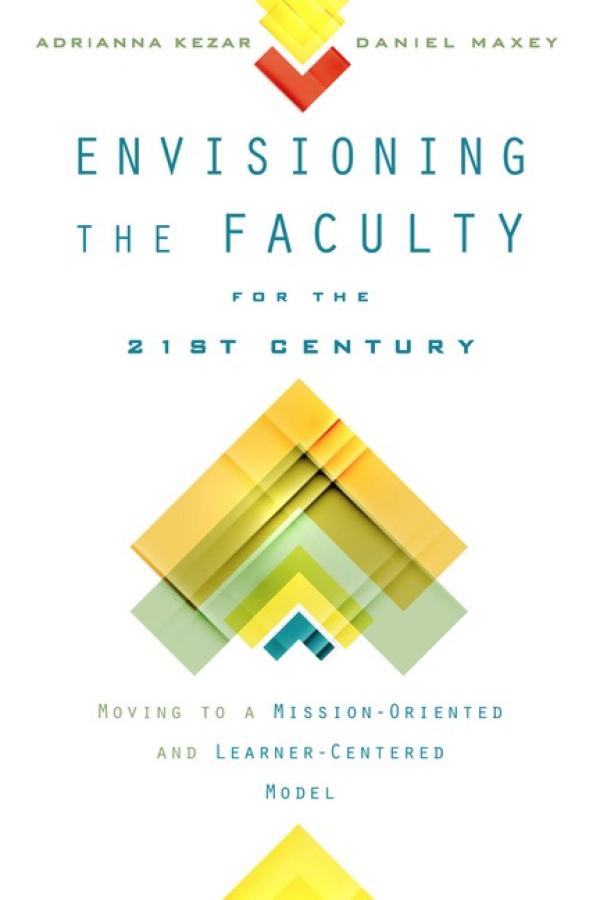
What functions occupy your time as an academic? Are they equally respected, sensibly arranged, and fairly evaluated? Are they well-coordinated with the mission of your institution? Do they complement the functions your colleagues carry out? Do they all contribute to student learning? If you have ever wondered about such questions, you must read this book. Adrianna Kezar and David Maxey, of the Delphi Project on the Changing Faculty and Student Success, gathered a distinguished group of contributors to produce this volume on the future role of faculty in U.S. higher education. They start by pairing two concerns often considered separately despite their proven interconnection: the erosion in recent decades of the traditional faculty model (the full-time, tenured or tenure-track faculty member), and student success. The unbundling of faculty roles, and the consequent re-distribution to assorted academic personnel, of curriculum development, course design, content delivery, assessment, advising, research, community engagement, and so forth—has negatively affected faculty-student interactions and therefore student learning and self-efficacy. Adjunct faculty members are not the problem. Even the disappearance of tenure is not the problem. The problem has been the random, reactive, and poorly conceived responses to market forces and technological revolutions in education. The volume goes on to raise many other concerns that changes to the faculty have effected, including: an evolving understanding of academic freedom based less on individual rights and more on collective responsibility, the way that internationalization of higher education and a global academic workforce challenge assumptions about U.S. supremacy, the need to base faculty evaluations on the success of the department as well as individual achievement, a shift in faculty development programs from mere technology training toward adult learning, and the pros and cons of customizing academic careers to support work-life balance. Contributors do not uncritically valorize the traditional faculty model; while they generally support the return to more full-time positions, they also recognize the need for flexibility and coordination in the design of faculty roles, alignment of those roles with institutional priorities, and collaboration rather than competition among communities of scholars. One specific innovation lifted up as noteworthy is the way medical schools have created multiple tracks (investigator, clinical-educator, clinical, research, and educator) that provide distinct but parallel career pathways for their faculty while simultaneously serving their institutional needs. Though the book does not conclude with a fully envisioned alternative model for the 21st century, several points of consensus do emerge, especially around the need for collegiality, professionalism, responsibility for students, differentiation and diversification of roles, and more expansive definitions of research and scholarship. This collaboration is a rare and refreshing example of one to which the contributions are evenly strong. Every chapter piqued my interest. Readers of this journal may especially appreciate the chapter on academic freedom because it is written by a religion scholar and has a familiar ring. Readers new to the literature on developments in higher education might first want to read Ernest Boyer’s 1990 Scholarship Reconsidered, referenced frequently by contributors. Envisioning the Faculty for the 21st Century will become an equally important and influential work. Works Cited Boyer, Ernest L., author. Drew Moser, Todd C. Ream, and John M. Braxton, editors. 2016 expanded edition. Scholarship Reconsidered: Priorities of the Professoriate. San Francisco: Jossey-Bass.