Resources

The University of Chicago made news recently because of a letter sent by its Dean of Students to inform its incoming class of freshmen that the University, given its commitment to “freedom of inquiry and expression,” does not support “trigger warnings,” cancel controversial speakers, or condone creation of “safe spaces.” Responses to this letter run the whole gamut from celebratory cheers to condemnatory curses. Some see this as the University’s honorable refusal to shut down difficult discussions of sensitive subjects; others see it as the University’s hypocritical and covert attempt to forestall student activism on campus to challenge conservative speakers or oppressive rhetoric. I have no way of knowing the “real” motivations or intentions of this letter. I do notice, however, that subsequent conversations, whether in support or in protest of the University of Chicago’s letter, tend to assume that “free speech” will necessarily trump or preclude “safe space” or “trigger warnings” without clarifying what those terms may mean or how they may be put into practice. As an educator who likes to encourage and enable students as well as myself to think again and think differently, I am all for free speech; free speech is, in fact, indispensable to classroom discussion and learning. We do not learn well if we feel like our thoughts and ideas are being suppressed; we also cannot learn if we are not allowed to make mistakes. Nobody’s commitment to Black Lives Matter, neither mine or any of my student’s, should keep white students in my class from articulating their disagreements with or dislike of James Cone’s Black Theology and Black Power. Similarly, advocates for LGBTQ rights, including myself, cannot silence students who want to push back against Marcella Althaus-Reid’s Indecent Theology. Every student in my classroom should have the space and time to express their thoughts and views, even if I think they are dead wrong; to deprive students of such is to take away from them an opportunity to hear and learn through feedbacks and responses. We must also not forget that persons from traditionally marginalized groups do make mistakes and can also be misguided in their thinking. Whether this commitment to free speech and the idea of the classroom being a safe space can coexist depends on what one means by the latter. I cannot guarantee that no one will feel uncomfortable, unsafe, or threatened in my classroom since I cannot control how one feels or deny what someone is feeling. Hearing new ideas that you have not considered before, especially if it contradicts or challenges what you have held dear deep down and for very long, can indeed be very alarming. I have also heard faculty of color and female professors saying that they themselves did not feel safe at times with their students. When students are even allowed to carry guns legally on some campuses, how can I feign the power or ability to keep everybody safe in my class? I can, however, promise that students in my courses will have a safe space to speak freely, meaning only that they will be able to say what is on their mind and in their heart, including saying, “I am feeling rather threatened!” or “I feel under attack and unsafe right now.” This kind of safe space is not one that shields students from being challenged, feeling offended, or experiencing wound or harm; it is, however, one that does not frame “free speech” and “safe space” as mutually exclusive by definition. Having a safe space to speak freely also does not, in my view and practice, necessarily cancel out the desire or the need for trigger warnings. A person does not have to run over other people verbally just because she or he has something important to say that others may find difficult to hear. I am not able to verify if it is true that persons of color, because of all the discrimination and marginalization, have developed thicker skins than average Whites, I will only say that some experiences, including oppressive and unjust ones, may also make someone more sensitive to other people’s feelings and she may hence become more thoughtful and more gracious about giving trigger warnings. Trigger warnings, when given clearly and concisely by a teacher on her own initiative in the classroom, do not function to shield students from but prepare students for difficult topics or challenging ideas. After giving a trigger warning, I have never once asked my students, “Is it okay to talk about this now?” or said to them, “You may leave the class if you do not want to hear or think any more about this.” More importantly, those of us who are teachers should remember that we have the responsibility to guide and guard the tone and the emotion of a classroom even or especially when we push for honest and genuine exchange of views and opinions. Let’s remember also that what we do may become models for our students to emulate. They, like us, need to learn how to disagree, debate, and argue passionately, thoughtfully, and respectfully. Instead of following or (even in dispute) allowing the University of Chicago’s letter to set the terms of the conversation, I see the possibility for “free speech,” “safe space,” and “trigger warnings” to exist alongside each other in my classroom and in my universe. Oh, one more thing: While a school can—and should—refuse to cancel an invited speaker with controversial viewpoints (whether the speaker is Ann Coulter or Jeremiah Wright), students and teachers can also continue their activism to speak freely against what they understand to be unjust or unacceptable. The point of activism is not to shut people up or shut people down, but to push for rethinking, reexamination, and further conversation. After all, is this not what teaching and learning is about?
This collection highlights the depth and breadth of interest in the historical Jesus across various forms of higher education. Editor Zev Garber has done an outstanding job of assembling high quality scholar-teachers to explicate their framework for understanding Jesus in his social-historical setting. What makes the volume noteworthy for a faculty teaching theology and religion, however, is the reflection on how to teach this important subject in ways that are pertinently positioned for a variety of student audiences. Taken as a whole, the volume answers Rudolf Bultmann’s question, “Can there be exegesis without presuppositions?” with a resounding “no.” Each contributor clearly presents their own position, the background of their institutional context, and assumptions that surround the teaching of their group of students. The collection is made up of twenty shorter essays and full comment on each cannot be made here. The first part of the volume examines teaching and student engagement from a variety of institutional contexts – primarily undergraduate, but including a rabbinical school and a Christian seminary. Further marks of delineation are private versus public; Protestant, Jewish, Catholic; and even a public community college. Some contributors function both in academia as well as in the training of religious leaders, formally or informally. Pedagogy is presented and explained, along with reflection on student questions, reactions, and participation in the learning process. The underlying purpose in doing this teaching work is to increase fruitful interfaith dialogue. The second section examines specific issues in teaching the historical Jesus – often these are difficulties encountered, with solutions suggested (for example, the use of art or cinema; the nature of Judaism and Jesus; the extended turn toward later Christian terms and theology; the use of gospel materials in reconstruction; clarity on the “parting of the ways”). The final section consists of four technically positioned essays about Jesus’s Jewish background and his roles within local, pan-Mediterranean, and larger political contexts of his society (who was Jesus among other males, the Pharisees, and political seditionists?). If readers of Reflective Teaching believe that good teaching is enhanced by “good conversations about teaching,” then this volume is a gold mine. Garber has directed the contributors to be transparent about themselves, their contexts, and their students. This allows us to contrast them to our own pedagogies, experiences, expectations, and accomplishments or difficulties. In addition, we can be reminded that our own contexts may be busy and focused to the extent that we are unaware of or inattentive to the differing contexts and perspectives of colleagues that both warrant our notice and our conversation – thus increasing our respect, tolerance, civility, and openness to dialogue. And because much of the discussion in this book revolves around students, we have an opportunity to see the variety of perspectives that we might one day engage in the classroom ourselves. I highly recommend this book for those who teach early Christianity or introductory courses in which the historical Jesus is a significant subject of inquiry.
Have you ever thought you knew something, only to discover, with the passing of time and the acquisition of experience, that there was more depth, breath, and nuance to the idea or situation than you had previously thought? Or, worse yet, have you ever found out that something you thought you knew was simply – inaccurate, outmoded, or outdated? Physicists are still working to understand the nature of light as well as the nature of gravity. Every 100 years or so there is a break-through which brings new clarity, more scientific accuracy, a better grasp of the basic concepts of light and gravity. Each time there is a new discovery, fellow scientists work to refute, amend and/or build upon the fresh claim. The intricacies of the universe are still being uncovered, discovered, created. I want my students to approach their work of ministry like these physicists. I want them to work at contesting the current conventions of church/theology/faith as an obligation of discipleship. I want them, as part of their role and responsibility of religious leadership, to work toward new approaches, perspectives, and worldviews which will evidence the profound complexity of praising God and serving neighbor for such a time as this. Alas, too often my students simply want me to tell them what to think – “just tell us the truth/the recipe/the formula” …. as if truth and theology are static, or even knowable. I am trying to get my students “to think new thoughts about old ideas” (an Emilie Townes phrase). I am trying to get my students to think as if the context of the digital age has made us pioneers in a new social and religious experiment – because I actually think it has. I want my students to yearn to know better. Re-examining what we thought we knew, nurturing curiosities for what others say is important, realizing that multiple, even opposing perspectives are likely simultaneously “right” while other tried-and-true perspectives need to be abandoned often leaves students flustered – especially those who came looking for the one true truth and the one true religion to match their own one call to ministry. Defending “one” in the age of multiplicity is like lashing yourself to the ship’s mast in a high-tide thunderstorm. I am aware that my students quickly learn rote answers to deep questions. They quickly read the culture and politics of the academy and substitute their churchified answers for answers provided by faculty. This is not increasing their knowing better. This is simply trading the milk cow for the bag of magic beans. Knowing better demands a suspicion that all there is to know has not yet been interrogated. It leans heavily upon the notion that God is mystery and God reveals God’s self in God’s own pace and rhythm. Students talk about God as if “he” is the uncle in the attic; as if all we need to know about God is known; as if the repertoire of God has been performed. Save us oh God from our lack of curiosity about you and your ways. Knowing better is important to me, in part, because of my mentor Charles Foster. I am a womanist, an outspoken, unorthodox, sometimes Christian scholar shaped and influenced by a reserved, white, man who passionately believes in the redemption of the world through the gospel of Jesus. People who do not understand the racial identity politics of the USA or of the racist/sexist academy are surprised to know my beloved mentor is a white man. My knowing better about speaking out against racism, sexism - the hegemonic forces of the US society is possible, in part, because of the loving and steadfast nurturing I received from Chuck. A man of his convictions, he believed the New Testament writers who envisioned the Kin-dom of God as something other than a land of patriarchy and white supremacy. Even though he is not a womanist, Chuck gave birth to a womanist. The ways of God are remarkable – a holy mystery! During the first session of Introduction to Educational Ministries Chuck was on my mind. I thought of this quote. Charles Foster said, “…the most serious threat to any community’s future occurs when its education can no longer maintain its heritage into the present or renew its identity or vocation for its changing circumstances.” More than anything, I want my students to be able to maintain the changed and changing Christian heritage while finding new and needed ways to renew its identities and vocations all the while surviving in the unprecedented liminality of the 21stcentury. If we are to be Christian in the future, we need to pay attention to Chuck’s wisdom in the present. I want my students to be more than lukewarm church bureaucrats whose primary question of ministry is “Do the people like me.” Knowing better entails having an urgency about the relevance of a Christian vision for a pluralistic and technological global village – I learned this from Chuck.
As teachers in religious studies and theology departments, one of our principal pedagogical claims is that we teach students to think critically and creatively, but we are not always clear on what this means in practical terms. This readable book by Robert DiYanni helpfully gathers research and writing from a wide variety of disciplines to help teachers define and apply critical and creative thinking for themselves. The book’s organization makes sense as it leads the reader through concepts, practical concerns, and application. Brief “interchapters” unite the flow of the book around one master of critical and creative thinking, Leonardo da Vinci. Each chapter ends with a well-crafted list of writing prompts to help the reader – both teachers and students – to apply the chapter’s concepts. For example, chapter 4 focuses on strategies and applications of critical thinking, and so the end-of-chapter prompts call on the reader to analyze arguments, evaluate scenarios, and deploy specific critical thinking strategies. Chapter 5, which examines approaches to creative thinking, provides prompts that invite imagination, innovation, and inventive solutions to problems. Essentials of critical thinking such as asking questions, seeking clarification, gathering evidence, evaluation, and reflection are discussed at length with colorful examples from notable historical events and popular culture. For instance, one chapter features a collection of headlines and other snippets of news coverage of the murder of Kitty Genovese. DiYanni invites the reader to consider what sorts of inferences and judgments various news sources made in response to this famous case (71-74). Another section examines the methods that Sherlock Holmes used in his legendary detective work (109-112). DiYanni argues, however, that critical thinking is not sufficient by itself and can even be reductive and dangerous (xi) if it is not joined by robust creative thinking. He persuasively shows that creative thinking is a necessary adjunct to critical thinking and leads to innovation and whole-minded approaches to problems. DiYanni’s coverage of creative thinking likewise draws on a wealth of examples from creative people such as choreographer Twyla Tharp and checklist-innovator Atul Gawande. DiYanni’s book thoroughly covers critical and creative thinking, but it may not live up completely to its subtitle, A Brief Guide for Teachers. There is not much by way of specific advice to teachers on how to teach students to be more critical and creative thinkers. Rather, the book reads like a textbook for a class whose subject matter is creative thinking itself. As such, the exercises in the book would have to be adjusted for application to religious studies and theology courses. Another small critique is that DiYanni argues early in the book that cultural forms and social locations, including religion, are “blocks” to critical thinking (10). While we can agree that people’s contexts can limit and define their worldview, religion professors know that it is not particularly helpful to consider religion as a hamper to thoughtfulness. These criticisms aside, this book is a helpful addition to the literature on critical and creative thinking, and its focus on application – even if not explicitly linked to pedagogical advice – provides welcome tools to promote critical and creative thinking in ourselves and our students.
This book is pitched to college and university faculty at all career stages, and it stands out from other books in this category because of its research-based findings and its thoughtful case studies. The authors based their guidance on a year-long research study of 688 faculty from a wide range of institutions as well as on years of personal professional experience. The book covers the major aspects of an academic career: effective teaching and promoting student success, defining and facilitating collegiality and positive relationships within departments and with administration, conducting research, performing effective service to the institution or guild, and moving through the ranks to tenure and beyond. This book’s strengths include the liberal use of longer case studies and shorter scenarios, each of which works through a series of questions and proposed resolutions (for case studies) and a challenge question and outcome (for scenarios). The initial warm-up questions are often quite broad (for example, “Is there any general advice you think might be helpful to your friend?” [6]) while later questions tend to be more specific and thoughtful, requiring the reader to consider multiple factors and angles within one scenario. These vignettes were well written and thoughtfully prepared, and on the whole they engage the reader quite effectively. That the scenarios are so clearly taken from actual experience makes them more valuable, especially to newer faculty members who haven’t yet seen it all. Two chapters of this guide focus specifically on teaching. The first, titled “Teaching Effectively in the Classroom,” strongly promotes active learning over lecturing. The case studies in this section deal with common problems, such as how to respond to poor results in student evaluations and what to do when the entire class fails an exam. This chapter emphasizes the importance of learning how to teach large courses effectively, although the authors do include a section at the end of the chapter on “teachniques” for teaching smaller courses. Many new faculty and older faculty who are retooling will find this chapter a useful primer. The second chapter focuses on “Promoting Student Success and Engagement,” with a focus on developing friendly but not-too-familiar relationships with students. Using research and experience, the authors explain the pivotal importance of faculty in shaping students’ lives and ways of thinking well beyond the classroom. Taken together, these two chapters address many issues of interest to readers of this journal, and the remainder of the book is equally valuable for those looking for guidance and food for thought. As a guide designed for all faculty, this book necessarily elides issues of race and gender, for instance, that significantly shape faculty experience. That said, the book accomplishes much in a short space, and each chapter of the book is short and well-structured. Above all, this book uses the very techniques it suggests for effective teaching, and new faculty members in particular will find themselves better prepared for everyday faculty life after thinking through these realistic case studies.
I am starting a new job at Union Theological Seminary in New York city. It is a joy beyond measure for me. As we know well, when we start a new job, our new position comes with lots of expectations, insecurities, hopes, and power. It is incredible how an institution can make us feel more or less powerful. The moral and historical weight of some institutions have a deep impact on our psyche. In this time of adjustment, I am busy settling in and getting prepared for my first of everything: faculty and student meetings, all kinds of meetings, chapels, classes and so on. I am getting very anxious. Not a surprise, this anxiety found a place in my dreams. Last week I dreamt that it was time for Convocation (I am supposed to speak at convocation this year) and I was running late. I walked to the chancel where the faculty was seated and I had no robe and was walking barefoot. You now have all you need to go anywhere you want in interpreting my dreams. Email me if you want to give me tips. However, the fundamental interpretation of my dream is mine. Contradictory to its pieces, a vague possibility of meaning can be: walking late is my anxiety with being here and not follow things properly; walking barefoot might be that I am relaxed and able to be myself; and walking without my Doctoral robe can be the eternal impostor syndrome that affects so many minority teachers, I am not sure what people might think of me and one day they will discover me, since I am an impostor. In any case, the sharing of my dreams is to say that my full being is entrenched in the very craft of teaching. Our inner life is never detached from our outer life. We feel and think together, our bodies are part of a much larger scheme of things, we get sick when workplaces are dysfunctional. Thus, my class is just a fold within many folds of correlation in the lives of my students, the school, and this country/world. Our classrooms have deep implications associated with the social, racial, sexual, religious, cultural, economic conditions of our students. No text is a text that stands on itself. Every reading is a dialogue, some better than others of course, with worlds opening and/or closing, colliding in many ways, and in all of the teaching/learning exchange life is figured, disfigured, and refigured. Extending the many folds of our classrooms, our schools are enmeshed in specific economic models, models that are changing our craft in so many ways. The neoliberal system that presses any institution into turning a profit, moving education and health systems into forms of gaining money, is transforming practices and conversations about education. Schools are becoming pawns of the market and its educational strategies are more often in the hands of economists or market specialists than educators. Without money, we can’t do anything. While it seems and feels that this is fundamentally right, the results in my view are desolating. For the students: students receive a narrow education; mostly to perform specific functions in the market; students become customers and teachers become the student’s employees. For the professors: faculty receives cumulative work for administration with the same or larger teaching loads, the disappearance of tenure -- especially when minorities are raised to tenured positions, increasing adjunct positions, a loss of worker’s rights, smaller salaries, and reduced benefits. All of this suggests how expansive a classroom can be and how anxious it can become. Nonetheless, when we check the borders of our classrooms, we realize that no pedagogy is neutral, or objective. Neutrality is often a form of pretending we are not supporting a political, economic system. Objectivity has been, in the words of Adrienne Rich “little more than male subjectivity.” In some ways, very small ways, the borders of our classrooms, both the content and the frame, can help shift worldviews, forms of living and help create new worlds. Critical pedagogies engage students to criticize the inequality of our class system, undo many forms of coloniality, contraband knowledges, create common spaces of differences, debunk ideas, demise economic systems, break down blind consensus, shift some circles of feelings that serve capitalism, challenge political views, confront ignorance and break chains of oppression. If our classes, whatever classes we teach, do not aim at undoing injustices, confronting capitalism/globalization/imperialism and serve the poor, it will tend to maintain conformity and complacency with the powers that be, sustaining class structure and inequality. Capitalism is eating us alive! We cannot let it go without criticism and action. We need teachers who know what their classrooms and pedagogies can do! Peter McLaren says the following: This is because naming let alone questioning the social, political, cultural, and economic arrangements under capitalism constitutes a form of political intervention and activism that for many educators is simply too risky. Instead, many engage in a form of “soft-radicalism” that scantly scratches the surface of the mechanisms of the dominant ideology. Here, protests reverberate like distant eructations from the bar stools of the local pub. Other colleagues may hide their class and race privileges in an obscure political and ideological discourse and language that leaves little room for actually addressing the material needs of those in our society who permanently live on the margins and the periphery.[1] Educators have to be aware of the many borders that clearly mark their classrooms. In this very short post, I just want to remind us how, from dreams to social class exploitation, from syllabi to gender troubles and sexual fluidities, from course evaluations to race and class struggles, from advising to students' loans and debts, from class discussions to being under neoliberal economic systems, everything is part of our daily craft. Either we see and talk about it, or not. For me, we have a moral responsibility to address it. [1] McLaren, Peter; McLaren, Peter; Farahmandpur, Ramin (2004-11-23). Teaching against Global Capitalism and the New Imperialism: A Critical Pedagogy (p. 7). Rowman & Littlefield Publishers. Kindle Edition.

The argument of Fareed Zakaria’s book is precisely what the title indicates: a liberal education is worth defending. Zakaria begins by describing the oft heard opinion that studying the liberal arts, especially in an age of technology and global business, is a waste of time, and how in India, a skills-based education is valued much more than one centered on the study of history or philosophy. He himself intended to focus upon maths and sciences, but wound up a history major because of an elective course. The book provides a brief but helpful history of liberal arts education, focused upon the United States, then turns to what Zakaria thinks is the “central virtue” (72) of such an education: it teaches one how to write, which in turn teaches one how to think. The other two main advantages of such an education are that one learns how to speak, and how to learn. Zakaria elaborates on how such abilities are requisite for obtaining a job, and important for the modern economy. He also maintains that education should be much more accessible and affordable, and that university education, at least in the United States, should be more rigorous. Thus, while extolling the importance of a liberal education, he recognizes that it is currently deeply flawed in its implementation. We need more, and better, liberal education (105). Subsequent chapters further discuss the need for greater accessibility to higher education (Zakaria believes MOOCs can make a contribution here), and the significance of knowledge for power, especially political power. Zakaria thinks the liberal arts are crucial if we want more just societies and a fairer distribution of wealth. His final chapter is a defense of today’s youth. There have been several recent books lamenting the lack of curiosity and selfishness of young people. However, Zakaria cites surveys that indicate that concerns about being a community leader and helping others have risen among students in university, and education, poverty. and the environment are their top concerns. However, at the close of the book he grants that all of us need to spend more time thinking about the meaning of life, which is precisely what a liberal arts education encourages us to do. Zakaria’s book is informative and engaging, and I appreciate his call to make education more accessible for those facing economic hardship. Some might find that the examples and citations from capitalist icons who endorse the liberal arts undermine other aspects of Zakaria’s argument given that one hopes (and Zakaria appears to share this hope) a liberal arts education would encourage a more reflective critique of economic systems in which people are able to amass so much wealth, often at the expense of others. Such examples might also reinforce the notion that success is measured primarily by wealth, which many dimensions of a liberal arts course of study would challenge. But those interested in a history of higher education in the United States will find this a good introduction. The more positive, or at least, sympathetic, attitude towards contemporary young people evident in the last chapter is welcome in light of how anxious and debt-ridden so many of our students are.
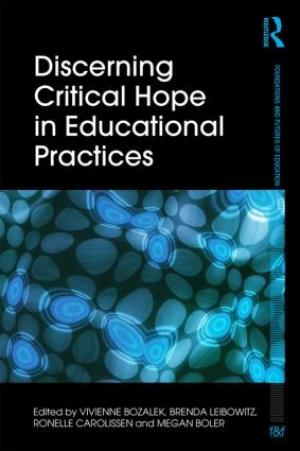
Discerning Critical Hope is a continuation of the work of Paulo Freire, whose famous Pedagogy of the Oppressed (1970) formed a basis for critical and liberation pedagogy. While his early work included hope, he reiterated the importance of that portion of his framework in Pedagogy of Hope (1992). A small but growing literature on critical hope is extant in the field of pedagogy, but this idea has not yet made many inroads into the published works of theologians, despite its connections with liberation theology and the other contextual and critical branches of theological discourse and activism. (Works on critical hope in the religious education and theology literature include: Bock, “Climatologists, Theologians, and Prophets,” Cross Currents; Kim, “Seeking Critical Hope in a Global Age,” Religious Education; and Kuhne, “A Community Pedagogy of Critical Hope,” PhD dissertation). Many readers of the Wabash Center’s publications will undoubtedly already teach in a way consistent with the critical and liberative themes in Freirean thought, critiquing oppressive social structures and advocating for a world grounded in God’s justice and love. After deconstructing oppressive systems and our complicity in them, however, it can be difficult to provide hope in the theological classroom. I personally find it challenging to move students beyond critique and not simply leave ministry students and seminarians with the task of reconstructing their shattered beliefs and worldviews on their own. Critical hope provides a way forward. Within this framework, critique and hopefulness cannot be separated: the point is that we need both. We need to be able to critique the world as it is, while retaining hope for a different future. Within this framework, the educator engages history with a critical lens, invokes students’ imaginations, envisioning a different way, and provides space for practical steps to enact that vision. Discerning Critical Hope includes chapters by a number of scholars, educators, and practitioners. The authors distinguish between critical hope, naïve hope, and false hope. Naïve hope is optimism without a sense of personal responsibility: expecting that things will turn out alright even if one puts forth no effort to make it so. False hope refers to the idea that working hard will result in one joining the oppressing class, a personal rather than systemic release from injustice. Several chapters critique neoliberal education and other forms of supposedly equality-based educational practices that promise merit-based successes, while in reality supporting colonial and patriarchal systems of power. These can serve as cautions for those who teach religion as well. Which of the forms of hope offered in classrooms are naïve or false hopes? Are faculty willing and able to be drawn to a deeper level of hope that can handle the paradox and mystery of critique, of looking in the face of real suffering and injustice, and struggling – hope-filled – toward a better world? Although each chapter has its helpful points, I found chapters 2, 5, and 10 most useful. Chapter 2, “Teaching for Hope: The Ethics of Shattering Worldviews,” by Megan Boler, provides hope for my own teaching. Boler recognizes the real difficulties in engaging critical hope in the classroom: intentionally invoking a pedagogy of discomfort is, not surprisingly, uncomfortable for students and educators alike. Boler states that, when utilizing this pedagogical method, about a third of students will be receptive, about a third will be vocally and angrily resistant, and another third will be numb or apathetic. She shares a difficult classroom experience, including her fears and other feelings as she navigated dealing with resistant students. It gave me courage to continue practicing this form of teaching. Chapter 10 provides a brief history of thinkers who have written about hope, from the Greek myth of Prometheus to Francis Bacon, Immanuel Kant, Georg Hegel, Karl Marx, W.E.B. Du Bois, Ernst Bloch, and Paulo Freire. This provides a helpful entry point into different explications of hope throughout history, especially since many of these philosophers had such a major impact on Western culture and on theology. This chapter delineates how and why critical hope differs from previous understandings of hope. Chapter 5, “Plasticity, Critical Hope and the Regeneration of Human Rights Education,” by André Keet, explains critical hope through the lens of deconstruction, bringing Derrida and other philosophers into the conversation. Keet describes critical hope as that leftover form present after deconstruction occurs, that kernel of truth or “trace” that remains when one strips away all the systems and structures that get layered on top of that essential form. Forms must be physical, must be enacted: these traces cannot remain metaphysical or theoretical, but must be lived. For theological educators, as we critique and deconstruct, we hope and trust there is an essential kernel there for our students to discover, a trace, a divine encounter or transcendent truth, a knowing that goes beyond the laws and organizational structures with which we so often burden our faith. As we critique, we also hope: we sense something there, something infinite, personal and universal, a never-changing essence and a dynamic Spirit of creative transformation. We can never pin it down; it is always a process of becoming. Hope is a means and an end, a way of being and a goal to strive for, but we cannot know for what we hope without critiquing the present context and imagining a different world. Nor can we truly hope unless we embody that hope in praxis, naming the problem, developing a solution, enacting it, reflecting, modifying, and trying again in a constant cycle of transformation. Though the authors of this text do not often discuss religion or spirituality, these topics do come up at points, and the struggles to name injustice and enact a truly just and hope-filled form of education will be recognizable to many religious educators. I recommend this book to educators in the religious academy who want to enact a form of education that goes beyond the banking model, who want to challenge their students to engage in critical thinking, who need courage and a sense of solidarity from knowing they are not alone in this struggle, and who also sense a deep undercurrent of hope in taking one step, and then another, toward that imagined future.
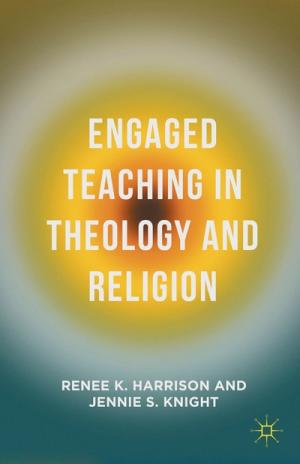
There is wide agreement that student-centered pedagogies yield deeper student engagement and stronger learning outcomes than more traditional “sage-on-the-stage” teaching does. Learning shines when students are invited and equipped to integrate course content with their own experiences, insights, and prior knowledge. In this volume Renee K. Harrison and Jennie S. Knight reflect on personal experiences in the classroom, explore pedagogical theory, and provide examples of applied practices to create a map of the key elements of engaged pedagogy. The map, divided into four sections, moves from the selfhood of the teacher to teaching methods and course content to community context and engagement. Harrison and Knight begin with a premise: that the enterprise of teaching involves the very personhood of the teacher. Either we can acknowledge this and cultivate an awareness of our strengths, blind spots, and biases, or we can ignore it. That deep learning involves the very personhood of students is another key premise. Nurturing this two-pronged awareness – that teachers and students do not leave their wider selves at the door of the classroom – is the necessary ground of engaged teaching. Whole persons are welcomed into the classroom and empowered to reflectively integrate course content with who they are. Sections two and three explore how form and content can either undermine or buttress one another and how, even when teachers aim for the latter, they may unwittingly miss the mark. For example, in classrooms in which more democratic teaching practices are employed, course content may still hew closely to a traditional textual canon, with marginalized voices tacked on at the end. Or content may offer a wide range of perspectives while teaching methods minimize student voices. Ideally, democratic pedagogies and a widened canon reiterate one another. If the goal of learning is not just knowledge acquisition but transformation and if we are inviting students’ whole lives into the process, attending to communal context is likewise crucial. The authors thus cap the volume with strong advocacy for community-based learning (CBL). They discuss the logistical and pedagogical challenges of incorporating community work into courses and illustrate why it is well worth the effort. They offer tools for implementing such work, while acknowledging that sustained success in CBL requires significant institutional buy-in that some teachers may not enjoy. In fact, a particular strength of this volume is its honesty about engaged teaching practices, which while considered innovative in pedagogical circles, are still perceived in many academic circles as less rigorous and less respectable than more classic methods. Harrison and Knight lament that this should be so especially in theological-religious education, where the integration of curricular and worldly knowledge is paramount. Should engaged teaching not be the norm? Recognizing that teachers will need to calculate risks depending on institutional context, they counsel courage for the sake of students’ whole-person integrity – and of the credibility of theological-religious education. The wisdom conveyed in these pages is clearly hard won, over the course of many years across varied institutions. In distilling their experiences, Harrison and Knight offer their readers a real gift. However, while teachers can benefit from the ideas, strategies, and examples laid out in the book, they should not expect to change their own teaching methods and courses overnight. Rather, this volume invites teachers to an ongoing practice of engaged pedagogy that requires continual self-reflection, awareness of institutional and classroom contexts, a willingness to take creative risks, and a commitment to engaging one’s students as whole persons. It is a compelling invitation indeed. For those who prize transformative pedagogy, this volume weaves the best of theory and practice in teaching theology and religion – accessibly, comprehensively, and indeed engagingly. Highly recommended for undergraduate, seminary, and graduate teachers alike.
Cláudio Carvalhaes Associate Professor McCormick Theological Seminary In Brazil We who believe in freedom cannot rest We who believe in freedom cannot rest until it comes. (1) We have had a month of intense events in the US. The killings of Black precious people, this time, Philando Castile and Alton...