Resources
This paper, co-authored by two instructors and four of their undergraduate students, details an experimental use of 'Open Space Technology' in a Religion course on social constructionism at the University of Toronto. In addition to describing the format and its purpose, four undergraduate evaluations of the course are offered.
Discoveries by both the professor and the students, in a seminar on the anthropology of Christianity at Candler School of Theology.
Special issue of “Syllabus,” an online journal that posts annotated syllabi and short-article course descriptions submitted by college and university professors. 
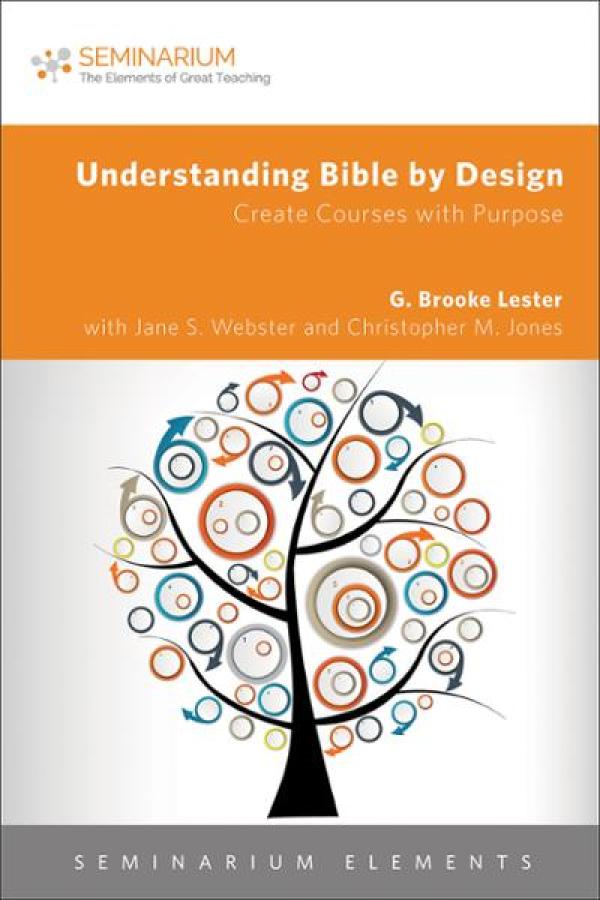
Click Here for Book Review Abstract: Today’s seminary and religious-education instructors are expected to design and redesign their courses more nimbly than in the past. We have to adapt our courses to novel learning environments, for more diverse learners, toward more diverse vocations. At the same time, institutional rewards for time invested in course design are fewer than ever. Understanding Bible by Design introduces the reader to Understanding by Design: an approach to course design that is proven time-efficient and grounded in the instructor’s most closely-held convictions about her subject matter’s “big ideas and essential questions.” This book’s contributors (one in Old Testament, one in New Testament, and one in Jewish Studies) demonstrate the value of Understanding Bible by Design for the Biblical Studies instructor, whether at seminary or university, face-to-face or online, from the intimate seminar to the massive MOOC. Lester’s synopsis of course design and suggested action is followed by a collaborative dialogue with Jane S. Webster and Christopher M. Jones. Webster and Jones provide practical commentary regarding the successful implementation of Lester’s proposed approaches. As a group, Lester, Webster, and Jones create a text that extends pedagogical innovation in inspiring but practical ways. (From the Publisher)
Journal Issue. Full text is available online.
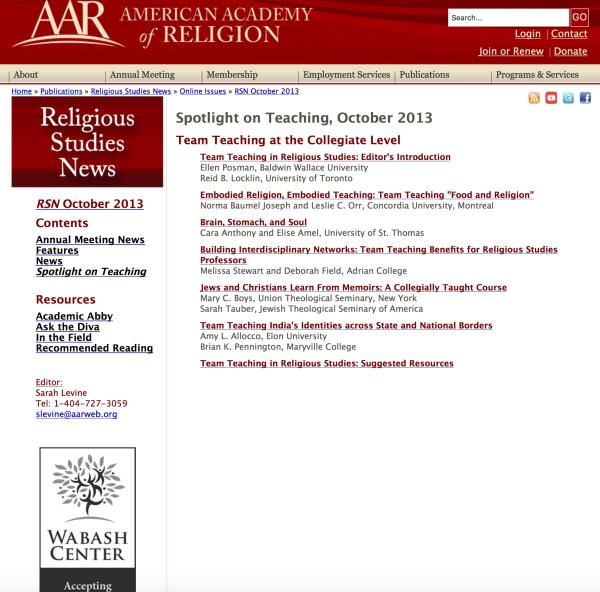
Includes syllabi from a variety of college and university courses, across all disciplines, that have a strong flavor of “civic agency,” the capacity to work across differences to solve public problems, create lasting civic goods, and shape the world around us in democratic ways. The project emphasizes courses that speak to citizens as citizens, concerned about co-creating their communities of different scale.
Is it feasible for nonfluent instructors to teach Biblical Hebrew by communicative principles? If it is feasible, will communicative instruction enhance postsecondary learning of a classical language? To begin answering these questions, two consultants representing second language acquisition (SLA) and technology-assisted language learning led 8 Biblical Hebrew instructors and a graduate assistant through a 3-year process involving study of SLA principles, development of Biblical Hebrew classroom manuals, training of teachers, and field-testing of materials with more than 90 students in 7 institutions. More than two-thirds of the students and all instructors found the communicative approach both effective and preferable to grammar-translation and audiolingual methods customarily employed for learning classical languages.
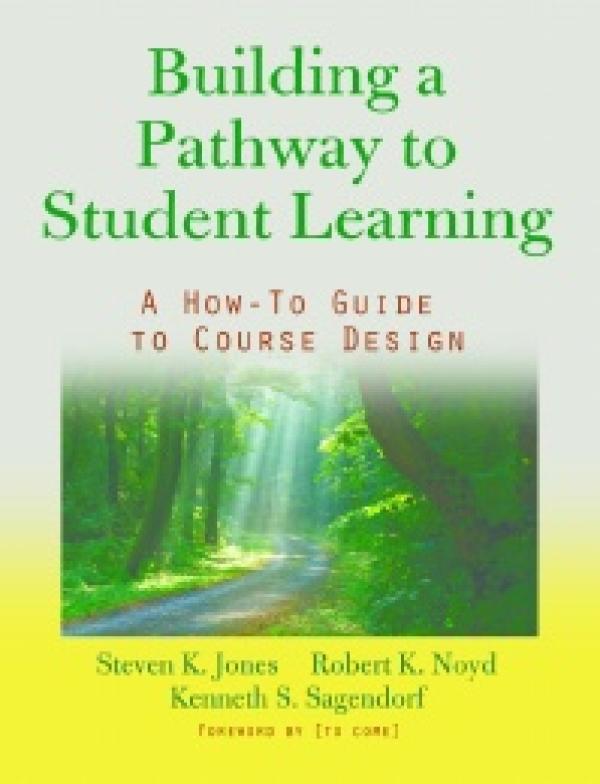
Click Here for Book Review Abstract: This book leads you through the process of designing a learning-centered course. It is written as a “how-to” handbook, providing step-by-step guidance on creating a pathway to student learning, including 26 workboxes (also available free online) that lead you through each element of the course design process and promote a rich reflection process akin to being in a workshop setting. The authors prompt you to (1) consider the distinctive characteristics of your students; (2) clearly articulate your course learning goals; (3) create aligned summative assessments; (4) identify the specific knowledge, skills, and attitudes students will need in order to be successful; (5) craft effective learning experiences, informed by the well-documented research on how people learn; and (6) incorporate formative assessment to ensure you and your students are staying on track. Completion of the sequence of worksheets leads to a poster as a visual display of your course design. This graphic depiction of your course ties the components together, provides a clear map of action for teaching your course, for modifying as you evaluate the success of particular strategies or want to introduce new concepts, and for developing your syllabus. A rubric for evaluating course posters is included. For faculty developers, this book provides a proven and ready-made resource and text around which to design or redesign learner-centered course design workshops or multi-day course design retreats, replicating or modifying the renowned workshop that the authors have developed at the Air Force Academy for both faculty new to teaching and those with many years of teaching experience under their belt. (From the Publisher)
An online journal publishing original syllabi, assessment instruments, assignments and activities, and articles related to college teaching. "A good syllabus is a piece of original scholarship; a great one is also an art form. A research or theory paper go through peer review process to be recognized and validated; the same process should be available to course materials. This is a small step towards taking college as seriously as we take research."