Resources
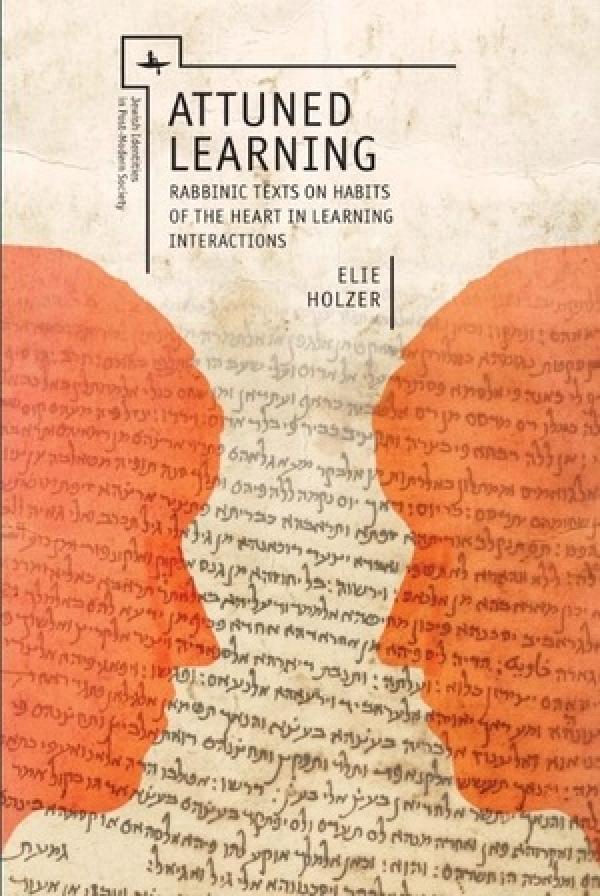
According to the publisher’s website, books in the series “Jewish Identities in Post-Modern Society” are dedicated to exploring the “multiple ways in which contemporary Jews express and define their Jewish identity.” The titles in the series “explore the sociological, historical, and psychological basis for these identities and the ways in which they reflect a rejection and or integration of the norms, morals, and values of post modern society.” Elie Holzer’s Attuned Learning is the eleventh contribution to that effort and his second contribution to the series. The purpose of the series helps to explain the approach that Holzer takes to his subject: Part One is devoted to “Conceptual Frameworks;” Part Two focuses on what “attuned learning” means for the “co-learners” devoted to the task; Part Three unpacks the implications of the theoretical framework for reading Rabbinic literature that Holzer outlines in Part One; and Part Four briefly explores the implications of his work for “Contemporary Contexts.” The nature of the series also explains why Holzer relies heavily on Hans-Georg Gadamer and Paul Ricouer, among others, for the philosophical assumptions that drive his work (20, 22-30). Arguing that “there is no such thing as an innocent reading” of any text, Holzer contends that the only antidote to self-deception is an honest effort “to clarify what lies at the basis of our interests as far as possible” (22-23). Students reading ancient texts must identify the “foremeaning or preconceptions” that shape their reading (24) and they must avoid “identifying the meaning of the text with the author’s intention. Instead, a text establishes its own form of discourse as soon as it is written, offering something to be appropriated by the reader” (26). Having laid out his philosophical assumptions, Holzer then describes the attuned learning that both teachers and students can accomplish, using the discourse in rabbinic literature as an illustration, source, and foil. “Argumentative learning” can be found there and has its contribution to make (47ff.), but – as Parker Palmer notes -- it is also “doubled edged” and can degenerate into “a secretive, zero-sum game played by individuals for private gain” (57). At the heart of rabbinic exchange, however, is what Holzer describes as chavruta, which he translates as “‘companionship’ or ‘friendship’” (41, n. 5). Attentive to the moral and emotional quality of the learning process and the roles that each co-learner plays, even conflict is placed in very different context. Teachers and students advance in their understanding by listening to one another, for which “the divine presence” or the “Shechina” (71ff.) is a metaphor and “‘God’ is understood primarily as some transcendent quality of a genuine interpersonal experience” (73). Teachers who recognize the importance of chavruta and the perils of argumentative learning are alert to the experiences of the learner and avoid the dynamics that lead students to experience their teachers as “uncaring” (112f.), “disgruntled” (114f.), or “incompetent” (116f.). Instead, Holzer argues, they are to attend to the “visage” of their students. They “see” their faces (129-130) and they look for “illumination” (130ff.). Likewise, the students “welcome” the faces of their teachers (135ff.) and receive the “visage” of their instructors (138ff.), indicating their willingness to enter into the partnered learning that has been offered. The result is a process in which “educators… never allow their active and curious presence to transform the learners’ presence into a shadow of their learners,” but “stimulate learners to live a critically conscious presence in the pedagogical and historical process” (159). There is a good deal to be absorbed here for the theological educator, especially as an antidote to teaching that is either sterile and concerned with subject matter alone or views the student as an object of deconstruction. As Holzer describes it, both approaches are equally immoral (149-150 and ns. 12 and 13). Theological educators will also find reasons to differ with the author. Writing for a broader and not necessarily religious audience, Holzer defines God and God’s presence in ways that are scarcely adequate if one conceives of God as more than a metaphor. Given the richness of the rabbinic tradition, one also wonders whether we might have learned even more, if Holzer had allowed the rabbis to reflect on what they believed about God as both a teacher and a student of Torah (88ff.). But, given his philosophical assumptions, that gift is strained through sieve of post-modern philosophy, skeptical as he is of innocent readings, let alone the voice of God. One wonders whether deeper attunement might have entertained the possibility that there was another Visage, longing to be welcomed into the conversation.

As an anthropologist of religion, I have advocated that the skills one develops in an ethnographic setting are necessarily translated to the classroom. I’m a proponent of creating a space for students to serve as experts and to speak to their own experiences—especially when addressing contemporary political movements and events. Active listening and collaborative learning with our students are key means through which we, as James Bielo notes, are able to be “ethnographers in, of, and for all the courses we teach.”[1] I like to joke with other anthropologists that we were the children who didn’t fit in; we sat on the sidelines watching the more popular children play, drawing rudimentary theories about their social dynamics and interactions. One of the first things one learns in the field is to drop all assumptions. We learn to ask questions to which we think we already know the answer and, more often than not, we uncover something altogether unexpected. This is my approach in my course on Religion and Society – a course that looks at the manifestations of religion in the contemporary world read through a lens and a critique of the social forces that dominate modern Western democracies. As has become almost canon among RS professors, I use the example of the American flag to illustrate Durkheim’s discussion of the totem and the distinctions between sacred and profane. As a Canadian living in the United States, I have the added benefit that I am able to feign ignorance. Holding a paper version of the American flag, I ask my students to reflect on what it stands for. “I didn’t grow up here,” I tell my students. “I don’t know what any of this means. Tell me abo-out it” (all semester long, I put the extended emphasis on my ‘u’s in preparation for this performance of difference). I pretend to be confused as they explain, yes, it’s a piece of paper, but really it means more: freedom, justice, liberty, etc. It’s a great conversation – one that is not original to me – and makes for a strong teaching exercise in an introductory religion class. Not only does it illustrate Durkheim’s theory of the totem, collective effervescence, and American civil religion, but it is also an excellent vehicle to get students comfortable with debate and disagreement in the classroom. Usually, the students respond well. They are acquainted with controversies surrounding the American flag; they quickly draw connections to such social issues as debates over the Confederate flag and Colin Kaepernick. In my experience, it is a topic that matters to them and they are already familiar with both sides of the argument and have already drawn their own conclusions. Because they are more or less set in their opinions, it serves as a good topic to practice respectful listening. Sometimes it is easier to listen openly to an opposing argument when you know that you’re not going to change your perspective.[2] And at an early stage in both the semester and in their college careers, learning to listen and practicing disagreement are key. I am unable to stop at this point. The exercise helps students learn to disagree from a shared starting point (American identity) but leaves me dissatisfied because it doesn’t attend to the experiences of dual nationalism of myself and many of my immigrant students. Canadians hold a form of national pride invested in our self-perception as the underdog. The first time I taught this lesson in the United States I followed the American flag with the Canadian one. I don’t know what I thought my students would say when asked about the national qualities and values associated with The Maple Leaf. But the responses of “hockey, Justin Bieber, bacon, and polar bears” were strikingly in contrast to the discussion of the core values signified by the American flag, for which many claimed they would willingly sacrifice their lives. I now take seriously collaborative learning experiences where some students’ lack of expertise might be highlighted. It is one that purposely redefines who counts as an expert and displaces my American-born students. A clarification about context is necessary. Middle Tennessee State University is the largest public institution in the state. It caters mostly to students from the Middle Tennessee area, many of whom are first-generation college students. Because of the wide availability of manufacturing jobs, low cost of living, and its identification by the American government as a refugee resettlement region, Middle Tennessee is more international than one might expect for a region that regularly boasts to be the ‘Buckle of the Bible Belt.’ In addition to significant Hispanic and Southeast Asian immigrant communities, the region has the largest Kurdish population in North America, a significant Laotian community who have been in the region for several decades, and a recent increase in immigrants from Somalia, Sudan, Egypt, Eretria, and Bhutan.[3] On the first day of every semester, I have students fill out an information form that—along with relevant questions asking about students’ majors/minors, preferred gender pronouns, previous courses in religious studies, etc.—asks what their hometown is. With this information in hand, I bring images of the national flags of their countries of origins and ask them to speak to their conceptions of their own flag.[4] Sometimes this exercise works and sometimes it falls flat. For the most part, my students who were born in another country immigrated to the United States with their families as children and have become naturalized citizens. Unlike myself, they have a sense of themselves as Americans. “What about this flag? What does it signify?” I wait patiently for Farrah, who immigrated to the United States as a child fourteen years ago to look up. Farrah looks up and laughs. “That’s the Egyptian flag,” she says excitedly. She begins to explain the symbolism of the colors and their revolutionary importance. She speaks proudly about the struggle to overcome oppression and how the white band symbolizes a peaceful exchange of power. “But it’s more than that,” she continues. “Egypt is the cradle of culture, the oldest continuing civilization. You wouldn’t have the developments in Europe or America if it hadn’t been for us. Or at least that’s what we learn in school. We’re taught that we are history.” At this point, I usually attempt to pick up a common theme between their form of nationalism and my own. With Farrah, it was easy to draw connections between the emphasis placed on a perceived bloodless transition of power in the national myths of Canada and Egypt. It doesn’t always work well. Farrah’s family moved to the US fifteen years ago, but they return regularly to Cairo to spend time with family. They are proud of their Egyptian roots. Often my Egyptian students, particularly those who are Coptic, are more critical of the national mythos. This past semester a student from Monaco rejected my attempts at a shared identity and instead placed me with the Americans observing, “Europeans just don’t care about these symbols the way you North Americans do.” I like this exercise because it displaces the students in a way for which they are not prepared. Their rehearsed points about the flag, which are perceptive and important, are all of a sudden lost in the context of a different national mythos. They are smart enough to know that the Justin Bieber jokes don’t cut it, and as Farrah lays claim to her country as the origins of history, she discursively moves the American-born students to the margins. If anyone understands displacement, it’s immigrants—from lines in airports and government forms to media rhetoric and misplaced cultural cues, feeling out of place is par for the course. It is my hope that this exercise serves as a place to begin larger conversations about religion, politics, and social issues and realigns our assumptions about who counts as an insider and who counts as an outsider. These are conversations that many of us are having both inside and outside of the classroom in consideration of gender, sex, abilities, race, ethnicity, and, of course, religion. But I’ve found the rhetoric about immigration, citizenship and nationality lacking. I am hesitant about language that in a spirit of inclusivity too quickly overlooks the lived experiences of our dual-national students. I’m not sure what I’m looking for, but I’d like to use this blog as a forum to think publically about it. I hope that you will join me in this conversation regardless of your nationality. [1] Bielo, James S. 2012. “Religion Matters: Reflections from an AAA Teaching Workshop.” Religion and Society: Advances in Research 3: 203–208. [2] A recent New Yorker article argues that changing one’s mind is even more difficult than we think: http://www.newyorker.com/magazine/2017/02/27/why-facts-dont-change-our-minds. [3] http://www.tennessean.com/story/opinion/contributors/2015/05/17/nashville-welcoming-immigrants/27479183/ [4] At the beginning of every semester, I have every student enrolled in this introductory course meet with me for a short one-on-one interview to get to know them, to talk about any early concerns they might have, and to emphasize my expectations about their responsibilities as students. I ask my immigrant students during this interview if they are comfortable speaking in class about their experience growing up in or coming from another country. Especially, given recent political developments, it would be inappropriate to ‘out’ them without permission.

Allow me to be honest. There are few things in my job that I dislike more than having a conversation with someone who is feigning objectivity or neutrality. I call it academic pretense. I cherish conversations when people speak from their hearts, even if I disagree with them. This holds true as well in my collaborative learning gatherings (aka co-learning gatherings, aka the classroom). Over the years, I have learned to face a reality in my own life, namely, there are few areas in which I have no opinions or, at least, have no leanings. If you tell me you are different, no offense, but if you are a fully engaged person I probably won’t believe you. Try as we may to be neutral, as engaged educators who regularly integrate our subjects of expertise with everything occurring around us, we all have leanings and assumptions concerning a wide-range of topics. Professing to be neutral, when in fact, we are not, endangers us by moving difficult conversations to the abstract and impersonal world of the ethereal, often leading to conversations that lack personal investment. How well can we learn if we are not invested in an honest process? I have found that most learning experiences “stick” best when we bring not just knowledge, but our own truth and experience to the conversation. The type of conversation I am suggesting is risky business in the sense that when we put ourselves “out on a limb,” mistakes will be made, feelings can be hurt, and positions may inevitably need to be re-directed and corrected--even if that corrective trajectory reaches farther in the future than we envision. Dangerous, yes. But, I think opportunities for real education are worth the risks. How did I come to a place of partiality for “risky conversations?” My own rough, street-wise childhood taught me to observe everything around me carefully; to assess present threats/concerns and size-up what is really happening underneath the surface of any given conversation. Where I grew up, the dangers of not trusting my own instincts could have grave, unforgiving and intractable consequences. But, as much as I trust my gut instinct, life has also taught me that I can be wrong. Having begun my teaching career later in life, I often found myself asking, “How do I use these skills in an organic discussion setting that will benefit the whole academic learning process?” And, more importantly, how will this discussion make us all better human beings? Early on in my teaching career, I had to re-teach myself to trust my instincts. What I discovered was that those life skills learned on the streets and in the course of my life can work for me in the classroom. Why? Allowing myself to move freely with what I see happening around me organically shifts the classroom zeitgeist from a theoretical, abstract reality to a more organically-real, shared reality--achieving a deeper level of honesty. Contributive-learners (aka co-learners, aka students) respect and even desire the level of honesty I am suggesting. Even when discussions don’t work out as planned, co-learners respect my honest regrets and my apologies. In the meantime, whether the discussion was a “once-in-a-lifetime” hit or a “write-off,” I am still modeling a paradigm that is teaching them to trust their instincts and go with the organic, sacred moment. Hopefully, I am also modeling humility. I realize there is a great deal of valid concern over co-learning gathering safeness. Perhaps I view it differently than some of my colleagues. In my experience, safeness has nothing to do with the subject matter at hand. But rather, safeness is primarily about our respect for the sacredness of how we handle the conversation. With social norms changing at a rapid pace, especially in the current political climate, I am discovering that people are afraid to talk honestly with one another, although many, including myself at times, are willing to talk at one another. This type of climate only promotes isolationism, binary position taking, and we/they attitudes. Education is about people learning from each other. How can we learn if we cannot talk with one another honestly? Obviously, we can’t. But, back to the danger. What if it goes too far? More than once in our discussions, co-learners have taken their polemic too far and hurt another person’s feelings. At that point, if another co-learner does not stop the process, I stop the conversation and I do a check. Together as a group, we take two deep breaths and have a moment of silence. I then ask if we are still committed to the values of truth-seeking, mutual respect and the sacredness of the moment we are in?* Invariably, the person who crossed the line apologizes for their inability to express their thoughts without getting personal. Also, and this always surprises me, the offended person sometimes apologizes for taking it too personally. I encourage the group to share any thoughts about the process and then ask if we are ready to go further in the conversation or come back at another time? In many of our Native American traditions, we have a prayer that goes something like, “have pity/understanding on me Creator and remember I am just a human being.” The idea behind this prayer is that perfection is the enemy of attainment. We are all simply human beings, imperfect, but learning from our mistakes. Those mistakes make us human. And, being human, by “climbing out on a limb” in order to reach others, is the most spiritual state of being in which we may find ourselves. I wish I could say I have these sacred moments in every co-learning gathering, I do not. But, I do encourage those moments through risky honest conversations. And when those special moments come, the whole room feels like we have experienced something together that is truly sacred. Perhaps promoting knowledge among my co-learners in an atmosphere of sacred space, is the most important role I have as a scholar and a spiritual leader. *This exercise requires pre-teaching and mutual commitment to the process.
Click Here for Book Review In this volume, the authors contend that teaching and learning must be viewed as communal work, whether conducted in one classroom, with colleagues at a programmatic level, or when tackled on a university-wide scale. When educators partner with faculty colleagues or students in teaching and learning, it becomes possible to: - improve the educational experiences of all students, - model professional behaviors that students will soon be expected to embrace, and - positively impact graduates, peers, campuses, and even communities at large. By intentionally creating collaborative structures for communal work to occur, educators can broaden access to opportunities for students, improve engagement experiences within the community, and improve faculty support and scholarship. Exploring multiple perspectives on collaborative structures in teaching and learning, this volume discusses ways to consider the collaborative structures within education that allow for shared contributions to teaching and learning. It discusses the need for practitioners to view teaching and learning as truly communal work, regardless of the type of setting. This is the 148th volume of this Jossey-Bass higher education series. It offers a comprehensive range of ideas and techniques for improving college teaching based on the experience of seasoned instructors and the latest findings of educational and psychological researchers. (From the Publisher)
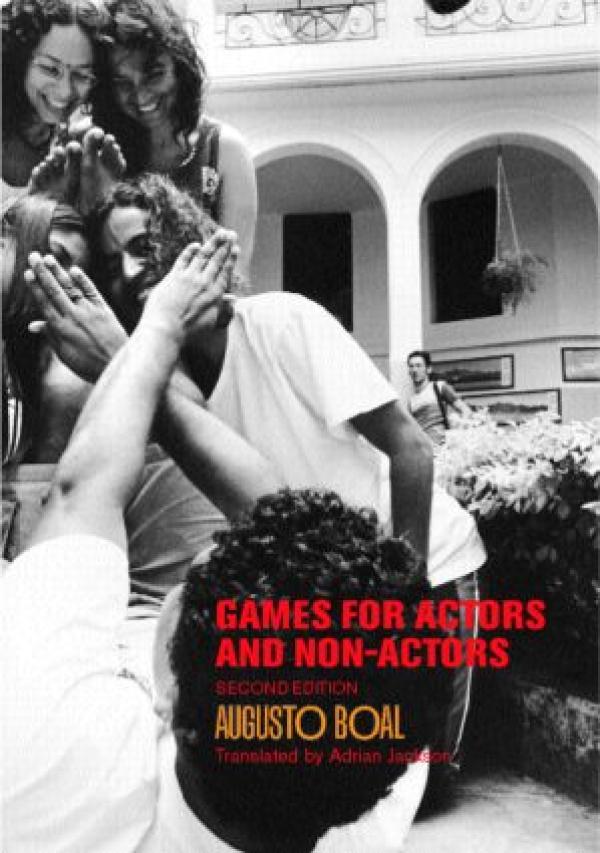
Games for Actors and Non-Actors is the classic and best selling book by the founder of Theatre of the Oppressed, Augusto Boal. It sets out the principles and practice of Boal's revolutionary Method, showing how theatre can be used to transform and liberate everyone – actors and non-actors alike! This thoroughly updated and substantially revised second edition includes: - two new essays by Boal on major recent projects in Brazil - Boal's description of his work with the Royal Shakespeare Company - a revised introduction and translator's preface - a collection of photographs taken during Boal's workshops, commissioned for this edition - new reflections on Forum Theatre. (From the Publisher)
This book captures TE's approach to successful group facilitation, which works in many different environments with both youth and adult groups of all kinds. Contains more than 300 interactive exercises and explains how to use them within a meeting structure that's bound to get the results your group needs! Find out more at MovingBeyondIcebreakers.org: See excerpts from the book, see what people have said about it, and order online. TE has 10 short videos posted on YouTube that illustrate how we work interactively to engage groups of youth and adults. See exercises in action from Moving Beyond Icebreakers! - Concentric Circles - Make It Up: Paper Chase - Wordstorm - Evaluation - The Human Knot - Name Wave - Warm-up Questions - Bag Toss - Zip Zap Zup with Foot-Stamp - Wind Blows with Word (From the Publisher)

Journal Issue. Full text is available online.
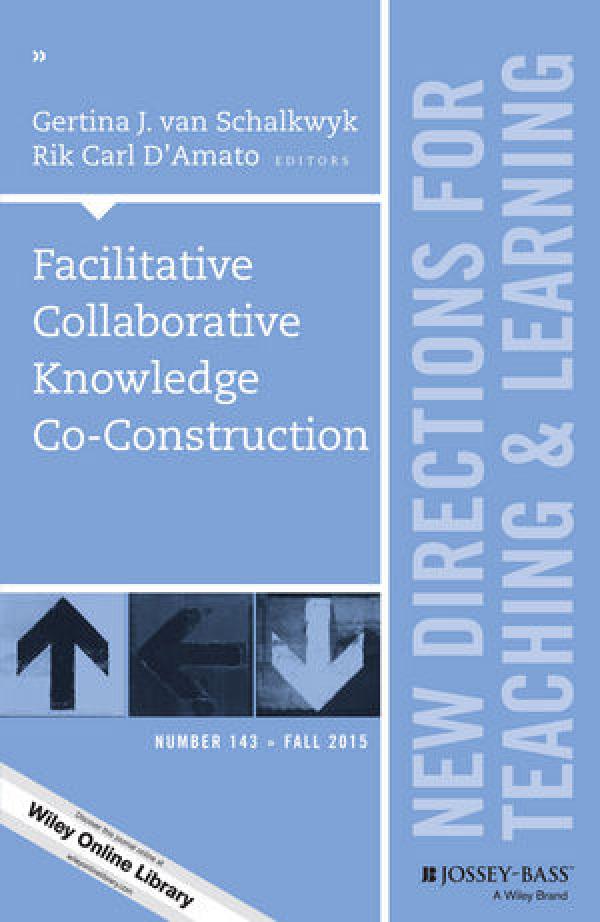
Click Here for Book Review Abstract: Collaborative teaching and learning has been a focus of research recently, yet it can sometimes be a challenge for multicultural students in an educational setting. This second volume of a two-volume edition helps lecturers, educators, and teachers create collaborative teaching and learning experiences with multicultural adult learners in higher education. The authors of this volume provide: - outlines of some of the positive relationships that can be developed among students and educators when the process of gaining knowledge is seen as a co-constructed process, - approaches to relational intelligence and collaborative learning, - research from neuropsychology and practical applications to teaching, and - characterizations of emotional intelligence and sociocognitive skills needed in collaborative learning environments. Though focused on Asian students and their experiences, this volume includes information for all students and educators who are engaged in the collaborative search for knowledge. This is the 143rd volume of this Jossey-Bass higher education series. It offers a comprehensive range of ideas and techniques for improving college teaching based on the experience of seasoned instructors and the latest findings of educational and psychological researchers. (From the Publisher)
A spreadsheet Google Doc comparing a range of e-tools that support differentiation of instruction to support learner needs, created and maintained by education consultant John McCarthy.
A website developed by the University of Minnesota that a faculty member might send students to in order to improve students’ experience and learning in group projects.