Resources
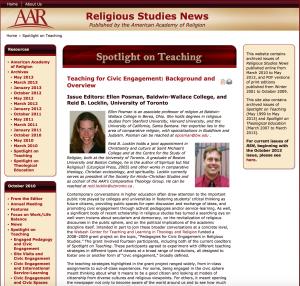
Journal Issue. Full text is available online.
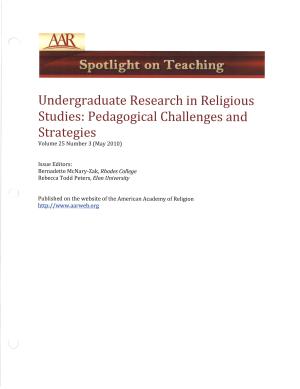
Journal issue. Full text is available online.
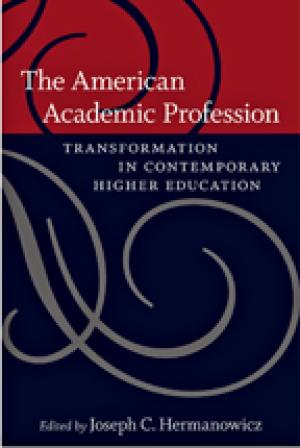
The academic profession, like many others, is rapidly being transformed. This book explores the current challenges to the profession and their broad implications for American higher education. Examining what professors do and how academia is changing, contributors to this volume assess current and potential threats to the profession. Leading scholars in sociology and higher education explore such topics as structural and cognitive change, socialization and deviance, career development, and professional autonomy and regulation. A comprehensive analysis of the significant questions facing this crucial profession, The American Academic Profession will be welcomed by students and scholars as well as by administrators and policy makers concerned with the future of the academy. (From the Publisher)
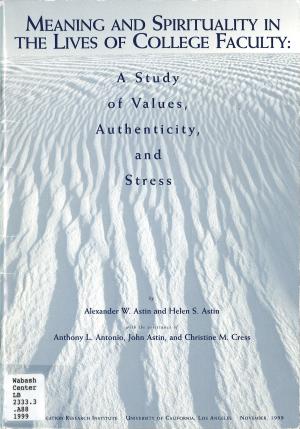
During the past three years more than 80 scholars, students, and educational leaders have participated with the Higher Education Research Institute in an extended series of dialogues about issues of spirituality, authenticity, meaning, wholeness, and self-renewal in higher education. These dialogues explored issues related to: achieving a greater sense of community, spirituality, and shared purpose in higher education; what are the causes of the divisions and fragmentation experienced by many academics in their institutional and personal lives; what it means to be authentic, both in the classroom and in dealings with students; and what disconnections higher education is experiencing within and in relation to the larger society. Through personal narratives the monograph explores expressions of spirituality, as well as obstacles to and facilitators of spiritual development; value conflicts; personal authenticity; sources of stress, including time pressures, competition between work and family life, research and publication, administrative responsibilities, students and teaching, tenure and peer review, and institutional climate; effect of stress; coping with stress; and sources of renewal. The monograph concludes with a brief review of ongoing and further work on spirituality in higher education. Appended are letters of invitation, the interview protocol, and a list of committee members. (From the Publisher)
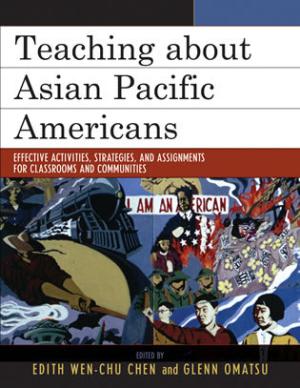
The number of Asian American students in schools and colleges has soared in the last twenty-five years, and they make up one of the fastest growing segments of the student population. However, classroom material often does not include their version of the American experience. Teaching about Asian Pacific Americans was created to address this void. This resource guide provides interactive activities, assignments, and strategies for classrooms or workshops. Those new to the field of Asian American studies will appreciate the background information on issues that concern Asian Pacific Americans, while experts in the field will find powerful, innovative teaching activities that clearly convey established and new ideas. The activities in this book have been used effectively in classrooms, workshops for staff and practitioners in student services programs, community-based organizations, teacher training programs, social service agencies, and diversity training. Teaching About Asian Pacific Americans serves as a critical resource for anyone interested in race, ethnicity, and Asian Pacific American communities. (From the Publisher)
Theoretical studies in curriculum have begun to move into cultural studies--one vibrant and increasingly visible sector of which is queer theory. Queer Theory in Education brings together the most prominent and promising scholars in the field of education--primarily but not exclusively in curriculum--in the first volume on queer theory in education. In his perceptive introduction, the editor outlines queer theory as it is emerging in the field of education, its significance for all scholars and teachers, and its relation to queer theory in literacy theory and more generally, in the humanities. (From the Publisher)
This article examines sexuality, a null curriculum in Asian-American faith communities, and explores pedagogical strategies to move the sexuality discourse to the explicit curriculum. The article first describes the current discussion of sexuality in Asian-American communities, then it critically analyzes the Confucian notion of the body, which has far-reaching influence on Asian-American views about sexuality, including those of Christians. The article then focus on demystification of the body, arguing that demystification is fundamental to Asian-American discussions about sexuality. Finally, it suggests pedagogical strategies for the teaching of sexuality in Asian-American contexts.
This report of the Greater Expectations National Panel calls for a new focus on excellence to better prepare students for the 21st century world. The report recommends the creation of a New Academy characterized by high expectations, a focus on learning, commitment to demonstrated achievement, intentional practices, and an engaged, practical liberal education for all students. (From the publisher)
Wabash Center Staff Contact
Sarah Farmer, Ph.D.
Associate Director
Wabash Center
farmers@wabash.edu