Resources
This article builds upon the theological insights of feminist and womanist theologians with respect to the sin of self-hate, and explores the ways in which gay male cyberculture inhibits the spiritual development of gay Asian men. 
The article synthesizes and critiques the social science, education, and adult education literature related to the examination of Whiteness and White privilege and offers recommendations for the field of adult education. By examining the historically changing nature of Whiteness, the major themes in this literature are discussed, along with the relevance of these themes for adult education research and practice. In reviewing the current efforts to name and challenge White privilege, the article provides recommendations for moving beyond naming and critiquing White privilege and racism in the field of adult education to challenging and transforming their impact.
This article presents an alternative approach to using service-learning courses to help students develop cultural competence. Service learning often comes from a deficit model that views the providers of a service as advantaged and the recipients as disadvantaged. The Conceptual Model for Cultural Engagement (CMCE) recognizes that those many deem as the disadvantaged have assets to share. The CMCE develops long-term, asset-based, reciprocal relationships between faculty members, community partners, and higher education students. During this relationship, all of the individuals actively participate in culturally engaged learning. The goal is to develop culturally effective members of our society who are educated to interact effectively with individuals from diverse backgrounds.
Wisdom or questing to know God and the world evokes fear through case studies of the controversial Reimagining Conference and the race related responses to the O. J. Simpson verdict, the fear of knowing God (which included the fear of questioning dominant metaphors of God) and the fear of knowing ourselves are explored. From this analysis, a view of wisdom is proposed and also an approach to education that inspires and encourages people to seek to know and respond to God and the world.
Poetry is a bridge across diverse realities; it bridges the expressible and inexpressible, the present and the future. Poetry is also a powerful force in human life; it reveals, nourishes, binds, critiques, empowers, constructs, and confront. From such movement come visions for educational action, both actual and metaphoric. These include: dancing, meditating, singing, chanting, improvising, and drumming.
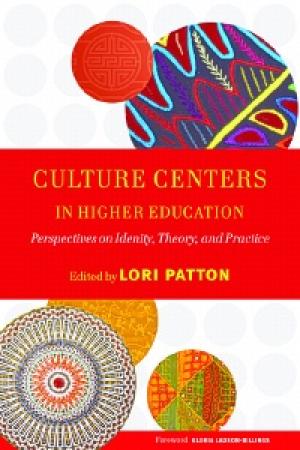
Are cultural centers ethnic enclaves of segregation, or safe havens that provide minority students with social support that promotes persistence and retention? Though Black cultural centers boast a 40-year history, there is much misinformation about them and the ethnic counterparts to which they gave rise. Moreover, little is known about their historical roots, current status, and future prospects. The literature has largely ignored the various culture center models, and the role that such centers play in the experiences of college students. This book fills a significant void in the research on ethnic minority cultural centers, offers the historic background to their establishment and development, considers the circumstances that led to their creation, examines the roles they play on campus, explores their impact on retention and campus climate, and provides guidelines for their management in the light of current issues and future directions. In the first part of this volume, the contributors provide perspectives on culture centers from the point of view of various racial/ethnic identity groups, Latina/o, Asian, American Indian, and African American. Part II offers theoretical perspectives that frame the role of culture centers from the point of view of critical race theory, student development theory, and a social justice framework. Part III focuses specifically on administrative and practice-oriented themes, addressing such issues as the relative merits of full- and part-time staff, of race/ethnic specific as opposed to multicultural centers, relations with the outside community, and integration with academic and student affairs to support the mission of the institution. For administrators and student affairs educators who are unfamiliar with these facilities, and want to support an increasingly diverse student body, this book situates such centers within the overall strategy of improving campus climate, and makes the case for sustaining them. Where none as yet exist, this book offers a rationale and blueprint for creating such centers. For leaders of culture centers this book constitutes a valuable tool for assessing their viability, improving their performance, and ensuring their future relevance – all considerations of increased importance when budgets and resources are strained. This book also provides a foundation for researchers interested in further investigating the role of these centers in higher education. (From the Publisher)
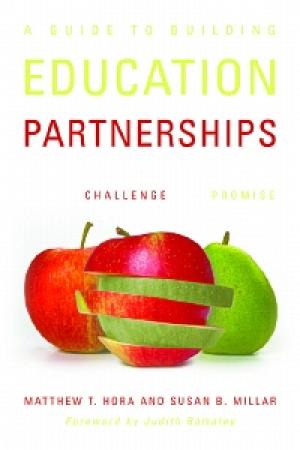
Education partnerships are central to – and often a requirement of – most education reform initiatives promoted by state and local governments, by foundations, and by business funders. Many fail for failure to understand the dynamics of their complex relationships. This book provides insights and guidance to enable prospective and existing education partners to develop answers to the questions that are critical to success: Why engage in this partnership? How can you communicate the potential benefits of partnership to motivate teachers, faculty, administrators, and community members? How do you select the best organizational structure and procedures for a partnership? How can you maintain open, deliberative discussion while respecting different histories and cultures? How can you produce compelling evidence that the partnership is worthwhile? Based on their observation of a five-year-long publicly funded partnership, research data, and the literature, the authors identify the principles that they consider critical to answering these questions. The authors do not minimize the differences and complexities inherent in partnership work, because they believe that doing so would be to present coherence and homogeneity where none exists. Instead, they seek to make evident how these principles underlie many different partnership situations. Thus, rather than presenting a package of best practices, or a cookie-cutter approach, this book presents the organizational principles for planning and implementing education partnerships, along with sets of strategies for working through them. The authors present the diagnostic tools for undertaking a deliberate and research-based approach to planning, designing, and managing a partnership. By surfacing participants’ often-differing motivations, and the practices and assumptions they bring to the table, the book provides the foundation for developing a constructive relationship. In scope, the book extends beyond school-university partnerships to include schools’ collaboration with state and local governments, nonprofit organizations, and the business sector. (From the Publisher)
In spring 2000, the authors undertook a study to explore the interaction between academic librarians and faculty at the University of Manitoba, the impact of librarians’ contributions, and the future roles of librarians. The following five areas were investigated: teaching/instruction, information services, information technology, research, and collections. The results clearly show that when faculty interact with librarians, librarians have a very positive and considerable impact on both faculty and students. In addition, the faculty responses indicate that they are receptive to collaborating with librarians at a higher level of interaction than currently experienced.
Reviews research on Native Americans in higher education and discusses its implications for Native Americans' experiences in colleges and universities. Discusses current research, current programs and practices, and learning styles of Native Americans. Identifies cultural barriers that prevent Native Americans from obtaining equal access to higher education.
Wabash Center Staff Contact
Sarah Farmer, Ph.D.
Associate Director
Wabash Center
farmers@wabash.edu