Resources
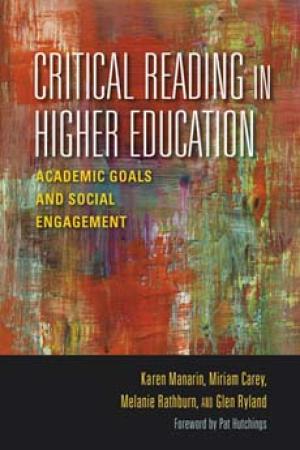
Faculty often worry that students can’t or won’t read critically, a foundational skill for success in academic and professional endeavors. “Critical reading” refers both to reading for academic purposes and reading for social engagement. This volume is based on collaborative, multidisciplinary research into how students read in first-year courses in subjects ranging from scientific literacy through composition. The authors discovered the good (students can read), the bad (students are not reading for social engagement), and the ugly (class assignments may be setting students up for failure) and they offer strategies that can better engage students and provide more meaningful reading experiences. (From the Publisher)
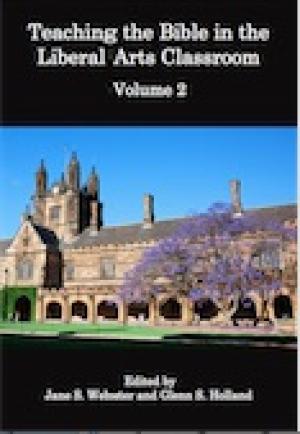
Click Here for Book Review Abstract: Eugene V. Gallagher, Rosemary Park Professor of Religious Studies at Connecticut College, writes: ‘In a context where the general value of the Humanities has increasingly come under question by those who see a college education as necessarily being directly tied to the first job that students will have after they graduate, an ability to make a vigorous case about the contribution of studying the Bible to any college student’s education is crucial for any teacher’. This second collection of essays edited by Jane Webster and Glenn Holland seeks not only to promote the role of biblical studies in an undergraduate liberal arts education, but also to suggest strategies and approaches for teaching the Bible in a range of academic situations. Combining the theoretical and the practical, this volume will be another useful source of guidance and support for teachers of biblical studies at any point in their professional careers. (From the Publisher)
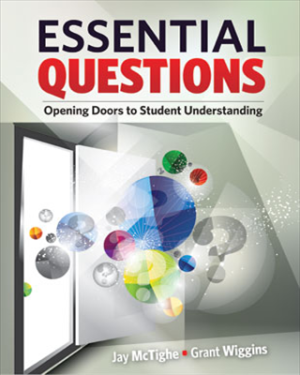
What are “essential questions,” and how do they differ from other kinds of questions? What’s so great about them? Why should you design and use essential questions in your classroom? Essential questions (EQs) help target standards as you organize curriculum content into coherent units that yield focused and thoughtful learning. In the classroom, EQs are used to stimulate students’ discussions and promote a deeper understanding of the content. Whether you are an Understanding by Design (UbD) devotee or are searching for ways to address standards—local or Common Core State Standards—in an engaging way, Jay McTighe and Grant Wiggins provide practical guidance on how to design, initiate, and embed inquiry-based teaching and learning in your classroom. Offering dozens of examples, the authors explore the usefulness of EQs in all K–12 content areas, including skill-based areas such as math, PE, language instruction, and arts education. As an important element of their backward design approach to designing curriculum, instruction, and assessment, the authors - Give a comprehensive explanation of why EQs are so important; - Explore seven defining characteristics of EQs; - Distinguish between topical and overarching questions and their uses; - Outline the rationale for using EQs as the focal point in creating units of study; and - Show how to create effective EQs, working from sources including standards, desired understandings, and student misconceptions. Using essential questions can be challenging—for both teachers and students—and this book provides guidance through practical and proven processes, as well as suggested “response strategies” to encourage student engagement. Finally, you will learn how to create a culture of inquiry so that all members of the educational community—students, teachers, and administrators—benefit from the increased rigor and deepened understanding that emerge when essential questions become a guiding force for learners of all ages. (From the Publisher)
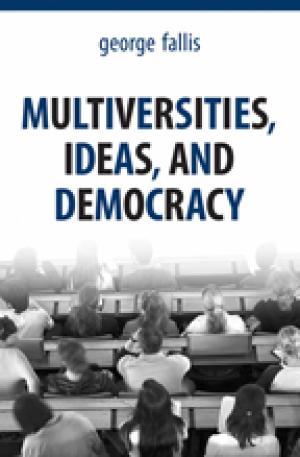
Multiversities are sprawling conglomerates that provide liberal undergraduate, graduate, and professional education. As well-springs of innovation and ideas, these universities represent the core of society's research enterprise. Multiversities, Ideas, and Democracy forcibly argues that, in the contemporary world, multiversities need to be conceptualized in a new way, that is, not just as places of teaching and research, but also as fundamental institutions of democracy. Building upon the history of universities, George Fallis discusses how the multiversity is a distinctive product of the later twentieth century and has become an institution of centrality and power. He examines five characteristics of our age - the constrained welfare state, the information technology revolution, postmodern thought, commercialization, and globalization - and in each case explains how the dynamic of multiversity research alters societal circumstances, leading to the alteration of the institution itself and creating challenges to its own survival. The character of our age demands reappraisal of the multiversity, Fallis argues, in order to safeguard them from so-called 'mission drift.' Writing from a multi-national perspective, this study establishes how similar ideas are shaping multiversities across the Anglo-American world. Ultimately, Multiversities, Ideas, and Democracy seeks to uncover the ethos of the multiversity and to hold such institutions accountable for their contribution to democratic life. It will appeal to anyone interested in the role of education in society. (From the Publisher)

If teachers want to create positive change in the lives of their students, then they must first be able to create positive change in their own lives. This book describes a powerful professional development approach that merges the scholarship of critical pedagogy with the Theatre of the Oppressed. Participants “act up” in order to explore real-life scenarios and rehearse difficult conversations they are likely to have with colleagues, students, administrators, and parents. The authors have practiced the theatrical strategies presented here with pre- and in-service teachers in numerous contexts, including college courses, professional development seminars, and PreK–12 classrooms. They include step-by-step instructions and vivid photographs to help readers use these revolutionary theatre strategies in their own contexts for a truly unique learning experience. (From the Publisher)
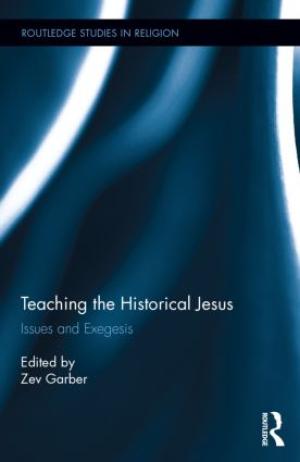
Click Here for Book Review Abstract: Teaching the Historical Jesus in his Jewish context to students of varied religious backgrounds presents instructors with not only challenges, but also opportunities to sustain interfaith dialogue and foster mutual understanding and respect. This new collection explores these challenges and opportunities, gathering together experiential lessons drawn from teaching Jesus in a wide variety of settings—from the public, secular two- or four-year college, to the Jesuit university, to the Rabbinic school or seminary, to the orthodox, religious Israeli university. A diverse group of Jewish and Christian scholars reflect on their own classroom experiences and explicates crucial issues for teaching Jesus in a way that encourages students at every level to enter into an encounter with the Hebrew Scriptures and the New Testament without paternalism, parochialism, or prejudice. This volume is a valuable resource for instructors and graduate students interested in an interfaith approach in the classroom, and provides practical case studies for scholars working on Jewish-Christian relations. (From the Publisher)
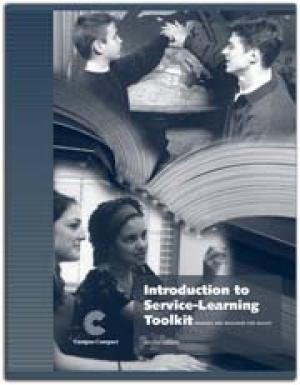
This new revised edition of our bestselling book brings together the best, most up-to-date writing and resources on service-learning, from learning theory and pedagogy to practical guidance on how to implement service-learning in the classroom. This edition reflects the tremendous growth in service-learning that has occurred since the first Toolkit was published in 2000. In addition to updated material throughout, this volume includes expanded chapters on community partnerships, student development, and redesigning curriculum, as well as two new chapters—one exploring the connection between service-learning and civic engagement and the other focusing on community-based research. Revised and expanded recommended reading lists, broken down by topic, bring readers a wealth of print and online resources for further study. The Introduction to Service-Learning Toolkit is an essential resource for faculty and administrators who wish to be part of the growing movement toward civic engagement in higher education. (From the Publisher)
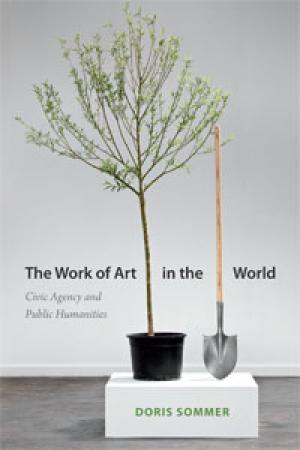
Celebrating art and interpretation that take on social challenges, Doris Sommer steers the humanities back to engagement with the world. The reformist projects that focus her attention develop momentum and meaning as they circulate through society to inspire faith in the possible. Among the cases that she covers are top-down initiatives of political leaders, such as those launched by Antanas Mockus, former mayor of Bogot√°, Colombia, and also bottom-up movements like the Theatre of the Oppressed created by the Brazilian director, writer, and educator Augusto Boal. Alleging that we are all cultural agents, Sommer also takes herself to task and creates Pre-Texts, an international arts-literacy project that translates high literary theory through popular creative practices. The Work of Art in the World is informed by many writers and theorists. Foremost among them is the eighteenth-century German poet and philosopher Friedrich Schiller, who remains an eloquent defender of art-making and humanistic interpretation in the construction of political freedom. Schiller's thinking runs throughout Sommer's modern-day call for citizens to collaborate in the endless co-creation of a more just and more beautiful world. (From the Publisher)
Workplace is a refereed, open access journal published by the Institute for Critical Education Studies (ICES) and a collective of scholars in critical university studies, or critical higher education, promoting dignity and integrity in academic work. Contributions are aimed at higher education workplace scholar-activism and dialogue on all issues of academic labor.
An interface between academic learning and civic engagement. The Initiative promotes the divergent thinking of arts and humanities in the service of solutions to real life problems.
Wabash Center Staff Contact
Sarah Farmer, Ph.D.
Associate Director
Wabash Center
farmers@wabash.edu