Search Results
9339 results found using the following search criteria: .
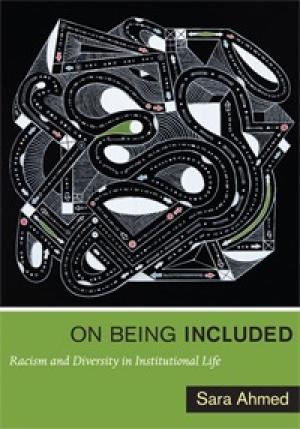
In a valuable and demanding text, Sara Ahmed’s On Being Included looks at the role of diversity in higher education institutions in order to examine the many difficulties and paradoxes that diversity practitioners face. Most centrally, Ahmed argues that the people who work in diversity offices are expected to fix the “blockages” that come with various racial, ethnic, gender, and sexuality tensions, yet these same persons are themselves viewed as the blockage when they raise such issues. Similarly, many institutions use the existence of a diversity office as sufficient evidence of the school’s health rather than as a locus for productive work. The book’s argument relies on a series of interviews that Ahmed did with diversity practitioners at schools in the United Kingdom and Australia. The results she obtained are shaped largely by a series of acts passed in the UK, beginning with 2000’s Race Relations Amendment Act (RRAA) and concluding with 2010’s Equality Act. These acts led to the creation and assessment of diversity statements by UK colleges and universities. Over the course of five main chapters, she examines the experiences of her informants and analyzes their logic and rhetoric to disclose how institutional diversity work often functions to salve privileged consciences while concealing marginalized voices. In particular, Ahmed spends significant time looking at the policy documents that diversity offices were often tasked with developing. Because of the RRAA, many of the documents she examined were written in terms of legal compliance, and thus target safeguarding the school’s image more than improving its institutional life and structures. Moreover, she notes that after the policies created by various UK schools were evaluated and ranked, high marks on a well-written statement were translated into institutional strength at diversity work, which ultimately concealed the type of work that still needed to be done. Indeed, the text claims that an explicit, stated commitment to diversity by a school usually has no effect on the actual practices and habits of the school. Not only do policy commitments fail to lead to action, they often substitute for action. This leads to one of the concluding provocations of the text, where Ahmed pushes against the discourse around diversity “allies.” She notes that a focus on white anti-racism can often have the effect of simply re-centering whiteness. Diversity work is often supported by white persons or by predominantly white institutions precisely as a way of assuaging a bad conscience. Ahmed sees this as most evident when progressive whites react to challenges about race first by invoking their own bonafides rather than affirming the experiences of the marginalized. On Being Included is an insightful, challenging, and well-written text. Teachers and administrators who are interested in diversity should certainly take time with Ahmed’s work, as should anyone interested in assessing the larger role of institutional context in higher education. Although a careful reading will not leave the reader with any easy approaches or techniques, it will undoubtedly prompt helpful critical self-reflection that universities need.
The editors of Looking and Learning argue that institutions of higher education have required textual literacy for centuries, but now are facing a problem: they have not cultivated visual literacy in an age when visual input has risen exponentially in volume, pace, and cultural significance. Little, Felten, and Berry propose to address this problem pedagogically throughout academic curricula. Eight contributing authors bring disciplinary-based tools to the conversation, discussing pedagogical approaches and outcomes for students’ development of visual literacy as a means of depth-learning. One of the most valuable features of this volume is the introduction of the Association of Colleges and Research Libraries’ (ACRL) definition, promotion, and list of observable performance standards with outcomes for visual literacy (3, 8). Looking and Learning then details particular courses and pedagogical approaches by professors who claim that visual learning significantly enhances student perceptions of data and experience, deepens engagement with course material, and sharpens critical thinking skills – all important outcomes for effective education. Chapter one, for example, focuses on visually-based pedagogical approaches for learning astronomy. A pedagogical shift came to Anthony Crider when he began to emphasize visual and information literacy skills rather than content delivery in his courses (16). He found that as a result, his students learned to think through problems more deeply and effectively. Now, close observations of the objects and phenomena in space are required, followed by deductive thinking to frame arguments for hypotheses and proofs. Chapter two provides pedagogical tools that move students from subjective reactions to critical responses when encountering a visual input. In this chapter, like Crider, Michael Palmer focuses on developing the critical skills for visual literacy, rather than content-based learning. Likewise, chapter three shows how Katherine Hyde uses photography to cultivate sociological mindfulness and social identity (31). Cedar Riener teaches about visual perception in chapter four, using pictorial illusion to demonstrate that perception is not always accurate. Chapters five and six speak to “deep learning” through work with visual media including historical paintings (Steven S. Volk), and film-making (Alison J. Murray-Levine). The intent is to slow visual inputs so there is actual engagement and analysis of the subject matter as a visual story and language. Chapter seven introduces the process and structure of critique in the area of visual arts (Phillip Motley). The volume concludes in chapter eight with Deandra Little providing suggestions and strategies for teaching visual literacy throughout a curriculum (87). For those who are visually impaired or have difficulty interpreting visual cues and yet are able to hear, there is little aid in this volume. One exception occurs in chapter five where historian Steven S. Volk helpfully introduces students’ auditory input for a person who is not sighted, discovering that learning is enhanced for everyone. Perhaps auditive literacy is the next logical educational contribution for learning by senses. Data and experience come through many senses; pedagogical approaches are likely to have to address these different avenues of learning as attention to differing abilities expands both culturally and legally. Ultimately, the editors and contributors call for all teachers and students to “learn to look and look to learn” (5). Such a challenge seems obvious, achievable, and pedagogically meaningful (for the sighted) as an effective educational focus for literacy – literacy for a visual age.
Adult education is an area of study and application that has helped bridge the gap between immigrant populations and the bureaucratic systems regulating said populations. This has been accomplished by implementing formal and informal training as well as collaborating with settlement services and other programs. Sadly, the bent of much of this training (specifically within Canada, the U.S., and Australia, in which this volume’s featured studies are located), was geared historically toward assimilating immigrants rather than integrating them into their host countries. Even today, the underlying narrative of immigration policy in these countries is highly colonial and assimilationist. This volume attempts to elucidate the key conflicts at work between immigrants, host countries’ policies, and service workers. Using Nancy Fraser’s theoretical constructs of redistributive, recognitive, and representational justice, the authors present solutions and insights into how adult education as a field can assist immigrants in challenging exploitation and influence policy towards a more socially just outcome. Applying Fraser’s theory to adult education, Shibao Guo defines recognitive adult education as one that “affirms cultural difference and diversity as positive and desireable assets” (15). This collection addresses the conflicting interests at work within immigration and education and points to possible ways adult educators and others can mitigate the negative realities that immigrants face. The topic of immigration is dense and multifaceted so thankfully the chapters are concise and accessible. Given that “the United Nations now estimates that 232 million of the world’s population lives outside the country of their birth,” transnational migration can no longer be ignored (2). One takeaway from this collection of nine chapters is that there is a marked disconnect between immigrants’ experiences and the policies created to regulate them. Immigrants face a myriad of challenges: the devaluation of foreign credentials, possible exploitation, racism, discrimination, heightened security policies of receiving countries, and broken bureaucratic systems. The nature of immigration has also changed. Shibao Guo provides a helpful description of how transnational migration is different from other types of migration by defining it as “multiple and circular migration across spaces of migrants who maintain close contact with their countries of origin” (7). This type of migration is a far cry from migration patterns of the nineteenth and twentieth centuries when migration was often described as “one way” and immigrants were expected to completely assimilate into the receiving country’s culture, leaving all traces of “foreignness” behind. Each of the chapters echo Shibao Guo’s call for adult education to “continue its long-standing commitment to social inclusion by working toward a more inclusive adult education squarely focused on the benefit of marginalized adult learners (e.g., workers, farmers, women, racialized minorities)” (8). The statistics reported are simply staggering. Bonnie L. Slade cites the Longitudinal Survey of Immigrants to Canada (LSIC), which reports that “although 76% of new immigrants have at least one type of international credential, such as a university degree, 70% experienced barriers in gaining access to the Canadian labor market at an appropriate level” (67). As Slade and others note, the devaluation of foreign creditials often leads to underemployment or unemployment, especially for immigrant women. Critically studying the language used in immigration policy and the theoretical position taken by policy makers may also assist adult educators in unpacking some of the undercurrents of racism and colonialism still at work in policy creation. As Edward Joaquin and Juanita Johnson-Bailey point out, the “issue of immigration has generally been cloaked in the language of patriotism and nationalism” (79). While overt racism and bias may be shunned in modern discourses around immigration “predjuice has become coded and wrapped in new, less offensive language and discussion” (80). Joaquin and Johnson-Bailey also suggest that adult education programs “adapt their curriculum to educate learners about transmigrational immigrant education concerns” as well as “infuse strategies that address the needs of immigrant students” (83). Yan Gao’s chapter on ESL programs in Canada illustates how some language programs have become mechanisms to create and control workers. Yan Gao suggests that adult educators in Canada “help immigrants develop critical language awareness” which will allow them to contest unfair practices (48). Perhaps one of the most promising avenues for change comes from Tara Gibb who suggests “inviting policymakers and employers into literacy classrooms and language classrooms so that they might observe firsthand alternative forms of assessment, view holistic respresentations of language and literacy practices, and listen to immigrants’ experiences and expressions of knowledge” (60). In these instances, adult educators are being called on to actively educate themselves, their students – immigrant and nonimmigrant alike – and policy makers on these issues. This collection provides an intriguing foray into the brave new world of immigration. It lends itself not only to adult educators who work with immigrants but also to those who do not. College faculty, administrators, and staff in the Global North would benefit from reading this volume because if transnational migration continues on its current trajectory, it will vastly change our institutional as well as national demographics.
Research literature reveals that effective mentoring has significant and positive impact on student success and persistence for women and people of color. Mentoring as Transformative Practice consists of ten essays concerning effective traditional and nontraditional mentoring strategies for women and underrepresented minorities (URM). The essays presuppose the value of mentoring and also explore its impact on student outcomes and agency. The majority of essays in this volume are written by women and persons of color who have successfully mentored others or have been the beneficiaries of effective mentoring relationships. Many of the essays employ a nontraditional methodology for analyzing mentoring relationships and effective mentoring methods. For example, a critical reflective and subjective instrument called scholarly personal narrative is used both to analyze mentoring relationships and as a tool to mentor students. Scholarly personal narratives highlight the author’s voice and communicate their perceptions and interpretations of their lived experiences. Such narratives reveal insights and depth of experience in compelling ways. These are not normally found in research works. They also offer a unique method for constructing new knowledge. Chapter One uses personal narratives to examine significant aspects of mentoring that impact women and URMs in higher education arguing that they often need psychosocial versus academic mentoring. The authors – one with a national mentoring award – reflect on mentoring practices in their personal narratives. They conclude that students need mentors who offer authentic relationships, understand their experiences as minorities, listen without reprisal, and encourage and model vulnerability at all levels. In Chapter Two, an African American female and associate professor at a research university and six of her students analyze data from their scholarly personal narratives, revealing three consistent behaviors that contribute to the development of student agency: (1) perceived and actual approachability allowing for mutual trust and comfort leading to cultivation of student agency; (2) the balance of challenge and support; and (3) assistance and encouragement to develop a scholarly voice, passions, and vocation. In Chapter Four personal narratives are used as a critical pedagogical tool through which students trace and critically analyze their educational development, comparing their experiences with patterns highlighted by social science theories, quantitative data, and relevant social policies. The book offers several mentoring takeaways in the remaining chapters. One takeaway is that mentoring can become a racialized experience when it takes the form of protecting a traditional canon from nontraditional perspectives brought to the learning experience by women and minority students. Viewed within the context of social justice, mentoring involves conscientization, the valuing of lived experience, and advocating for students. Nontraditional alternatives to proximate mentoring relationships include “mentoring-at-a-distance” through emails, conferences calls, and so forth, and various unexpected “cheerleaders” who become sources of psychosocial encouragement. Online mentoring solutions provide psychosocial support for students in specific disciplines, like STEM. “Pedagogy for Equity” peer mentoring can focus on three levels – personal biography, collaborative sociocultural group context, and broader institution. Intergenerational and near-peer approaches positively impact retention and achievement from junior high through doctoral programs. I highly recommend this book as a resource for individual or institutional self-reflection about participation (or lack thereof) in mentoring relationships as mentor/mentee and for thinking about and developing effective mentoring strategies for women and URMs.
The title Listening to Teach caught my eye. When one imagines teaching, one might first think the student’s job is to listen, while the teacher’s job is to speak, or at least to organize activities geared toward a predetermined outcome. What does listening have to do with the role of teaching? Furthermore, for those teaching within the religious academy, what might a pedagogy of listening look like in the context of religious higher education? Although this book does not specifically target religion or higher education, undergraduate and seminary professors will find many ideas, which will inspire their classroom teaching. The various models of pedagogical listening presented in this text can also serve to challenge traditional teaching strategies that are still pervasive in many higher education classrooms: teacher-centered strategies that often rely on a banking model where content is transferred to passive students. Infusing religion classrooms with dialogical and student-centered approaches can create new forms of learning where students learn not only content, but also how to ask good questions and seek answers in ways that are personally and contextually relevant. For many teachers this requires a shift in one’s perceived role: rather than seeing the teacher as having all the information and students as receptacles for it, this approach recognizes that students enter the classroom with a wealth of experiences and perspectives the teacher may not share. Within listening pedagogy models, teachers serve as co-researchers, observers and documenters of classroom interactions, and interpreters who can help students grasp the meaning of the learning that has taken place. As teachers listen deeply to students and encourage them to learn the art of listening to one another, students are able to enter into the learning process in a way that holds their interest and results in learning that remains in place far beyond a content test. Part 1 sparks ideas for teaching strategies and discussion formats that, although predominantly geared toward children, would work at least as effectively in a classroom of college or seminary students. In these methodologies there are some strategies I have come to through trial and error, but like many teachers in higher education, I have no formal training in teaching. Therefore, learning educational theories and strategies others have found helpful provides a deeper level of intentionality in my teaching, and allows me to see how I might more holistically implement options other than didactic teaching. These brief chapters also provide lists of references that are useful for digging more deeply into any of the specific pedagogies outlined. Part 2 contains ideas of particular relevance for higher education religion classrooms. Chapter 8 focuses on a “pedagogy of discomfort,” which the author, Ashley Taylor, suggests as a way to approach teaching and learning about areas of injustice and oppression. Taylor draws together the cognitive and emotional aspects of learning, allowing learners to critically analyze their own emotional responses. A teacher’s role, then, is to listen intently to student responses and create a safe space in which to acknowledge and examine areas outside of our comfort zones. This approach could be quite helpful in facilitating conversations regarding the approach people of faith should take in the face of today’s many areas of social and economic inequity. Chapter 9 suggests a pedagogical model a religion teacher might find useful: curation as listening. Thinking of a religion teacher as a curator of a faith tradition, with particular emphasis on the Latin word curare, “to take care of,” what would it look like for religion professors to imagine our role as caring for the tradition and testimony of our spiritual forbears, closely listening to the voices (present and absent) in our tradition’s history, and the ways those voices speak to our present context? In content-based religion courses such as Bible, history, and some theology courses, how might the professor’s role shift by thinking of him or herself as a curator of the tradition rather than the all-knowing expert? How might the students’ experience change if they see themselves as co-curators, creating meaning alongside the tradition and their curator-professor? Other chapters also hold useful ideas, including the development of trust, the augmentation of uncertainty, and the ways that one transfers these listening pedagogies to an online format. Similar to the struggle experienced by many K-12 teachers regarding “teaching to the test,” many religion professors may wonder if students can learn an appropriate level of content based on these methodologies, and this is a valid critique. Engaging a pedagogy of listening invites academics to reimagine ways by which a discipline is passed on most effectively and meaningfully. For those recognizing the limitations of the banking model of education, pedagogies of listening offer alternative models to advance lifelong student learning.

The crisis of the American higher education is no longer news. Rather than prosecuting the state of educational affairs with the dominant approach of “crisis zeitgeist” held among educationalists and analysts (65), Harrison and Mather examine the positive contributions of higher education and analyze problems through positive inquiry, alongside their critique as learners, professors, and administrators in the system. Throughout the eight chapters, the authors show how older and current research in theories, applications, and empirical data can strengthen the interdisciplinary and interconnected industry – both within and outside of itself (ch. 2). While mindful of the current commodification of education or the consumeristic mentality currently involved in reprogramming or (re)structuring education, the authors urge a more holistic evaluation of not just the value of higher education towards vocationalism but also its purpose for cultivating individuals, community life, and public service: to see that education as a means of vocationalism (career development, preparing learners for better paying jobs) is not more important than to embrace the intrinsic value of liberal arts education for nurturing knowledgeable citizens who will in time contribute to the democratic ideals of public society (chs. 3 and 5). The thrust of Harrison and Mather’s proposal is a hopeful, though realistic, imagination of “what can we create together” (46) not just with educators, but also with community engagement (50). Thus they recommend a shift from a pedagogy of “standardization testing” to cultivating attentiveness to the different “narratives” for “meaningful student learning” (ch. 4), and from a focus of merely cognitive and pragmatic (applicable) knowledge to building a holism of cognitive, affective, and other facets of learning, and developing the whole person (chs. 6 and 7). Accordingly, universities and community colleges need to learn to leverage what each offers best without denigrating one another (denigration happens when leaders wrongly conflate or differentiate vocational and remedial goals of education in both types of institutions). They need to create infrastructures that provide level-playing fields for learners of different economic and ethnic standings in matching institutions, curricula, and related discourses on the recipients and goals of education (59; 83-86). The volume does not only register theoretical concerns; the authors report positive efforts from select institutions that have redirected discourses and implementation for overcoming crisis. The selection includes well-known and lesser-known institutions, such as Ball State University, Berea College, College of Wooster, Columbia University, Denison University, Duke University, Emory University, Kentucky State University, Ohio University, Santa Clara University, St. Mary’s College, University of California Santa Cruz, University of North Carolina, Wake Forest University, and Western Governors’ University in the United States, and it even provides occasional reviews of institutions outside of North America, such as the Asheshi University in Ghana. Though discussions in the volume would resonate with colleagues in religious studies programs, the volume did not provide application for religious or theological studies programs. Various efforts by the Association of Theological Schools (ATS) to overhaul religious offerings (curriculum, faculty, student enrollment, and so forth), such as granting reduced M.A. and M.Div. curriculum to requesting member institutions have both helped and added to the challenges of re-envisioning religious studies programs in light of the current educational crisis. The search for better resolutions in the sea of analyses continues with no clear landing in sight.

The argument of Fareed Zakaria’s book is precisely what the title indicates: a liberal education is worth defending. Zakaria begins by describing the oft heard opinion that studying the liberal arts, especially in an age of technology and global business, is a waste of time, and how in India, a skills-based education is valued much more than one centered on the study of history or philosophy. He himself intended to focus upon maths and sciences, but wound up a history major because of an elective course. The book provides a brief but helpful history of liberal arts education, focused upon the United States, then turns to what Zakaria thinks is the “central virtue” (72) of such an education: it teaches one how to write, which in turn teaches one how to think. The other two main advantages of such an education are that one learns how to speak, and how to learn. Zakaria elaborates on how such abilities are requisite for obtaining a job, and important for the modern economy. He also maintains that education should be much more accessible and affordable, and that university education, at least in the United States, should be more rigorous. Thus, while extolling the importance of a liberal education, he recognizes that it is currently deeply flawed in its implementation. We need more, and better, liberal education (105). Subsequent chapters further discuss the need for greater accessibility to higher education (Zakaria believes MOOCs can make a contribution here), and the significance of knowledge for power, especially political power. Zakaria thinks the liberal arts are crucial if we want more just societies and a fairer distribution of wealth. His final chapter is a defense of today’s youth. There have been several recent books lamenting the lack of curiosity and selfishness of young people. However, Zakaria cites surveys that indicate that concerns about being a community leader and helping others have risen among students in university, and education, poverty. and the environment are their top concerns. However, at the close of the book he grants that all of us need to spend more time thinking about the meaning of life, which is precisely what a liberal arts education encourages us to do. Zakaria’s book is informative and engaging, and I appreciate his call to make education more accessible for those facing economic hardship. Some might find that the examples and citations from capitalist icons who endorse the liberal arts undermine other aspects of Zakaria’s argument given that one hopes (and Zakaria appears to share this hope) a liberal arts education would encourage a more reflective critique of economic systems in which people are able to amass so much wealth, often at the expense of others. Such examples might also reinforce the notion that success is measured primarily by wealth, which many dimensions of a liberal arts course of study would challenge. But those interested in a history of higher education in the United States will find this a good introduction. The more positive, or at least, sympathetic, attitude towards contemporary young people evident in the last chapter is welcome in light of how anxious and debt-ridden so many of our students are.
Outcomes-based learning invites the question of how to best produce them, and this book introduces the reader to seven high-impact practices (HIPs), namely high expectations, close and frequent student-faculty interaction, effective teaching strategies, undergraduate research, collaborative learning, service learning, and diversity. Chapters are organized around these seven features. The authors use their own school, Oxford College of Emory University, as a test case for their hypothesis that these features provide the best means for student success as measured in desire to continue learning, graduation rate, STEM interest, and community engagement. Institutions promoting HIPs provide intentional support to their students for these practices, cultivate diversity, and blur the boundaries between classroom and extracurricular life. The book is seasoned with excerpts from faculty and student interviews and almost constant reference to the last thirty years of research on academic practice. High expectations are created in classroom synergy between students and instructors, where instructors lead students in exploring beyond the basic subject information students are expected to learn on their own. Students report appreciation for being pushed beyond introductory knowledge and for gaining the self-knowledge that they underestimate their own learning capacities, something they would not have learned without high expectations. High expectations are successful when students have more opportunities to interact with faculty. This works best at smaller institutions and requires the institution’s support to work. While faculty report that interaction helps them tailor their instruction to students’ needs and abilities, they also caution against an over-customization that reduces a subject’s breadth and prevents students from being challenged by new and unfamiliar material. As expected, high-impact teaching calls for active learning techniques, with fourteen such practices – called “Inquiry Guided Learning” – described in the third chapter. Among them are student discovery (as in problem-solving), systematic construction of knowledge, cross-disciplinary integration, addressing misconceptions, creating surprise in the classroom, and using mistakes strategically. These practices are not formulas set forth by the authors but were derived from student-faculty conversations about good teaching at Oxford College. The reader looks in vain, however, for the redemption of the lecture as a component in active learning. In any case, faculty are advised to use practices that fit their personality and their discipline; some fit better than others. Collaborative learning is enhanced through student research projects, which should be found across the disciplines (STEM fields have done the best job here). Such learning is best coupled with collaborative leadership in student life activities. The greater benefit accrues the less division there is between a campus’s academics and student life. Students learn leadership skills and gain confidence if collaboration with their peers is encouraged in both areas. Service learning includes collaboration and moves students beyond mere cognition to an experience the authors describe as spiritual and aimed at the “whole student.” And, the more diverse a campus, the better the outcome of any sort of collaborative activity. The conclusion offers readers ways and means of implementing these HIPs on their own campuses. Flexibility and adaptation are key, and in the process, more HIPs may be devised from conversations among all parties in different campus contexts.
Facilitative Collaborative Knowledge Co-Construction is the second volume in a series under the Jossey-Bass New Directions for Teaching and Learning imprint (see Carolyn Jones Medine’s review of volume 1, From the Confucian Way to Collaborative Knowledge Co-Construction, posted April 15, 2016). Van Schalkwyk and D’Amato both have experience at the Centre for Teaching and Learning Enhancement at the University of Macau, China. As such, this volume and its predecessor aim at improving the learning experience of Asian students, particularly in Confucian teaching contexts. In the first volume, the “authors provided a framework that was designed to encourage teachers as they move from a Confucian way of teaching toward a more collaborative way of providing a co-constructed knowledge base in the classroom” (i). “One can certainly train students to memorize facts and follow algorithms, but unless they know what the algorithms mean and when and how to use them, their mastery of the subject is only superficial. Moreover, most of the knowledge that is acquired by rote learning will be lost quickly because it has no connection to anything meaningful in students’ minds and lives” (3), argue the editors. One challenge in considering this volume for use in US-based contexts is that it is firmly aimed at those who have traditionally taught using rote learning and memorization of facts – repeated references to “the Asian classroom” make this clear. One questions the degree to which such methodologies are entrenched among religious and theological educators in this country. Certainly constructivist learning is a challenge for any number of traditional educators, but involving students in problem-solving or helping them see the value of personal reflection and application in their learning is less foreign to many of us. Where these insights may be useful is in reminding faculty of the unique needs of international students coming from Confucian-based systems. Chapters in this volume focus on the value of constructivist, cooperative, and collaborative learning; relational intelligence; insights from neuropsychology; sociocognitive skills and emotional intelligence; and “engendering critical reflective thinking within a collaborative teaching and learning context” (2-3). Mary M. Chittooran’s chapter on “Reading and Writing for Critical Reflective Thinking,” for example, contextualizes specific tools like questioning, feedback, and the presentation of alternative explanations, demonstrating how each might best be used with Asian students. Chittooran also explores sixteen different reading and writing activities; any of these might spur creative ideas for teaching a variety of students. Helen Y. Sung’s exploration of emotional intelligence offers seventeen suggested questions to help expand students’ emotional fluency. There is some repetitiveness between chapters, particularly as various authors review the characteristics of Confucian learning environments and how education is changing. This volume may lend itself best to “cherry picking” whatever portions or techniques are needed for a given professor’s context or students. Most of Amato’s chapter on brain-based learning with Yuan Yuan Wang, for example, may translate over to a variety of educational contexts. Their advice that “learners should not be grouped by age but should be grouped by processing or aptitude levels in most learning activities” (55) is as germane in a Biblical languages class as it is in a room full of international students.
Discerning Critical Hope is a continuation of the work of Paulo Freire, whose famous Pedagogy of the Oppressed (1970) formed a basis for critical and liberation pedagogy. While his early work included hope, he reiterated the importance of that portion of his framework in Pedagogy of Hope (1992). A small but growing literature on critical hope is extant in the field of pedagogy, but this idea has not yet made many inroads into the published works of theologians, despite its connections with liberation theology and the other contextual and critical branches of theological discourse and activism. (Works on critical hope in the religious education and theology literature include: Bock, “Climatologists, Theologians, and Prophets,” Cross Currents; Kim, “Seeking Critical Hope in a Global Age,” Religious Education; and Kuhne, “A Community Pedagogy of Critical Hope,” PhD dissertation). Many readers of the Wabash Center’s publications will undoubtedly already teach in a way consistent with the critical and liberative themes in Freirean thought, critiquing oppressive social structures and advocating for a world grounded in God’s justice and love. After deconstructing oppressive systems and our complicity in them, however, it can be difficult to provide hope in the theological classroom. I personally find it challenging to move students beyond critique and not simply leave ministry students and seminarians with the task of reconstructing their shattered beliefs and worldviews on their own. Critical hope provides a way forward. Within this framework, critique and hopefulness cannot be separated: the point is that we need both. We need to be able to critique the world as it is, while retaining hope for a different future. Within this framework, the educator engages history with a critical lens, invokes students’ imaginations, envisioning a different way, and provides space for practical steps to enact that vision. Discerning Critical Hope includes chapters by a number of scholars, educators, and practitioners. The authors distinguish between critical hope, naïve hope, and false hope. Naïve hope is optimism without a sense of personal responsibility: expecting that things will turn out alright even if one puts forth no effort to make it so. False hope refers to the idea that working hard will result in one joining the oppressing class, a personal rather than systemic release from injustice. Several chapters critique neoliberal education and other forms of supposedly equality-based educational practices that promise merit-based successes, while in reality supporting colonial and patriarchal systems of power. These can serve as cautions for those who teach religion as well. Which of the forms of hope offered in classrooms are naïve or false hopes? Are faculty willing and able to be drawn to a deeper level of hope that can handle the paradox and mystery of critique, of looking in the face of real suffering and injustice, and struggling – hope-filled – toward a better world? Although each chapter has its helpful points, I found chapters 2, 5, and 10 most useful. Chapter 2, “Teaching for Hope: The Ethics of Shattering Worldviews,” by Megan Boler, provides hope for my own teaching. Boler recognizes the real difficulties in engaging critical hope in the classroom: intentionally invoking a pedagogy of discomfort is, not surprisingly, uncomfortable for students and educators alike. Boler states that, when utilizing this pedagogical method, about a third of students will be receptive, about a third will be vocally and angrily resistant, and another third will be numb or apathetic. She shares a difficult classroom experience, including her fears and other feelings as she navigated dealing with resistant students. It gave me courage to continue practicing this form of teaching. Chapter 10 provides a brief history of thinkers who have written about hope, from the Greek myth of Prometheus to Francis Bacon, Immanuel Kant, Georg Hegel, Karl Marx, W.E.B. Du Bois, Ernst Bloch, and Paulo Freire. This provides a helpful entry point into different explications of hope throughout history, especially since many of these philosophers had such a major impact on Western culture and on theology. This chapter delineates how and why critical hope differs from previous understandings of hope. Chapter 5, “Plasticity, Critical Hope and the Regeneration of Human Rights Education,” by André Keet, explains critical hope through the lens of deconstruction, bringing Derrida and other philosophers into the conversation. Keet describes critical hope as that leftover form present after deconstruction occurs, that kernel of truth or “trace” that remains when one strips away all the systems and structures that get layered on top of that essential form. Forms must be physical, must be enacted: these traces cannot remain metaphysical or theoretical, but must be lived. For theological educators, as we critique and deconstruct, we hope and trust there is an essential kernel there for our students to discover, a trace, a divine encounter or transcendent truth, a knowing that goes beyond the laws and organizational structures with which we so often burden our faith. As we critique, we also hope: we sense something there, something infinite, personal and universal, a never-changing essence and a dynamic Spirit of creative transformation. We can never pin it down; it is always a process of becoming. Hope is a means and an end, a way of being and a goal to strive for, but we cannot know for what we hope without critiquing the present context and imagining a different world. Nor can we truly hope unless we embody that hope in praxis, naming the problem, developing a solution, enacting it, reflecting, modifying, and trying again in a constant cycle of transformation. Though the authors of this text do not often discuss religion or spirituality, these topics do come up at points, and the struggles to name injustice and enact a truly just and hope-filled form of education will be recognizable to many religious educators. I recommend this book to educators in the religious academy who want to enact a form of education that goes beyond the banking model, who want to challenge their students to engage in critical thinking, who need courage and a sense of solidarity from knowing they are not alone in this struggle, and who also sense a deep undercurrent of hope in taking one step, and then another, toward that imagined future.