Search Results
9334 results found using the following search criteria: .

“The best way to learn something is to teach it.” Wary as I tend to be of truisms, this one has proven accurate in my own experience as a teacher and scholar. The passages and concepts that I have taught over the years are on permanent recall in my brain. I remember these stories and ideas because I have talked about them with others repeatedly. But learning—and learning through teaching—is not just about memorization. The practice of preparing to teach prompts a very specific (and, yes, memorable) kind of thinking. When I approach a text to make a teaching plan, it requires attention to particularity and ambiguity. When I prepare to teach, I ask: What can be clearly learned from this passage? What is uncertain enough to warrant discussion? In other words, I read for ways both to distill possible meanings and to make room for new ones. In recent years, I have begun wondering what it might be like to invite my undergraduate students into this practice of teaching preparation. I’ve formulated “The Teaching Portfolio” as a capstone assignment for an upper-level undergraduate course where the enrollment may be too high for students to actually teach all or even part of a session themselves. In this assignment, each student selects a biblical passage (one we haven’t already read together), subjects that passage to close analysis using the terms and queries we’ve developed over the course of our semester, and finally plans several activities or discussion prompts they would use to help their hypothetical students engage with their chosen passage. The AssignmentThis is how I describe the assignment to students:This final project invites you into a step-by-step process of how you would approach interpreting and then teaching a biblical passage in a classroom setting. These projects will be individual, but we will devote the final two weeks of class to workshopping these projects collaboratively.Here’s what that teaching portfolio will include:A. An Annotated Biblical Passage. In the margins of this passage you will:Pose three major interpretive questions, related to the types of terms and queries we have asked over the course of the class. Pose two translation or vocabulary questions that you can research and answer (please chat with me about this!).Pose two connections with texts we’ve studied over the course of this text. Explain these connections. B. An Interpretive Artifact. A piece of direct (that is self-conscious) interpretation of the passage you’ve chosen (from short ancient Jewish or Christian texts, from the history of art, etc.). If you select a text, make sure that it’s an excerpt of around three hundred words. Put this artifact into brief context (tell us who made it, when, and where).Describe the artifact, making two to four observations about how our specific course concepts and terms are represented in this artifact or are relevant to its analysis.Make at least two observations about how this interpretation differs from the biblical text and/or what this interpretation adds to the biblical account.How might you incorporate this artifact into a classroom activity? What questions would you pose to the classroom to generate discussion about this artifact? C. Answering Your Questions. Attempt provisional answers to your three major interpretive questions (from part A) with direct, specific references to the text. You may not be able to answer your questions conclusively (that’s okay!), just reflect on how you would begin to answer these questions with as much detail as you can.D. Preparing to Teach. Having wrestled with this text and its interpretation, now is the time to reflect and prepare to teach it. In this final section, please address the following questions: If you taught this story in a classroom setting, what two or three major concepts, questions, or ideas would you want students to remember from this text? Why? What would make teaching this particular text challenging? How might you address those challenges? Describe an activity (in addition to the discussion you imagined above in part B.4) that you might use in class that would engage and convey those ideas to students. Describe it in as much detail as you can.Having completed this project, what new interpretive questions do you now have about this passage, especially in view of our course’s major terms and concepts? E. Presentation. You will have ten to fifteen minutes to present your portfolio work-in-progress in the two weeks leading up to finals week. The Fine Print Your selected passage must be from a part of the Hebrew Bible or Septuagint (LXX) that we have NOT covered in class. Be sure to spend time understanding the context of this passage, especially if it is part of a larger narrative. That is one thing we will ask you do at the beginning your portfolio presentation.Not sure where to start looking for an interpretive artifact? Check out the following sites:Posen Library of Jewish Culture and Civilization. The Posen online library has some great examples of visual and literary interpretation of biblical passages. Visual Commentary on Scripture has some good examples of biblical interpretation in the history of art (if using the VCS just make sure the artwork you select is a direct, self-conscious representation of your biblical passage; some of the connections this site makes are more abstract). Sefaria is a great place to start in finding examples of ancient Jewish interpretation. While you are welcome (encouraged!) to confer with colleagues, your final project must show clear evidence of independent thought (different questions and answers, a distinctive interpretive artifact, etc.). If a colleague from our workshop inspires or helps your thinking in any particular way, be sure to cite them like this: “(conversation with A. Colleague, 12/6/24).” ResultsI have used this assignment in several 300-level courses (enrollment twenty to twenty-five). I typically reserve our three final class sessions for students to present their portfolios in progress and receive feedback from their colleagues. This means we typically end the semester on an energetic and collaborative note. One student told me that the project helped inspire his pursuit of a career in education. Students have reflected that this project helped them to synthesize the major ideas of the class and consider how they might communicate them to communities beyond our classroom.

We know that students are most motivated to learn when they’re genuinely excited and curious about the material, when they can connect the material to their personal interests, and when they can perceive the relevance between course content and their own lives, both current and future. (This is one way of establishing “value”—a primary driver of student motivation.)I have tried to motivate my students this way for many years, convinced by the goodness of the approach. In class discussions, I frequently ask students to think of examples from their own lives to illustrate course concepts: “What is a time in your own life where you felt misunderstood based on an identity that you held?” or “If you were a Hindu, which god would you worship and why?” I frequently teach skills and orientations that I explicitly state can be used outside of my course: “I suggest this note-taking strategy for all of your classes” or “I encourage you to ask ‘why’ about everything you do.” On weekly quizzes, I prompt students: “Describe a connection between something from our course this week and your life outside of class.” For their final projects, I allow students to choose their own topics; my instructions read, “Ideally, I’d like for you to pick a topic that is relevant or applicable to your own life, something that interests or excites you.”I DO think this attunement to relevance and connection helps students to learn. They do seem excited by the material; they do seem to understand difficult concepts better with personalization; they do seem to realize and appreciate the applicability of course material more than if I simply lectured at them about course content only. It’s been rewarding to witness.AND I am becoming worried about this approach.In both public and private spheres, I am perceiving the (increasing?) pervasiveness of:Disinterest (or worse) in people who are “not like us” (out-group bias);“Cancel culture” and going “No Contact” from those (even parents) who may hold opinions, values, or beliefs different than our own; Villainization and pathologization of people who we reduce to just one thing (an identity, a behavior, a religion); Psychological labels such as “toxic,” “narcissistic,” or “triggering” applied to those individuals whose behavior we don’t like (a great book on why this is a problem); Compulsory “pick-a-side”-ism (this video even contains a warning!); Refusal to admit—or even to consider—the inevitable limitations of one’s own position;Valorization and unqualified support for any “one of us” (even in the face of obvious concerns or problems); And more.I am bothered by this all.When I insist on relevance as a guiding principle in my presentation of course content, am I implying to students that anything that doesn’t personally interest or benefit them is not worth their time? Am I positioning whatever is outside of their (very very limited) spheres as inherently insignificant and irrelevant? Am I encouraging an individualism (that often lapses into self-centeredness) that Americans are already known for? Am I fostering growth, exploration, discomfort—or am I basically fitting the horses I lead with better and better blinders?My daughter loves reading graphic novels. (I get that any reading is still reading, but some of these books are terrible.) And they’re mostly representative of the life that she leads. The protagonists are all young characters whose lives are consumed by crushes and drama and makeup and annoying teachers. Yes, it’s all very familiar. But the best literature can transport us to different worlds. It exposes us to experiences and situations that we may never encounter. We get to inhabit characters who may be unlike us in every way possible—and grow to care about them deeply. (I cried over a gorilla in The One and Only Bob.) This is how literature builds empathy; this is what “Theory of Mind” is all about. So, once in a while, I force my kid to read old books, books from my childhood, books where the characters don’t talk like her or act like her or have the same stuff as her. She doesn’t like it one bit.I think we could all do with getting out of our comfort zones a bit more. I think we could all do with a bit more exposure to ideas, people, and worlds that are disconnected from our own. Otherwise, we’re all just operating in our own little insular echo chambers. How else will we discover new interests? How else will we change our minds? How else will we build empathy? Lots of things are going to be irrelevant or foreign for students AND still be important for them to learn. In fact, maybe these are the most important things to learn? So the question I’m trying to mull over now is: How can we motivate students while also de-centering them and pushing them to engage with difference, strangeness, otherness, irrelevance—learning for the mere sake of learning?

Since my last post, life has changed in ways I never imagined: a divorce, a move from Indiana to California, and the start of an entirely new rhythm. I’m still drawing every day, but my focus has widened. I write, I cook, I apply for jobs, I manage household logistics. The life I imagined during my sabbatical—long, uninterrupted studio days—has given way to something messier and, in its own way, more honest. 2025 Mini #6, 2.5 x 3.5 in., ink on paperMornings usually start with writing. I work on essays for my two ongoing blogs: Aspie Art Journey, where I write about life as an artist with Asperger’s and how that lens shapes my perspective on the world; and Dating App Diaries, which chronicles the equally unpredictable world of human connection. Both projects grew out of the same instinct that drives my drawings: to observe closely, reflect honestly, and keep creating even when life doesn’t line up neatly.When the writing slows, I move on to practical things—job applications, phone calls, the endless details of caregiving, and keeping a household running. It’s not glamorous, but it’s part of the work. I’ve started to see these moments—cooking for my parents, cleaning, organizing supplies—as an extension of art-making. They’re grounded, rhythmic, physical. The same kind of attention that steadies my line work can also steady the rest of my life. 2025 Mini #13, 2.5 x 3.5 in., ink on paperLate afternoons are for drawing, even if only for an hour or so. My large-format days are on hold for now; most of my recent work consists of small 2½ × 3½-inch ink drawings. The pens I used for years finally clogged, so I’m experimenting with new colors and tools. I enjoy the challenge of small-scale pieces—they require precision and focus without the demands of long hours. They also fit perfectly with a new project I’m planning: a Patreon that will feature these drawings as part of a monthly subscription. Alongside them, I’m sketching designs for a new 4×6 linocut print series. Both ideas bring me back to the tactile side of creativity—the ink, the carving, the test prints, the final prints, and the repetition of making something by hand. 2025 Mini #18, 2.5 x 3.5 in., ink on paperEvenings are when I reconnect with the spirit behind all this: podcasts about functional medicine, the intersections of Buddhist meditation and neuropsychology, or Spanish language lessons. I also read, yet rarely finish a single book before starting others. Sometimes I draw to music; sometimes I just look at what I made that day and think about how it fits into the larger story of my life. That’s when my mind drifts to Lines on the Spectrum, my illustrated memoir, or to the online course I’m developing, “Art as Spiritual Practice.” The course explores the same process I go through daily: using creativity to stay present, grounded, and aware. It’s designed primarily for non-artists, hobbyists, and anyone who feels a pull toward new, transformative experiences, even if they’ve never called themselves creative. 2025 Mini #23, 2.5 x 3.5 in., ink on paperAnyone can become more creative despite the oft-repeated refrain, “I’m not an artist; I have no talent.” The course combines practical exercises with a rigorous examination of terms such as artist and spiritual, a concept that is hotly debated among scholars of religion. The course is a hybrid, combining experiential and reflective elements. Participants practice art-making to encounter transformation firsthand, while also engaging the critical study of language, meaning, and presence.I now see that what I loved most about teaching—the chance to help others notice, pause, and see differently—still guides my days. I just do it now with ink, words, and color instead of “lectures” and syllabi. Art remains my way of thinking about meaning and presence, except now I practice it one small act of attention at a time, line by line, word by word.
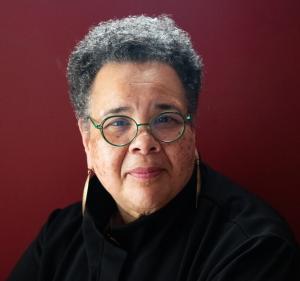
In the old religious imagination, neighbor was commandment—love thy neighbor as thyself—a moral directive carved in sacred text, often recited more than practiced. But womanist knowing stretches that word beyond obedience into embodiment. Neighbor is not assignment; neighbor is encounter. It is the moment you recognize that your life is braided into another’s survival.To be neighbor is to resist the lie of separation.To be neighbor is to lean into the inextricable connection between us.To be neighbor is to know that heart, guts, breath, and soul are even now relationship—we know this is how the universe holds us, whether we consent or not. To be neighbor is to understand that justice is not abstract. It is as close as the nearest wound you are willing to see and bind up. This is not about convenience. Neighbor is not the one who lives next door. That is geography, proximity without promise. Neighbor is interruption of our indifference. It is the holy disruption of your comfort by someone else’s reality and need. Neighbor is memory: remembering that somebody once stood in the gap for you/us. Neighbor is risk: choosing connection when disconnection would be easier, less costly, less troublesome. Neighbor is sacred because it insists that no one is outside the circle of care.It is when you cannot unknow what you now know, and so you must respond—not out of charity, but out of shared humanity, communal obligation, and love. Neighbor is the woman whose name you do not know, but whose struggle you recognize in your bones. Your marrow knows she is tired in a way that feels familiar. She is carrying more than she should have to carry. And something in you refuses to let her carry it alone—even if all you can offer is witness and empathy.Womanist theology reminds us that survival is communal. Thriving is collective. Therefore, neighbor is not optional. Neighbor is the practice of showing up, especially when systems have decided someone is disposable, expendable, or useful only to the greed of others… and that someone is we, us, mine. And perhaps most truthfully—neighbor is action. It is doing. It is what you do when love refuses to remain a theory, an abstraction, or a fragile, contestable idea.I have vivid childhood memories of the ways the women in our church, including my mother, would band together to care for someone recently out of the hospital. When a person or household was in distress, they mobilized a circle of care.The women organized grocery shopping, meal preparation, house cleaning, laundry, medication schedules, transportation to doctor visits, errands, fellowship visits, overnight stays, pet care, plant care, and prayer. As many aspects of home life as were needed were tended to. Each woman took, or was assigned, a task, with one or two coordinating the efforts of the whole group.Sometimes this neighborliness supported family members who were caregivers. Sometimes, when there was no family—or when family was absent or unreliable—the women became the family.Most often, my mother cooked meals. My father and I delivered them. My mother gave us strict instructions—where to leave the food, what dishes to retrieve, how to be attentive without overstaying.As a child, I felt the weight and wonder of doing something important. I would talk with the person receiving care, even in my shyness. I would remind my father of my mother’s instructions. Together, we noticed what needed tending: the throw rugs that should be removed now that Mrs. Thurgood used a walker; the broken commode upstairs that needed a plumber before her grandson’s next weekend visit.We stayed just long enough—twenty to thirty minutes—present but not exhausting. Back home, we reported everything to my mother, who reported to the coordinating woman. Often, what needed fixing was already in motion before the next visit.We were neighbors, acting as neighbors. We were caring for someone in need, trusting that when our time came, we would not be alone either. No one was left to fend for themselves. Our care was how we moved and had our collective being in the world.The ethic of neighborliness is part of my DNA. And yet, for a long time, I believed I had not been part of a community that lived this way anymore—or so I thought. I thought I was alone. I was wrong. A recent health diagnosis placed me in the ICU for eight days. While I was in the hospital, friends and colleagues—local, regional, and national—banded together for my care. I am not alone.After my hospital discharge, my neighbor, Tom Traughber—a friend to me and to the Wabash Center for more than twenty years—stepped fully into the work of care. For two weeks, Tom stayed with me. He grocery shopped, cooked, did laundry, picked up prescriptions, drove me to follow-up appointments, watered my plants, and asked me every day, “How do you feel?” He watched over me. He took care of me. Tom’s radical, steadfast care returned me to my childhood—to that circle of care where being neighbored was simply a way of life.I am grateful beyond measure to be healing. I am on the mend. And I am humbled to have received the sacred and precious gift of being on the receiving end of neighboring. Time spent convalescing has given me space to remember, reflect, and pray. Before this moment, I would have said I had lost touch with this kind of neighborly faithfulness. But memory corrected me. I remembered faculty who showed up for one another. I remembered celebration—my first book marked with a sheet cake bearing its cover, joy made edible. I remembered the ways colleagues supported me during the ten years I was the sole caregiver for my parents. I remembered the affirmations—grants, tenure, promotion, and then promotion again—not as solitary achievements, but as communal investments.I had not named these moments as neighborliness before.I have made that correction.Neighbor is not lost. It is waiting to be practiced again, deliberately, tenderly, and with courage. In a world that profits from our isolation, to choose neighbor is to resist. It is to remember that we belong to one another, not as sentiment, but as survival. The question is no longer whether neighbor exists. The question is whether we will be neighbor—again, and again, and again—until no one is left outside the circle of our care.Thank you, Tom! Reflection Questions Where, in my academic life, have I mistaken collegial proximity for genuine neighborliness—and what would it take to move from one to the other? When have I been carried by a “circle of care” in my professional journey, and how do I honor that memory through my own actions now? What risks am I unwilling to take for the sake of connection, and what does that reveal about my commitments to communal thriving? How do institutional norms (competition, productivity, scarcity) shape or limit my capacity to practice neighborliness—and how might I resist them? Who, in my immediate academic community, is carrying more than they should—and what is one concrete act of neighboring I can offer this week?

Part 1: “Hate”I came into academia sideways. At a slant, you might say. After seminary, I worked in multicultural student affairs at a small, private liberal arts college by day and attended classes in an educational leadership, research, and policy PhD program for working professionals by night. After earning my degree, I served my church denomination as a researcher and was happy in that role, but the constant travel was taking a toll on my health.I longed to find a vocational path that could ground me within a particular community, a place where I might have a day-to-day impact on others and vice versa. I also knew I didn’t want to pastor a church (I never did) but desired to continue engaging in relevant research for the church and community. This is when I saw a job announcement for an administrative faculty position at my alma mater to direct the school’s internship program and decided to apply.Little did I know what I was getting myself into. I quickly realized that “one of these things is not like the other.” My daily activities of running an internship program, overseeing adjunct faculty teaching seminar courses, and planning trainings for intern supervisors and students was quite different from the daily labors of my faculty colleagues. Sure, I taught half the credits that a tenure-track colleague taught, but this was far eclipsed by the kind of work that I and my staff—yes, I also have the responsibility of hiring and supervising staff—faced regularly. Think student affairs/academic dean type of work, with less responsibility but more external accountabilities.My first year was especially difficult. I was asked to conduct a review of the program’s curriculum and the department as a whole, and there was staff turnover during that time. While much of it was not unlike the administrative and supervisory work I had done for the denomination, it was a very different rhythm and workload from that of my peers.Because I came into academia at a slant—from the church, and with a non-religious doctorate from a non-ranked state school—I felt honored that the faculty had chosen me to join their exclusive club. I still feel honored. As a Latina and first-generation college graduate from a poor, rural background, working at a graduate theological school was beyond my wildest childhood dreams. Many of the faculty had been my seminary professors more than twenty years before. They, along with the administration, saw my gifts as a teacher and researcher and nurtured those gifts through various avenues of support and camaraderie. They are now truly my colleagues.Eight years into the life of a teacher-administrator, however, I am feeling the wear and tear of administrative work on my body and my spirit. Having earned a sabbatical (for which I am very, very grateful), I have tasted the sweet nectar of being only a teacher—someone who maintains a certain amount of autonomy over their own schedules for course planning, research, and travel. They are not beholden to staff or adjunct faculty supervisees, leaders in churches and nonprofits, or even students in the same ways. Even though there are committee and guild responsibilities for full-time teaching and research faculty (I have those too), there is more space to read, to think, to write. I realized early on that if I wanted to pursue a research and writing agenda, I needed to adopt a bivocational mentality as a teacher-administrator. Unfortunately, what this has led to is possessing two full-time jobs. Sabbatical affords me the luxury of holding just one full-time position, committing with gusto to research and writing. Adding the teaching of one or two classes and a few monthly meetings to that schedule seems pretty manageable compared to the pace at which I had been running. (I know boundaries are important, and so on; but I needed to produce scholarship at an accelerated pace in order to even be considered for tenure, which is a story for another time.)I don’t really have a “hate” relationship with the role of teacher-administrator because I do not ascribe to the action itself. But with each passing year, I find myself wanting to live more fully in one world or the other. Having now established myself as a scholar in the field, I want to explore further where my research and academic pursuits might lead. Institutions are demanding more from all of us these days, so many are feeling the tensions of the teacher-administrator conundrum in this era of scarcity and rapid change. These pulls often remain unacknowledged in academia, but if we begin to talk more openly about them, we might be able to imagine more sustainable paths forward (and more equitable compensation models).I came into academia sideways. At a slant, you might say. I still feel honored to be here. Might I dare to want more?
A few weeks ago, I stood in a sea of people at a Devo and B-52’s concert, feeling like I’d been transported back to the 1980s. I could see the waves of color from the stage lights, neon, and pulsing. It struck me that this, too, was a kind of art practice—a reminder that movement, rhythm, and attention are inseparable. Sometimes I meditate, and sometimes I find music has similar effects. The musical energy that others might find chaotic calms me. What some might label “angry” or “loud” music—whatever that means—has always soothed my Aspie brain. No, I’m not suggesting that Devo or the B-52’s fit those categories. 025 Mini #7, 2.5 x 3.5 in., ink on paper That concert reminded me how fully the sensory world animates everything I do. The driving beat, the lights, the crowd—it all felt like a visual composition in motion. When I draw, I’m doing something similar: tracing the rhythm of sound and motion until the lines on the page start to breathe. There’s no boundary between listening, seeing, and creating. Presence isn’t achieved by blocking out the world, but by stepping fully into it.This, for me, is the foundation of Art as Spiritual Practice. It isn’t about ritual, belief, or meditation in the conventional sense. It’s about attention—fierce, sustained attention—to the moment as it unfolds through color, sound, line, and touch. Making art slows perception. It opens a space between thought and movement where something larger than language happens. 2025 Mini #11, 2.5 x 3.5 in., ink on paper I don’t pretend to know what to call that something. Some might call it spiritual, while others might use the language of psychology, neurobiology, philosophy, or anthropology. To me, those vantage points all circle the same experience: the shift from distraction to presence, from noise to stillness. It doesn’t matter whether the source is a rock concert, a blank sheet of paper, or a kitchen sink filled with dishes. Each offers a chance to inhabit awareness more fully.The term “spiritual” itself is hotly contested—too elastic for some, too personal for others. Scholars of religion debate whether its very malleability renders it useless for any serious analysis. I tend to think of it as a working placeholder, a word that gestures toward the transformative quality of human experience when we’re paying close attention. Yes, this is among the varied and problematic definitions of spirituality, and I’m fine with that. I’ve moved toward immersing myself in the experience of art-making and away from debates over how to classify these experiences. Of course, that’s a perk of “retirement,” I suppose. I no longer need to engage in those debates, important though they may be. 2025 Mini #8, 2.5 x 3.5 in., ink on paper That’s the spirit behind my forthcoming course, also called Art as Spiritual Practice. It’s designed primarily for non-artists, hobbyists, and anyone who feels the urge to express themselves creatively but doesn’t know where to start. You don’t need to identify as “spiritual,” and you certainly don’t need to believe in anything otherworldly. You just need curiosity—and a willingness to stay with your own process long enough to notice what shifts.Alongside the course, I’m also beginning to share my own sketchbook practice more publicly. The series of small 2½ × 3½-in. ink drawings I’ve been making—each one a study in rhythm, attention, and constraint—will soon appear in a monthly format for those who want to follow the work as it unfolds. 2025 Mini #12, 2.5 x 3.5 in., ink on paper The course mixes practical exercises with reflection. We’ll explore how a daily sketchbook habit can become a form of grounding, how color and rhythm shape mood, and how repetition itself—the steady return to the page—creates meaning over time. Participants will also wrestle with questions that don’t have easy answers: What does it mean to call something spiritual? Who gets to decide who is or is not an artist? What happens when we replace the pursuit of perfection with the practice of presence?In that sense, the course isn’t just about making art; it’s about re-learning how to be with ourselves. Each drawing, each attempt, becomes a mirror for how we approach uncertainty, judgment, and even joy. There’s a moment—whether I’m drawing, cooking, or listening to Devo—when the line between effort and ease dissolves. That’s where transformation begins.I’ve spent much of my life teaching students to look closely, to question assumptions, to sit with ambiguity. I’m still doing that, but now the classroom is my desk, the lesson plan is a page of ink lines, and the students are anyone willing to pick up a pen and see what happens.Presence, not product, is the point. Art becomes the way we practice paying attention. And when we do, even the loudest music becomes a form of stillness.

a·syn·chron·ous·definition: “not existing or happening at the same time” I recently surprised a professor friend with the “news” that I taught almost exclusively in an asynchronous format and have been doing so for the past dozen years. A colleague on staff at my school recently said about this format: “Don’t you just set up the class and they are left to learn on their own?” Another professor in my field when responding to my comment in a writing workshop that I do a lot of my writing in comments on Canvas posts said: “Isn’t that mostly cut-and-paste?” I have been surprised to realize that many people in my inner circle don’t think of asynchronous online teaching as real teaching work. I beg to differ.Recently, I found myself in the worst of it. I was writing discussion prompts for week six while responding to late posts from students meant for week one while two-thirds of my students were talking with each other somewhere in week three. Others had turned in an assignment not due for two more weeks. All this teaching in multiple weeks in my course in one two-hour block while sitting at my kid’s desk on my laptop. He left for college a few weeks ago. We are all in different times, different places, but somehow still connected.Asynchronous teaching is the stuff of sci-fi and fantasy. I engage in time travel on the daily. If only I was a Time Lord with a Tardis to travel in! Or Hermione Grainger with a magical Time Turner on a necklace so I could stop the other times to focus on the one in which I found myself. Instead, I just have a learning management system, where I click to the next item in Speed Grader and jump ahead or behind a couple of weeks to material that has since slipped from my leaky brain. I try to remember what the student would and wouldn’t have encountered at that point in the class as I respond to their work.This morning, I found myself lying in bed and thinking about the clunkiness of the word asynchronous. What would be the word for being in a different place than your learners? A-syn-loc-ous? Oh, yeah. We just call that “distance learning.” Easy peasy. Everyone does that. But when we are in different times, we have a word that specifically marks the absence of togetherness: asynchronous. Out of time with one another.In fact, this is not a new reality. John Dewey called it the greatest pedagogical fallacy, the assumption that students are learning what we are teaching when we are teaching it. I can remember sitting in the now-demolished stadium-seating lecture hall in seminary and watching some of the great professors of my era lecturing. Sitting near the back, I would amuse myself by watching my classmates reach the point when they gave up taking notes, hopelessly lost in the verbiage of our professors. A few at a time, their pens would go down in defeat, and they would sit back in the wooden theater chairs and stare blankly at the speaker, folding their arms defensively. Nowadays, they would pick up their phones or click over to another tab on their computers to check the news, less obvious means of abandoning the effort to follow along. Where the students were, in time, was some light years away from where the professor was teaching. They remained closer to the energetic start of the universe that the professor was now hurtling along the furthest edges of. Teaching involves many moments like these. Planning a syllabus and having to post it a month before the class starts, or having to propose it to a committee a year in advance. In either case, never having met the learners before devising a plan for their learning. Teaching students who have just been exposed to the material alongside those who have wrestled with it for a term or even for years. Teaching people ruminating on yesterday’s political assassination about something that happened a thousand years ago. Sometimes it feels like a miracle when we end up in the same time with the same focus.All of this jumping to the location of students in time and space takes an enormous amount of imagination, energy, and nimbleness, whether online or working in person. But sure, why wouldn’t you put twenty-five or thirty-five students in my asynchronous class, since all I do is post the information and they learn it on their own in their own time? Turns out, asynchronous teaching makes me into an unwilling time lord without a sonic screwdriver in sight. But it also illuminates what Dewey named so long ago: meeting students where they are is no easy challenge, no matter the teaching modality. Teaching online and asynchronously just places this experience in vivid contrast so we recognize it more quickly and are forced to bear the weight of its reality.