Resources
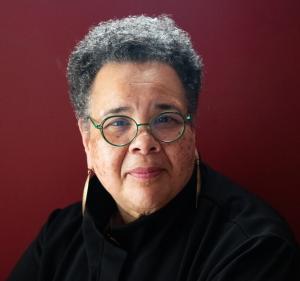
In the old religious imagination, neighbor was commandment—love thy neighbor as thyself—a moral directive carved in sacred text, often recited more than practiced. But womanist knowing stretches that word beyond obedience into embodiment. Neighbor is not assignment; neighbor is encounter. It is the moment you recognize that your life is braided into another’s survival.To be neighbor is to resist the lie of separation.To be neighbor is to lean into the inextricable connection between us.To be neighbor is to know that heart, guts, breath, and soul are even now relationship—we know this is how the universe holds us, whether we consent or not. To be neighbor is to understand that justice is not abstract. It is as close as the nearest wound you are willing to see and bind up. This is not about convenience. Neighbor is not the one who lives next door. That is geography, proximity without promise. Neighbor is interruption of our indifference. It is the holy disruption of your comfort by someone else’s reality and need. Neighbor is memory: remembering that somebody once stood in the gap for you/us. Neighbor is risk: choosing connection when disconnection would be easier, less costly, less troublesome. Neighbor is sacred because it insists that no one is outside the circle of care.It is when you cannot unknow what you now know, and so you must respond—not out of charity, but out of shared humanity, communal obligation, and love. Neighbor is the woman whose name you do not know, but whose struggle you recognize in your bones. Your marrow knows she is tired in a way that feels familiar. She is carrying more than she should have to carry. And something in you refuses to let her carry it alone—even if all you can offer is witness and empathy.Womanist theology reminds us that survival is communal. Thriving is collective. Therefore, neighbor is not optional. Neighbor is the practice of showing up, especially when systems have decided someone is disposable, expendable, or useful only to the greed of others… and that someone is we, us, mine. And perhaps most truthfully—neighbor is action. It is doing. It is what you do when love refuses to remain a theory, an abstraction, or a fragile, contestable idea.I have vivid childhood memories of the ways the women in our church, including my mother, would band together to care for someone recently out of the hospital. When a person or household was in distress, they mobilized a circle of care.The women organized grocery shopping, meal preparation, house cleaning, laundry, medication schedules, transportation to doctor visits, errands, fellowship visits, overnight stays, pet care, plant care, and prayer. As many aspects of home life as were needed were tended to. Each woman took, or was assigned, a task, with one or two coordinating the efforts of the whole group.Sometimes this neighborliness supported family members who were caregivers. Sometimes, when there was no family—or when family was absent or unreliable—the women became the family.Most often, my mother cooked meals. My father and I delivered them. My mother gave us strict instructions—where to leave the food, what dishes to retrieve, how to be attentive without overstaying.As a child, I felt the weight and wonder of doing something important. I would talk with the person receiving care, even in my shyness. I would remind my father of my mother’s instructions. Together, we noticed what needed tending: the throw rugs that should be removed now that Mrs. Thurgood used a walker; the broken commode upstairs that needed a plumber before her grandson’s next weekend visit.We stayed just long enough—twenty to thirty minutes—present but not exhausting. Back home, we reported everything to my mother, who reported to the coordinating woman. Often, what needed fixing was already in motion before the next visit.We were neighbors, acting as neighbors. We were caring for someone in need, trusting that when our time came, we would not be alone either. No one was left to fend for themselves. Our care was how we moved and had our collective being in the world.The ethic of neighborliness is part of my DNA. And yet, for a long time, I believed I had not been part of a community that lived this way anymore—or so I thought. I thought I was alone. I was wrong. A recent health diagnosis placed me in the ICU for eight days. While I was in the hospital, friends and colleagues—local, regional, and national—banded together for my care. I am not alone.After my hospital discharge, my neighbor, Tom Traughber—a friend to me and to the Wabash Center for more than twenty years—stepped fully into the work of care. For two weeks, Tom stayed with me. He grocery shopped, cooked, did laundry, picked up prescriptions, drove me to follow-up appointments, watered my plants, and asked me every day, “How do you feel?” He watched over me. He took care of me. Tom’s radical, steadfast care returned me to my childhood—to that circle of care where being neighbored was simply a way of life.I am grateful beyond measure to be healing. I am on the mend. And I am humbled to have received the sacred and precious gift of being on the receiving end of neighboring. Time spent convalescing has given me space to remember, reflect, and pray. Before this moment, I would have said I had lost touch with this kind of neighborly faithfulness. But memory corrected me. I remembered faculty who showed up for one another. I remembered celebration—my first book marked with a sheet cake bearing its cover, joy made edible. I remembered the ways colleagues supported me during the ten years I was the sole caregiver for my parents. I remembered the affirmations—grants, tenure, promotion, and then promotion again—not as solitary achievements, but as communal investments.I had not named these moments as neighborliness before.I have made that correction.Neighbor is not lost. It is waiting to be practiced again, deliberately, tenderly, and with courage. In a world that profits from our isolation, to choose neighbor is to resist. It is to remember that we belong to one another, not as sentiment, but as survival. The question is no longer whether neighbor exists. The question is whether we will be neighbor—again, and again, and again—until no one is left outside the circle of our care.Thank you, Tom! Reflection Questions Where, in my academic life, have I mistaken collegial proximity for genuine neighborliness—and what would it take to move from one to the other? When have I been carried by a “circle of care” in my professional journey, and how do I honor that memory through my own actions now? What risks am I unwilling to take for the sake of connection, and what does that reveal about my commitments to communal thriving? How do institutional norms (competition, productivity, scarcity) shape or limit my capacity to practice neighborliness—and how might I resist them? Who, in my immediate academic community, is carrying more than they should—and what is one concrete act of neighboring I can offer this week?
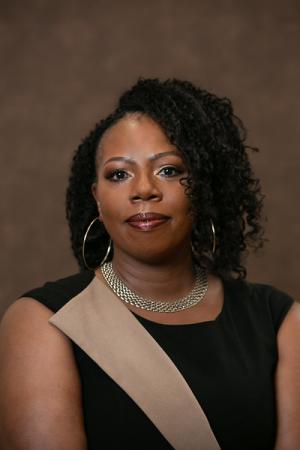
This semester I taught the Gospel of Luke for the first time. My class was a seminar style class with seven students who worked diligently through the Lucan text while also engaging various scholars and they ways that these scholars used a variety of methods for interpretation. Since most of my published works are in the Gospels of Mark and John, teaching the Gospel of Luke was a new experience for me. During the course of this class, my students dubbed me as their most “confessional” professor. At first, I disliked the term because, in my mind, I was still seeking to embody the detached state in my teaching approach which would have been very similar to many of the professors with whom I studied New Testament texts. However, I had to ask myself why I was seeking to be detached within this particular pedagogical space. Upon reflection, I realized that the makeup of the class was one reason I wanted to appear detached. In my Gospel of Luke class, I had a variety of students ranging from budding womanist and feminist students to strictly complementarian male church leaders. As an African American woman professor, I have found in my years of teaching that strictly complementarian male church leaders often avoid my classes just because of my embodied presence. Because I knew that some of our conversations could become tense, I wanted to remain a detached presence even though my embodied presence oftentimes cannot afford to be detached. My particular embodied presence makes a difference in the ways that students receive information. Realizing this, I embraced the idea of being confessional—with some caveats. Most scholars understand confessional approaches to religious education as not valuing differing interpretations of understandings of scripture and theological concepts.[1] Confessional scholars often believe that different opinions cannot be valued and accommodated within confessional spaces. I would offer something slightly difference and nuanced. Turning to the work of Patricia Hill Collins, I argue that even though I am an ordained minister and seminary professor, my “confessions” are not rooted in the above-referenced (and outdated) understandings of confession but are confessional with a hint of testimonial authority. Collins argues that academia is influenced by various forms of critical analysis. Citing critical race theory, Collins discusses that said theory was advanced by legal scholars, practitioners, and activists while drawing upon dual theoretical traditions: specifically, structural analysis within the social sciences as well as narrative traditions within the humanities.[2] Collins further explains that the narrative traditions stem from the testimonial authority of storytelling. The recipients of the worst practices within the legal system told their stories as a way to bring about change to the system. As I reflect on what I am calling “Womanist Confession as a Form of Embodied Teaching,” I realize that even as I explain the various theories and methods of biblical interpretation, most of my examples and discussion prompts stem from my own life and being as a Womanist New Testament scholar. Similar to Collins’ understanding of the testimonial authority of storytelling, I often reiterate stories of the worst practices of biblical interpretation that continue to gaslight within traditional confessional spaces. By doing this, Scholars can bring about change in the academic study of the Bible. For example, when studying Mary’s Magnificat in Luke 2, I prompted the class to think about questions of consent, knowing that my own experiences of sexual assault lie in the background of my questions. While I may not explicitly tell stories about such experiences, I do allude to and testify about different experiences in my life and how male pastors have gaslit me into believing that the sexual assault was not as bad as it was.[3] Statistics also help in explaining the importance of asking these questions. According to the CDC, one in four women experience a rape or attempted rape in their lifetime.[4] There were five women in my class so that means that two of us has had such an experience. How does the conversation of Mary’s “consent” play out when we ask these questions while reading the biblical text? Oftentimes, male students do not think that such questions belong in the conversation but, as I argue to them, preachers may miss more than half of their congregation if they ignore such questions. As pedagogues, we are not objective, dispassionate, and detached presences in our classrooms. I hope that each and every one of us continues to interrogate our own identities and our own stories as we enter the classroom space. [1] L. Philip Barnes, Education, Religion and Diversity: Developing a New Model of Religious Education (New York, NY: Taylor & Francis Group, 2014). [2] Patricia Hill Collins, Intersectionality as Critical Social Theory (Durham, NC: Duke University Press) 90. [3] See https://www.christianitytoday.com/news/2019/june/sbc-caring-well-abuse-advisory-group-report.html. [4] See https://www.cdc.gov/violenceprevention/sexualviolence/fastfact.html.