Drawing as Presence: Art as Spiritual Practice
A few weeks ago, I stood in a sea of people at a Devo and B-52’s concert, feeling like I’d been transported back to the 1980s. I could see the waves of color from the stage lights, neon, and pulsing. It struck me that this, too, was a kind of art practice—a reminder that movement, rhythm, and attention are inseparable. Sometimes I meditate, and sometimes I find music has similar effects. The musical energy that others might find chaotic calms me. What some might label “angry” or “loud” music—whatever that means—has always soothed my Aspie brain. No, I’m not suggesting that Devo or the B-52’s fit those categories.
| 025 Mini #7, 2.5 x 3.5 in., ink on paper | |
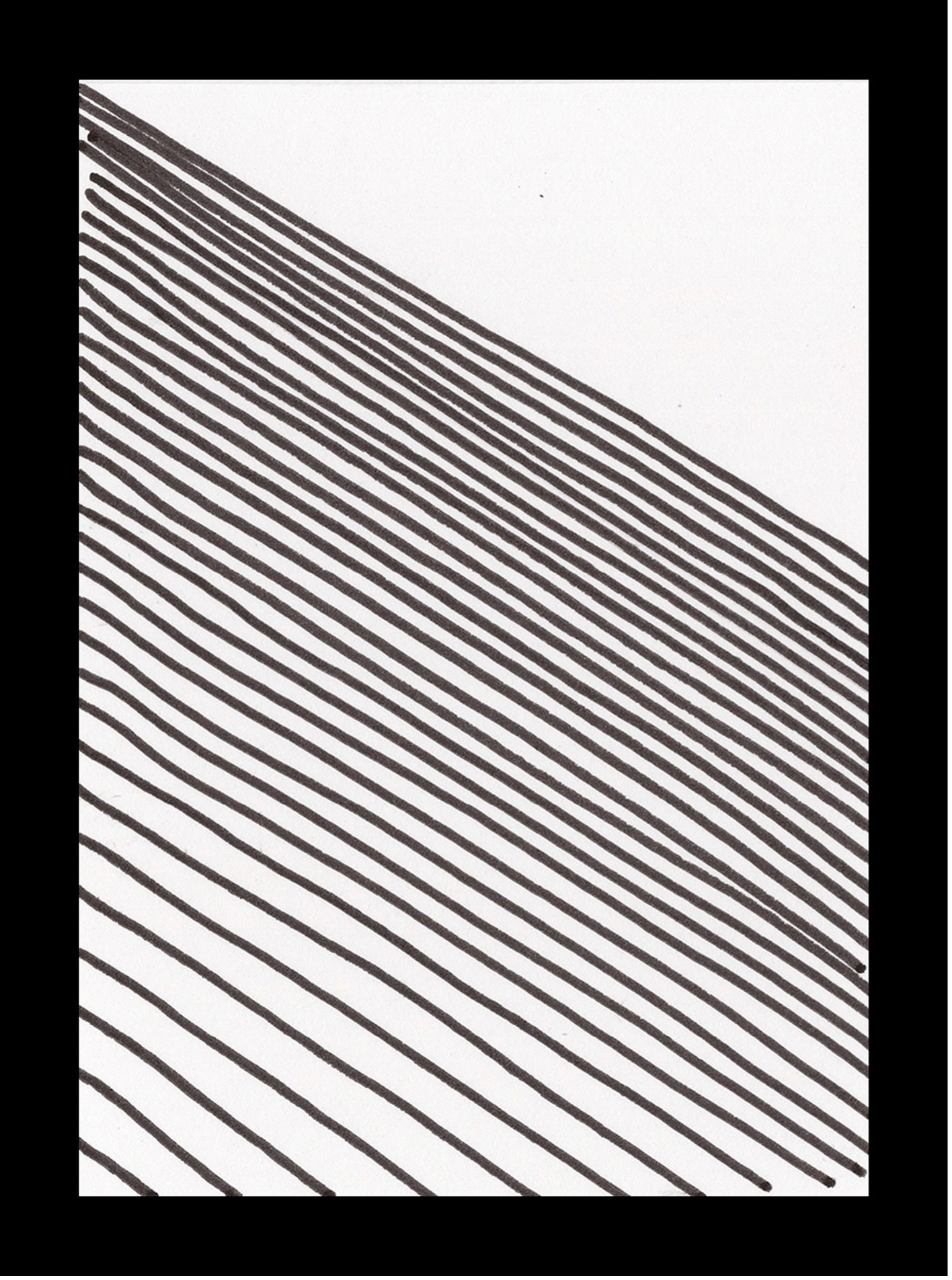 |
That concert reminded me how fully the sensory world animates everything I do. The driving beat, the lights, the crowd—it all felt like a visual composition in motion. When I draw, I’m doing something similar: tracing the rhythm of sound and motion until the lines on the page start to breathe. There’s no boundary between listening, seeing, and creating. Presence isn’t achieved by blocking out the world, but by stepping fully into it.
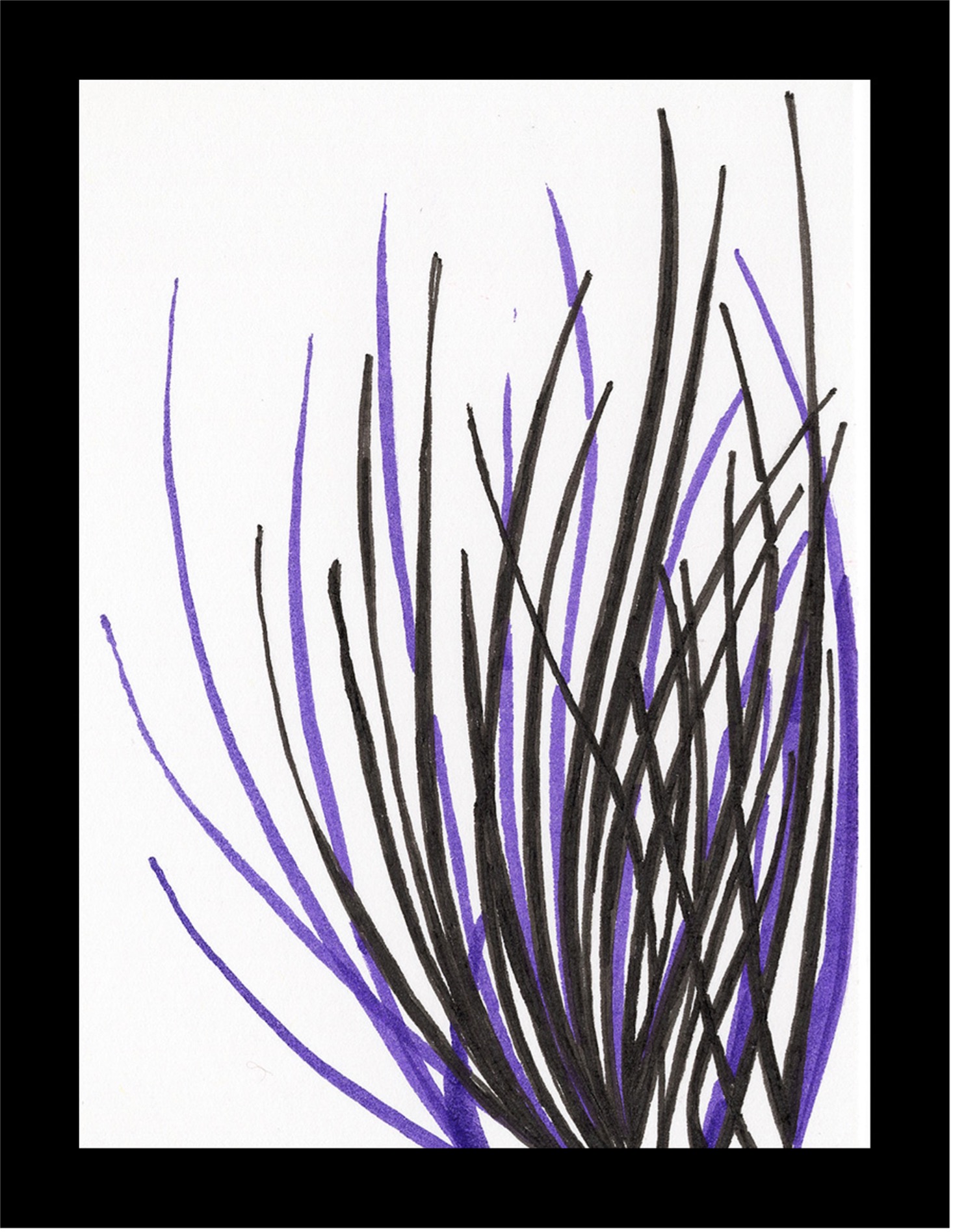
This, for me, is the foundation of Art as Spiritual Practice. It isn’t about ritual, belief, or meditation in the conventional sense. It’s about attention—fierce, sustained attention—to the moment as it unfolds through color, sound, line, and touch. Making art slows perception. It opens a space between thought and movement where something larger than language happens.
| 2025 Mini #11, 2.5 x 3.5 in., ink on paper | |
 |
I don’t pretend to know what to call that something. Some might call it spiritual, while others might use the language of psychology, neurobiology, philosophy, or anthropology. To me, those vantage points all circle the same experience: the shift from distraction to presence, from noise to stillness. It doesn’t matter whether the source is a rock concert, a blank sheet of paper, or a kitchen sink filled with dishes. Each offers a chance to inhabit awareness more fully.
The term “spiritual” itself is hotly contested—too elastic for some, too personal for others. Scholars of religion debate whether its very malleability renders it useless for any serious analysis. I tend to think of it as a working placeholder, a word that gestures toward the transformative quality of human experience when we’re paying close attention. Yes, this is among the varied and problematic definitions of spirituality, and I’m fine with that. I’ve moved toward immersing myself in the experience of art-making and away from debates over how to classify these experiences. Of course, that’s a perk of “retirement,” I suppose. I no longer need to engage in those debates, important though they may be.
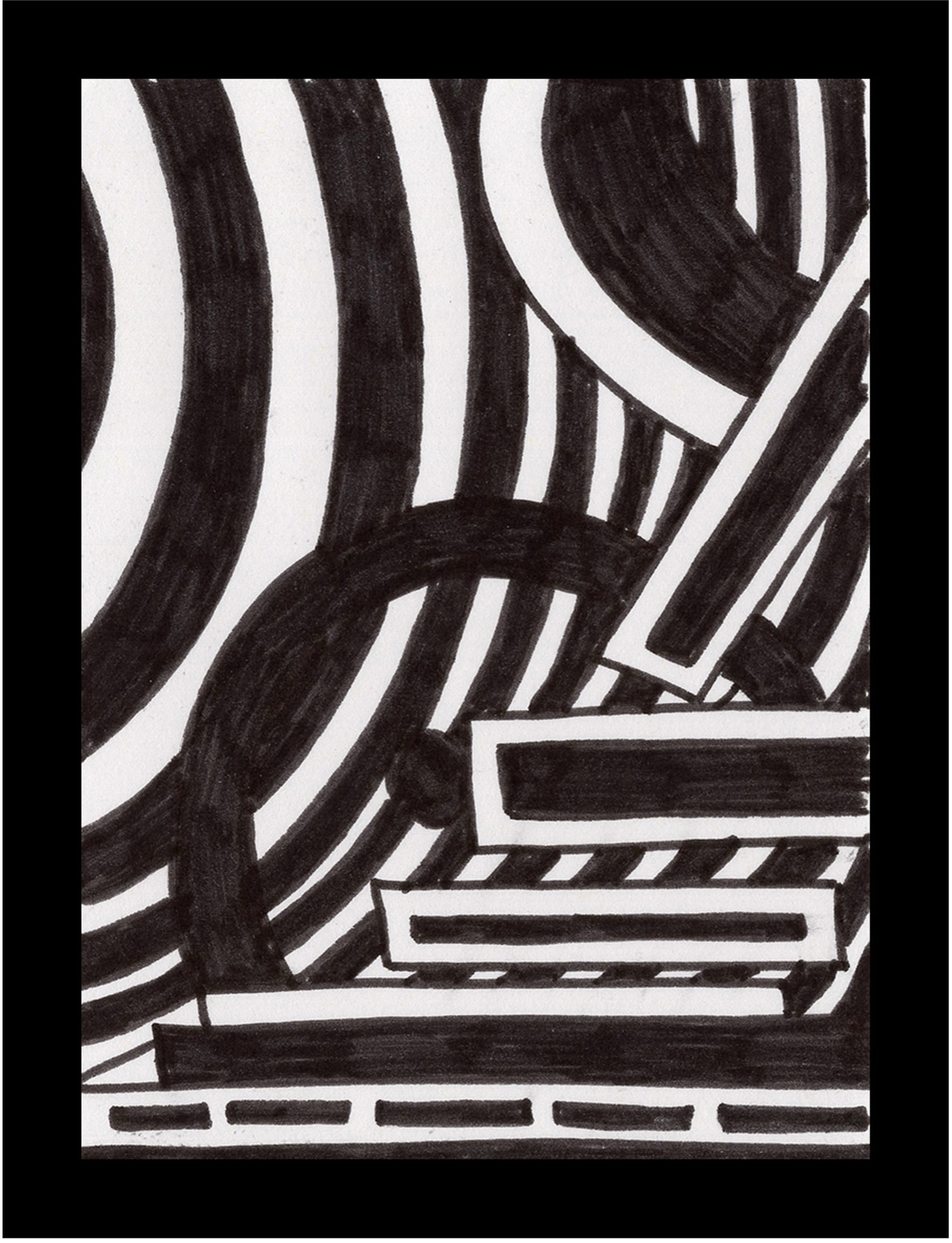
| 2025 Mini #8, 2.5 x 3.5 in., ink on paper | |
 |
That’s the spirit behind my forthcoming course, also called Art as Spiritual Practice. It’s designed primarily for non-artists, hobbyists, and anyone who feels the urge to express themselves creatively but doesn’t know where to start. You don’t need to identify as “spiritual,” and you certainly don’t need to believe in anything otherworldly. You just need curiosity—and a willingness to stay with your own process long enough to notice what shifts.
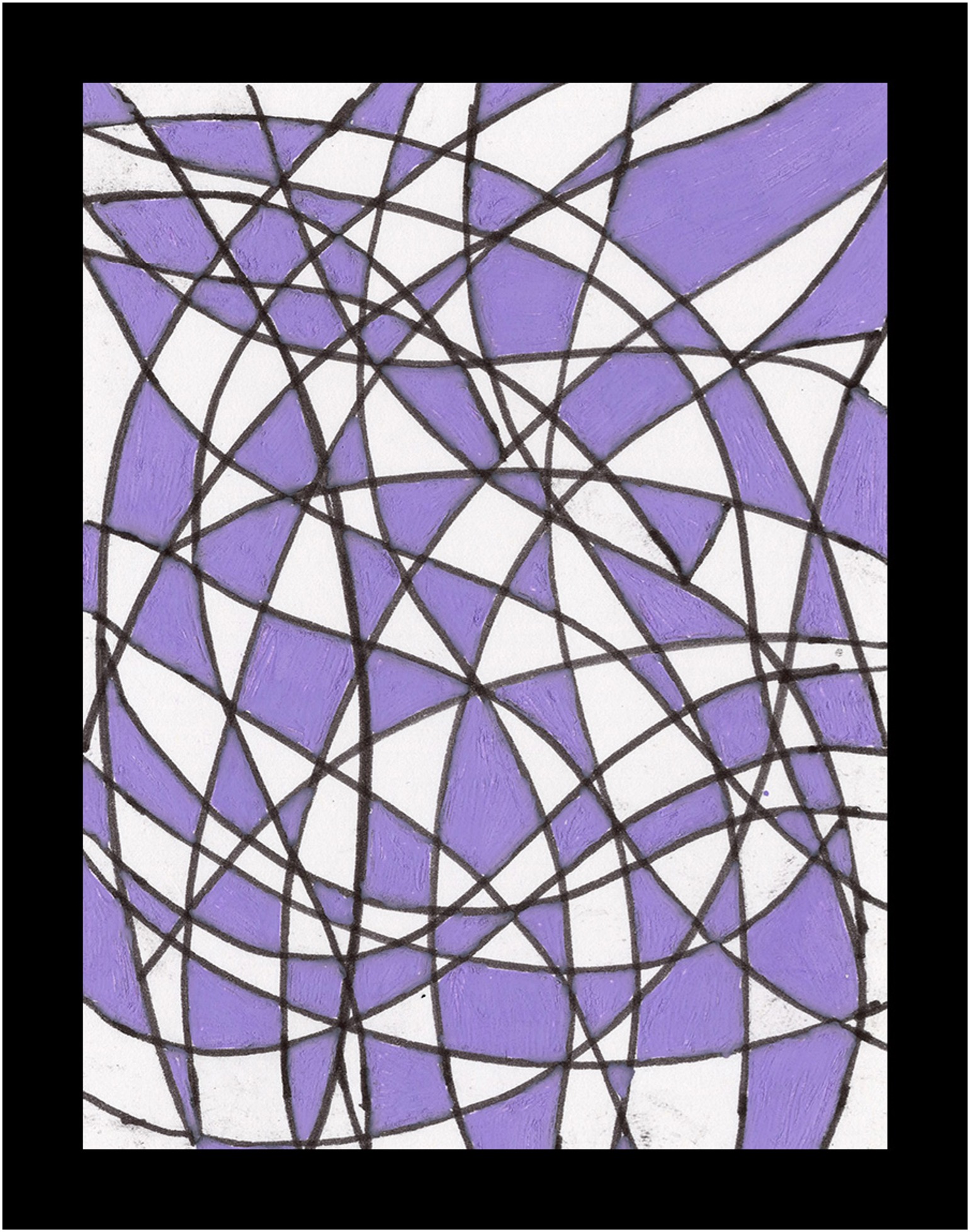
Alongside the course, I’m also beginning to share my own sketchbook practice more publicly. The series of small 2½ × 3½-in. ink drawings I’ve been making—each one a study in rhythm, attention, and constraint—will soon appear in a monthly format for those who want to follow the work as it unfolds.
| 2025 Mini #12, 2.5 x 3.5 in., ink on paper | |
 |
The course mixes practical exercises with reflection. We’ll explore how a daily sketchbook habit can become a form of grounding, how color and rhythm shape mood, and how repetition itself—the steady return to the page—creates meaning over time. Participants will also wrestle with questions that don’t have easy answers: What does it mean to call something spiritual? Who gets to decide who is or is not an artist? What happens when we replace the pursuit of perfection with the practice of presence?
In that sense, the course isn’t just about making art; it’s about re-learning how to be with ourselves. Each drawing, each attempt, becomes a mirror for how we approach uncertainty, judgment, and even joy. There’s a moment—whether I’m drawing, cooking, or listening to Devo—when the line between effort and ease dissolves. That’s where transformation begins.
I’ve spent much of my life teaching students to look closely, to question assumptions, to sit with ambiguity. I’m still doing that, but now the classroom is my desk, the lesson plan is a page of ink lines, and the students are anyone willing to pick up a pen and see what happens.
Presence, not product, is the point. Art becomes the way we practice paying attention. And when we do, even the loudest music becomes a form of stillness.
About Jeffrey M. Brackett
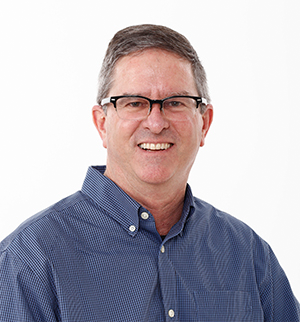
Jeff Brackett is a former professor of religious studies who now works full-time as an artist and writer. His current projects include Aspie Art Journey, Dating App Diaries, an illustrated memoir titled Lines on the Spectrum, and a forthcoming online course called Art as Spiritual Practice.